How to Start a Commercial Gym: Choosing Your Concept and Gym Equipment
Starting a commercial gym is a major investment. A commercial gym is a paid training facility that is open to the public. As a business, a commercial gym requires careful planning from the beginning, from defining your target users and setting the business concept to estimating startup costs and choosing durable gym equipment.
Unlike a private training space, a commercial gym must be able to serve many users with different fitness levels safely, comfortably, and efficiently. This article provides a complete guide to planning a commercial gym so operations can run smoothly and the business can grow over the long term.
What Is a Commercial Gym?
A commercial gym is defined as a paid fitness training facility that is open and accessible to the public. It operates during official business hours, provides various types of training equipment, and is generally supported by administrative staff and professional trainers, or personal trainers (PTs).
The main characteristic of a commercial gym is the very high and repeated frequency of equipment use by many members with different fitness backgrounds.
Because of this, the needs of a commercial gym are much more complex than those of a private training space such as a home gym, as it must prioritize smooth user flow, equipment safety, and overall comfort at the same time.
Differences Between a Commercial Gym and a Private Gym
Understanding the differences between a commercial gym and a private gym or home gym is important so you do not choose the wrong equipment specifications or design an unsuitable room layout. Equipment that is ideal for personal use may not necessarily withstand the high frequency of use in a commercial gym.
Comparison Factor | Commercial Gym | Private Gym / Home Gym |
|---|---|---|
Main Users | Accessible to the general public, with many users at the same time. | Used by the owner, family, or a small group of specific clients. |
Equipment Durability | Requires heavy-duty commercial specifications that can withstand intensive daily use. | Requires home-use or light-commercial specifications based on personal capacity. |
Equipment Variety & Quantity | Provides a wide variety of equipment and multiple units of popular machines. | Focuses on versatile, space-efficient equipment with a limited number of units. |
Layout Focus | Focuses on room capacity, safety clearance, and smooth user flow. | Focuses on personal comfort, room aesthetics, and footprint efficiency. |
Who Is the Target User of a Commercial Gym?
Defining the main target market is the first step that should be completed before purchasing gym equipment. The target users will directly affect the types of equipment required, the number of units, the layout concept, and even membership pricing.
Some target groups for a commercial gym may include beginners, general fitness enthusiasts, strength training enthusiasts, bodybuilders, functional training enthusiasts, office workers, university students, and sports communities.
For example, a general fitness gym requires a balanced variety of cardio and strength machines, while a gym focused on strength training needs more power racks, barbells, weight plates, and free-weight areas.
Determining Your Commercial Gym Concept
Before purchasing equipment, you need to define the gym’s positioning and concept clearly. A well-defined concept helps you avoid buying equipment that is not relevant to your members’ needs.
Some common commercial gym concepts include:
General Fitness Gym: Provides a complete combination of cardio machines, isolated strength machines, and a free-weight area to meet the needs of the general public.
Strength & Power Gym: Focuses on weightlifting racks such as power racks, deadlift platforms, a large supply of weight plates, and competition-spec barbells.
Bodybuilding Gym: Provides a wide variety of single-station isolation machines for training specific muscle angles, along with heavy dumbbells.
Functional Training Studio: Provides a large open area equipped with turf flooring, rigs, kettlebells, plyo boxes, sandbags, and sleds.
Women-Only Gym / 24-Hour Gym / Budget Gym: Adjusts facilities based on privacy, flexible operating hours, or affordable access pricing.
How Does a Commercial Gym Membership System Work?
The membership model will determine business cash flow and influence the number of active members each day. Common membership options include daily access, monthly subscriptions, 3-month plans, 6-month plans, and annual packages.
In addition to general access memberships, commercial gyms can expand their revenue streams through personal training packages, different types of classes, and special off-peak access plans. Estimating the ratio between the number of members and equipment capacity is important to anticipate crowding during peak hours so members do not have to wait too long.
Types of Equipment Commonly Available in Commercial Gyms
In general, commercial gym equipment can be grouped into five main categories to support a balanced variety of training.
Cardio Equipment
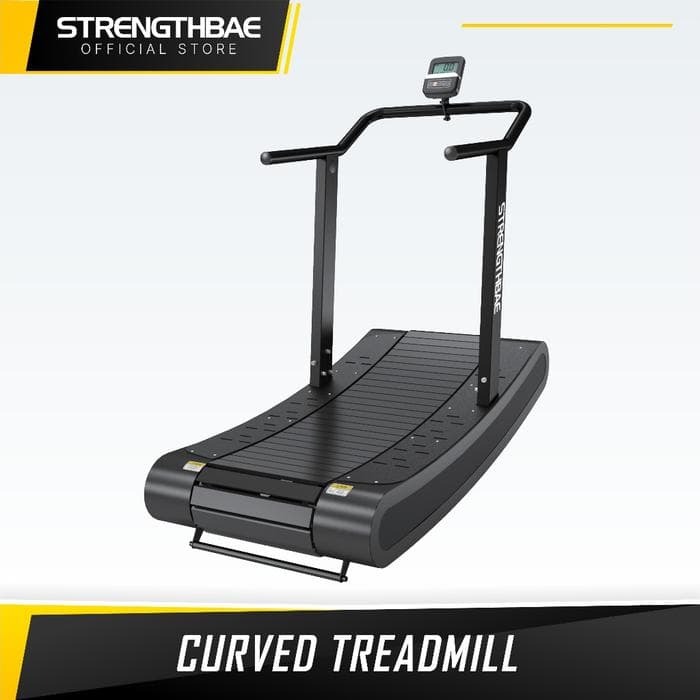
Cardio equipment is used to improve cardiovascular fitness and burn calories. Essential units include treadmills, exercise bikes, elliptical trainers, rowing machines, and stair climbers. The number of units should be adjusted based on the expected number of users during peak hours.
Strength Machines
Isolated strength machines, or selectorized machines, are highly suitable for beginners because they provide a stable and guided movement path. Standard units include chest press, shoulder press, lat pulldown, seated row, leg press, leg extension, and leg curl machines.
Free Weight Area
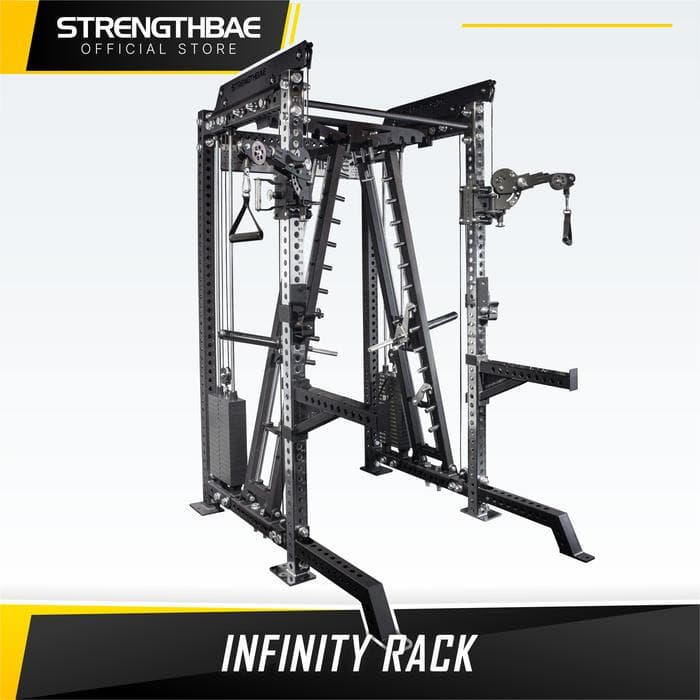
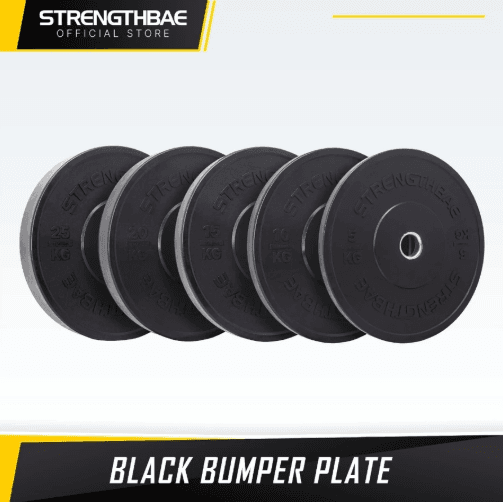
The free-weight area is one of the most active areas in a gym. The main equipment includes a set of dumbbells with storage racks, barbells, weight plates, flat benches, adjustable benches, and power racks or squat racks.
Cable and Functional Equipment
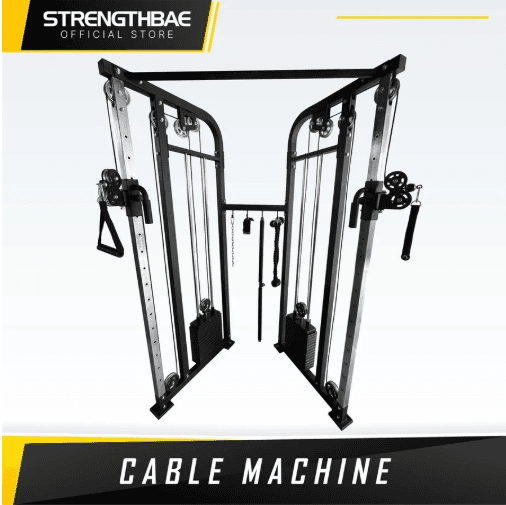
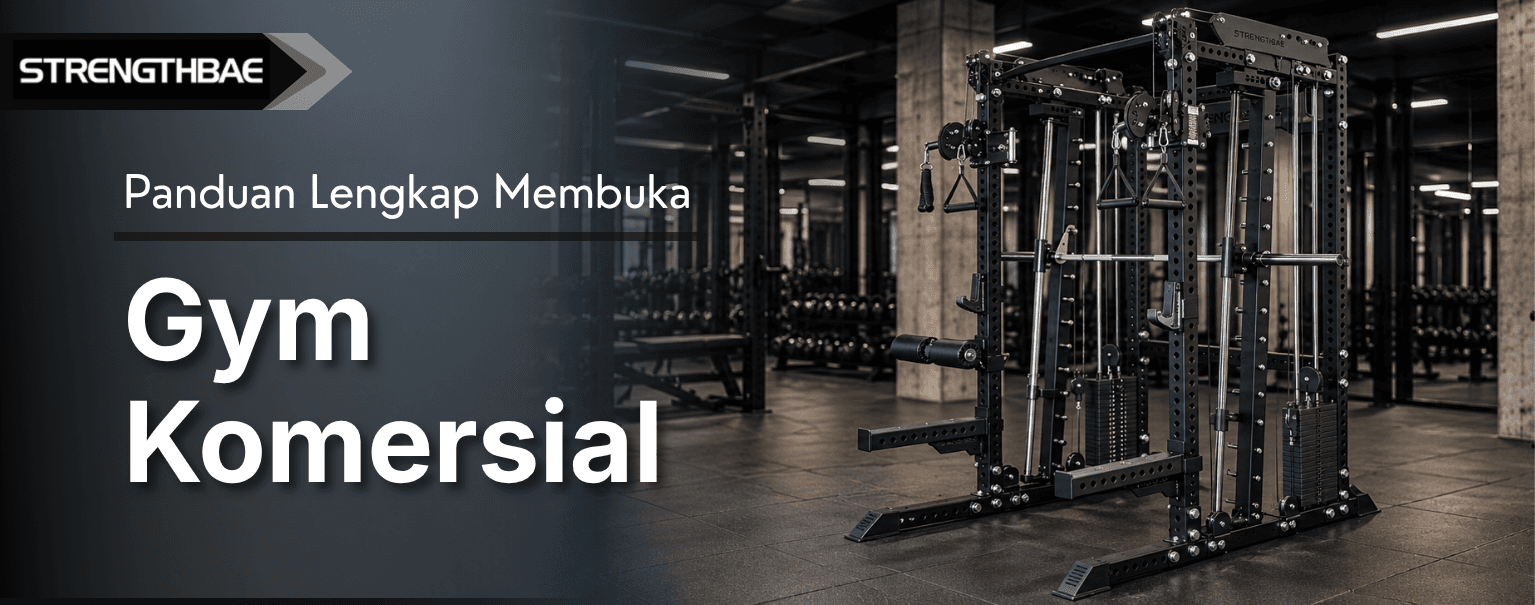
Cable and functional training equipment offer very high movement flexibility. Common units include cable crossovers, functional trainers, Smith machines, All-in-One Trainers, kettlebells, medicine balls, resistance bands, and sleds if space allows.
Accessories and Additional Equipment
Supporting equipment helps maintain organization and training comfort, such as stretching mats, storage racks, cable attachment holders, and other mobility tools.
How to Choose Gym Equipment
Buying commercial gym equipment requires careful technical consideration. Here are six main principles for choosing the right gym equipment.
Choose Equipment Based on Function, Not Just Quantity
Avoid buying many pieces of equipment with very similar functions just to fill the room. Evaluate which movement patterns and muscle groups are not yet covered so your gym can offer a balanced range of training options.
Consider Weight Capacity and Adjustability
Gym members have different body proportions and strength levels. Make sure the equipment offers adjustable settings for seat height, pad position, and safety features that can be easily adapted for each user.
Consider Durability and Usage Intensity
Commercial gym equipment is used continuously every day. Pay attention to steel frame thickness, upholstery stitching quality, pulley and bearing smoothness, and the durability of the finishing coat. Also make sure an official warranty and spare parts are available from the manufacturer.
Pay Attention to Storage
Provide dedicated storage racks for dumbbells, plates, barbells, and cable accessories from the beginning of the planning process. Organized storage prevents equipment from being scattered across the floor and helps reduce the risk of tripping injuries.
Choose the Right Flooring and Safety Areas
Use suitable flooring such as rubber flooring in each training zone. Free-weight areas require thicker rubber flooring to absorb impact and noise, while other functional areas require flooring surfaces that support movement stability.
Consider Ventilation, Lighting, and Comfort
Fresh air circulation, adequate air conditioning, and bright lighting are important factors in maintaining member comfort while training together indoors.
Prioritize Based on Budget: Determining How Much Startup Capital Is Needed
Based on industry estimates, the initial capital required to start a commercial gym ranges from around Rp 300 million to more than Rp 1 billion, depending on the scale of the business, the location of the shop building or facility, and the chosen concept. Gym equipment generally takes the largest share, at around 65% of the total initial capital.
The allocation of commercial gym startup capital is generally divided into five main components. The figures below are only examples and may vary depending on location and area.
Rent & Renovation: Shop or building rental ranges from Rp 50 million to Rp 300 million per year, while interior renovation ranges from Rp 100 million to Rp 500 million.
Gym Equipment (Cardio & Strength): Cardio machine procurement ranges from Rp 100 million to Rp 300 million, while weight training equipment ranges from Rp 50 million to Rp 200 million.
Initial Operations: Staff and trainer salaries range from Rp 10 million to Rp 30 million per month, while electricity, water, and promotional costs range from Rp 10 million to Rp 35 million.
Licensing & Legal Requirements: Establishing a business entity and obtaining official operating permits ranges from Rp 5 million to Rp 15 million.
BEP Simulation: With efficient operational management and the right marketing strategy, a commercial gym business generally reaches its Break-Even Point (BEP) within 12 to 36 months, or 1–3 years.
Does All Equipment Need to Be Purchased at Once?
The answer is not always. Gym equipment can be purchased gradually as the number of members grows. In the early stages, prioritize essential gym equipment and high-usage equipment that is most relevant to your target market.
Once the business is operating and member usage patterns become clearer, you can add specialist isolation machines or new training stations. This gradual approach helps maintain healthier cash flow during the early stages of operation.
How Much Equipment Is Needed?
The number of equipment units should take into account the projected number of active members, the available room capacity, and estimated crowding during peak hours. Highly popular equipment such as treadmills, adjustable benches, and lat pulldowns should ideally be provided in more than one unit to prevent excessively long queues.
Gym Layout: What Should You Consider?
Designing a commercial gym layout is not simply about making sure all equipment fits into the room, but also about creating a safe and comfortable flow of movement for members. Create clear training zones, such as separate cardio, strength machine, free-weight, functional, and stretching areas.
Make sure there is sufficient safety clearance around each piece of equipment, wide main walkways, and dedicated space for loading weight plates so members can move without interfering with one another.
Common Mistakes When Starting a Commercial Gym
To help ensure your investment succeeds, avoid these ten common mistakes often made by first-time gym owners:
Buying gym equipment before clearly defining the concept and target market.
Focusing too much on the number of machines without considering their quality and physical durability.
Ignoring layout planning and member circulation paths.
Underestimating user density during peak hours.
Buying too many machines with the same movement function.
Failing to provide adequate storage racks from the beginning.
Ignoring regular maintenance costs and the availability of official spare parts.
Choosing home-use equipment for intensive commercial-scale use.
Failing to leave empty space for future facility expansion.
Forgetting to handle business permits, legal requirements, and insurance protection.
Commercial Gym Equipment Buying Checklist
Use the following evaluation checklist as a final guide before deciding to purchase commercial gym equipment:
Key Evaluation Point | Question to Consider Before Purchase |
|---|---|
Concept & Target Market | Have the business concept and main target members been specifically defined? |
Room Capacity | What is the actual room size and the estimated number of active members being targeted? |
Equipment Priorities | Which equipment will be used most frequently by your main target market? |
Number of Units | How many units of each type of equipment are needed to anticipate peak hours? |
Equipment Specifications | Are all selected machines built to durable heavy-duty commercial specifications? |
Warranty & Maintenance | Are official warranties, maintenance services, and spare parts available locally? |
Storage Availability | Have dedicated storage racks for dumbbells, plates, and accessories been planned? |
Layout Planning | Does the equipment layout still leave enough walking space and safety clearance? |
Expansion Space | Does the room layout still leave space for adding equipment in the future? |
Business Licensing | Have the business permits, operating permits, and insurance coverage been arranged? |
FAQ
How much startup capital is needed to start a commercial gym?
The estimated startup capital required to start a commercial gym ranges from Rp 300 million to more than Rp 1 billion, depending on the scale of the business, location, and chosen concept. Gym equipment generally takes the largest share, at around 65% of the total capital investment.
How long does it take for a gym business to reach the Break-Even Point (BEP)?
With careful capital planning, efficient operational management, and the right marketing strategy, a commercial gym business can generally reach the Break-Even Point (BEP) within 12 to 36 months, or 1–3 years.
Does all commercial gym equipment need to be purchased at the same time in the beginning?
Not necessarily. Purchases can be made gradually, starting with core equipment and the units most frequently used by members. Once usage patterns become clear, you can add specialist isolation machines over time.
What is the main difference between commercial gym equipment and home gym equipment?
Commercial gym equipment is designed with larger, heavy-duty steel frame structures that can withstand continuous use by hundreds of members each day. Home gym equipment, on the other hand, prioritizes space efficiency and versatile functions for personal use.
How do you determine which types of gym equipment best match your target members?
Equipment selection should be based on market research and your chosen business concept. For example, if your target market consists of strength training enthusiasts, allocate a larger budget to power racks, barbells, and weight plates. If your target is general fitness, provide a balanced combination of cardio machines and isolated strength machines.
Build a Profitable Commercial Gym with StrengthBae
Building a successful and efficient commercial gym requires careful planning, from choosing the right concept and calculating startup capital to providing durable equipment. For more information about equipment package options, room layout simulations, and consultations for your commercial gym or home gym needs, contact the StrengthBae team today.
Strengthbae is a professional gym equipment brand that provides solutions for commercial, personal, and home gym needs. From racks and All-in-One Trainers to functional training accessories such as HYROX-standard sandbags, everything is available at StrengthBae.