Kettlebell Exercises at Home for a Full-Body Workout
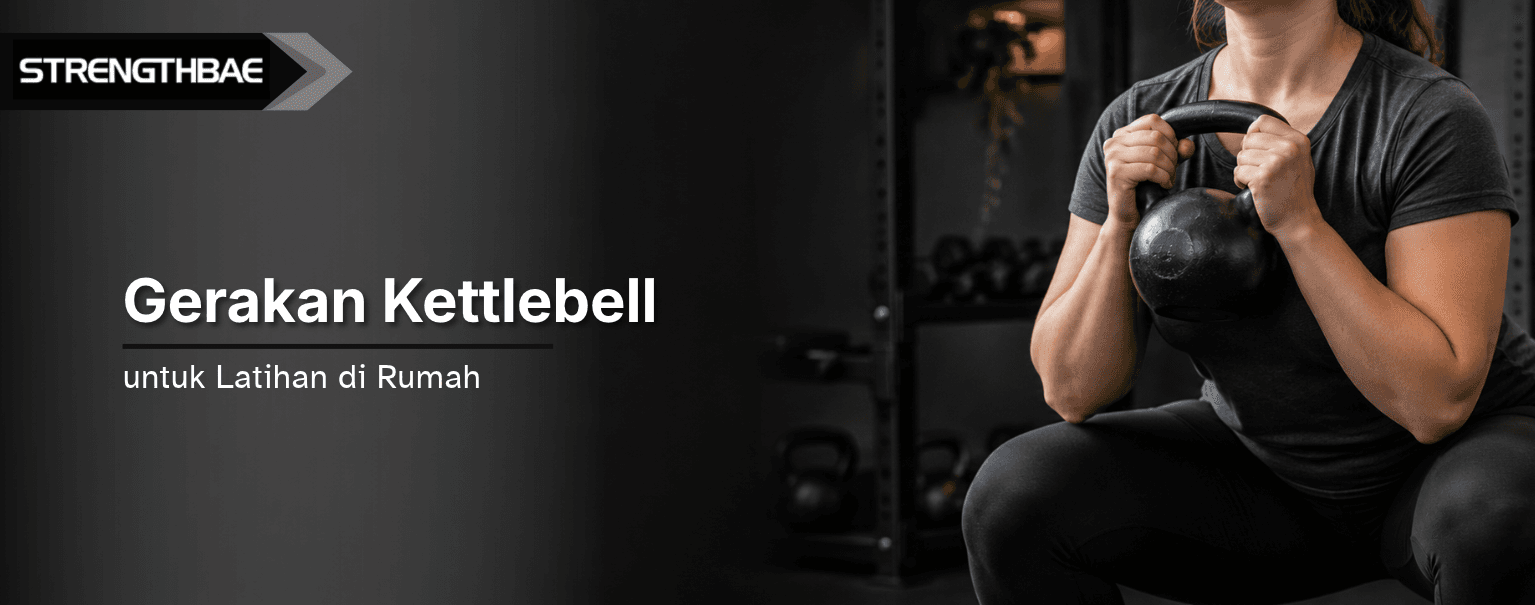
Kettlebell training at home is a practical way to build muscle strength and improve physical fitness using just one piece of equipment. These exercises can target various muscle groups, including the thighs, glutes, chest, back, shoulders, and core.
A kettlebell has a handle at the top, while most of its weight is positioned below the handle. This design allows users to perform various movements, from more controlled exercises such as goblet squats, floor presses, and single-arm rows to fast and powerful movements such as kettlebell swings, cleans, and thrusters. You can start all of these exercises at home with just one kettlebell.
Getting to Know the Kettlebell
A kettlebell is a weight training tool shaped like a solid iron or steel ball with a curved handle on top. Unlike a dumbbell, which distributes the weight evenly on both sides of the handle, most of the kettlebell's weight is positioned below the handle. This design creates an additional challenge for maintaining balance and training the stabilizing muscles and core.
Kettlebells can be used to improve strength, muscle mass, endurance, cardiovascular fitness, and movement capacity. Not all kettlebell exercises need to be performed quickly. Controlled movements such as squats, rows, floor presses, and shoulder presses are also suitable for beginners.
Strengthbae Kettlebell Comparison
When choosing a kettlebell for home workouts, there are three main types that can be selected based on your training needs and available space: fixed kettlebells and adjustable kettlebells.
Strengthbae Classic Kettlebell
This kettlebell is made from solid cast iron without welded joints. The kettlebell becomes larger as the weight increases. It is available from 2.5 kg to 48.5 kg, with a more affordable price and a comfortable handle for two-handed exercises such as goblet squats and swings. This kettlebell is a fixed kettlebell.
Strengthbae Competition Kettlebell
Made from steel with hybrid race standards such as HYROX. The body size remains the same across all weight options, with a 35 mm handle diameter. It is available from 4 kg to 48 kg, allowing users to maintain consistent technique and kettlebell positioning even when the weight changes. This kettlebell is also a fixed kettlebell.
Strengthbae Adjustable Kettlebell
An adjustable kettlebell allows the weight to be changed within a single piece of equipment. This type uses a design similar to a competition kettlebell, with weight plates inside that can be added or removed.
The Strengthbae Adjustable Kettlebell can be adjusted from 12 kg to 32 kg in 1 kg increments. One unit can replace up to 19 fixed kettlebells, making it more space-efficient and suitable for smaller home gyms.
Before use, especially for swinging movements such as kettlebell swings, make sure the threaded locking system is securely tightened so that the weight plates do not move.
Strengthbae Kettlebell Comparison Table
Feature | Classic Kettlebell | Competition Kettlebell | Adjustable Kettlebell |
Material | Solid cast iron without welding | Hollow steel | Steel body with internal weight plates |
Body Size | Gets larger as the weight increases | Remains the same across all weights | Remains the same across all weights |
Weight Options | 2.5–48.5 kg | 4–48 kg | 12–32 kg, 1 kg increments |
Advantage | Affordable and comfortable for two-handed exercises | 35 mm handle and more consistent training position | Space-saving and can replace up to 19 kettlebells |
Suitable For | General strength training and weight variations | Technique training and consistent kettlebell movements | Home gyms with limited space and a need for multiple weight options |
How to Choose the Right Kettlebell Weight for Beginners
Beginners should choose a kettlebell weight based on the type of movement and their ability to control the load, rather than relying only on body weight or gender. The lower body can generally handle heavier loads during movements such as goblet squats and Romanian deadlifts compared with the upper body during shoulder presses or shoulder stability exercises such as kettlebell halos.
As a starting guideline for beginners:
4–8 kg Kettlebell
Suitable for upper-body exercises, shoulder stability movements such as kettlebell halos, core exercises, and users who are still learning to control their movement technique.
8–12 kg Kettlebell
Suitable for basic lower-body exercises such as goblet squats, Romanian deadlifts, and sumo squats.
These weight ranges are only starting guidelines, not strict rules that must be followed. Choose a kettlebell that allows you to perform around 8–12 repetitions with proper technique and posture while still having enough energy for a few additional repetitions.
For fast and powerful movements such as kettlebell swings, first master the hip hinge technique before increasing the kettlebell weight.
Kettlebell Exercises for Legs and Glutes
Kettlebell Floor Press
Main Muscles: Chest, triceps, and front deltoids.
How to Perform: Lie on your back on a mat with your knees bent. Hold the kettlebell with one hand and position your elbow at approximately 45 degrees from your body. Press the kettlebell upward until your arm is almost straight, then slowly lower it until your upper arm touches the floor. Use both hands when picking up and returning the kettlebell to the floor to keep your wrists and shoulders safe.
Recommendation: 2–3 sets × 8–12 repetitions per side.
Single-Arm Kettlebell Row
Main Muscles: Latissimus dorsi, upper back, and biceps.
How to Perform: Lean your body forward by pushing your hips back, or use your knee or a chair for support. Hold the kettlebell with one hand, then pull it toward your lower waist while driving your elbow backward. Lower it slowly.
Recommendation: 2–3 sets × 8–12 repetitions per side.
Kettlebell Shoulder Press
Main Muscles: Shoulders and triceps.
How to Perform: Hold the kettlebell near your shoulder with your wrist kept straight. Press the kettlebell overhead until your arm is straight and stable, then lower it slowly. Brace your core and avoid excessive arching of your lower back while lifting the weight.
Recommendation: 2–3 sets × 6–10 repetitions per side.
Kettlebell Halo
Main Muscles: Shoulder stabilizers, deltoids or shoulder muscles, and core.
How to Perform: Hold the kettlebell upside down in front of your chest with both hands on the handle. Slowly move the kettlebell around your head while keeping it close to your body. Keep your neck and body stable without leaning or rotating along with the movement.
Recommendation: 2 sets × 5–8 rotations per direction using a light weight.
Read More: Strengthbae Classic Kettlebell
Kettlebell Exercises for Chest, Back, and Shoulders
Kettlebell Floor Press
Main Muscles: Chest, triceps, and front deltoids.
How to Perform: Lie on your back on a mat with your knees bent. Hold the kettlebell with one hand and position your elbow at approximately 45 degrees from your body. Press the kettlebell upward until your arm is almost straight, then slowly lower it until your upper arm touches the floor.
Recommendation: 2–3 sets × 8–12 repetitions per side.
Safety Tips: Use both hands when picking up and placing the kettlebell back on the floor to keep your wrists and shoulders safe.
Single-Arm Kettlebell Row
Main Muscles: Back muscles, including the latissimus dorsi, rhomboids, trapezius, and biceps.
How to Perform: Lean your body forward by pushing your hips back. You can also use your knee or a chair for support. Hold the kettlebell with one hand, then pull it toward your lower waist while driving your elbow backward. Slowly lower the kettlebell.
Recommendation: 2–3 sets × 8–12 repetitions per side.
Kettlebell Shoulder Press
Main Muscles: Shoulders and triceps.
How to Perform: Hold the kettlebell near your shoulder in the rack position with your wrist straight. Press the kettlebell overhead until your arm is straight and stable, then slowly lower it with a controlled movement.
Recommendation: 2–3 sets × 6–10 repetitions per side.
Safety Tips: Brace your core and avoid excessive arching of your lower back while lifting the kettlebell.
Kettlebell Halo
Main Muscles: Shoulder stabilizers, deltoids or shoulder muscles, and core.
How to Perform: Hold the kettlebell upside down in front of your chest with both hands on the handle. Slowly move the kettlebell around your head while keeping it close to your body. Keep your neck and body stable without leaning along with the movement.
Recommendation: 2 sets × 5–8 rotations per direction using a light weight.
Kettlebell Exercises for Core
Kettlebell Suitcase Carry
Main Muscles: Obliques, deep abdominal muscles, forearms for grip strength, and hip stabilizers.
How to Perform: Hold the kettlebell with one hand at your side as if carrying a suitcase. Stand upright, then walk forward with controlled steps. Keep your body straight and avoid leaning toward the weight.
Recommendation: 2–3 sets × 20–40 seconds of walking per side.
Kettlebell Dead Bug Hold
Main Muscles: Deep core muscles that maintain body stability and the rectus abdominis.
How to Perform: Lie on your back on a mat, then hold a light kettlebell with both hands and extend your arms above your chest. Raise both legs with your knees bent at a 90-degree angle. Slowly extend one leg forward without lifting your lower back off the floor. Return the leg to the starting position, then repeat with the other leg.
Recommendation: 2 sets × 6–10 repetitions per leg.
Full-Body and Conditioning Kettlebell Exercises
Kettlebell Swing
Main Muscles: Glutes, hamstrings, lower back, lats, and core.
How to Perform: Hold the kettlebell with both hands, then push your hips back. Next, drive your hips forward powerfully to swing the kettlebell up to chest height. Generate the movement from your hips rather than your shoulders, and avoid turning the swing into a repeated squat.
Recommendation: 2–3 sets × 8–12 repetitions after mastering the basic hip hinge technique.
Kettlebell Clean
Main Muscles: Glutes, hamstrings, quadriceps, upper back, and arms.
How to Perform: Start with the kettlebell in a low position between your thighs. Drive your hips forward powerfully while bringing the kettlebell into the rack position near your shoulder. Keep your arm close to your body throughout the movement.
Recommendation: 2–3 sets × 5–8 repetitions per side. It is recommended to learn this movement after mastering the hip hinge technique and basic kettlebell control.
Kettlebell Thruster
Main Muscles: Quadriceps, glutes, shoulders, triceps, and core.
How to Perform: Hold the kettlebell near your shoulder in the rack position, then lower your body into a squat. As you stand back up, use a strong drive from your legs to press the kettlebell overhead until your arm is straight in one continuous movement. Use a light enough weight to maintain proper squat and shoulder press technique.
Recommendation: 2–3 sets × 6–10 repetitions.
Read More: Strengthbae Adjustable Kettlebell
Kettlebell Workout at Home for Beginners (20–25 Minutes)
3–5 Minute Warm-Up
Before starting the workout, warm up by marching in place for 1 minute, followed by 10 repetitions of bodyweight squats and 10 repetitions of unloaded hip hinges. After that, perform arm circles and shoulder mobility movements for 1 minute.
2-Round Main Workout
Perform all the exercises in the table below in order. Rest for 30–60 seconds after each exercise. After completing the first round, rest for 1–2 minutes before repeating all the exercises for the second round.
Exercise | Main Muscles | Repetitions / Duration | Rest |
Kettlebell Goblet Squat | Quadriceps, glutes, inner thighs | 10–12 repetitions | 30–60 seconds |
Kettlebell Romanian Deadlift | Hamstrings, glutes, back | 10–12 repetitions | 30–60 seconds |
Single-Arm Kettlebell Row | Lats, upper back, biceps | 8–10 repetitions per side | 30–60 seconds |
Kettlebell Floor Press | Chest, triceps, shoulders | 8–10 repetitions per side | 30–60 seconds |
Kettlebell Shoulder Press | Shoulders, triceps | 6–8 repetitions per side | 30–60 seconds |
Kettlebell Suitcase Carry | Obliques, core, grip strength | 20–30 seconds per side | 30–60 seconds |
2–3 Minute Cool-Down
Walk at an easy pace to gradually lower your heart rate. After that, perform light stretches for your thighs, shoulders, and lower back.
Variations for Advanced Kettlebell Training
For those with better physical ability and fitness levels, the workout program can be adjusted in the following ways:
Replace the Romanian Deadlift with the Kettlebell Swing once you have mastered the hip hinge technique with fast movements.
Add Reverse Lunges to increase the amount of unilateral leg training.
Use the Kettlebell Thruster as a finishing exercise to train the entire body and improve physical endurance.
Increase the main workout to 3 rounds and reduce the rest time to 30 seconds.
FAQ
Which is more suitable for beginners, the Classic Kettlebell or Competition Kettlebell?
The Classic Kettlebell is generally more suitable for beginners because it is available starting from 2.5 kg, with a compact size that is easy to control. However, the Competition Kettlebell or Adjustable Kettlebell can also be suitable for beginners who want to become accustomed to an internationally standardized handle size from the beginning.
Is the Adjustable Kettlebell safe and stable for swings and cleans?
Yes. The Strengthbae Adjustable Kettlebell features a tight screw locking mechanism designed to securely lock the weight plates in place. This system helps prevent the plates from shifting or making noise during swings, as long as the locking mechanism is properly secured.
How often and how long should you train with kettlebells at home?
Beginners can perform kettlebell workouts 2–3 times per week, with each session lasting around 15–30 minutes. When performed consistently, these workouts can help maintain fitness, improve muscle strength, and burn calories.
Can kettlebell training be combined with barbell and dumbbell training?
Yes. Kettlebells can be used as the main workout or as an additional component of a strength training program. Combining kettlebells with barbells and dumbbells can help train joint stability, grip strength, and overall body strength.
How much space is needed for kettlebell training at home?
A recommended training area is at least around 2 × 2 meters with sufficient ceiling height. This space allows users to perform movements such as kettlebell swings, lunges, and overhead presses more freely and safely, whether in a home gym or commercial gym.
Improve Your Kettlebell Training with Strengthbae
Kettlebell training at home is a practical way to improve strength, muscle mass, and endurance. By mastering basic techniques, choosing the appropriate kettlebell weight, and increasing the load gradually, you can work toward your fitness goals more safely.
To support your training, Strengthbae offers various high-quality kettlebell options, from the Classic Kettlebell made of solid cast iron, to the Competition Kettlebell with international competition standards, and the practical, space-saving Adjustable Kettlebell.
Find the kettlebell that suits your needs at home or for your gym business with Strengthbae. Contact the Strengthbae team for home gym equipment consultation, product specifications, and the best offers with an official warranty.
Strengthbae is a professional gym equipment brand providing solutions for commercial gym businesses and home gyms. From racks and All in One Trainers to functional training accessories for HYROX-standard hybrid races, everything is available at Strengthbae.
