Types of Cable Machine Attachments and Their Functions
types-of-cable-machine-attachments-and-their-functions
Types of Cable Machine Attachments and Their Functions
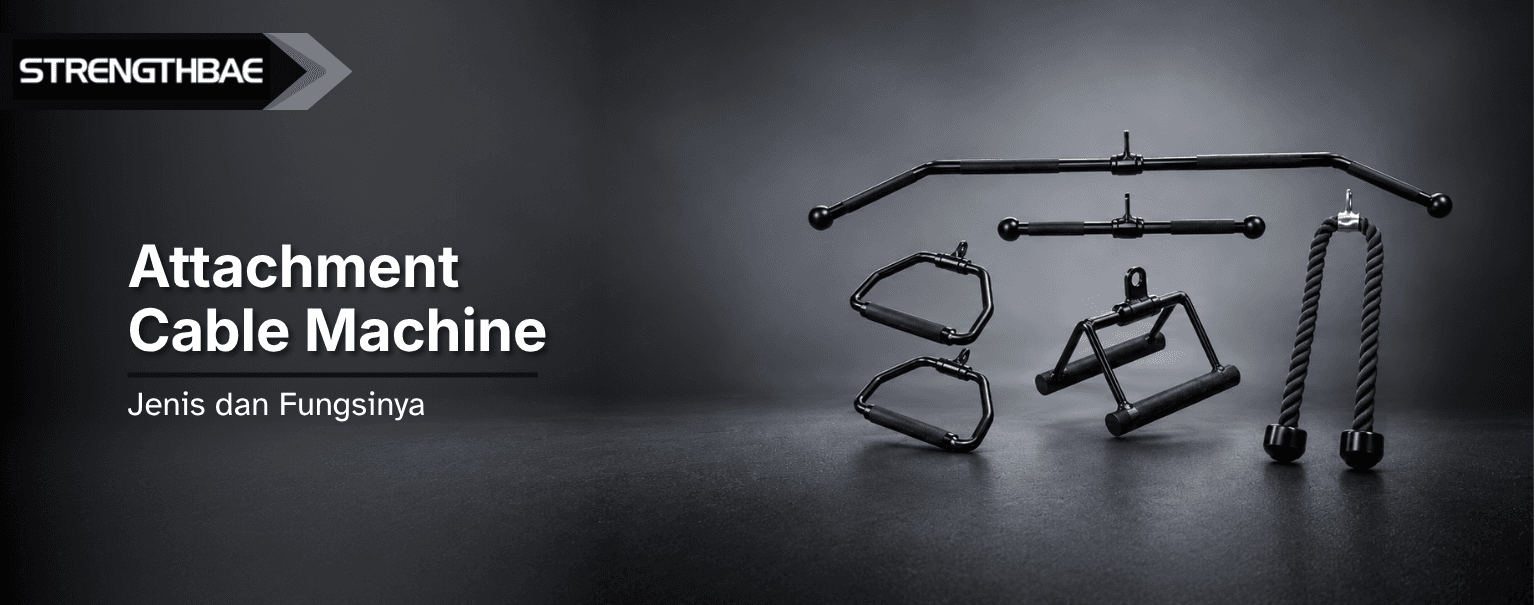
Cable machine attachments come in a wide variety of forms, including handles, bars, ropes, and straps that are connected to the cable pulley to adjust grip, movement direction, range of motion, and target muscles. With attachments such as D-handles, triceps ropes, straight bars, lat pulldown bars, V-bars, EZ curl bars, and ankle straps, a single cable machine can be used for various upper body, lower body, and core exercises. This article covers the types and functions of cable machine attachments, grip variations, the differences between single handles and bars, how to choose attachments, and safety tips for beginners.
Understanding Cable Machine Attachments
A cable machine or functional trainer is a versatile fitness equipment that can be used for various exercises. Its flexibility comes from the pulley system, which can be connected to different attachments. Cable machine attachments serve as the connection between your hands or feet and the cable that transfers resistance from the weight stack.
Cable machine attachments are typically connected using a carabiner or connector at the end of the cable. The shape of the attachment affects how you grip it, wrist position, pulling direction, stability, and the types of exercises that can be performed.
In general, cable machine attachments consist of single handles for one-arm (unilateral) exercises and bars for two-arm (bilateral) exercises. You do not need to own every type of attachment. A few basic cable machine attachments are enough to perform a wide variety of upper body, lower body, and core exercises.
Types of Cable Machine Attachments
Cable machine attachments come in various shapes and functions that can be adjusted according to the exercise and target muscles. Some of the most commonly used attachments are D-Handle, Triceps Rope, and Straight Bar.
D-Handle / Single Handle
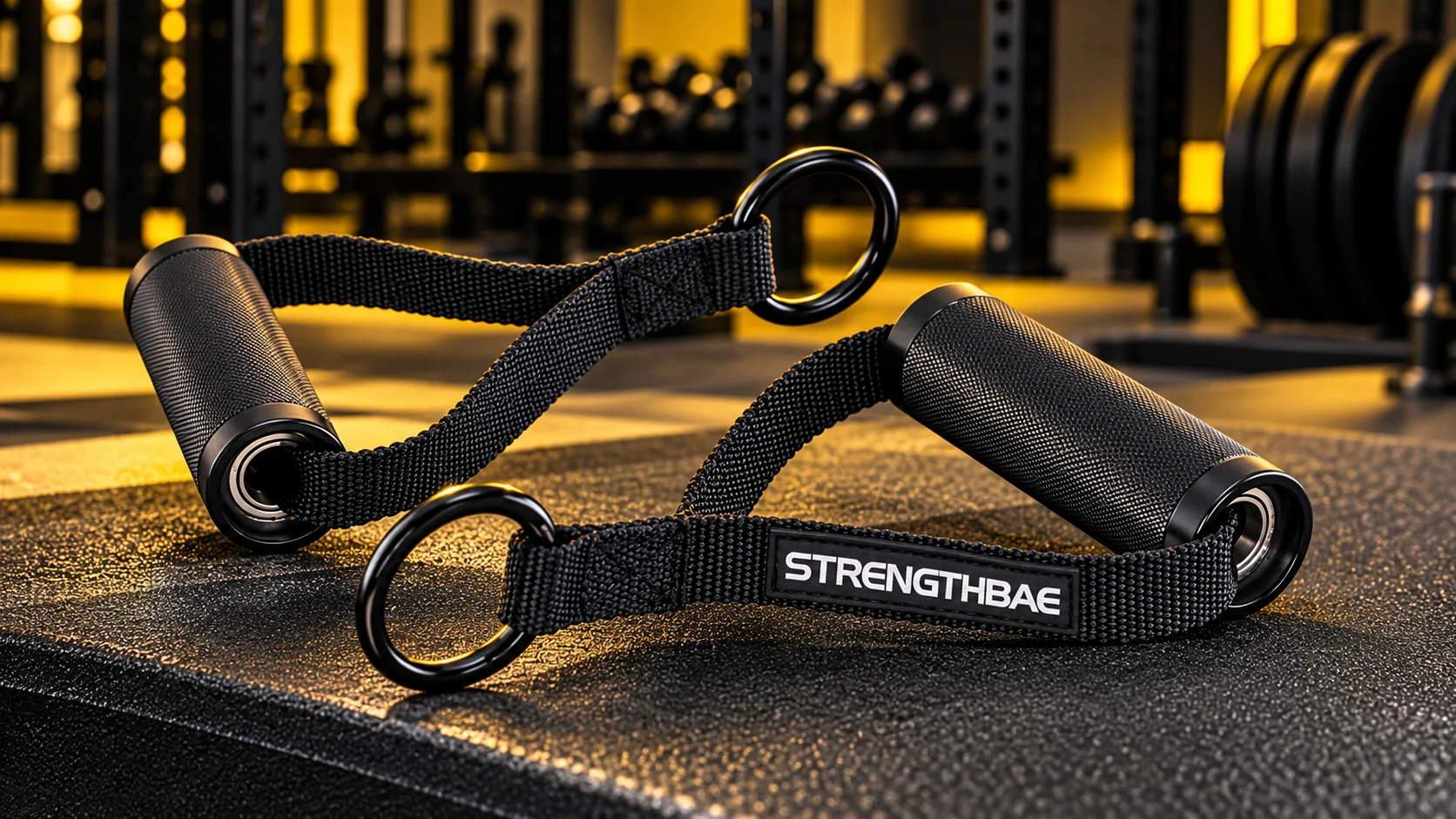
A D-Handle is a cable machine attachment shaped like the letter D and is designed to be used with one hand. It is generally used with a neutral grip, while the connection point allows the hand to move and rotate along with the movement.
D-Handles can be used for various exercises such as single-arm cable row, single-arm lat pulldown, cable biceps curl, single-arm cable lateral raise, cable chest fly, and crossbody triceps extension. The target muscles can vary depending on the direction of movement, including the chest, back, shoulders, biceps, and triceps.
The main advantage of a D-Handle is its flexibility for unilateral exercises. Using one hand also helps train both sides of the body more independently and allows the hand to move more freely during exercise.
Triceps Rope
A Triceps Rope is a cable machine attachment made of a thick rope with grips or stoppers at both ends. This attachment is typically used with a neutral grip and provides greater freedom of movement compared with a rigid bar.
Common exercises performed with a Triceps Rope include triceps pushdown, overhead triceps extension, face pull, rope hammer curl, and cable crunch. The muscles trained depend on the movement, including the triceps, rear delts, trapezius, and biceps.
Because both hands can move more freely, the rope allows users to open their hand position at the end of the movement. This can provide a greater range of motion and help achieve better muscle contraction in some exercises.
Straight Bar
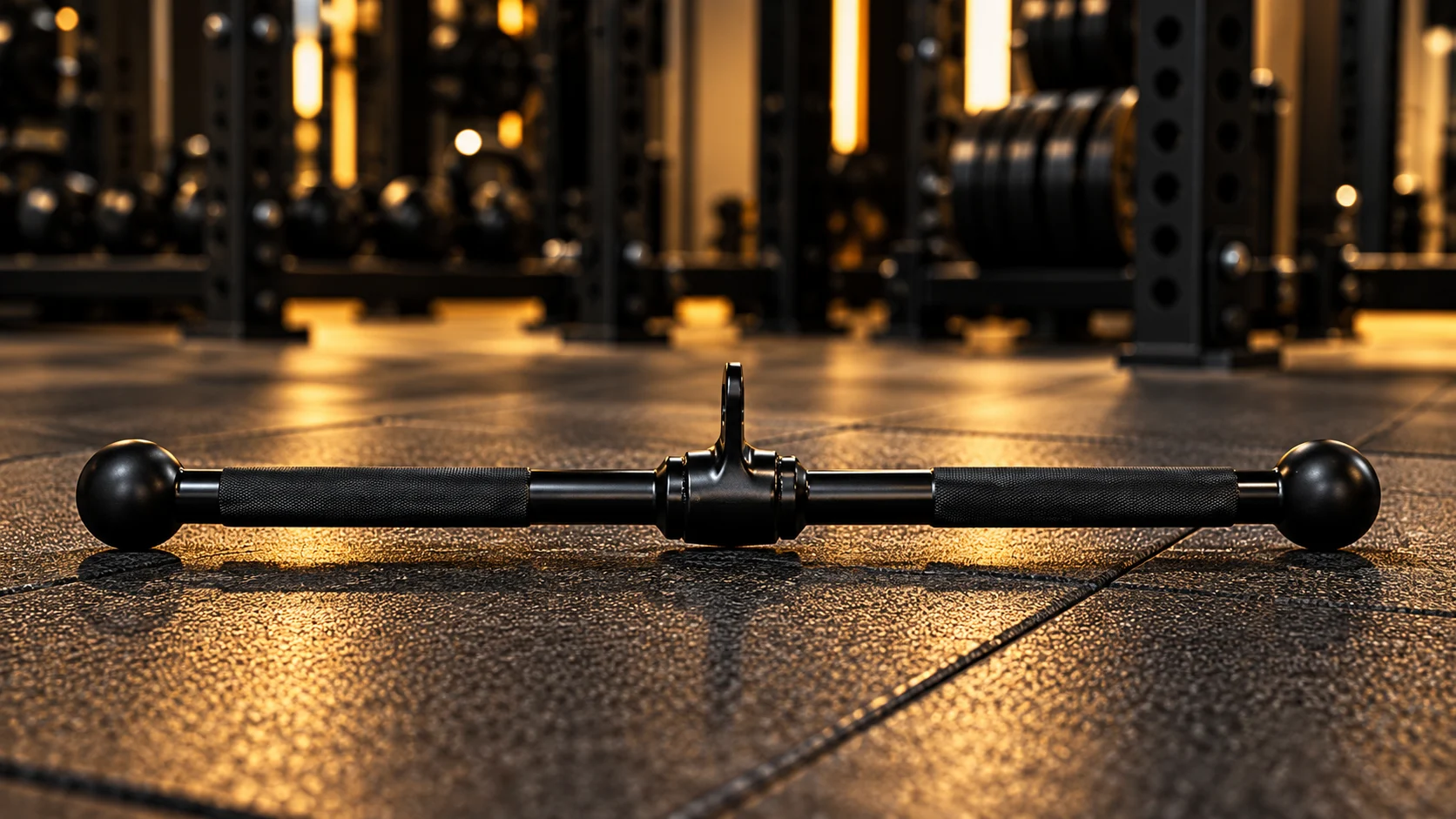
A Straight Bar is a cable machine attachment shaped like a straight bar that connects both hands through a single grip. It can be used with an overhand grip or underhand grip, depending on the exercise.
The Straight Bar is commonly used for cable biceps curls, triceps pushdowns, seated cable rows, and upright rows. The target muscles can include the biceps, triceps, forearms, and back muscles.
Because both hands hold the same bar, hand positioning becomes more stable and consistent. This makes the Straight Bar suitable when performing exercises with heavier loads and controlled movements.
Lat Pulldown Bar
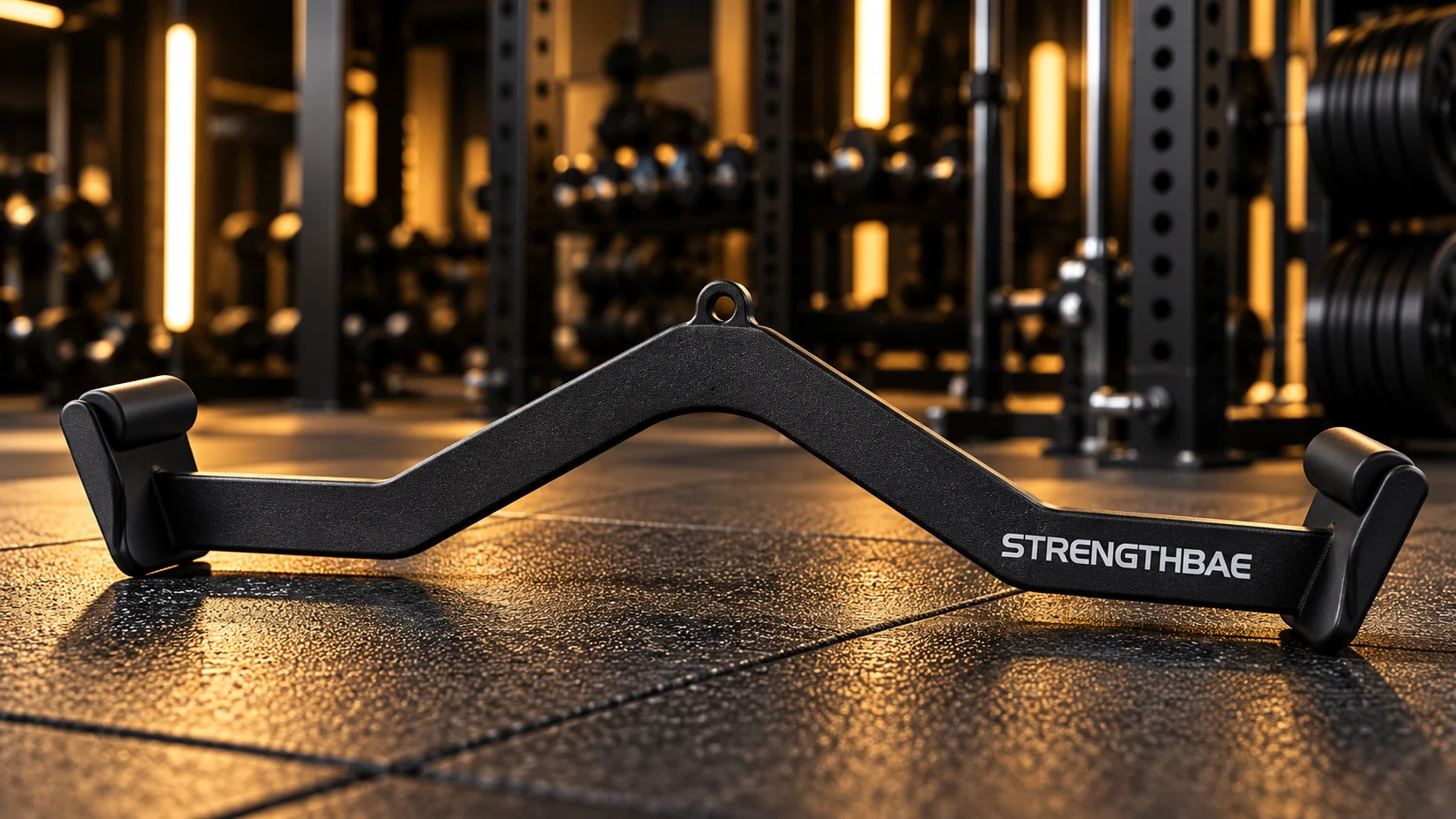
A Lat Pulldown Bar is a cable machine attachment shaped like a long bar with curved ends. It is typically used with a wide grip, but it can also be held more narrowly depending on the exercise.
Common exercises include lat pulldowns, wide-grip seated rows, and straight-arm cable pulldowns. The primary muscles trained are the latissimus dorsi (back muscles), teres major, rhomboids, and biceps. Its long shape provides a wider grip option, making it suitable for training back width.
V-Bar / Close-Grip Handle
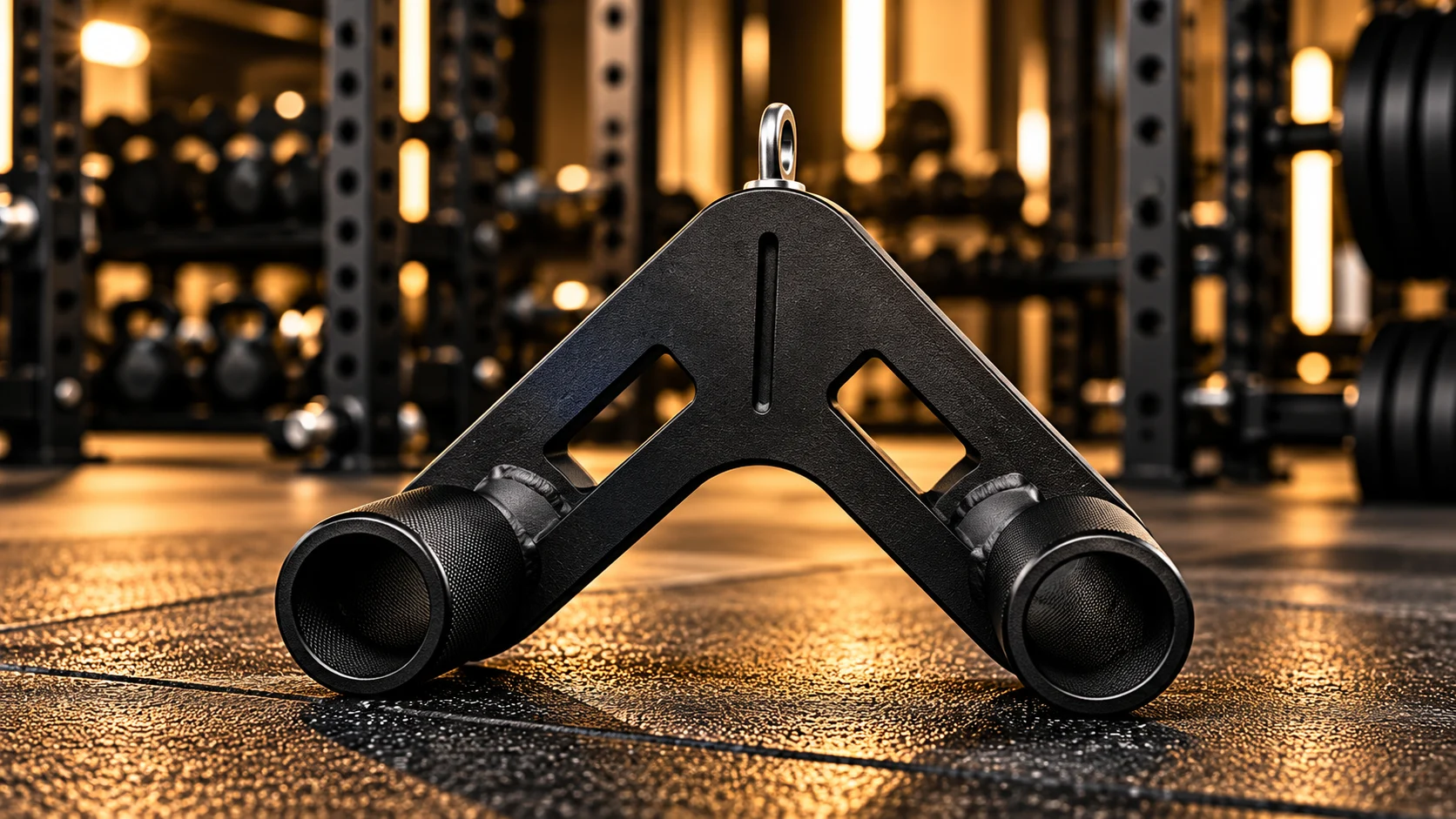
A V-Bar is a cable machine attachment shaped like a V with two closely positioned handles. This attachment is used with a neutral grip, with both palms facing each other.
A V-Bar can be used for close-grip lat pulldowns, seated cable rows, and heavy triceps pressdowns. The muscles trained include the mid-back, latissimus dorsi, biceps, and triceps. The close grip keeps the elbows closer to the body, making the movement feel stable and comfortable.
EZ Curl Bar
An EZ Curl Bar is a cable machine attachment shaped like a bar with several bends designed to provide a more comfortable grip position. Its grip is positioned between an overhand and underhand grip.
This attachment can be used for cable biceps curls, reverse curls, and overhead triceps extensions. The primary muscles trained are the biceps, brachialis, and triceps. Its shape can help reduce stress on the wrists and elbows, especially during high-repetition exercises.
Ankle Strap
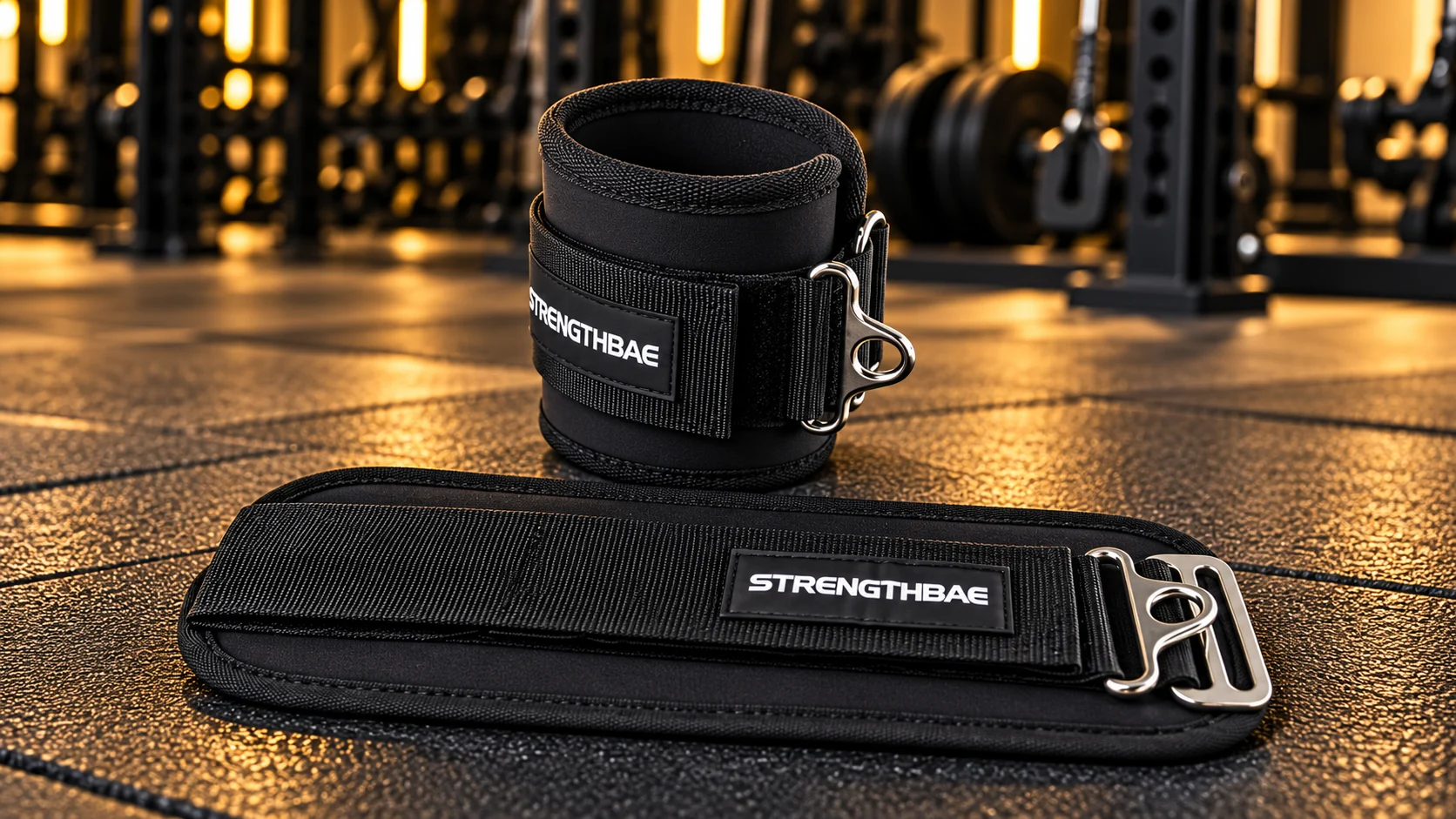
An Ankle Strap is a cable machine attachment in the form of a strap that is secured around the ankle and connected to the cable, typically using the low pulley. The strap is equipped with padding for greater comfort during use.
This attachment can be used for glute kickbacks, standing cable leg curls, hip abduction, hip adduction, and cable leg extensions. The muscles trained include the gluteus maximus (glutes), gluteus medius, hamstrings, quadriceps, as well as the inner and outer thigh muscles. An Ankle Strap expands the range of lower body exercises that can be performed using a cable machine.
Triceps Bar
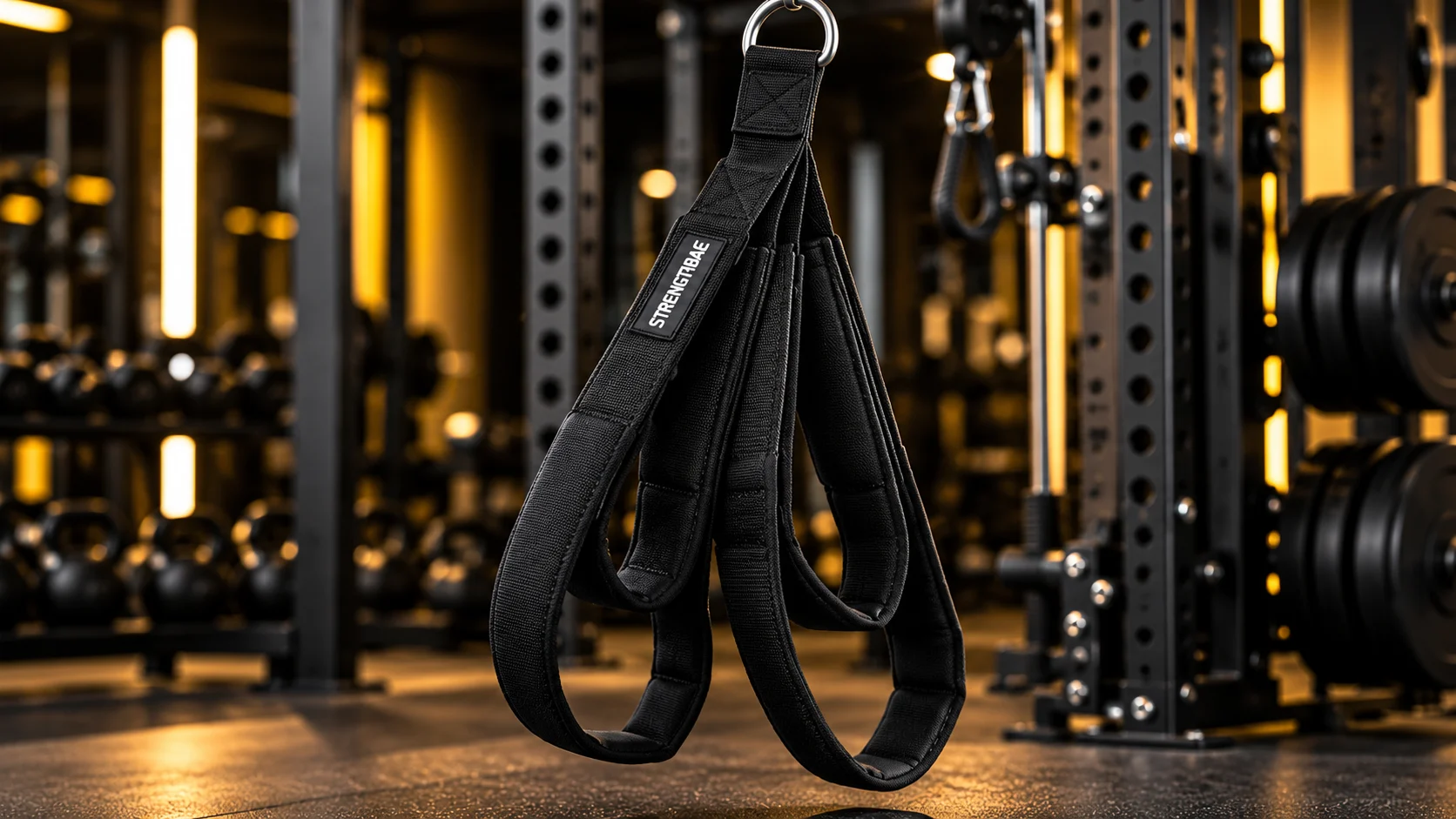
A Triceps Bar is a cable machine attachment shaped like a bar with handles designed for arm exercises. Its rigid structure helps keep the hands in a stable position during exercise.
This attachment is primarily used for triceps pushdowns and overhead triceps extensions, focusing on the triceps brachii (back of the upper arm). Compared with a rope, the rigid bar provides a more stable grip when using heavier loads.
Row Handle
Row Handle is a cable machine attachment designed for horizontal pulling exercises with a comfortable grip position. It is generally used with a neutral grip, with the palms facing each other.
This attachment is suitable for seated cable rows and standing cable rows. The muscles trained include the latissimus dorsi (back), rhomboids, trapezius, rear delts, and biceps. Some open-row designs also provide greater freedom of movement when pulling the handle toward the body.
Multi-Grip Pulldown Bar
Multi-Grip Pulldown Bar is a cable machine attachment with multiple grip options and grip angles in a single bar. Users can choose a neutral grip, wide grip, or angled grip according to their comfort and the type of exercise.
This attachment can be used for various lat pulldown and high cable row variations. Its primary targets are the back and arms. Its main advantage is that users can change their hand position without having to replace the attachment on the cable machine.
Summary of Cable Attachment Types
The following table helps compare different types of cable machine attachments based on grip, target muscles, and exercises that can be performed.
Attachment Type | Main Grip | Target Muscles | Exercises |
D-Handle | Neutral / rotational | Chest, back, shoulders, arms | Single-arm row, fly, lateral raise |
Triceps Rope | Neutral | Triceps, rear delts, traps | Triceps pushdown, face pull, rope curl |
Straight Bar | Pronated / supinated | Biceps, triceps, back | Cable curl, pushdown, upright row |
Lat Pulldown Bar | Wide pronated | Latissimus dorsi, upper back | Wide-grip lat pulldown, straight-arm pulldown |
V-Bar / Close-Grip | Close neutral | Mid-back, lats, triceps | Seated cable row, close-grip pulldown |
EZ Curl Bar | Angled semi-supinated | Biceps, brachialis, triceps | Cable biceps curl, overhead triceps extension |
Ankle Strap | Ankle strap | Glutes, hamstrings, quadriceps | Glute kickback, hip abduction, cable leg curl |
Triceps Bar | Angled neutral | Triceps brachii | Triceps pushdown, overhead pressdown |
Row Handle | Neutral / open grip | Lats, rhomboids, trapezius | Seated cable row, open-grip row |
Multi-Grip Bar | Multi-angle / neutral | Latissimus dorsi, upper back | Multi-angle pulldown, cable row |
Choosing Cable Machine Attachments Based on Exercise Type
Grouping cable machine attachments according to target muscles can make it easier to choose the right attachment for each exercise, whether in a commercial gym or home gym.
For Back
Use the Lat Pulldown Bar for exercises that target back width and help develop a V-taper. The V-Bar / Close-Grip Handle and Row Handle are more suitable for pulling exercises that target the mid-back. The D-Handle can be used for single-arm rows to train each side of the body independently, while the Multi-Grip Pulldown Bar provides a wider range of grip angles.
For Arms
The Triceps Rope is suitable for triceps pushdowns and overhead triceps extensions with a freer hand position. The Straight Bar can be used for cable curls and triceps pushdowns with a stable grip. The EZ Curl Bar has a more angled grip position that may feel more comfortable for some users during arm exercises. Meanwhile, the Triceps Bar can be used for triceps exercises with a more rigid and stable grip.
For Shoulders
The D-Handle can be used for single-arm shoulder exercises such as lateral raises and front raises. The Triceps Rope can also be used for face pulls, which involve the rear delts and the muscles that help stabilize the shoulder.
For Lower Body
The Ankle Strap is secured around the ankle and connected to the low pulley. This attachment can be used for various lower-body exercises such as glute kickbacks, hip abduction, hip adduction, and cable leg curls to train the glutes, hamstrings, and inner and outer thighs.
For Core and Functional Training
The D-Handle can be used for core exercises such as Pallof presses and cable woodchoppers, including exercises that require resisting or controlling body rotation. The Triceps Rope can also be used for cable crunches to train the abdominal muscles.
Cable Machine Attachment Compatibility with Cable Machines
Before purchasing additional attachments, make sure the attachment is compatible with the cable machine being used. Each machine may have different connector sizes and attachment systems. Pay attention to the following:
Connector and carabiner type: Make sure the carabiner can fit into the cable attachment ring and lock securely.
Attachment point size: Check the thickness of the attachment point to ensure it fits the carabiner size.
Load capacity: Make sure the attachment, especially those made from rope or nylon, can safely handle the training load being used.
Cable and attachment length: Consider the attachment length so it does not limit the cable's range of motion.
Machine system: If the cable machine uses a specific pulley system or ratio, use attachments recommended by the manufacturer.
Tips for Using Cable Machine Attachments
Follow these steps to keep your cable machine attachment use safe and comfortable:
Make sure the carabiner is securely locked before pulling the load.
Choose a comfortable grip that keeps your wrists and elbows stable.
Adjust the pulley height according to the movement direction and training target.
Use a load that you can control during both the pulling and return phases. During the return phase, perform the movement slowly over approximately 2–3 seconds.
Do not allow the cable or weight stack to return with a sudden impact, as this can reduce equipment lifespan and increase the risk of injury.
Choose an attachment based on the type of movement and target muscles, not just its shape or appearance.
FAQ
Can all cable machine attachments be installed on all cable machines?
Most attachments can be used with various cable machines when they use a standard carabiner. However, always check the attachment size and load capacity to ensure they are suitable for the machine being used. Consult the Strengthbae team if you need further confirmation.
Which cable machine attachments are essential for beginners?
For beginners, four basic attachments are enough for various upper-body and core exercises: D-Handle, Triceps Rope, Lat Pulldown Bar, and V-Bar/Row Handle.
What is the difference between a triceps rope and a straight bar for pushdowns?
A straight bar provides a more stable grip because of its rigid structure and is suitable for using heavier loads. A triceps rope is more flexible, allowing the hands to move more freely at the end of the movement and helping achieve greater triceps contraction.
Is an ankle strap safe for leg exercises on a cable machine?
An ankle strap can be used safely when it is properly secured and used within its load capacity. This cable machine attachment can be used for exercises such as glute kickbacks, hip abduction, and cable leg curls.
More Effective Cable Machine Training with Strengthbae
Each cable machine attachment has a different grip shape and function, so there is no single attachment that is suitable for every exercise. To get started, a combination of D-Handle, Triceps Rope, Lat Pulldown Bar, and Row Handle is enough to perform various exercises and target multiple muscle groups.
Need help choosing the right cable machine attachments? Contact the Strengthbae team for product consultation, functional trainer procurement, or home gym and commercial gym facility planning.
Strengthbae is a professional gym equipment brand providing solutions for commercial gym businesses and home gyms. From racks and All-in-One Trainers to functional training accessories for HYROX-standard hybrid race training, everything is available at Strengthbae.
