What Is Bulking and Where Should You Start?
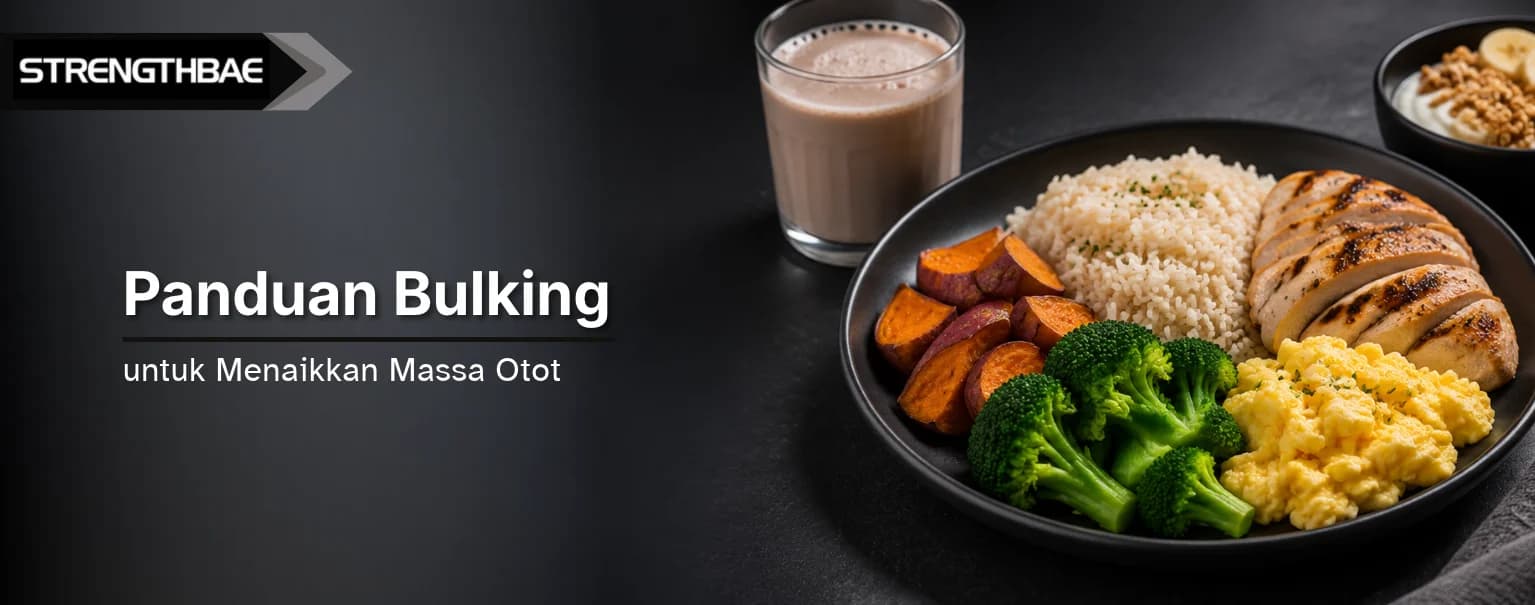
Bulking is a phase in weight training and bodybuilding when a person consumes more calories than the body needs each day. This condition is known as a calorie surplus, with the goal of increasing muscle mass and body strength.
Bulking is not simply about eating as much as possible, but about managing your diet so that weight gain comes primarily from muscle growth rather than fat. To achieve this, you need proper nutrient intake, high-intensity strength training, and enough rest to allow the muscles to recover and grow.
This article will discuss what bulking is, how to calculate a calorie surplus, how to manage protein, carbohydrate, and fat intake, how to choose nutritious foods, how to create a strength training program, and the steps beginners can take to start bulking.
What Is Bulking?
Bulking is one of the phases in bodybuilding and strength training that aims to increase muscle mass and body strength.
In bodybuilding, there are three main phases: bulking to increase muscle mass, cutting to reduce body fat and make muscle definition more visible, and maintenance to maintain body weight and muscle mass.
The bulking phase typically lasts 4–6 months. During this period, the body needs additional energy to support the process of muscle protein synthesis.
As an example, one study of bodybuilders found that men's average calorie intake during bulking was around 3,800 calories per day, compared with 2,400 calories during cutting. Meanwhile, women's average calorie intake reached around 3,200 calories during bulking and 1,200 calories during cutting.
Who Is Suitable for Bulking?
The bulking phase is suitable for people who want to increase muscle mass and body strength. Some groups that may consider bulking include:
People with a Lean Body Type
People who are under their ideal body weight, have difficulty gaining weight, and want to increase body mass in a healthy way. This group is often referred to as ectomorphs or hardgainers.
Beginners in Strength Training
People who are just starting strength training and want to build muscle mass and body strength as a foundation for their training.
Gym Users Who Want to Improve Performance
People who already train regularly but have reached a plateau, which is a condition where strength or lifting performance is no longer improving. Additional energy from bulking may help support gradual increases in training loads or progressive overload.
People Who Already Train Regularly
People who have completed a cutting phase and want to focus again on increasing muscle size.
For beginners who have a relatively high body fat percentage or are overweight, body recomposition may be a more suitable starting option.
Body recomposition is the process of building muscle while reducing body fat by consuming calories around your daily maintenance needs, without immediately entering a bulking phase.
How to Calculate Bulking Calories for Beginners
Starting a bulking phase requires proper calculation and planning so that weight gain can be monitored and managed safely.
Calculate Your Daily Calorie Needs
The first step is to determine your Total Daily Energy Expenditure or TDEE, which is an estimate of the number of calories your body burns each day to perform basic bodily functions and physical activities.
TDEE is calculated based on body weight, height, age, sex, and daily activity level. You can use an online TDEE calculator or the Harris-Benedict and Mifflin-St Jeor formulas to estimate your daily calorie needs.
Determine Your Calorie Surplus
After determining your TDEE, add around 10–20% of your daily calorie needs or start with an additional 200–300 calories per day as an initial guideline.
The recommended weight gain target is around 0.25–0.5% of body weight per week. For example, someone weighing 68 kg can target a weight gain of around 0.2–0.4 kg per week.
Beginners who have been training for less than 6 months can target weight gain of up to 0.5% per week. Meanwhile, people with more weight training experience should target around 0.25% per week to reduce the risk of excessive fat gain.
Set Protein, Carbohydrate, and Fat Intake for Bulking
After determining your daily calorie needs, the next step is to manage the amount of protein, carbohydrates, and fat you consume.
Protein 30–35% of Total Calories
The recommended protein intake is around 1.6–2.2 grams per kg of body weight. Protein plays an important role in repairing muscle tissue after training and supporting new muscle growth.
Carbohydrates 45–60% of Total Calories
Carbohydrates are the body's main source of energy, especially during high-intensity strength training. Carbohydrates also help replenish energy stores or muscle glycogen after training.
Healthy Fats — 15–30% of Total Calories
Healthy fats play an important role in maintaining normal hormonal function, including the production of testosterone, which supports muscle growth.
Read Also: Low-Calorie Drink Diet Variation Ideas
Food Choices for Bulking
Your diet during bulking should prioritize whole foods that are rich in nutrients. A variety of nutritious foods helps the body get enough vitamins and minerals to support energy metabolism.
High-Quality Protein Sources
Protein can be obtained from skinless chicken breast, lean beef, salmon, tuna, whole eggs, milk, cheese, yogurt, as well as plant-based protein sources such as tofu, tempeh, edamame, and lentils. These foods provide various essential amino acids that the body needs to help repair and build muscle tissue.
Complex and Simple Carbohydrate Sources
Carbohydrate sources include brown rice, white rice, oatmeal, potatoes, sweet potatoes, quinoa, whole-grain bread, pasta, and fruits such as bananas, apples, avocados, and berries. Simple carbohydrates from fruit can be consumed before or after training to help provide energy quickly.
Healthy Fat Sources
Healthy fats can be obtained from avocados, almonds, peanuts, natural peanut butter, chia seeds, sunflower seeds, olive oil, and naturally occurring fats from fish. These foods help increase calorie intake without requiring you to eat excessively large portions.
How to Meet Your Daily Calorie Target
To meet your calorie needs during bulking, you can eat 4–5 meals a day with moderate portions. Add nutritious snacks such as fruit smoothies and nuts between meals, and use sauces or healthy oils to increase the calorie content of your meals.
Continue consuming green vegetables and fruits to meet your fiber needs and support digestive health.
Supplements such as whey protein can also be used to help meet your protein needs. Meanwhile, 5 grams of creatine monohydrate per day can help improve the muscles' ability to produce force during training. However, whole foods should remain your main source of nutrition.
Weight Training During Bulking
Weight training is very important during bulking to help increase muscle mass. Without weight training, excess calories are more likely to be stored as fat rather than used to build muscle.
Weight training provides a stimulus that causes muscles to adapt, become stronger, and grow larger. This muscle growth process is known as hypertrophy.
A bulking training program should prioritize compound exercises, which involve multiple joints and muscle groups at the same time. Some exercises you can perform include:
Barbell or Smith Machine Squats train the quadriceps, glutes, and core.
Barbell or Dumbbell Bench Press trains the chest, front shoulders, and triceps.
Deadlift or Romanian Deadlift trains the posterior chain muscles.
Overhead Shoulder Press trains the shoulders or deltoids and triceps.
Rows and Lat Pulldowns train the back muscles, particularly the lats and trapezius, to develop back thickness and width.
You should also apply the principle of progressive overload, which means gradually increasing the weight, number of repetitions, or total training volume from week to week so that the muscles continue to develop.
For beginners, it is recommended to start with full-body workouts 2–3 times per week. Another option is an Upper/Lower Split, which divides training days between the upper and lower body.
How to Monitor Your Bulking Progress
Monitoring your body's progress regularly is important to ensure that weight gain comes primarily from muscle rather than fat. Here are some factors to monitor:
Daily and Weekly Body Weight
Weigh yourself every morning after waking up and using the bathroom. Calculate your weekly average, with a target weight gain of around 0.25–0.5% of body weight per week.
Body Measurements
Measure your chest, arms, thighs, and waist every 2–4 weeks. Increasing muscle size while keeping your waist measurement relatively stable can be a sign of muscle growth.
Training Performance
Record your weights and repetitions. Improvements in training performance can be a sign of increasing strength and muscle mass.
Progress Photos
Take photos from the front, side, and back every month using the same position and lighting to compare changes in your body.
If your body weight does not increase for 2–3 weeks, add 100–150 calories per day. Conversely, if your body weight increases by more than 1% per week, slightly reduce your calorie intake to help limit excessive fat gain.
Read Also: 16 Fruits for a Weight Loss Diet
Sleep and Recovery During Bulking
Lack of sleep and insufficient rest can increase cortisol levels, a stress hormone that can contribute to muscle tissue breakdown. These conditions can also interfere with the release of growth hormone or HGH, which plays a role in muscle recovery and growth.
Adults are recommended to get 7–9 hours of sleep every night. You should also allow around 48–72 hours of recovery before training the same muscle group again. Avoid increasing your training volume excessively over a short period to reduce the risk of tendon injuries and central nervous system fatigue.
FAQ
How long should beginners stay in the bulking phase?
The bulking phase is generally carried out consistently for 4–6 months. This gives the body time to build muscle mass gradually while helping limit excessive fat gain.
Can you bulk without gaining body fat?
It is very difficult to bulk without gaining any body fat because excess calories can also be stored as body fat. However, by following a clean bulking approach with an additional 200–300 calories per day and gradually increasing training loads through progressive overload, excessive fat gain can be minimized.
Is it better to use free weights or gym machines during bulking?
Both have their advantages and can be used together. Free weights such as barbells and dumbbells help train stabilizing muscles and overall strength through various movements.
Meanwhile, gym machines such as Smith Machines and cable systems provide additional stability, allowing users to focus more on training specific muscles close to muscular fatigue.
Is cardio necessary during bulking?
Cardio remains important during bulking to maintain cardiovascular health, support blood flow that delivers nutrients to the muscles, and maintain stamina. You can perform light to moderate cardio 2–3 times per week for 20–30 minutes per session without significantly interfering with muscle growth.
When should you stop bulking and start cutting?
Bulking can be stopped when your body fat percentage reaches a level you are comfortable with, such as around 15–20% for men or 23–28% for women. You can also start cutting after reaching your planned bulking period, such as 6 months, if you want to reduce body fat and make muscle definition more visible.
Maximize Your Muscle Growth with Strengthbae
Building muscle through bulking requires a combination of an appropriate calorie surplus, nutritious foods, regular weight training, and sufficient rest. This approach can help you increase muscle mass while limiting excessive fat gain.
To support your training, Strengthbae provides a range of professional-grade gym equipment, from power racks to sturdy and comfortable All in One Trainers, backed by an official warranty. These products are suitable for building a home gym or equipping a commercial gym facility.
Ready to build muscle and increase your strength? Start your bulking journey with the right training equipment! Contact the Strengthbae team for gym space planning, product specifications, and fitness equipment packages tailored to your needs.
Strengthbae is a professional gym equipment brand that provides solutions for commercial gym businesses and home gyms. From racks and All in One Trainers to functional training accessories for HYROX-standard hybrid races, everything is available at Strengthbae.
