Differences Between All-in-One Trainer vs Functional Trainer
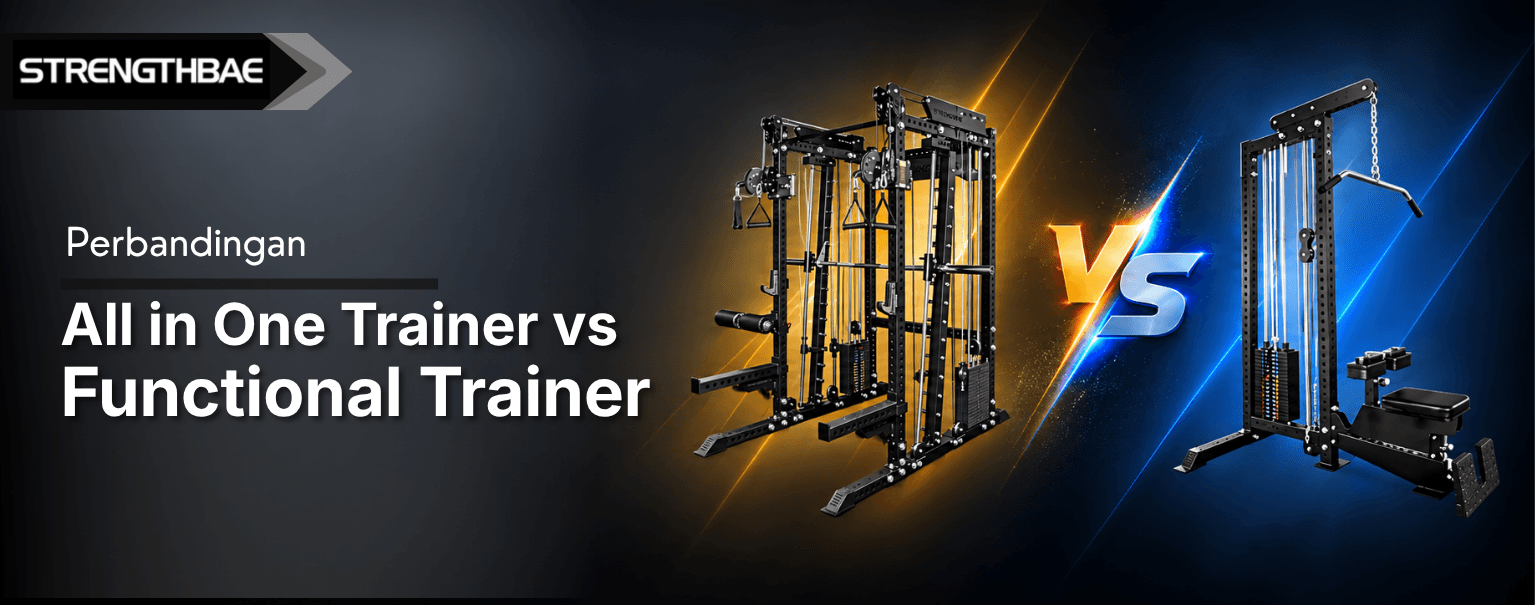
The main difference between an All in One Trainer and a Functional Trainer lies in the scope of their functions. A Functional Trainer focuses on cable system-based exercises, making it suitable for various pulling, pushing, muscle isolation, and multi-angle exercises. Meanwhile, an All in One Trainer offers broader functionality because it combines several stations such as a power rack, Smith machine, and cable system in a single frame.
This difference also means that the training experience with each machine is not the same. Therefore, choosing between the two should not be based solely on the number of features.
Also consider the types of exercises you perform most often, the available space, the number of users, and the available budget so that the equipment you choose truly suits the needs of your home gym or commercial gym.
What Is an All in One Trainer?
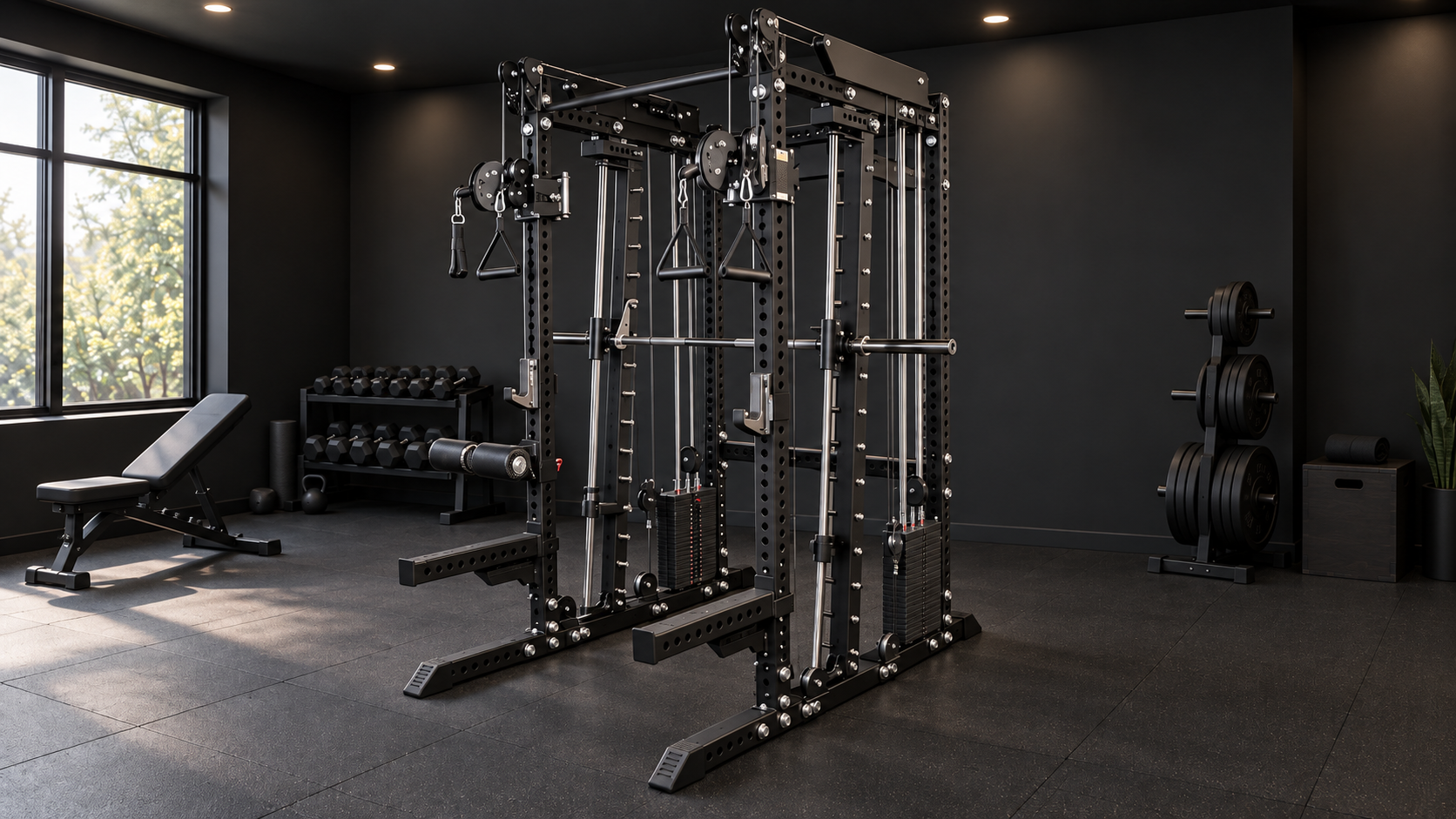
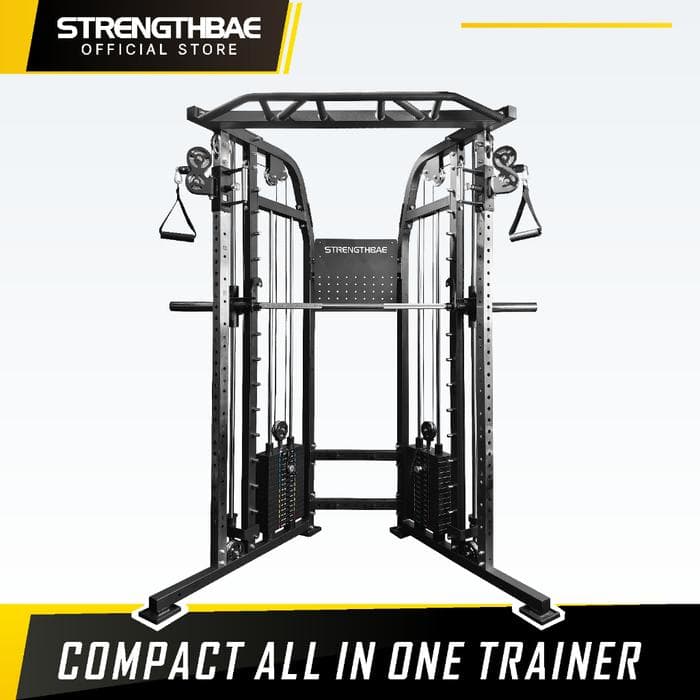
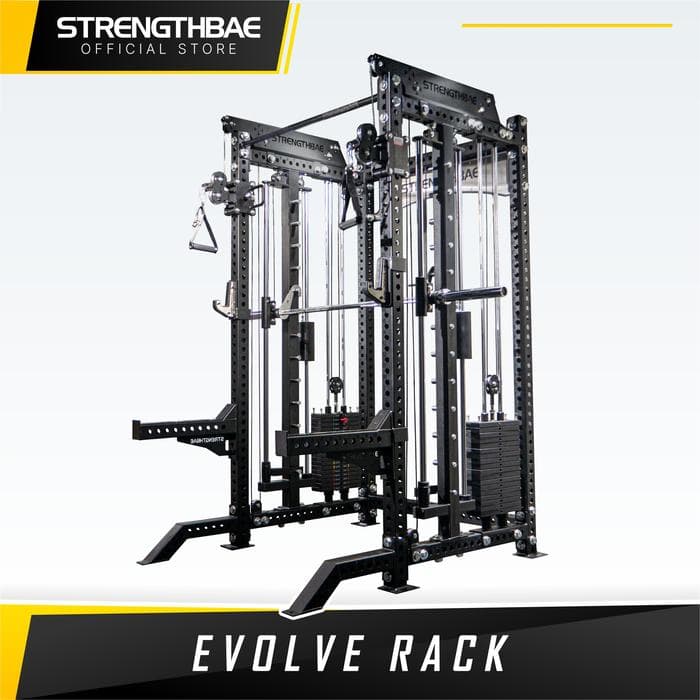
An All in One Trainer is a versatile strength training machine that integrates several separate gym stations into a single frame. The main concept of this equipment is to provide full-body strength training without requiring the purchase of multiple separate machines.
Depending on the manufacturer and model type, one All in One Trainer generally combines the following main components:
Power Rack / Half Rack: A sturdy frame structure for safely performing squats, bench presses, and overhead presses.
Smith Machine: A vertical guided rail system equipped with safety hooks for controlled barbell lifts.
Dual Cable / Functional Trainer: Two independent cable pulley stations with adjustable heights for various cable exercises.
Pull-Up Bar: A multi-grip handle at the top for bodyweight training.
Landmine Attachment: A rotating joint sleeve at the bottom for rotational exercise variations and barbell rows.
Dip Attachment: Parallel handles for chest and triceps strength training.
Lat Pulldown & Low Row Station: Dedicated stations for training the upper and lower back muscles.
Weight Plate Storage: Weight plate storage pins located on the sides of the frame.
Exercises You Can Perform with an All in One Trainer
Because it combines three main training methods—free weights, Smith machine rails, and cable pulleys—an All in One Trainer allows hundreds of exercise variations in a single station:
Barbell Squat and Barbell Bench Press using the power rack.
Smith Squat, Smith Bench Press, and Smith Incline Press using the guided rails.
Romanian Deadlift, Barbell Row, and Landmine Press.
Cable Chest Fly, Cable Seated Row, Lat Pulldown, and Cable Crossover.
Biceps Cable Curl, Triceps Pushdown, and Cable Lateral Raise.
Pull-Up, Chin-Up, Dips, and various other bodyweight exercises.
What Is a Functional Trainer?
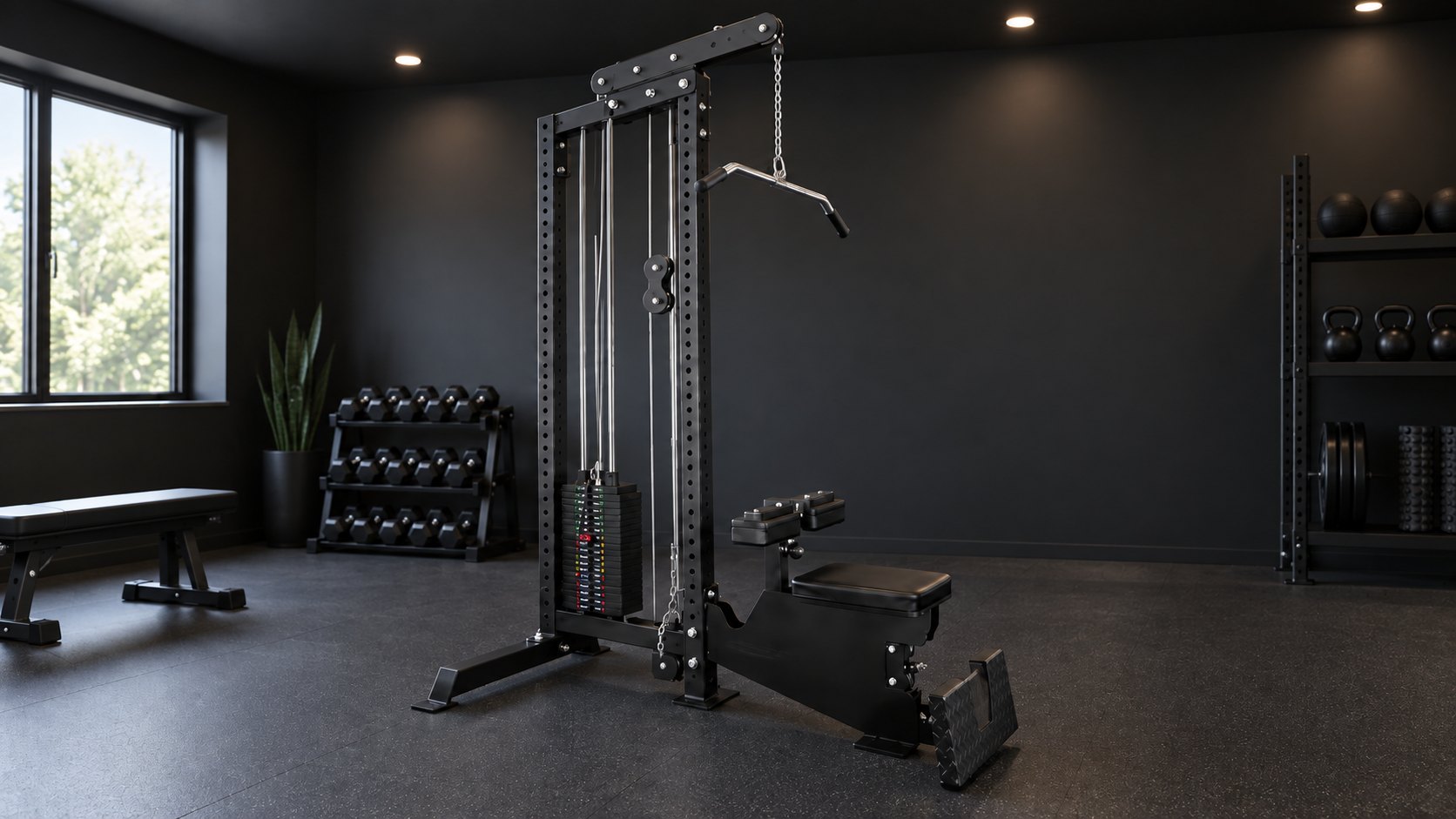
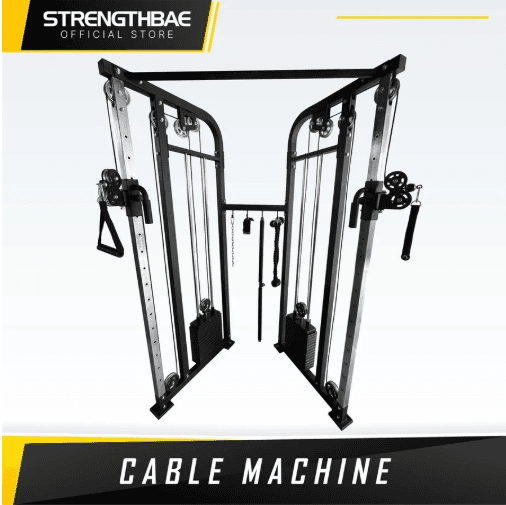
A Functional Trainer is essentially a cable pulley-based training machine (cable machine) equipped with two pulley units whose height can be flexibly adjusted from top to bottom. This equipment is specifically designed to facilitate natural three-dimensional movements that mimic patterns of everyday physical activity as well as certain sports.
The main characteristic of a Functional Trainer lies in the flexibility of its cable pulling direction. Users can pull the cable from upper, middle, lower, or side angles with constant resistance throughout the movement path.
Exercises You Can Perform with a Functional Trainer
A Functional Trainer is highly effective for muscle isolation exercises, developing core stability, as well as physical recovery or rehabilitation:
Cable Chest Fly (High-to-Low, Low-to-High, and Mid-Fly).
Cable Seated Row, Standing Cable Row, and One-Arm Cable Row.
Lat Pulldown using various cable handles.
Biceps Curl, Triceps Pushdown, and Overhead Triceps Extension.
Wood Chop and Pallof Press for rotational core strength.
Cable Glute Kickback and Cable Hip Adduction using ankle straps.
Various unilateral training movements to correct muscle strength imbalances.
Similarities Between Functional Trainer and All in One Trainer
Functional Trainer and All in One Trainer both use a cable system as one of the main components for training. Both can be used for various pulling and pushing movements, while also allowing users to train many parts of the body with flexible movement directions.
Both machines are also suitable for home gyms and commercial gyms because they can support many exercise variations within one area. Users can adjust the load, choose attachments, and change the pulley position according to the type of exercise being performed.
In addition, Functional Trainer and All in One Trainer both help reduce the need to purchase too many separate machines. The difference lies in the completeness of their functions, but both still offer a more efficient multifunctional training solution compared with using multiple single-station machines.
Main Differences Between All in One Trainer and Functional Trainer
Although both machines have cable pulley stations, the fundamental difference lies in the completeness of the supporting training stations beyond the cable function.
The following table summarizes the key differences between Functional Trainer and All in One Trainer to make your evaluation easier:
Evaluation Aspect | Functional Trainer | All in One Trainer |
|---|---|---|
Main Function | Training focused on cable pulleys (cable-based) | Combines several gym training stations |
Main Components | Dual adjustable pulley + weight stack | Cable, Power Rack, Smith Machine, Pull-Up Bar, etc. |
Barbell Training | Generally not available (requires a separate rack) | Available if the unit is equipped with a Power Rack station |
Smith Machine | Generally not available | Often included as one of the main stations in the unit |
Squat & Bench Press | Limited without an additional rack | Can be performed fully and safely |
Cable Exercise | Highly flexible with a wide range of angle adjustments | Highly flexible, depending on the cable path design |
Accessory Support | Focuses on cable handle accessories | Includes cable accessories and rack equipment |
Frame Size | Tends to be simpler and more compact | Usually has a larger physical size |
User Suitability | Users who focus on cable isolation movements | Home gyms that want complete functionality in one place |
Differences in the Types of Exercises You Can Perform
The differences in physical components between the two machines directly affect the variety of strength training patterns you can perform at home.
All in One Trainer: Cable, Free Weight, and Smith
An All in One Trainer allows you to combine three types of strength training methods within one area. You can perform free-weight compound exercises such as barbell squats and bench presses, continue with isolated Smith machine movements, and finish with cable exercise variations.
This option is highly suitable for people following hypertrophy or strength training programs that require a comprehensive variety of resistance training.
Functional Trainer: More Focused on Cable Exercises
A Functional Trainer offers very high flexibility for cable-based movements because the pulley height can be adjusted very precisely. However, a standard Functional Trainer machine is not designed to support a barbell.
Without an additional rack station, you cannot optimally perform barbell squats, heavy-load bench presses, or Smith squats.
Is an All in One Trainer More Suitable for You?
An All in One Trainer is the most suitable option if you are planning to build a home gym from scratch and want a complete training setup without having to purchase multiple separate pieces of equipment. If your daily program includes variations such as barbell squats, Smith bench presses, lat pulldowns, and cable flyes, having one All in One Trainer can reduce equipment costs while keeping the room layout efficient.
Is a Functional Trainer More Suitable for You?
A Functional Trainer is highly suitable if you already have separate free-weight equipment, such as a power rack, barbell, weight plates, and a gym bench (adjustable bench). In this situation, adding a Functional Trainer will complete your cable exercise variations without duplicating the rack station you already have at home.
How Much Space Is Required?
Considering the physical dimensions and the required usage area (clearance) is very important to ensure that the equipment fits properly and can be used safely indoors.
All in One Trainer
An All in One Trainer requires a relatively larger room area because it has a wider frame structure. In addition to considering the physical dimensions of the equipment, you need to leave extra space on the left and right sides for loading weight plates onto the barbell sleeves, as well as space in front for moving the training bench.
Functional Trainer
A Functional Trainer generally has a simpler and more compact footprint. However, you still need to provide enough free space in front of and beside the machine so that long cable movements (such as cable flyes or lunges) can be performed comfortably.
Which Is More Space-Efficient for a Home Gym?
Space efficiency depends on the initial condition of your room. If you are starting from scratch, an All in One Trainer is far more space-efficient because it replaces 3 to 4 large pieces of equipment with a single station. However, if you already have a separate power rack, adding a compact Functional Trainer is a more efficient option.
For a home gym with limited space, choosing a compact-type All in One Trainer is the best solution if you do not have any equipment yet. Combining rack, Smith, and cable functions within a 2 x 2 meter area prevents the room from becoming overcrowded with separate pieces of equipment.
On the other hand, if your home gym only has a small empty corner remaining and your training focus is isolation movements and calorie burning, choosing a slim Functional Trainer will provide a more spacious training area.
However, this does not mean that you cannot choose an All in One Trainer. Strengthbae offers the Compact All in One Trainer, which is the most compact All in One Trainer in its class. You still get the full functionality of an All in One Trainer without having to worry about limited space.
Differences in Attachments and Upgrade Potential
The range of included accessories and the potential to expand the equipment's functions in the future are important added values when investing in gym equipment.
All in One Trainer
An All in One Trainer supports a very wide range of additional accessories, from cable handles, dip attachments, landmine sleeves, lat pulldown thigh pads, low row footplates, to weight plate storage racks. This gives you a high level of flexibility to gradually upgrade the equipment's features as your training needs develop.
Functional Trainer
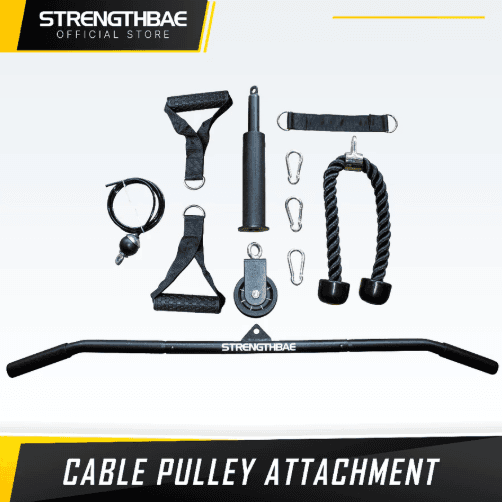
Accessories on a Functional Trainer focus on variations of cable handles, such as a straight bar, triceps rope, single handle, ankle strap, and lat bar. Equipment upgrades are more focused on increasing the variety of muscle isolation angles.
Which Is Most Suitable for Beginners?
For beginners who are just starting strength training, a Functional Trainer offers ease of use because cable movements follow a smooth path and are easy to adjust. Beginners can safely train the chest, back, and arm muscles without worrying about free weights falling on them.
Meanwhile, an All in One Trainer provides a more comprehensive learning platform. Beginners can first learn basic weightlifting techniques using the safer Smith machine before progressing to free barbells on the power rack station as their confidence and core strength increase.
Choosing between an All in One Trainer and a Functional Trainer ultimately depends on the equipment you already own, your main training goals, available space, and the budget you have prepared.
Choose an All in One Trainer If:
You are building a personal home gym from scratch and want full-body strength training facilities from one versatile station. This option is highly suitable if you need a combination of free-weight training, Smith machine rails, and cable pulleys at the same time to save space and the cost of purchasing separate equipment.
Choose a Functional Trainer If:
Your main daily training focus is cable-based movements, muscle isolation, and core stability. This option is highly suitable if you already have a power rack and barbell set at home, allowing the Functional Trainer to complete your exercise variety without duplicating the functions of equipment you already own.
FAQ
Does an All in One Trainer Always Include Functional Trainer Features?
Not always. Although most modern All in One Trainers are equipped with a dual cable system, the specifications of each product may vary. Make sure to check the availability of the cable pulley station and the flexibility of its adjustments before purchasing.
Strengthbae has five types of All in One Trainer. Consult your options with our team.
Is a Functional Trainer the Same as a Cable Crossover?
In principle, both use a cable pulley system. However, a Functional Trainer has a more compact frame with pulley spacing designed appropriately for full-body exercise variations, while a traditional commercial Cable Crossover has a much wider physical size.
Can an All in One Trainer Be Used as a Functional Trainer?
Yes. As long as the All in One Trainer is equipped with a dual cable pulley station with adjustable height (adjustable pulley), you can perform all cable exercise variations just as you would on a dedicated Functional Trainer machine.
Do All All in One Trainers Have a Smith Machine?
Not all of them. Some types of All in One Trainer only combine a Power Rack and Functional Trainer without including Smith machine rails. Always check the official feature list or consult our team to make sure the unit includes the stations you need.
Is an All in One Trainer Better for a Home Gym?
An All in One Trainer is highly practical for a home gym if you need multiple strength training functions in one space-efficient station. However, for users who already have a free-weight setup, choosing a separate Functional Trainer may be a more efficient option.
Which Is More Space-Efficient for a Home Gym?
A dedicated Functional Trainer machine has a more compact physical size. However, when considering the total number of machines it replaces, an All in One Trainer can be more space-efficient overall because it combines a rack, Smith machine, and cable system within a single footprint.
Build Your Dream Home Gym with Strengthbae
Building a safe, comfortable, and efficient strength training area requires proper equipment planning. Whether you need the cable pulley flexibility of a Functional Trainer or the versatile practicality of an All in One Trainer, choosing equipment with precise specifications will help ensure that every training session runs optimally.
For more information about recommended equipment specifications, consultation on planning a home gym or commercial gym layout, as well as the best package price offers with an official warranty, please contact the Strengthbae team for a free consultation.
Strengthbae is a professional gym equipment brand that provides solutions for commercial, personal, and home gym needs. From racks and All in One trainers to functional training accessories such as Hyrox sandbags, everything is available at Strengthbae.