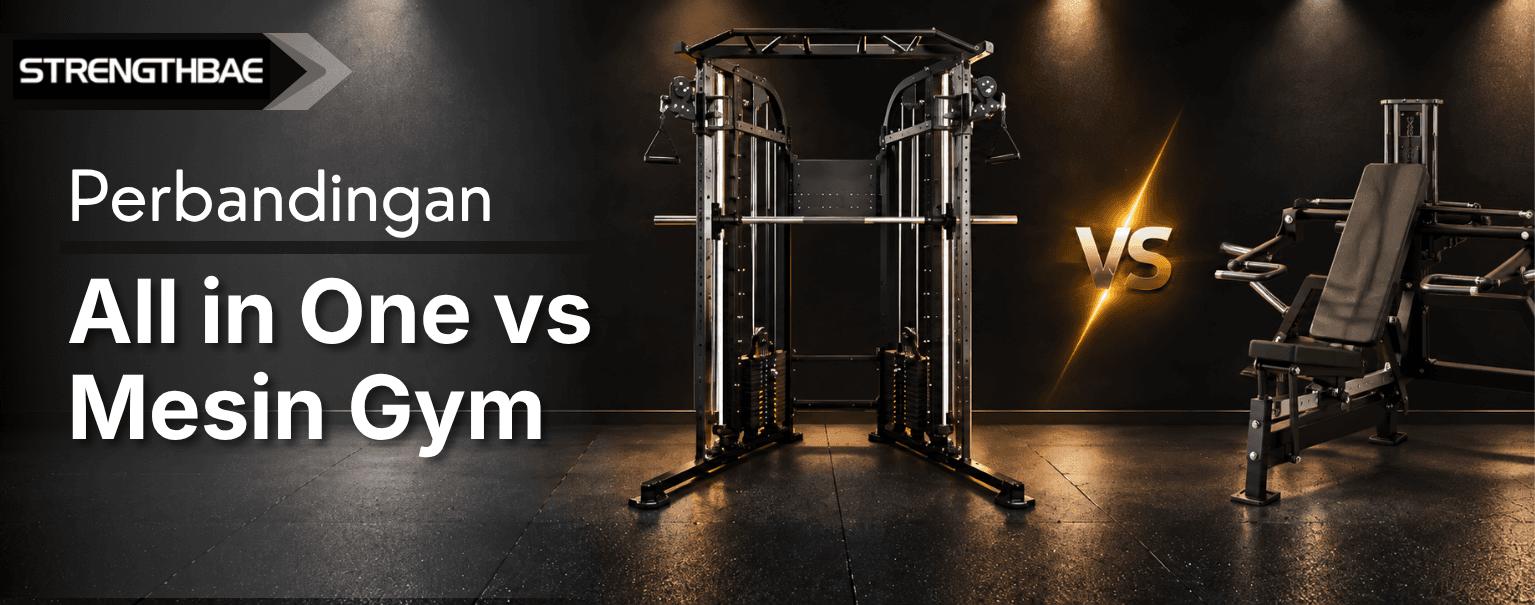
All-in-One Trainer vs Individual Gym Machines: Which Is Better for a Home Gym?
Berikut terjemahan lengkapnya ke bahasa Inggris, dengan struktur dan makna tetap dipertahankan.
If space and budget are limited, an All-in-One Trainer is usually more efficient than buying a Power Rack, Smith machine, and functional trainer separately, because a single unit already combines all three functions. On the other hand, individual gym machines become more appealing when you have a larger space, a flexible budget, and several people who need to train at the same time.
So, the real question is not “which one is always better,” but rather how much space and budget you have, how many people will use the gym, and how important space efficiency is compared with the freedom to choose each training station separately.
What Is the Difference Between an All-in-One Trainer and Individual Gym Machines?
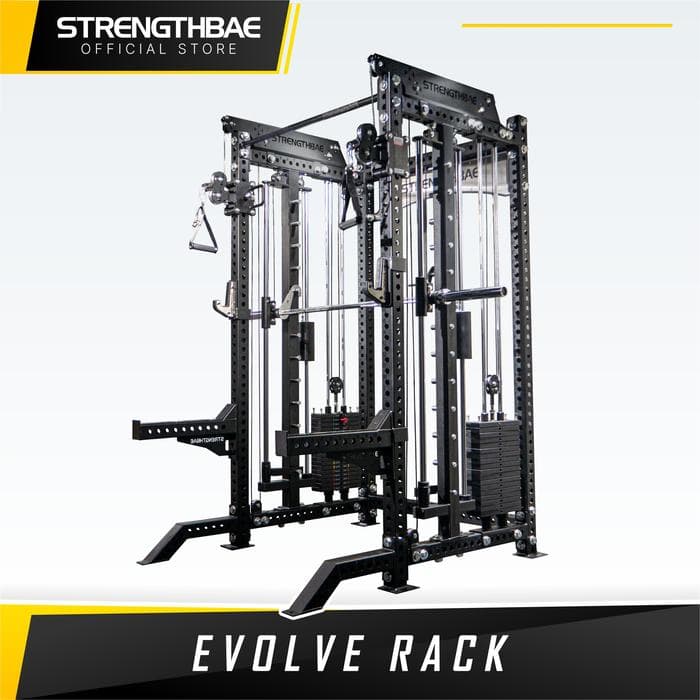
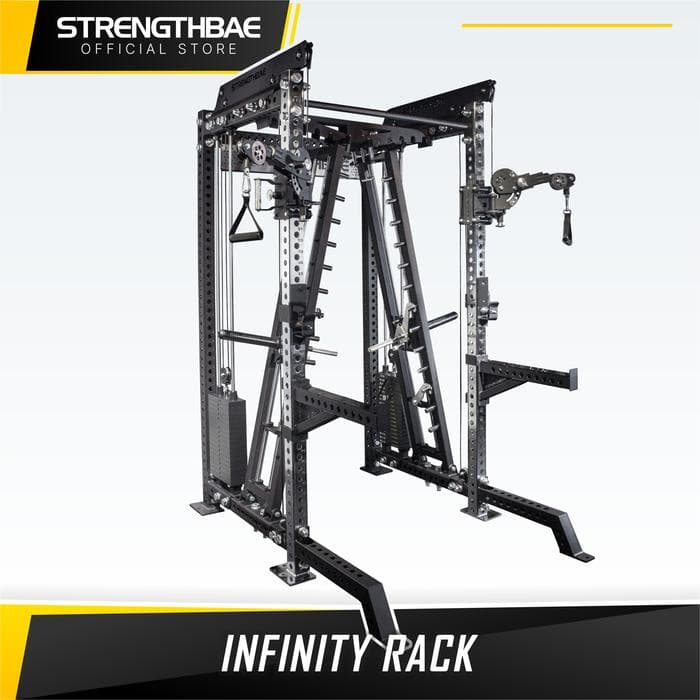
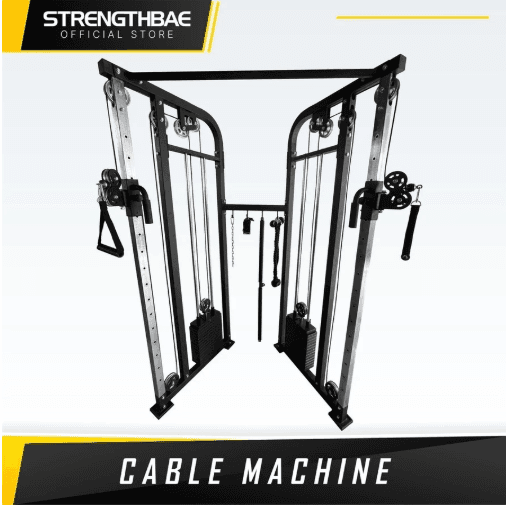
An All-in-One Trainer is an integrated machine that combines a Power Rack, Smith machine, and functional trainer in one unit. Individual gym machines mean purchasing those functions separately, then adding other isolation machines such as a leg extension or leg press if needed.
Both approaches can create an excellent home gym. The main difference is how your space and budget are allocated. An integrated system combines multiple functions within one area, while separate machines provide more physical training stations and make it easier for several people to train at the same time.
1. If Space Is Limited, an All-in-One Trainer Is More Efficient
The space required for gym equipment should not be calculated based only on the dimensions of the machine frame. You also need enough room to walk in front of the equipment, position and adjust a bench, load weight plates, use a barbell that is approximately 2.2 meters long, operate the cables, and perform other setups safely.
If three large machines are installed separately, each one requires its own working clearance. As a result, the total space required can be much greater than simply adding up the dimensions of each frame.
With an All-in-One Trainer, several working areas share the same footprint. The same bench, for example, can be used for bench presses, Smith incline presses, and cable exercises without moving to another station.
2. If You Have a Large Space, Separate Gym Machines Are Worth Considering
If your training area is larger than approximately 16 m² and the room layout allows it, you may have enough flexibility to separate the Power Rack, Smith Machine, and Functional Trainer.
In this situation, you can choose a rack that is specifically suited to your workout style, a Smith Machine with your preferred specifications, and a Functional Trainer with the weight stack and pulley ratio you want.
However, for most home gyms that share space with a bedroom, garage, or other area, an All-in-One Trainer is still the more realistic option.
3. Use the Remaining Space for Different Functions
Once the gym equipment layout has been organized efficiently, the remaining space can be used more effectively. You can allocate it for a leg extension and leg curl machine, leg press, adjustable dumbbells, cardio equipment, a stretching area, or storage.
This way, every square meter adds a new function instead of duplicating a function you already have.
For a small private studio, an All-in-One Trainer can serve as the centerpiece, while the remaining training areas are arranged around it.
4. For Multiple People Training at the Same Time, Separate Gym Machines Have the Advantage
This is one limitation of integrated systems that is often overlooked. Even though an All-in-One Trainer offers many functions, all of those features are still located within a single station.
If one person is performing a Smith squat, another person may not be able to comfortably perform a Cable Fly or Bench Press near the same machine at the same time.
For a personal home gym, this is usually not a major issue. However, in a commercial gym or studio where several clients may train simultaneously, separate machines have a significant advantage because multiple stations can be used in parallel.
5. Individual Gym Machines Offer More Freedom for Each Function
Experienced lifters or larger gyms sometimes prefer separate gym machines because each station can be selected as the best product for its specific function.
With an All-in-One Trainer, the design has to accommodate multiple systems within a single frame.
However, it is still important to check frame stability, rack capacity, J-cup and safety arm quality, pulley ratio, cable travel, and after-sales support. Do not choose a machine simply because it offers many features. Choose one that is well built and reliable.
6. Build a Complete Home Gym More Quickly with an All-in-One Trainer
Once an All-in-One Trainer is installed, you immediately have three categories of strength equipment in one system.
Add an adjustable bench, barbell, weight plates, and dumbbells, and the setup can already support most strength and hypertrophy training.
By comparison, a setup based on individual machines is usually built over a longer period. You need to choose a rack, select a Smith Machine, choose a functional trainer, and then arrange each station with enough space around it.
7. Separate Gym Machines for Gyms That Will Continue to Expand
For larger commercial gyms, individual machines offer strong scalability.
If traffic increases, you can add a second Rack. If the Cable station regularly has a queue, you can add another Cable Tower.
In this situation, an All-in-One Trainer can still be useful, but it is better positioned as one multifunction station among several others rather than as the gym’s only central training station.
8. An All-in-One Trainer Can Still Work Well in a Large Home Gym
There is nothing wrong with choosing an All-in-One Trainer even if you have a large training space.
In fact, an All-in-One Trainer can still serve as the main training station, while the additional space is used for a leg press, leg extension, leg curl, or dumbbell zone.
This approach often makes more sense than buying a separate Rack, Smith Machine, and Cable machine simply because you have enough room.
Ultimately, the decision should come back to how you actually train, not just how large the room is.
Read also: What Is an All in One Trainer? 3 Core Functions for a Complete Home Gym
Which Option Is More Cost-Effective?
Do not compare the price of only one machine.
A high-quality All-in-One Trainer can cost tens of millions of rupiah, but the comparison should be made against an equivalent set of functions.
If you purchase a Power Rack, Smith machine, Functional Trainer, attachments, and storage separately, the total investment can approach or even exceed the price of an integrated machine in the same class.
One advantage of an All-in-One Trainer is that it uses one frame and one installation process, which often makes the cost per function more efficient.
However, individual machines have the advantage of requiring a lower initial investment because you can purchase them gradually according to your available budget.
All-in-One Trainer vs Individual Gym Machines Comparison Table
Factor | All-in-One Trainer | Individual Gym Machines |
|---|---|---|
Space requirements | Highly efficient, with multiple functions in one footprint | Requires more space because each station needs its own footprint and clearance |
Budget for a complete setup | Usually more efficient for combining Rack, Smith, and Cable functions in one system | Total cost can be higher when purchased separately |
Initial cash outlay | Can be high because the complete system is purchased at once | Can be built gradually according to budget |
Simultaneous use | More limited because multiple functions share one station | Very good for multiple users training at the same time |
Specification flexibility | You need to work with the integrated configuration | You can choose Rack, Smith, and Cable systems with different specifications |
Upgrades | Depends on the type and modularity of the system | Highly flexible because each machine can be replaced individually |
Suitable for small home gyms | Highly suitable | Less efficient if you need many functions |
Suitable for large commercial gyms | Suitable as a multifunction station | Very suitable for creating multiple training stations |
Read more: All in One Strengthbae
The Easiest Way to Decide
1. How Much Usable Space Do You Actually Have?
If space is limited, an All-in-One Trainer usually has the advantage.
You should not calculate only the total room size. You also need to consider how much training space remains after accounting for doors, cabinets, storage, and walking paths.
2. How Many People Will Train at the Same Time?
For one or two users, an integrated system such as an All-in-One Trainer is usually sufficient.
If many people need to train at the same time, separate gym machines are generally more convenient.
3. Do You Need All the Functions Right Now?
Do you want a Rack, Smith Machine, and Cable system from the beginning?
If so, an All-in-One Trainer often offers strong value because it combines those functions in one machine.
If you are just starting with barbell training and plan to expand your gym gradually, buying a Power Rack first may be a better option because it focuses on your initial training needs.
4. Is Your Priority Efficiency or Specialization?
For space efficiency and a lower cost per function, choose an All-in-One Trainer.
If your priority is the freedom to choose the best machine for each individual station, separate gym machines may be the better option.
FAQ
1. Is an All-in-One Trainer cheaper than buying separate gym machines?
If you need a Power Rack, Smith Machine, and Functional Trainer at the same time, an All-in-One Trainer is usually more efficient overall because several functions share one frame.
However, the final price still depends on the quality and specifications of each product.
2. Is an All-in-One Trainer suitable for a commercial gym?
Yes. It can be very useful as a multifunction station, especially in boutique gyms or gyms with limited space.
For high-traffic commercial gyms, however, it is still better to have several separate stations so members do not have to wait to use the equipment.
3. What is the ideal room size?
There is no single ideal number.
An All-in-One Trainer can work in a relatively compact space, but you still need to account for the machine frame dimensions, barbell length, bench position, and cable clearance.
Separate machines require their own working space around each station.
4. If my space is larger than 16 m², do I have to buy separate machines?
No.
Having more than 16 m² simply gives you more options. You can still choose an All-in-One Trainer and use the remaining space for leg machines, a dumbbell area, or cardio equipment.
5. What is the best additional equipment to buy after an All-in-One Trainer?
Gym equipment that provides different functions is usually the best addition, such as a leg extension/leg curl machine, leg press, adjustable dumbbells, or cardio equipment.
Any new equipment should ideally expand your available training patterns rather than duplicate functions that are already available on the All-in-One Trainer.
Find All-in-One Trainers and Individual Gym Machines at Strengthbae
An All-in-One Trainer is ideal for maximizing space efficiency and providing a wide variety of exercises within one station, while individual gym machines are better suited to users who want more specialized functions and have a larger training area.
For a home gym or studio that needs a more compact setup, an All-in-One Trainer is usually the more practical option.
If you are still unsure which option is right for you, consult the Strengthbae team via WhatsApp to discuss your available space and training needs.
Strengthbae is a professional gym equipment brand that provides solutions for commercial gyms, personal training facilities, and home gyms. From racks and All-in-One Trainers to functional training accessories such as Hyrox sandbags, a wide range of gym equipment is available at Strengthbae.
Kalau mau, saya juga bisa membuat versi English-nya sedikit lebih native untuk SEO blog internasional tanpa mengubah informasi atau struktur artikelnya.