Essential Gym Equipment List for Starting a Commercial Gym Business
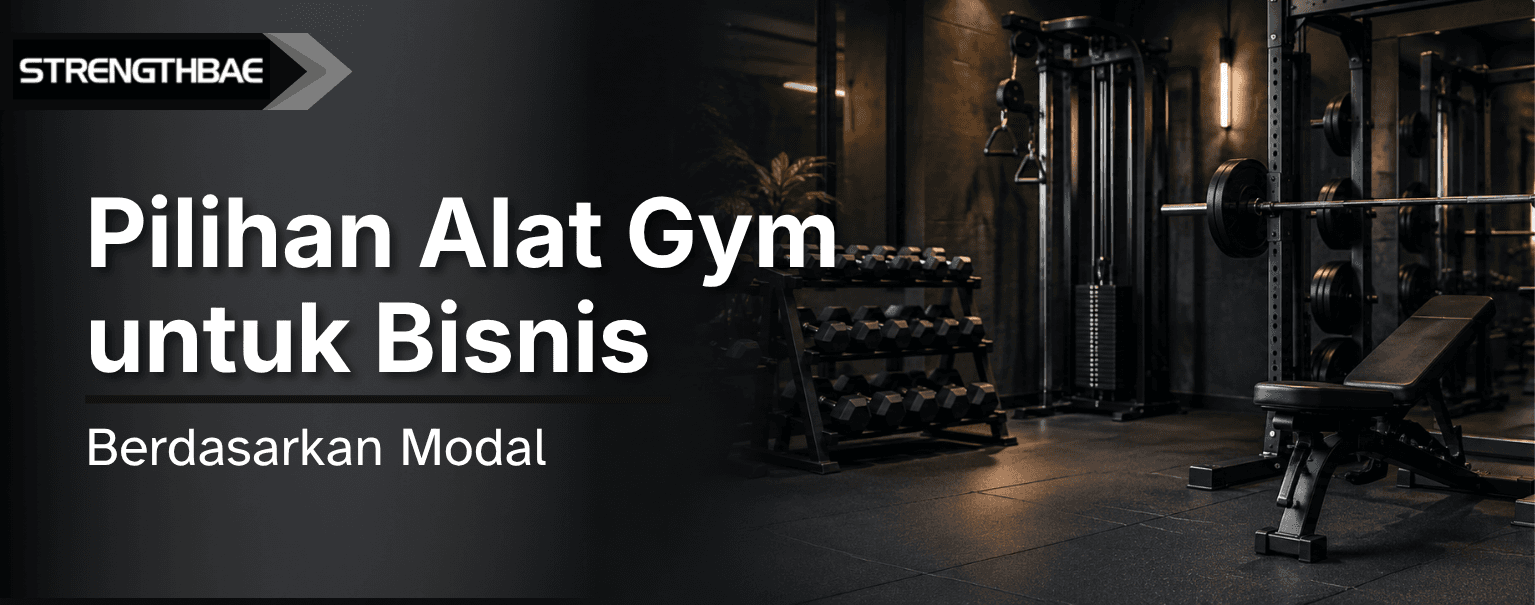
Building a gym business does not mean you have to purchase all the equipment at once. What matters more is determining the essential equipment based on your gym concept, target members, available space, and budget. A successful commercial gym requires selecting gym equipment by functional category so the business can remain sustainable while generating optimal returns.
With proper budget allocation, you can build gym requirements gradually, starting with priority equipment and then adding machines and facilities. This approach helps keep the initial gym business investment more controlled without limiting future gym development.
Essential Gym Equipment List by Function
Starting a commercial gym business is not simply about buying as much equipment as possible. Each equipment category has a specific role in supporting member training variety, maintaining smooth traffic flow, and maximizing space capacity safely.
Free Weight Area
The free weight area is one of the busiest areas in a commercial gym. A free weight area is a training area used for strength training with free weights. Customers or members have greater freedom to control the direction and pattern of their movements.
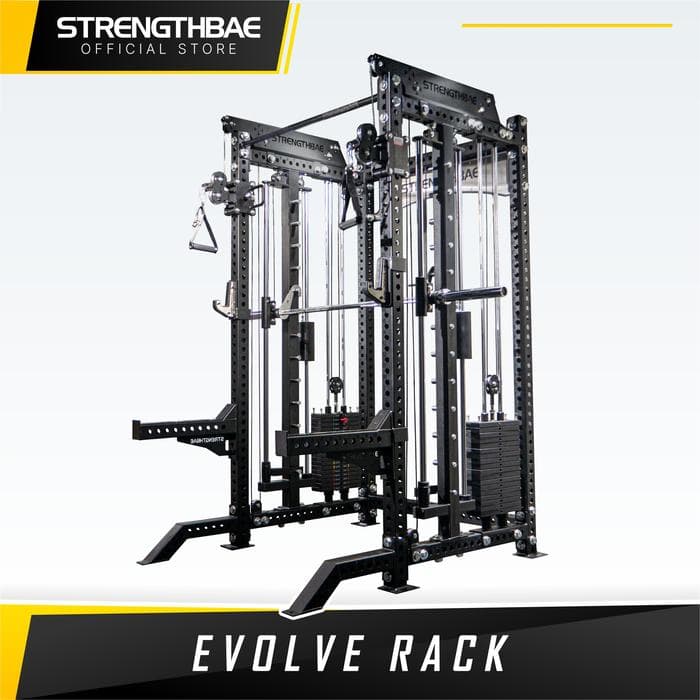
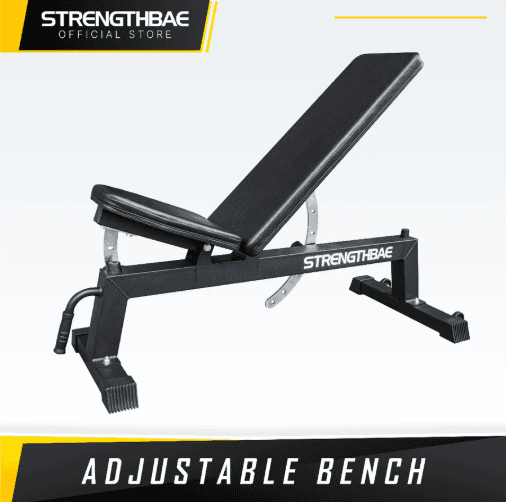
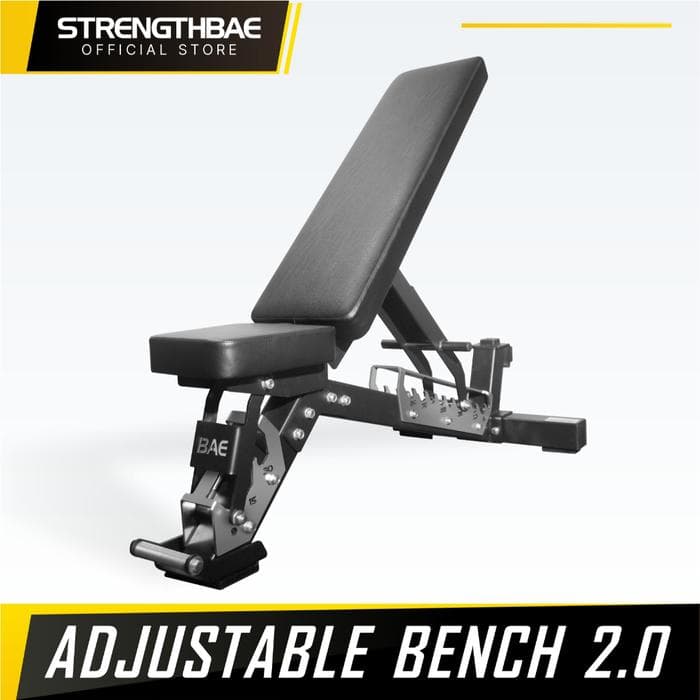
Essential equipment that should be available includes a fixed dumbbell set, dumbbell rack, Olympic barbell, weight plates or bumper plates, adjustable bench, flat bench, power rack or squat rack, Smith machine, plate storage, and barbell storage. This area supports major compound movements such as squats, bench presses, deadlifts, rows, shoulder presses, and various dumbbell exercises.
Important factors gym business operators need to consider include providing a complete dumbbell weight range, an adequate number of benches and racks, enough weight plates, and anticipating potential queues during peak hours.
Selectorized Strength Machines
Selectorized strength machines are gym machines for strength training that use a weight stack and pin to quickly adjust the resistance according to the user’s ability. Selectorized strength machines are especially suitable for beginner to intermediate members because they use guided movement paths.
The pin-stack resistance adjustment system makes this equipment very safe and easy to use. Examples include chest press, lat pulldown, leg extension, leg curl, shoulder press, and seated row. Essential gym equipment includes chest press, lat pulldown, seated row, leg extension or leg curl, and leg press.
For the Selectorized Strength Machines area, commercial gym operators need to ensure that the machine selection is varied enough for different exercises, the weight stack range accommodates different user levels, machine adjustments are easy to understand, and there are enough units to keep queues under control during busy hours.
Cable and Functional Trainer
The cable trainer equipment category offers some of the widest exercise variety within a single training station. Essential gym equipment includes functional trainers, All in One Trainers, cable crossovers, dual adjustable pulleys, lat pulldown or low row machines, pull-up stations, and various cable attachments.
The cable machine area can train the chest, back, shoulders, arms, core, and lower body. Having more than one cable station is highly recommended if the gym has a large number of members.
The Cable and Functional Trainer area should be designed to support movement variations from different directions while maintaining comfortable access. Consider the number of pulleys, attachment options, resistance range, and spacing between users so training remains flexible without making the area feel cramped or causing frequent queues.
Plate-Loaded Machines
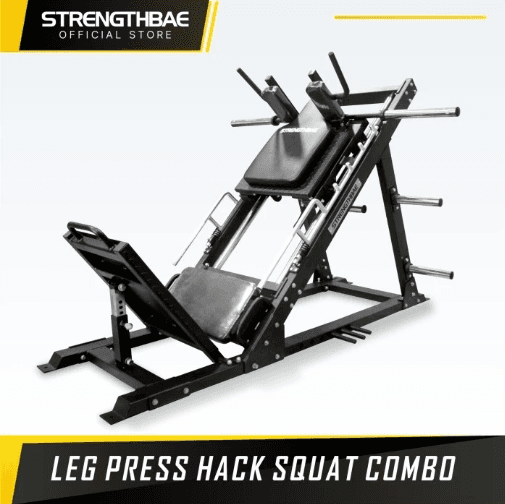
Plate-loaded machines are ideal for members focused on strength and muscle development (hypertrophy), as well as heavy resistance training. Examples of key gym equipment include chest press, incline press, shoulder press, seated row, lat pulldown, leg press, hack squat, pec fly, and hip thrust machines.
During the early stage of a gym business, prioritize equipment that genuinely adds movement variety rather than repeating the same function. Hack Squat, Hip Thrust, and Incline Press are essential gym machines that should be prioritized because they offer a variety of functions.
The Plate-Loaded Machines area usually requires attention to the number of available weight plates, ease of loading and unloading weights, and spacing between machines so users can move safely. Commercial gym operators also need to ensure there is enough machine variety and that weight plates do not become a bottleneck during peak hours.
Cardio Equipment
Cardio equipment is very important for members who train for conditioning, endurance, general fitness, and weight management. Priority equipment includes treadmills, exercise bikes, spin bikes, ellipticals, and rowing machines. If the budget allows, add a stair climber, air bike, or curved treadmill.
Within this category, treadmills require special attention because they are often among the most frequently used machines. You should consider not only adding more units, but also motor durability, usage capacity, ease of maintenance, and spacing between machines to keep the area comfortable during busy periods.
If your target membership is large enough, providing several treadmills with consistent, high-quality specifications can help reduce queues and simplify daily operations.
Functional Training Area
The functional area is a training area used for various dynamic movements, conditioning, athletic training, and hybrid race-style training such as HYROX. Because the exercises are highly varied, this area generally requires more open space than machine areas.
Common equipment includes kettlebells, medicine balls, slam balls, sandbags, plyo boxes, battle ropes, resistance bands, weighted sleds, and turf tracks. Each piece of equipment should be stored neatly so it is easy to access without obstructing training routes.
The Functional Training Area only becomes a major priority if the gym concept specifically targets functional fitness, athletic training, group classes, CrossFit-style training, or HYROX hybrid race training.
If these needs are not yet a primary focus, the area can be developed gradually by first providing open space, then adding more specialized and larger gym equipment once member needs and demand begin to develop, with proper consideration beforehand.
Core and Mobility Area
The core and mobility area does not require large gym equipment, but it is still important for completing a commercial gym facility. Basic equipment can include exercise mats, foam rollers, ab wheels, Swiss balls, resistance bands, and simple mobility tools that can be used for warm-ups, cool-downs, core training, and stretching.
This area should be open enough for members to move comfortably without interfering with other members’ training routes. If the budget is still limited, gym operators do not need to immediately provide a large amount of equipment. Start with the most frequently used basic equipment, then add more variety according to member needs.
Rubber Flooring
Rubber flooring is a very important investment, not simply decoration for a gym. Its functions include protecting the underlying floor structure, absorbing weight impact, reducing noise, and providing a stable, non-slip training surface. Consider the total area, rubber mat thickness for free weight versus machine areas, and whether a turf track is needed.
Storage and Other Supporting Gym Equipment
Storage equipment is very important for maintaining cleanliness, organization, and smooth commercial gym operations. Examples include dumbbell racks, plate trees, barbell holders, cable attachment storage, kettlebell racks, and mat racks. Good storage helps speed up user transitions and minimize the risk of injuries caused by tripping over scattered equipment.
Which Equipment Is Truly a Priority When Starting a Gym Business?
If your initial budget is still limited, gym equipment should be purchased gradually based on daily usage priority:
Complete dumbbell set and adjustable bench
Power rack, squat rack, or Smith machine
Olympic barbell and weight plate or bumper plate set
Cable machine, functional trainer, or All in One Trainer
Several treadmills and exercise bikes
Chest press, lat pulldown, and leg press
Functional training equipment that is used less frequently only needs to be provided as a single unit during the early stage. On the other hand, high-use equipment such as treadmills, dumbbells, and benches is more suitable to be provided in multiple units to accommodate users during peak hours.
What Is the Ideal Budget for a Commercial Gym Business?
The gym business budget allocation percentages below specifically cover gym equipment, flooring, and storage. These calculations do not include rental costs, building renovations, AC installation, electrical capacity, changing room facilities, or monthly operating expenses. These costs can vary depending on the location and city where the gym business operates.
Gym Equipment Category | Estimated Budget Allocation |
|---|---|
Selectorized Strength Machines | 25% |
Cardio Equipment | 22% |
Free Weight Area | 18% |
Cable & Functional Trainer | 12% |
Plate-Loaded Machines | 10% |
Functional Training Area | 5% |
Rubber Flooring | 5% |
Storage & Accessories | 3% |
Total Equipment Budget Allocation | 100% |
Use the gym business budget percentages above as a framework rather than a strict rule. These proportions can be adjusted according to the gym concept you choose. For example, a strength-oriented gym can shift part of the cardio budget toward the free weight and rack areas, while a hybrid/functional gym can allocate a larger portion of the budget to the functional training area.
Example of a Rp500 Million Gym Business Budget Allocation
Gym Equipment Category | Estimated Budget (Rupiah) |
|---|---|
Selectorized Strength Machines | Rp125,000,000 |
Cardio Equipment | Rp110,000,000 |
Free Weight Area | Rp90,000,000 |
Cable & Functional Trainer | Rp60,000,000 |
Plate-Loaded Machines | Rp50,000,000 |
Functional Training Area | Rp25,000,000 |
Rubber Flooring | Rp25,000,000 |
Storage & Accessories | Rp15,000,000 |
Total Estimated Equipment Budget | Rp500,000,000 |
Starting a Gym Business Gradually Based on Budget
A commercial gym business budget can be adjusted according to scale and developed gradually. As a general illustration, the equipment budget alone can start at around Rp150–300 million for a small gym business, Rp300–700 million for a standard gym, and Rp800 million–Rp1.5 billion or more for a fully equipped gym. These ranges can vary depending on the number of machines, brands, specifications, and the gym concept being developed.
If you plan to use a growing gym concept by gradually purchasing additional gym equipment, a substantial open space area needs to be provided so new equipment can be added without disrupting the existing flow.
Starter Commercial Gym (Rp150–300 Million)
At the initial stage of the gym business, prioritize gym equipment including dumbbells, benches, barbells, racks, cable trainers, several essential selectorized machines, treadmills, exercise bikes, rubber flooring, and storage racks. This setup is highly suitable for small-scale gyms, limited spaces, and business owners with a measured initial budget.
Standard Commercial Gym (Rp300–700 Million)
As the number of active members increases, upgrade the gym facilities by adding a more complete variety of selectorized machines, plate-loaded machines for heavy resistance training, more varied cardio options, a dedicated functional training area, and more comprehensive storage racks. This stage is highly suitable for general-purpose gyms serving members from a wide range of backgrounds.
Advanced Commercial Gym (Rp800 Million–Rp1.5 Billion)
At a more advanced stage, the gym can:
Add specialized machines for specific muscle groups
Increase the number of the most frequently used cardio units
Add a functional training area
Increase the number of racks, benches, and cable stations to reduce queues
The facility can also be equipped with premium gym equipment, a recovery area, and better-organized storage to serve more members with increasingly diverse training needs.
FAQ
What Is the Estimated Initial Budget for Purchasing Commercial Gym Equipment?
The estimated initial budget for purchasing equipment for a small-scale commercial gym business can start from Rp130 million to Rp500 million, depending on the concept, area size, and variety of equipment selected. Budget allocation should prioritize equipment with a wide range of functions, such as free weights, racks, cable machines, All in One Trainers, and essential cardio equipment.
What Gym Equipment Should Be Prioritized When Opening a Gym for the First Time?
The main priority equipment includes a complete dumbbell set with adjustable benches, a power rack or Smith machine, Olympic barbells with weight plates, a cable machine, as well as treadmills and exercise bikes. This combination already covers the basic strength and cardio training needs of most members.
Can Commercial Gym Equipment Also Be Used for a Personal Home Gym?
Yes. Commercial-grade gym equipment has highly durable steel frame construction and high load capacity, making it very durable for personal home gym use. However, consider the physical dimensions and available space in your home before choosing large commercial equipment.
How Do You Determine the Number of Equipment Units So Members Do Not Have to Wait Too Long?
The number of equipment units should be adjusted according to the projected number of active daily members and estimated traffic during peak hours. High-use equipment such as treadmills, adjustable benches, and cable machines should ideally be provided in more than one unit.
Build Your Dream Commercial Gym with StrengthBae
Planning to start a commercial gym business requires the right equipment selection strategy so your investment remains efficient and sustainable over the long term.
Whether you are preparing a new commercial gym business or designing a complete personal home gym facility, choosing high-quality equipment will help ensure training comfort and safety for your gym members in the future.
For consultation regarding equipment package recommendations, room layout, and the best pricing offers, please contact the StrengthBae team.
StrengthBae is a professional gym equipment brand that provides solutions for commercial gyms and home gyms. From racks and All in One Trainers to functional training accessories such as HYROX-standard sandbags, everything is available at StrengthBae.