Exercise for Seniors at Home: Light and Safe
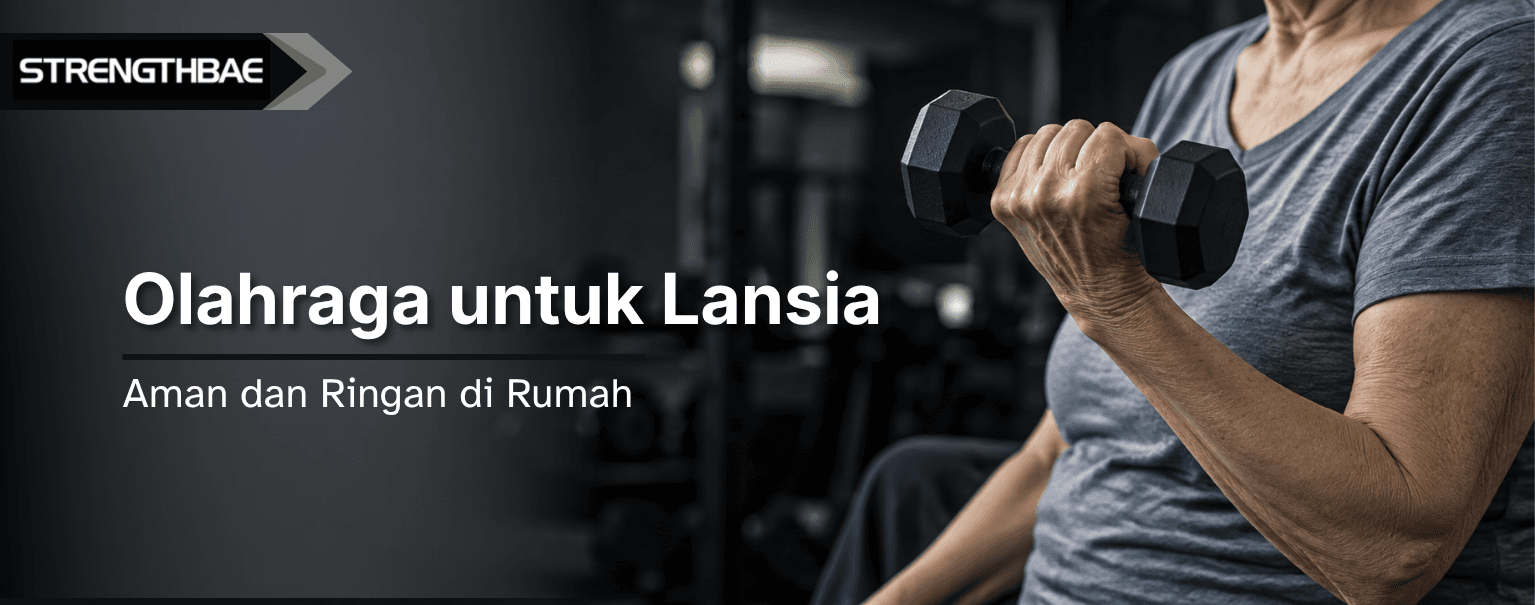
Staying physically active is important for keeping the bodies of seniors strong and mobile. One way to do this is by doing light exercise at home that suits their abilities. Exercise for seniors can help maintain muscle strength, balance, joint flexibility, and cardiovascular fitness without placing excessive stress on the body.
Exercises can be performed using bodyweight, a chair or wall for support, light dumbbells, resistance bands, stationary bikes, or treadmills at low speeds. Exercising for 15–30 minutes regularly can help seniors stay active, remain independent in daily activities, and reduce the risk of falls.
Benefits of Exercise for Seniors
As people age, the body naturally experiences changes such as reduced muscle mass, bone density, and joint flexibility. Regular exercise for seniors can help slow these changes and keep the body active. Here are some benefits of light exercise for seniors:
Maintaining muscle and bone strength. Light resistance training helps maintain muscle mass and bone strength needed for daily activities while also helping maintain bone density.
Supporting balance and body stability. Physical exercise helps train balance and body control, which can reduce the risk of falls.
Maintaining mobility and joint flexibility. Mobility exercises and stretching help reduce stiffness and keep joints moving easily.
Maintaining heart health and blood circulation. Physical activity helps improve blood flow and supports the management of blood pressure and blood sugar levels.
Supporting independence in daily activities. Stronger muscles and joints help seniors perform activities such as getting up from a chair, climbing stairs, sweeping, and walking more easily.
Maintaining mental health and cognitive function. Exercise can help reduce stress, improve sleep quality, and support brain function and cognitive health.
What Is Exercise for Seniors?
Exercise for seniors is performed differently compared to exercise for adults in general. Physical activities adapted to a senior's abilities and health condition are already considered exercise. Light exercise does not mean extremely easy or weight-free training, but rather exercise performed at an intensity that is safe and appropriate for the body's capabilities.
Exercises at home can be performed in various ways:
Using bodyweight: Using your body weight for basic exercises such as standing, sitting, and stepping.
Using a chair or wall for support: Helps maintain balance when performing exercises.
Using light dumbbells or water bottles: Using weights of around 0.5–2 kg to train arm and shoulder strength.
Using resistance bands: Provides light resistance and can be used for various movements.
Low-intensity cardio equipment: Such as a stationary bike or treadmill at low speed to improve cardiovascular endurance.
Read also: Treadmill vs Stationary Bike: Which Is Suitable for Exercise at Home?
Preparing Before Exercising for Seniors
Safety is the highest priority when designing an exercise session for seniors at home. Proper preparation of the environment and physical condition can help prevent injuries or discomfort during exercise.
Choose a Safe Exercise Area
Make sure the exercise area is spacious enough and has a flat, dry, and non-slip floor. Remove rugs that can easily move, cables, or other objects that could cause tripping while moving.
Use a Sturdy Support
Use a chair without wheels that has a sturdy structure or exercise near a solid wall. This support can be used for balance, especially when performing balance exercises or movements that require stability.
Wear the Right Equipment
Wear athletic shoes with non-slip rubber soles to help maintain a stable footing. Also choose comfortable clothing that is not too tight and can absorb sweat effectively.
Start with Low Intensity
Start with light, easy-to-control resistance. Perform each movement slowly and do not force the range of motion if your body feels uncomfortable.
Stay Hydrated
Drink enough water before, during, and after exercise to keep your body hydrated. Adjust your fluid intake according to the duration and conditions of the workout.
Medical Consultation
Seniors with a history of heart disease, high blood pressure, diabetes, or chronic joint problems should consult a doctor before starting a new exercise program. A doctor can help determine the type and intensity of exercise that is appropriate for their physical condition.
Mobility Exercises as Exercise for Seniors
Mobility exercises aim to stretch stiff muscles, improve joint fluid circulation, and prepare body tissues before moving on to the main workout. Here are four light mobility exercises that are very safe for seniors to do at home:
Ankle Circles
Slowly rotate the ankles clockwise and counterclockwise. This exercise trains ankle joint flexibility, which is important for maintaining stable footing while walking and reducing the risk of tripping.
Shoulder Circles
Slowly and gently rotate both shoulders forward and backward in a circular motion. This movement helps release tension in the neck and upper back muscles while preparing the shoulder joints before performing upper-body exercises.
Hip Movement
Slowly move or rotate the hips through a comfortable range of motion. This can be done while standing and holding onto the back of a chair to train flexibility in the hip and lower back muscles.
Light Stretching
Gentle static stretching for the chest, hamstrings, and calves. Stretch slowly without bouncing and avoid forcing the movement until pain occurs.
Strength Exercises as Exercise for Seniors
Strength exercises help maintain muscle mass and bone density so seniors can stay strong and perform daily activities more easily. The following exercise variations for seniors can be adjusted according to individual physical abilities.
Chair Squat
Stand upright in front of a chair with your feet shoulder-width apart. Lower your hips in a controlled manner as if you were about to sit on the chair, then push your feet into the floor to return to a standing position. This exercise trains the quadriceps and glutes, which are directly used when standing up from a seated position.
Wall Push-Up
Stand facing a wall at arm's length, then place both palms flat against the wall. Bend both elbows to bring your chest closer to the wall, then push yourself back to the starting position. This exercise trains the chest, shoulder, and triceps muscles without placing excessive stress on the wrists.
Calf Raise
Stand upright while holding onto the back of a sturdy chair. Raise both heels off the floor until you are supported on the balls of your feet, then slowly lower them. This movement strengthens the calf muscles to support ankle stability while walking.
Leg Raise
Stand beside a chair while holding onto it, then slowly raise one leg to the side or backward with full control. This exercise strengthens the outer hip and glute muscles to help maintain balance while walking.
Light Dumbbells
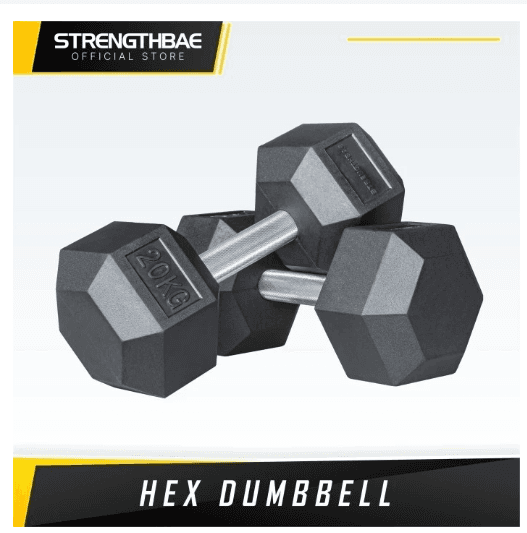
Light dumbbells weighing 0.5 kg to 2 kg can be used for variations such as biceps curls, shoulder presses, or goblet squats.
Light dumbbells can be used for various simple exercises. Biceps curls are performed by bending the elbows and lifting the dumbbells toward the shoulders to train the arms. Shoulder presses are performed by pressing the dumbbells upward from a position beside the shoulders to train the shoulders and arms. Goblet squats are performed by holding one dumbbell in front of the chest, then bending the knees and lowering the body as if sitting down to train the thighs and glutes.
Choose a weight that can be lifted smoothly for 8–12 repetitions.
Read more: Strengthbae Hex Dumbbell
Resistance Band
A resistance band is an elastic band with different levels of resistance that is practical for home workouts. To use it, simply hold or anchor the band to a sturdy point, then pull it slowly according to the exercise movement, such as rowing, chest pulls, or leg exercises. Resistance bands are gentle on the joints and easy to store after use, making them suitable for seniors.
Water Bottles as Weights
330 ml or 600 ml water bottles can be used as an alternative weight for seniors who do not have dumbbells at home. Make sure the bottle is tightly sealed and comfortable to grip. It can be used for the same movements as the dumbbell exercises above.
Balance Exercises as Exercise for Seniors
Balance exercises for seniors focus on training neural coordination and hip stability to help reduce the risk of falling while walking. Here are several exercises that can be performed at home:
Single-Leg Balance
Stand near a chair or wall for support. Lift one foot a few centimeters off the floor and maintain an upright standing position for 10–20 seconds. Alternate between both legs.
Heel-to-Toe Walk
Walk slowly in a straight line by placing the heel of the front foot directly in front of the toes of the back foot, alternating with each step. Use a wall or have someone assist you if your balance is not yet stable.
Light Cardio Exercises as Exercise for Seniors
Light cardio exercises aim to train respiratory endurance and support cardiovascular health. Here are several simple and easy exercises for seniors:
Walking
Walk at a relaxed pace around the yard or along a corridor for 15–30 minutes a day. Walking is a low-impact cardio exercise that can help burn calories and strengthen the heart.
Walking in Place
Lift the feet alternately while standing in place. This can be done in the living room while watching television, using a chair for support if needed.
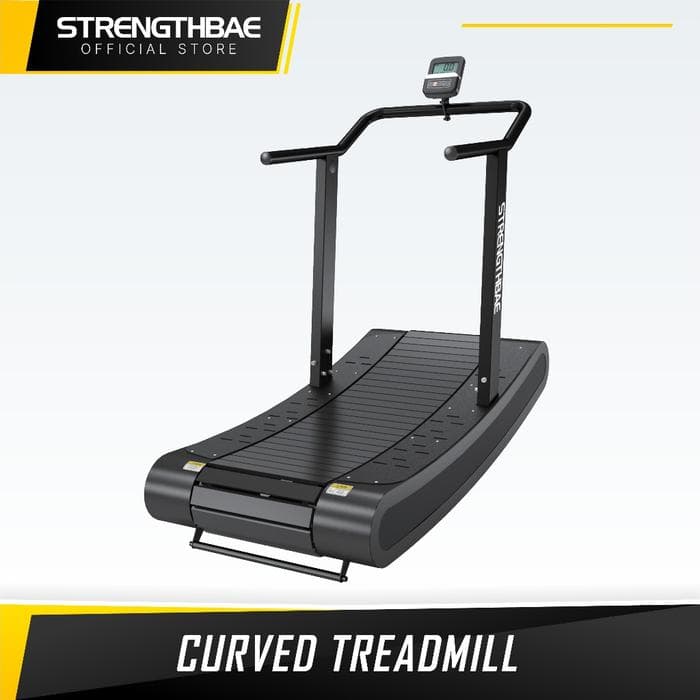
Low-Speed Treadmill
Using a treadmill at a low speed of 1.0 to 3.0 km/h provides the experience of walking at home. Make sure the treadmill user understands how to use the automatic safety key and uses the side handrails to maintain balance.
Home Gym Equipment Suitable for Exercise for Seniors
Choosing home gym equipment for seniors should be adjusted to their abilities, needs, and physical condition. The right gym equipment can help perform strength, balance, mobility, and cardio exercises more comfortably at home.
Prioritize gym equipment that is easy to use, stable, and allows movements to be performed with good control. Here are some of the most lightweight equipment options that can support exercise for seniors at home:
Resistance Band
A resistance band is one of the most practical tools for senior workouts because it is lightweight, easy to use, and does not require much space. Choose a light resistance level at first and perform the movements slowly so they remain easy to control.
Dumbbell
Light dumbbells weighing around 0.5–2 kg can be used to train the arms, shoulders, chest, and legs. Choose dumbbells with comfortable, non-slip handles. As strength improves, the weight can be gradually increased according to individual ability.
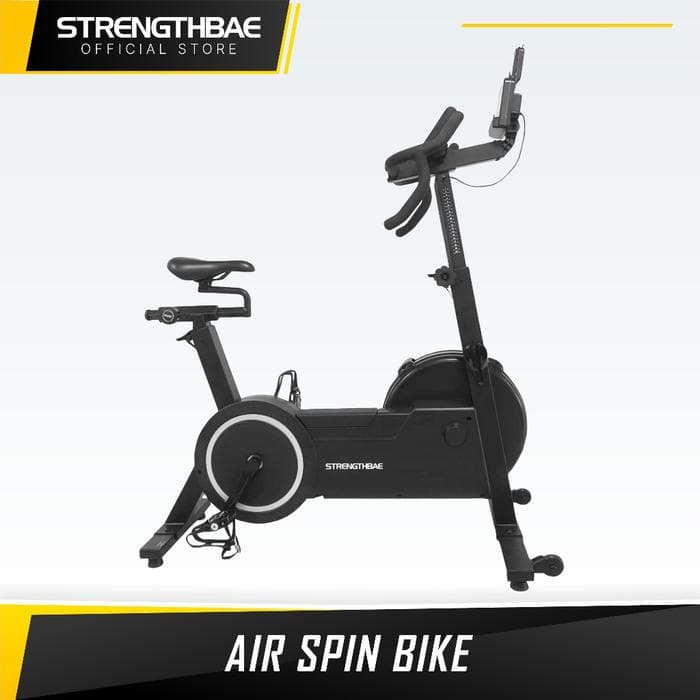
Stationary Bike
A stationary bike can be a good option for cardio exercise with relatively simple movements and minimal space requirements. A recumbent bike with a backrest provides additional body support and can be an option for seniors who need a more stable seated position.
Treadmill
A treadmill can be used as exercise for seniors, with the speed adjusted according to their ability. Choose a treadmill with a sufficiently wide walking area, a stable surface, and sturdy handrails to help maintain balance. Start at a low speed before increasing the duration or speed of the workout.
Adjustable Bench
An adjustable bench can be used as supporting equipment for various exercises with dumbbells or resistance bands. A bench can also provide a more stable seated position or back support during exercise. If physical ability has improved, the bench can be used for more technical exercise variations such as dumbbell press, seated shoulder press, or step-ups with appropriate supervision.
Cable Machine or All in One Trainer
If seniors are already accustomed to strength training and want to increase the intensity, a cable machine or All in One Trainer can be an option. The cable system allows the load to be adjusted gradually and used for various movements such as rowing, chest press, lat pulldown, and arm exercises.
Use a weight that can still be controlled properly and prioritize movement technique. It is also recommended to continue exercising under the supervision of another family member, personal trainer, or healthcare professional.
Leg Press or Leg Exercise Machine
For more intensive training, a machine such as a leg press can be used to train the thigh and glute muscles while the body is supported by the backrest. The load can be adjusted according to ability so that training can be progressed gradually.
This equipment should be used after the user is accustomed to basic exercises and understands how to adjust the machine position correctly.
The Relationship Between Exercise for Seniors and Daily Activities
Light exercise can help seniors perform daily activities more easily and independently. The following table shows the relationship between types of exercise and their benefits for daily activities.
Exercise Category | Movement Type / Equipment | Practical Benefits for Daily Activities |
Mobility | Ankle & Shoulder Circles | Helps improve walking steps & makes it easier to reach objects in high cabinets. |
Strength | Chair Squat | Trains the thigh muscles used to stand up from a chair or toilet. |
Strength | Wall Push-Up | Trains pushing strength in the chest & arms when opening doors or getting out of bed. |
Strength | Calf Raise | Trains calf strength when standing on tiptoes and helps maintain foot stability while walking. |
Strength | Leg Raise | Strengthens the hips to make it easier to climb stairs or get into a vehicle. |
Strength | Light Dumbbell / Band | Helps maintain arm strength when carrying grocery bags or watering plants. |
Balance | Single-Leg Balance | Improves hip stability to help prevent slipping or tripping. |
Balance | Heel-to-Toe Walk | Trains precise step coordination when walking through narrow or uneven areas. |
Light Cardio | Walking / Treadmill | Improves breathing stamina so you do not get tired easily during activities around the house. |
Light Cardio | Stationary Bike / Recumbent | Trains cardiovascular and hip joint endurance without placing impact loads on the body. |
Example of an Exercise Routine for Seniors at Home
Daily exercise for seniors can be performed for 15–20 minutes. Start with a small number of repetitions, such as 5–8, then gradually increase to 10–12 repetitions when the movements feel easier and more comfortable.
3–5 Minute Warm-Up Session
Ankle circles for 5 rotations.
Shoulder circles for 5 rotations.
Slowly perform hip movements.
Light stretching for the arms and chest.
10–12 Minute Main Workout Session
Chair squat for 5–10 repetitions.
Wall push-up for 8–10 repetitions.
Calf raise for 8–10 repetitions.
Leg raise for 5–8 repetitions per leg.
Single-leg balance for 10 seconds per leg.
3–5 Minute Cardio and Cool-Down Session
Walk in place or walk on a treadmill at a low speed for around 3 minutes.
Continue with light stretching and deep breathing exercises.
Things to Avoid During Exercise for Seniors
To maintain safety throughout the workout, avoid the following:
Avoid Heavy Loads Immediately. Start with light weights and increase gradually. Avoid weights that place excessive stress on the spine and joints.
Avoid Explosive or Bouncing Movements. Avoid jumping, jerking, or moving too quickly. Perform each movement slowly and with control.
Do Not Perform Balance Exercises Without Support. When performing single-leg exercises, make sure there is a sturdy chair or wall nearby that you can hold onto if you lose your balance.
Do Not Force Your Range of Motion. Perform movements according to your body's ability and do not force the joints to bend or stretch beyond a comfortable limit.
Avoid Slippery Exercise Areas. Make sure the floor is dry and not slippery before exercising. Remove rugs that can easily move and objects that could cause you to trip.
When Should You Stop?
Immediately stop the workout session and rest if the following symptoms occur:
Sharp Pain. Stop exercising if sharp or sudden pain occurs in the knees, lower back, chest, ankles, or other parts of the body.
Dizziness or Lightheadedness. Stop immediately if you feel dizzy, lightheaded, or suddenly lose your balance.
Excessive Shortness of Breath. Stop exercising if your breathing becomes extremely difficult, feels unusual, or makes it difficult to speak normally.
Nausea or Excessive Weakness. Stop exercising if you suddenly feel extremely weak, nauseous, or unable to continue exercising.
If these symptoms do not subside after resting, consult a healthcare professional or specialist doctor immediately.
FAQ
Can seniors use weights when exercising?
Yes. Using light weights such as 0.5–2 kg light dumbbells, resistance bands, or water bottles can be safe and beneficial for maintaining muscle mass and bone density in seniors, as long as the weight can be controlled with proper technique.
Can seniors use a treadmill for exercise?
Yes. A treadmill is very suitable for walking exercises at home with supervision. Make sure to set the speed at a low level, around 1.0–3.0 km/h, use the safety handrails, and attach the emergency stop key while walking.
Are light exercises effective for seniors?
Very effective. Simple movements such as chair squats, wall push-ups, and balance exercises can provide sufficient muscle stimulation to maintain joint flexibility and independence in daily activities, especially when performed consistently.
How long should seniors exercise?
Exercise for seniors is recommended for around 15 to 30 minutes per day, 3 to 5 times a week. Beginners can start with a shorter duration of 10–15 minutes and gradually increase it according to the body's response.
Build a Healthy, Active, and Independent Later Life with Strengthbae
Exercise for seniors at home does not need to be complicated or require a lot of equipment. A combination of mobility, strength, balance, and light cardio exercises is enough to help keep the body strong, stable, and active.
With equipment such as light dumbbells, resistance bands, stationary bikes, and treadmills with safety features, exercise for seniors can be performed more comfortably and with better control. Whether for a home gym or daily exercise needs, you should choose equipment that suits your needs. Want to prepare a comfortable home gym for seniors? Contact the Strengthbae team to get recommendations for suitable gym equipment.
Strengthbae is a professional gym equipment brand that provides solutions for commercial gym businesses and home gyms. From racks and All in One Trainers to functional training accessories such as standard Hyrox sandbags, everything is available at Strengthbae.