Choose a Walking Pad or Treadmill for Exercise at Home
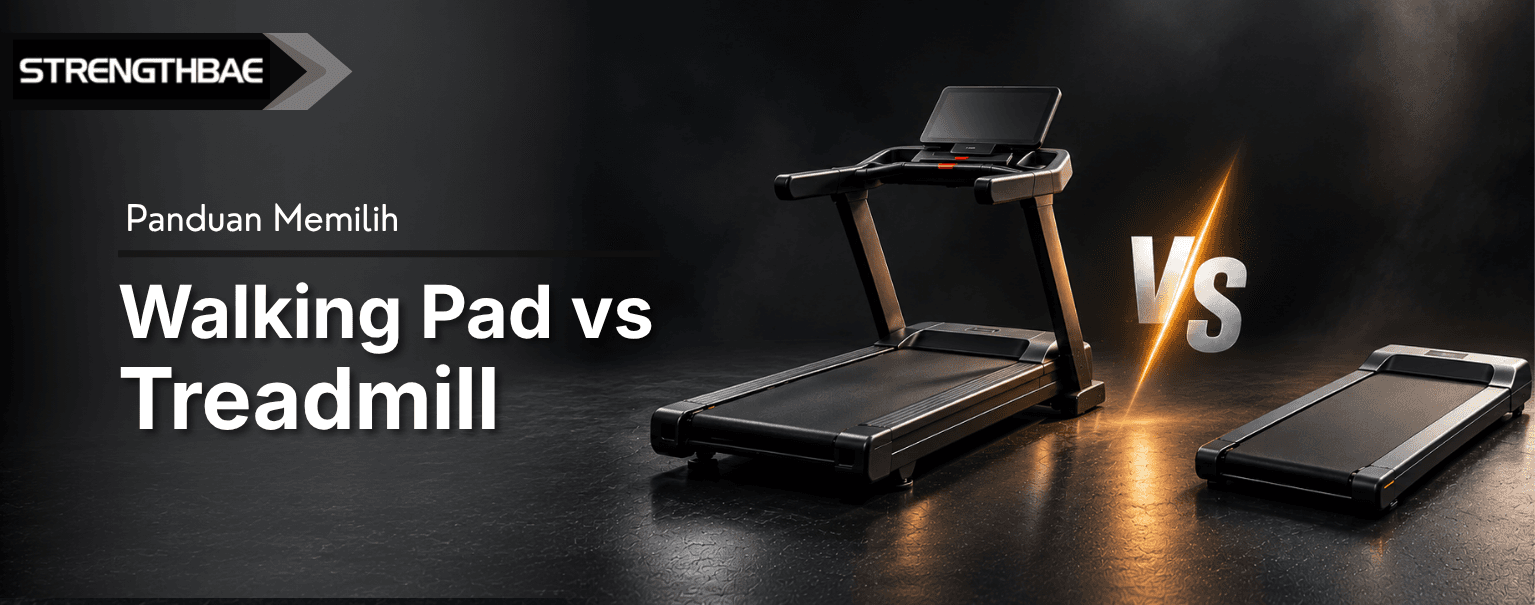
Walking pads and treadmills are both popular choices for cardio equipment for exercising at home. However, they differ in terms of training functions, physical dimensions, and machine capabilities.
A walking pad is compactly designed for casual walking activities, especially for increasing your daily step count in limited spaces. Meanwhile, a treadmill offers a much wider range of workouts, from walking and jogging to fast running, with higher speed limits and weight capacities. The best choice depends on your exercise goals, available space, usage habits, and budget.
What Is a Walking Pad?
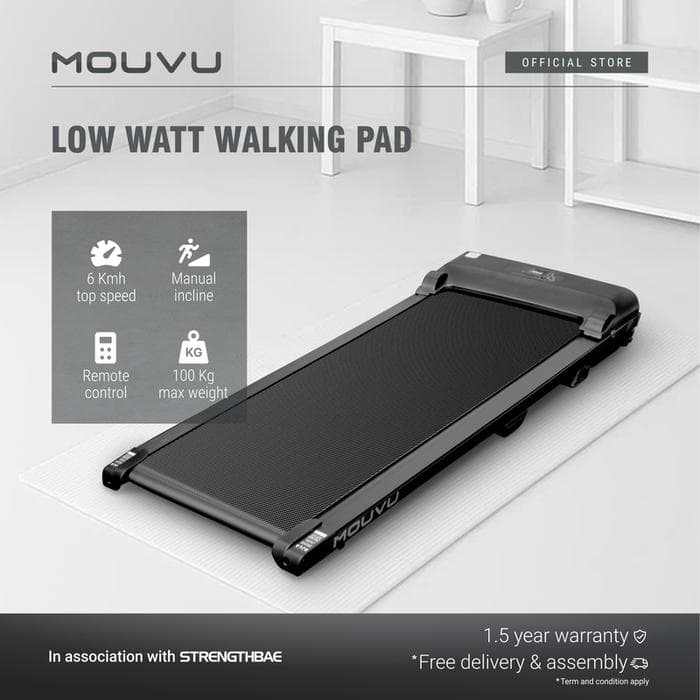
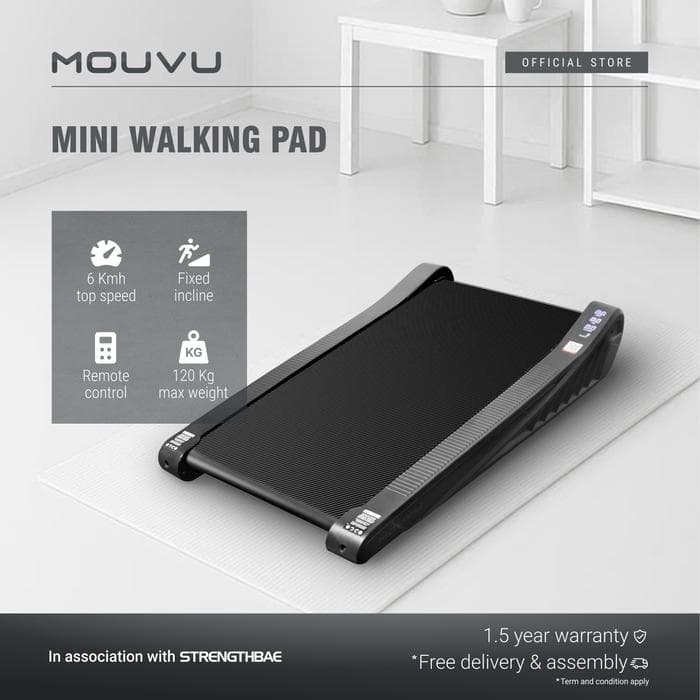
A walking pad is a compact cardio machine with a walking belt. This home gym equipment is specifically designed to support indoor walking activities. The frame structure of a walking pad is simpler and thinner than that of a treadmill. Some models can be folded or stored underneath household furniture.
In general, walking pads are equipped with very minimalist and foldable handles. Some walking pads are even designed without handrails at all. This is because the maximum speed of a walking pad is relatively lower than that of a treadmill. The typical speed limit ranges from 0.5 to 6 km/h.
Some walking pads also allow light jogging if the motor power specifications and deck length support it. However, this equipment is generally not designed for fast running or repeated sprints. User weight capacity and machine durability vary between products. Always check the technical specification sheet before purchasing.
Who Is a Walking Pad Suitable For?
A walking pad is highly suitable for users who want to increase their daily step count and non-exercise physical activity (Non-Exercise Activity Thermogenesis, NEAT) without having to leave the house.
This equipment also became popular among people who work from home and want to walk casually while working at a standing desk. Those with limited space in apartments or minimalist homes can also greatly benefit from the easy storage of a walking pad.
For beginners who are just starting an exercise routine or need a way to perform light recovery activities, a walking pad provides a safe, low-impact way to exercise.
However, if your long-term goal is to regularly perform fast running, high-intensity interval training, or incline walking, a walking pad may not be the right option because these functions are more commonly available on treadmills.
What Is a Treadmill?
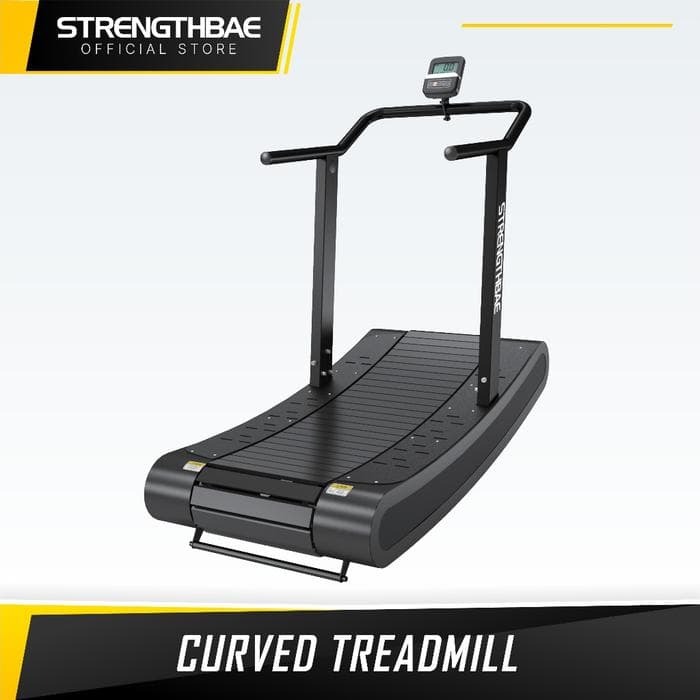
A treadmill is a motor-powered cardio machine equipped with a spacious running belt to accommodate a wider variety of more intense workouts.
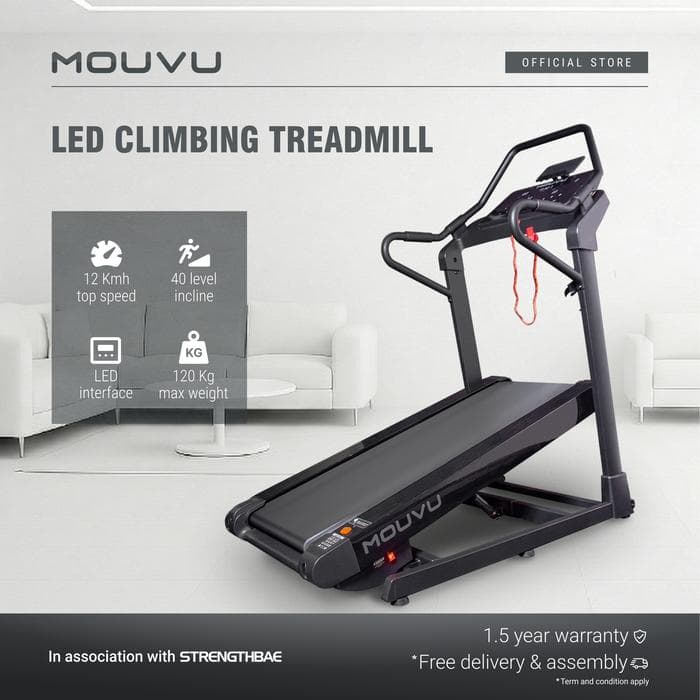
Unlike a walking pad, a treadmill is designed to support casual walking, brisk walking, jogging, fast running, and even high-intensity interval training (HIIT). Treadmills generally have a sturdy frame structure, a longer and wider running area, stable side handrails, and a comprehensive control console.
Most treadmill models are also equipped with an electric or manual incline feature to simulate uphill routes. This feature is highly useful for increasing calorie expenditure.
The maximum speed of a treadmill can reach 12 to 18 km/h, with greater motor power (2.0 to 3.5 CHP) and a higher user weight capacity. A treadmill can therefore be a primary choice for gradually improving cardiovascular fitness or running speed.
Who Is a Treadmill Suitable For?
A treadmill is highly suitable for users who make cardio training a major part of their daily fitness program. If you plan to jog or run regularly, need variations of interval training, or enjoy simulating uphill walking, a treadmill provides a much more capable training platform.
This equipment is highly relevant for athletes or running enthusiasts. This cardio machine can accommodate long-term improvements in physical capacity with higher performance goals. The sturdy handrails and stable console also provide an extra sense of safety and balance, especially for users who need support while stepping.
Types of Exercise: Walking Pad vs Treadmill
Although both look similar as machines with moving walking surfaces, there are clear differences in the types of movement and training intensity that can be performed on a walking pad and a treadmill.
Walking Pad Functions: Walking and Light Jogging
The primary use of a walking pad focuses on low- to moderate-intensity movement. A walking pad primarily trains the quadriceps, hamstrings, glutes, and calves. The core also works lightly to maintain posture and balance while walking.
The most suitable uses include casual walking, brisk walking, maintaining your daily step count, and walking slowly under a standing desk while working. Light jogging can only be performed on walking pads with a speed limit above 6 km/h and a sufficiently long walking deck.
Combining a walking pad with a standing desk can also help reduce the amount of time spent sitting for hours while working from home. The key to safe use is walking at a low and steady speed, maintaining an upright posture, and ensuring that electrical cables are safely positioned away from the walking area. Avoid typing or performing tasks that require high concentration while walking at excessively high speeds.
Treadmill Functions: Jogging, Running, and Intervals
A treadmill accommodates a much wider and more dynamic range of cardio workouts. You can perform casual walking, brisk walking, regular jogging, long-distance running, and high-intensity sprints.
The incline feature allows for hill climb workout variations to strengthen the thigh and glute muscles. A treadmill provides complete flexibility to progressively increase your training as your endurance improves.
Size, Running Belt, and Comfort: Walking Pad vs Treadmill
The comfort of using a walking pad or treadmill is greatly influenced by the physical size of the walking surface, running belt dimensions, shock absorption system, and stability of the machine frame.
Walking pads prioritize practicality, so they have a smaller walking surface with a running belt that tends to be shorter and narrower. In contrast, a treadmill requires more room but provides a more spacious running deck.
Users who are taller than 175 cm or have a long stride should pay close attention to deck length, especially when moving at high speeds. Prioritize a treadmill if you have a long stride.
The shock absorption system on a treadmill is also generally thicker to absorb heel impact while running in order to protect the knee and ankle joints. In terms of stability, the heavier treadmill frame provides a very sturdy base when moving quickly, while a walking pad is designed to be lighter so it can be moved easily.
Space Requirements: Walking Pad vs Treadmill
Matching your choice of walking pad or treadmill to the available space in your home is key to keeping the workout area neat and uncluttered.
Walking Pad for Small Spaces
A walking pad is the best choice for limited spaces such as bedrooms, home offices, apartments, or minimalist home gyms. Most walking pad models are designed with a slim profile that allows the equipment to be stored under a bed, underneath a sofa, or vertically if supported by the design. Although compact, make sure you still leave sufficient safe clearance around the equipment while it is in use.
Folding Treadmill for Small Spaces
For those who need running functionality but have limited space, a folding treadmill can be a suitable solution. Folding treadmills use a hydraulic system to raise the running deck when not in use. Keep in mind that even when folded, the thickness and height of a folding treadmill still take up considerably more physical space than a walking pad.
User Capacity: Walking Pad vs Treadmill
Both walking pads and treadmills have different user weight capacity limits and height recommendations.
Compact walking pads generally have a weight capacity between 90 and 110 kg. Continuously using the equipment close to its maximum limit can accelerate wear on the motor and walking belt.
Treadmills are built with thicker steel frames, allowing them to support users weighing from 120 to 160 kg+. In addition to body weight, consider your height and stride length. Running requires a longer deck than casual walking because your stride naturally lengthens as your speed increases.
Noise Level: Walking Pad vs Treadmill
The noise level of the equipment is influenced by motor capacity, belt condition, the impact of your footsteps, and the type of flooring in your home. A walking pad produces relatively little motor noise because it operates at lower speeds, and the impact of footsteps during casual walking tends to be minimal.
Running on a treadmill produces stronger vibrations and louder footstep impacts on the floor. To reduce noise and vibration while protecting household tiles, especially for users living in apartments or on the second floor, using rubber flooring such as a rubber mat underneath a walking pad or treadmill is highly recommended to reduce noise.
Weight Loss Effectiveness: Walking Pad vs Treadmill
Neither a walking pad nor a treadmill has the same calorie-burning speed as the other. Weight loss is fundamentally determined by total daily calories burned, diet, workout duration, intensity, and the consistency of your physical activity.
A walking pad is highly effective for helping increase your daily step count and daily energy expenditure because it is very practical and easy to use at any time. Meanwhile, a treadmill provides the potential for higher calorie expenditure per minute through running speed options and incline settings. However, fundamentally, the most effective equipment for weight loss is the equipment you use most consistently every day.
Electricity Consumption: Walking Pad vs Treadmill
Electricity consumption is influenced by motor size (horsepower), the speed used, user body weight, and additional features such as electric incline. Walking pads generally use smaller motors (1.0 to 1.5 HP), so their power consumption tends to be lower during casual walking.
Treadmills require greater motor power (2.0 to 3.5 HP) to move the belt at high running speeds and operate the electric incline mechanism. Always check the Watt specifications of the model you choose and make sure your home’s electrical capacity is sufficient.
Maintenance: Walking Pad vs Treadmill
Consistent routine maintenance is essential for both types of equipment to keep the motor and walking belt durable over the long term. Always compare the care guide or maintenance instructions for both machines to be certain.
In general, for both walking pads and treadmills, you need to regularly clean dust and dirt from the belt surface using a dry cloth. Check the belt alignment to ensure it does not shift to one side, and adjust the belt tension according to the manual instructions. Apply silicone oil lubricant periodically underneath the walking belt if recommended by the manufacturer, and clean the motor cover area to prevent dust buildup.
Differences Between Walking Pads and Treadmills
The following table summarizes the differences between walking pads and treadmills to make your evaluation easier:
Comparison Parameter | Walking Pad | Treadmill |
Main Function | Casual walking, brisk walking, daily steps | Walking, jogging, running, intervals, incline |
Maximum Speed | Generally 0.5–6 km/h | Generally 0.8–16+ km/h |
Running Belt Size | Tends to be shorter and narrower | Longer and wider |
Incline Feature | Very rare / Fixed flat | Electric / manual incline available |
Handrail & Console | Minimalist / No handrail | Equipped with sturdy handrails & console |
Space Usage | Very compact, easy to store | Requires a permanent area / Folding |
Weight Capacity | Average 90–110 kg | Average 120–160+ kg |
Electric Power (Motor) | Lower (1.0–1.5 HP) | Higher (2.0–3.5+ HP) |
Checklist Before Buying a Walking Pad or Treadmill
Use the following considerations before deciding to purchase a cardio machine for your home:
Determine your main training goal, whether it is purely to increase your daily step count while working or to follow a running and high-intensity interval training program.
Measure the available room area, consider the equipment dimensions both when in use and when stored, and make sure to leave sufficient safe clearance behind and beside the equipment.
Check the maximum user weight capacity and match the running belt length to your height and stride length.
Make sure your home’s electrical capacity can support the machine’s peak wattage, and check the motor warranty period and the availability of official after-sales service.
FAQ
Can a walking pad replace a treadmill?
A walking pad can replace a treadmill if your main needs are only casual walking, increasing your daily step count, and performing light-intensity exercise in a limited space. However, a walking pad cannot replace a treadmill if you need fast running, interval training, or simulated uphill walking.
Can a walking pad be used every day?
Yes. A walking pad is safe to use every day as long as the duration of use and weight capacity remain within the manufacturer’s recommended specifications. Performing regular maintenance such as dust cleaning and belt lubrication will help keep the machine performing well for longer.
Should a rubber mat be placed under a walking pad or treadmill?
Using a rubber mat is highly recommended. Rubber flooring helps reduce noise and vibrations transferred to the floor below, protects household tiles from scratches, improves the equipment’s grip and stability, and prevents floor dust from entering the machine’s motor area.
How much clear space should be provided around the equipment?
It is recommended to leave at least 0.5 meters of clear space on the left and right sides of the equipment, as well as at least 1 to 1.5 meters behind the walking surface. This clear space is very important for safety if the user slips and also helps facilitate airflow for motor cooling.
Build Your Dream Cardio Area at Home with Strengthbae
Choosing between a walking pad and a treadmill requires the right balance between your personal fitness goals, available space, and budget. Combining a walking pad or treadmill with other gym equipment will also make your home gym more complete and versatile.
If you would like to consult about cardio equipment recommendations, home gym space requirements, or choosing fitness equipment that best suits your needs, contact the Strengthbae team for a free consultation.
Strengthbae is a professional gym equipment brand that provides solutions for commercial gym businesses and home gyms. From racks and All in One Trainers to functional training accessories such as HYROX-standard sandbags, everything is available at Strengthbae.