Hypertrophy Training Guide for Building Muscle
Hypertrophy training is a type of weight training aimed at increasing muscle size. During training, the muscles work against the resistance provided. When performed regularly with appropriate intensity, this training can help increase muscle mass and strength.
Muscle growth requires regular training, gradually increasing the load, adequate protein intake, and sufficient rest. All of these help the body build and recover muscle tissue after training.
Hypertrophy training can be performed by beginners as well as experienced individuals. You can also do it at home or at the gym using various weight training equipment.
What Is Hypertrophy?
Hypertrophy or muscle hypertrophy is the process of increasing muscle size that occurs when the body adapts to regular weight training. This process causes muscle fibers to become larger, increasing muscle size and volume.
This growth occurs at the cellular level. The parts inside muscle fibers called myofibrils can become larger and increase in number. As a result, the cross-sectional area of the muscle fibers also increases.
The Difference Between Strength Training and Hypertrophy
Strength training and hypertrophy training have different goals.
Strength training or muscular strength focuses on the ability of the muscles to produce as much force as possible.
One way to measure it is through 1-Repetition Maximum or 1RM, which is the heaviest weight that can be lifted once with proper technique. Strength training generally uses very heavy weights with low repetitions, usually fewer than 6 repetitions.
Meanwhile, hypertrophy training focuses on increasing muscle size. Muscle growth is primarily driven by mechanical tension, which is the stress placed on the muscles when working against resistance.
Hypertrophy training can also produce metabolic stress, which is the accumulation of metabolic byproducts when the muscles work hard.
Although their goals are different, strength training and hypertrophy support each other. Larger muscles have the potential to produce greater force. Conversely, increased strength helps a person use heavier weights to support muscle growth.
Read Also: Weightlifting vs Weight Training
Who Needs Hypertrophy Training?
Hypertrophy training is not only beneficial for bodybuilders or competitive bodybuilders. Athletes from various sports also need muscle mass and strength to support their performance.
Examples include Anthony Joshua in boxing, Caeleb Dressel and Katie Ledecky in swimming, Cristiano Ronaldo in football, and Serena Williams in tennis.
In addition to professional athletes, people who exercise for fitness can also perform hypertrophy training. The benefits are not only increasing muscle size, but also helping improve strength, body composition, supporting endurance during activities, and increasing the body's daily energy expenditure.
Choosing Exercises for Hypertrophy Training
A good hypertrophy training program combines compound exercises and isolation exercises. Both types of exercises help train various muscle groups so that their development is more balanced.
In addition to choosing exercises, exercise order is also important. If there is a muscle group you want to develop more, it is best to train that muscle earlier while you still have plenty of energy. This allows you to put more effort into the muscle that is the priority.
Compound Exercise
Compound exercises are exercises that involve two or more joints and several muscle groups at the same time. This type of exercise is suitable for building muscle mass and strength because it allows the use of heavier weights.
Here are some examples of compound exercises for hypertrophy training:
Squat (Barbell / Dumbbell): Trains the quadriceps, glutes, and core.
Bench Press: Trains the pectoralis major, anterior deltoid, and triceps.
Romanian Deadlift (RDL): Trains the hamstrings, glutes, and back muscles that help stabilize the body.
Lat Pulldown / Pull-Up: Trains the latissimus dorsi and biceps.
Shoulder Press: Trains the deltoids and triceps.
Isolation Exercise
Isolation exercises are exercises that focus on one joint and a specific muscle group. This type of exercise helps provide additional training for the muscles you want to develop without involving too many other muscle groups.
Here are some examples of isolation exercises for hypertrophy training:
Biceps Curl: Trains the biceps brachii.
Triceps Pushdown: Trains the triceps brachii.
Lateral Raise: Trains the lateral deltoid.
Leg Extension: Trains the quadriceps.
Leg Curl: Trains the hamstrings.
Combining compound exercises and isolation exercises helps make hypertrophy training more complete. Compound exercises are used to train several muscle groups at once, while isolation exercises help provide additional focus on specific muscles.
Choosing Weights and Repetitions for Hypertrophy Training
Choosing the weight and number of repetitions is very important in hypertrophy training. Both determine how hard the muscles work and how much stimulus they receive to support muscle growth.
Training Load
The training load for hyperthrophy is usually measured based on the percentage of 1RM, which is the heaviest weight that can be lifted once with proper technique.
For hypertrophy training, a load of around 67–85% of 1RM is often used because it is heavy enough to stimulate muscle growth while still allowing several repetitions in a set.
Loads above 85% of 1RM can usually only be lifted for a small number of repetitions. These loads are more commonly used to increase maximum strength.
Meanwhile, lighter loads can also help increase muscle size if the training is performed with sufficient effort. However, the number of repetitions required is usually higher.
Number of Repetitions
Hypertrophy training generally uses 6–12 repetitions per set. This range is often chosen because it provides a balance between load and the number of repetitions that can be performed.
However, muscle growth can also occur across a wider repetition range, including 6–30 repetitions per set.
The most important thing is to use a sufficiently challenging load and maintain proper movement technique.
For most people, 6–12 repetitions can be a practical starting point for designing a hypertrophy training program.
Training Close to Failure
Muscular failure is the condition when a muscle is no longer able to complete one additional repetition with proper technique.
In hypertrophy training, you do not always have to train until you are completely exhausted.
One effective approach is to stop when you feel you could still perform 1–3 additional repetitions.
This is called Reps in Reserve (RIR 1–3), which generally corresponds to an effort level of RPE 7–9.
For example, if you can perform a maximum of 12 repetitions, you can stop at the 9th to 11th repetition.
This allows the muscles to receive a training stimulus without having to reach failure on every set.
Training to failure too often can cause excessive fatigue and require a longer recovery period. Therefore, beginners should start by leaving 1–3 repetitions in reserve so that training remains controlled and proper technique is maintained.
Read Also: Building Muscle Mass with the Hydra All in One Trainer ** **
Number of Sets and Hypertrophy Training Frequency
The number of sets and frequency of hyperthtrophy training need to be managed so that the muscles receive enough stimulus to grow. However, hyperthtrophy training should also not be excessive because the body needs time to recover.
Number of Sets
Training volume is the total number of sets performed to train a muscle.
In hypertrophy training, each exercise is generally performed for 3–6 sets, with a target of around 10 sets or more per muscle group each week.
For beginners, 2–3 sets per exercise with a total of around 4–8 sets per muscle group each week can already be a good starting point. The number of sets can then be increased gradually according to ability and recovery.
Training Frequency
Each muscle group can be trained 2–3 times per week to help stimulate muscle growth regularly.
Arrange the schedule so that the muscles have enough time to recover before being trained again. Rest periods between sets are usually around 30 seconds to 2 minutes, depending on the type of exercise and weight used.
According to research by Schoenfeld in 2016, resting at least 2 minutes between heavy sets can help maintain strength and the number of repetitions in the following set.
This allows the total training volume to remain sufficient to support muscle growth.
Example Hypertrophy Training Program
There are three common types of hypertrophy training schedules, namely Full-Body Workout, Upper-Lower Split, and Push-Pull-Legs. Each program has a different division of muscle groups and training frequency.
Full-Body Workout
Full-body workout is a program that trains all major muscle groups in a single session. This program is suitable for beginners or people who only have time to train 2–3 days per week.
Here is an example of a full-body workout program along with the number of sets, repetitions, and muscles trained:
Exercise | Number of Sets | Repetitions | Target Muscles |
|---|---|---|---|
Barbell / Goblet Squat | 3 sets | 8–12 | Quadriceps and glutes |
Dumbbell / Barbell Bench Press | 3 sets | 8–12 | Chest and triceps |
Lat Pulldown / Seated Row | 3 sets | 8–12 | Back and biceps |
Romanian Deadlift (RDL) | 2–3 sets | 8–12 | Hamstrings and glutes |
Dumbbell Lateral Raise | 2–3 sets | 12–15 | Lateral shoulders |
Dumbbell / Cable Biceps Curl | 2 sets | 10–15 | Biceps |
With this hyperthrophy training program, you can train almost all major muscle groups in a single session without having to divide the workout across many days.
Upper-Lower Split
Upper-Lower Split is a program that separates upper-body and lower-body training into different days. This program is suitable for people who can train 4 days per week.
An example of the schedule is Monday for Upper Body A, Tuesday for Lower Body A, Thursday for Upper Body B, and Friday for Lower Body B.
Upper Body: Trains the chest, back, shoulders, and arms. Examples of exercises include Bench Press, Incline Dumbbell Press, Bent-Over Row, Shoulder Press, Biceps Curl, and Triceps Extension.
Lower Body: Trains the thighs, glutes, calves, and core. Examples of exercises include Barbell Squat, Romanian Deadlift, Leg Press, Leg Curl, Calf Raise, and Plank.
With this split, each muscle group can be trained twice a week while still having enough time for recovery.
Push-Pull-Legs (PPL)
Push-Pull-Legs is a program that divides training into three sessions based on movement types, namely pushing, pulling, and training the legs.
Push: Trains the chest, shoulders, and triceps through pushing movements. Examples include Bench Press, Overhead Press, and Triceps Pushdown.
Pull: Trains the back and biceps through pulling movements. Examples include Lat Pulldown, Dumbbell Row, Biceps Curl, and Face Pull.
Legs: Trains the quadriceps, hamstrings, glutes, and calves. Examples include Squat, Romanian Deadlift, Leg Extension, and Calf Raise.
The PPL program can be performed 3 days a week with one session for each movement group. If you have enough time and recovery capacity, this program can also be performed up to 6 days a week so that each muscle group is trained twice.
Nutrition and Recovery to Support Hypertrophy Training
Building muscle does not happen only because of hyperthrophy training. The body also needs adequate nutrition and rest to repair and build muscle tissue.
Protein Requirements
Protein helps the body repair and build muscle tissue after training. The process of building new muscle protein is called muscle protein synthesis.
To support hypertrophy, daily protein requirements are generally around 1.6–2.2 grams per kilogram of body weight. Schoenfeld also recommends an intake of around 1.7–2.0 grams per kilogram of body weight per day.
For example, a person weighing 70 kg would need around 119–140 grams of protein per day if following the recommendation of 1.7–2.0 grams.
It is recommended to divide protein intake into 3–4 meals per day, with around 25–40 grams of protein at each meal. You can leave around 4–5 hours between meals so that protein intake is spread throughout the day.
Consuming around 20–25 grams of protein after training can also help the muscle recovery and growth process.
Sources of protein that can be consumed include chicken breast, fish, eggs, lean beef, milk, tofu, and tempeh.
Calorie Intake
In addition to protein, the body needs sufficient energy to build muscle.
One way to support muscle growth is through a calorie surplus, which means consuming more calories than the body burns each day.
The total energy used by the body in a day is called TDEE. This approach is commonly used in bulking programs.
Carbohydrates are also important as an energy source during training. An intake of around 3 grams per kilogram of body weight per day can be a starting point, especially for people who regularly perform weight training.
However, increasing muscle size does not always require a calorie surplus. Some beginners can still increase muscle mass while reducing body fat even when calorie intake is balanced. This process is called body recomposition.
Sleep and Recovery
Sleeping for 7–9 hours each night helps the body recover muscles and energy after training. During sleep, the body also carries out various recovery processes, including the release of growth hormone or growth hormone (GH).
It is important to note that muscle soreness after training, known as Delayed Onset Muscle Soreness (DOMS), does not necessarily mean that the muscles are growing.
The success of hypertrophy training is better assessed by changes in training performance and muscle size over time.
For example, you may gradually become able to lift heavier weights, perform more repetitions, or see an increase in muscle size.
Therefore, regular training needs to be balanced with nutritious food and sufficient rest so that muscle growth can progress properly.
FAQ
Can hypertrophy training at home be as effective as training at the gym?
Yes. Muscle growth depends more on training load and intensity than on location. With adjustable dumbbells, resistance bands, and an adjustable bench, you can train your entire body and gradually increase the load (progressive overload). However, make sure the equipment has sufficient weight capacity to support training progression.
How long does it take for hypertrophy training results to become visible?
Strength improvements can usually begin to be felt within the first 2–4 weeks. Meanwhile, visible changes in muscle size generally require around 8–12 weeks of consistent training. Results can vary depending on the training program, diet, and rest.
Does hypertrophy training make women's bodies too muscular?
Not suddenly. Women generally have lower testosterone levels than men, so muscle growth usually occurs more gradually. Hypertrophy training helps increase muscle mass, improve body composition, and support bone health.
What home gym equipment can be used for hypertrophy training?
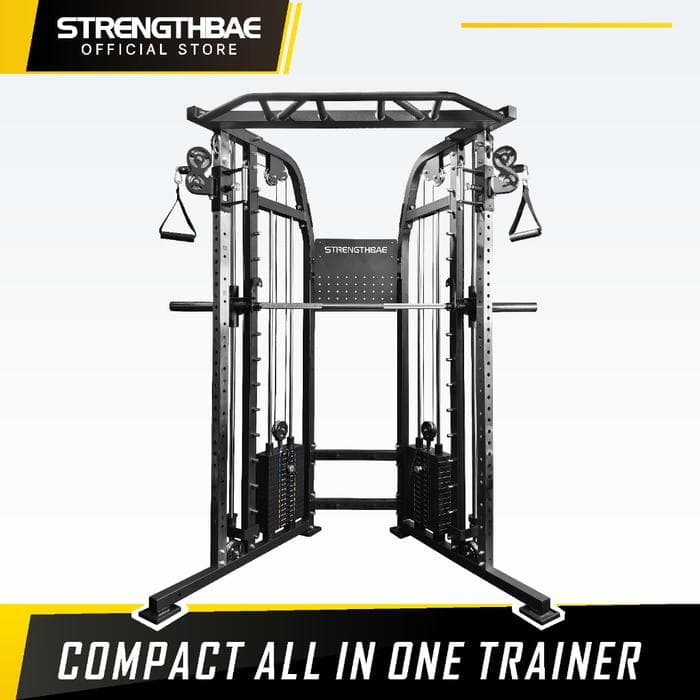
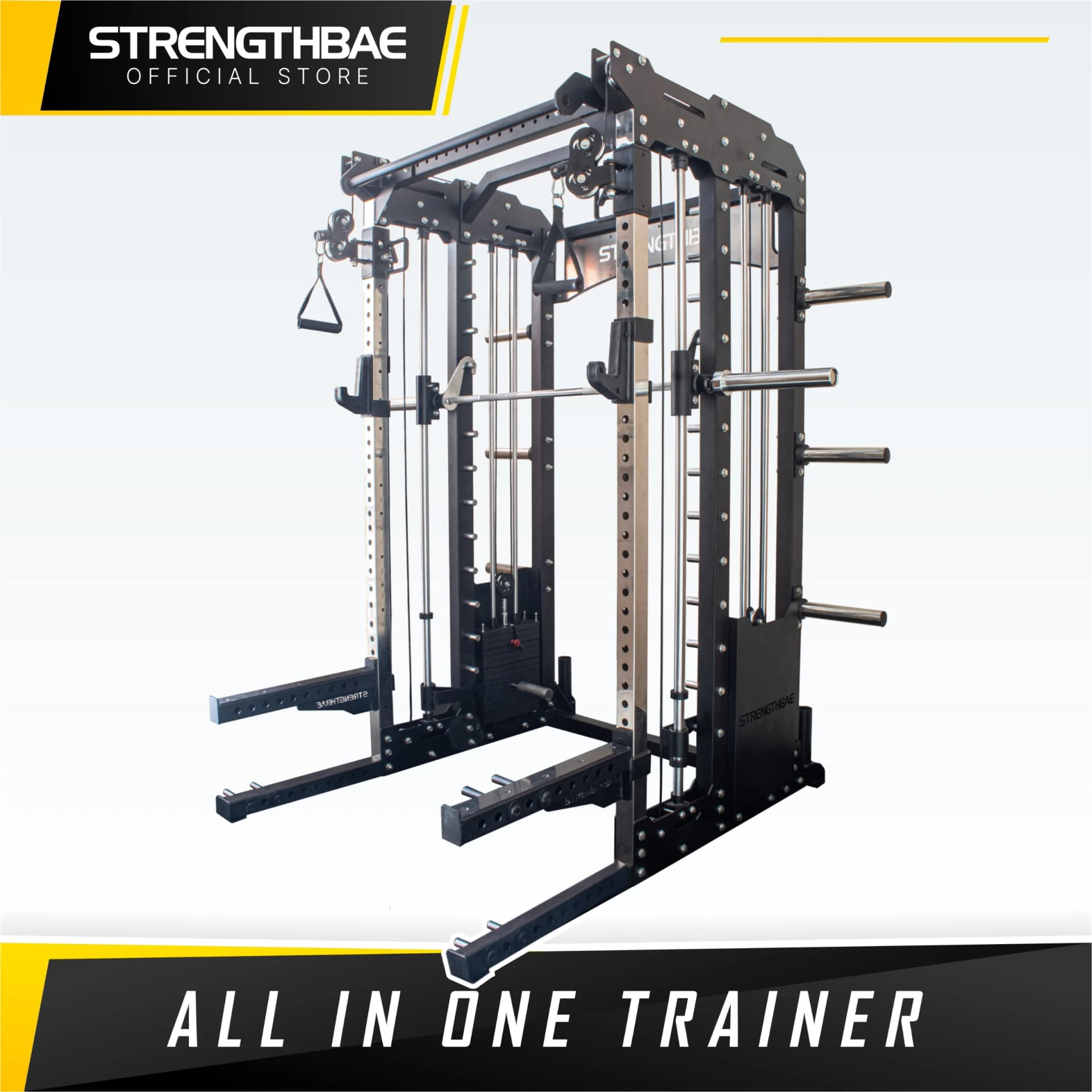
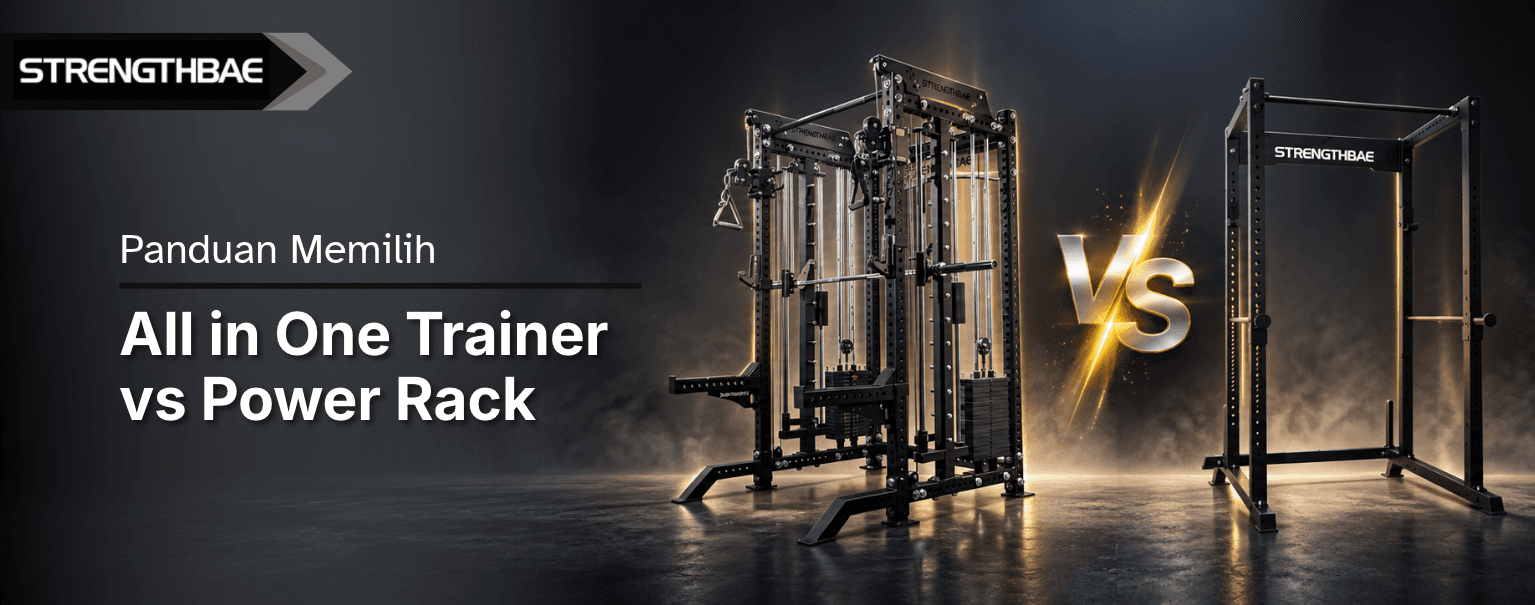
You can use adjustable dumbbells for weight training, resistance bands for exercise variations, an adjustable bench to support various training positions, and a rubber mat as flooring. These pieces of equipment are practical for training various muscle groups without requiring much space. If you want a more complete and integrated workout, an All in One Trainer can be a good choice.
Build Muscle Mass with Strengthbae
Hypertrophy training can help increase muscle size and improve body strength. To achieve good results, combine compound exercises and isolation exercises, gradually increase the load, and make sure your protein intake and rest are sufficient.
Strengthbae provides various gym equipment options to support hypertrophy training, both for home gyms and commercial gyms. Contact the Strengthbae team for recommendations on equipment that suits your hyperthophy training program, space requirements, and budget.
Strengthbae is a professional gym equipment brand that provides solutions for commercial gym businesses and home gyms. From power racks and All in One Trainers to hybrid race-standard training accessories, everything is available at Strengthbae.