HYROX Second Station: 50-Meter Sled Push Guide
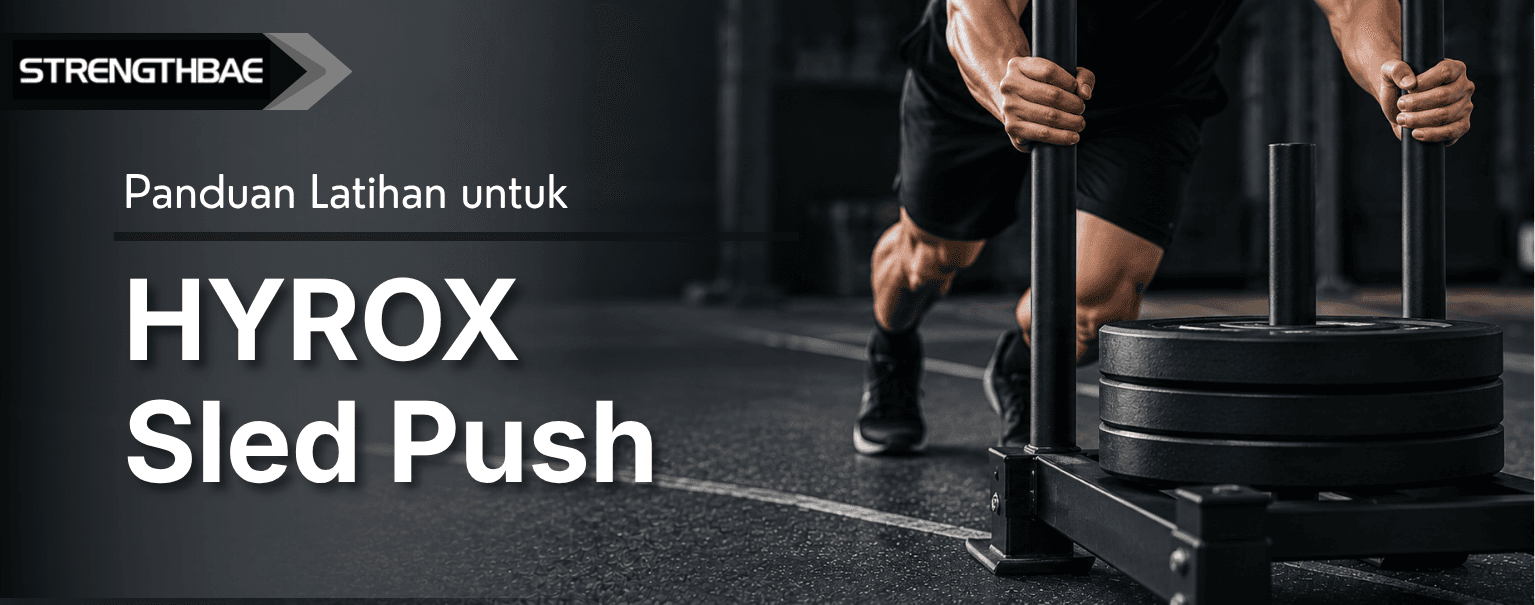
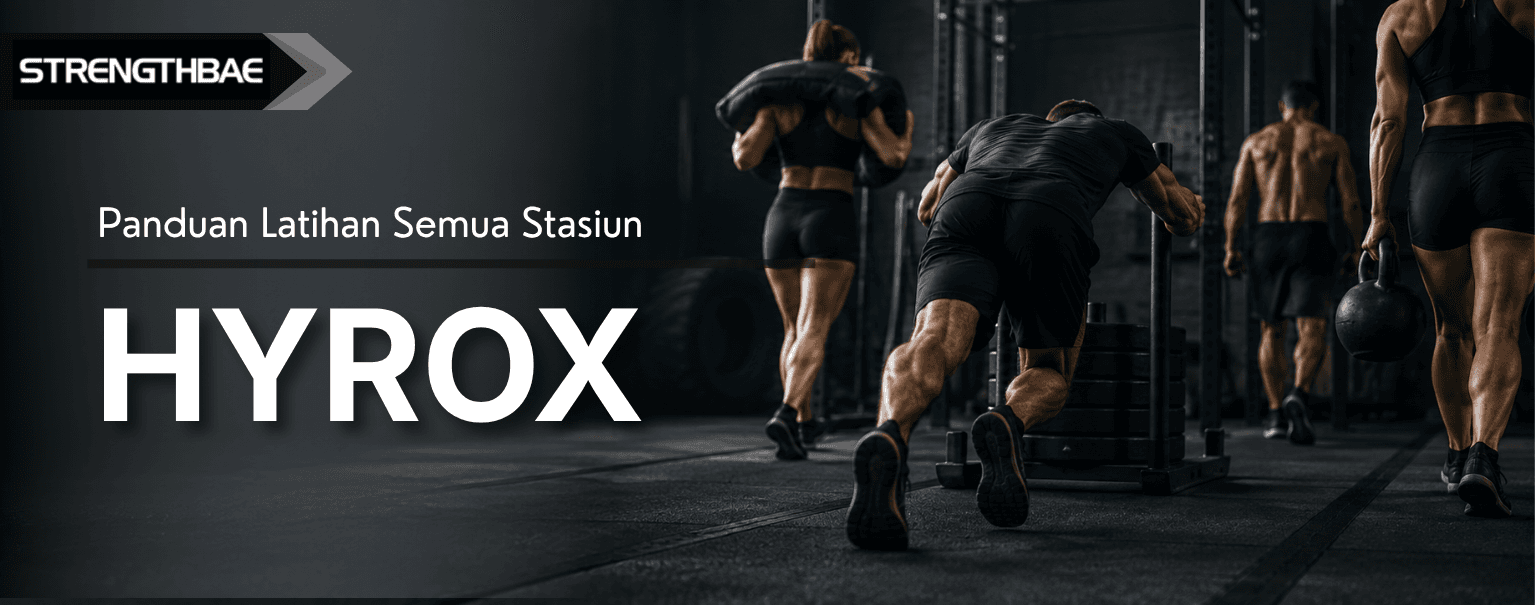
Sled Push is the challenge at the second HYROX station after SkiErg. This station may look simple because the movement only involves pushing a sled forward, but the exercise can feel extremely demanding as the load increases or when performed while the body is already fatigued.
This second HYROX station movement involves many muscles at once, especially the legs, glutes, core, and upper body to keep the position stable.
To make the Sled Push more efficient, you need to understand pushing technique, body position, and supporting exercises that can help improve strength. For beginners, training should also be started gradually so the body can adapt to the movement pattern and the demands of the sled load.
HYROX Sled Push Specifications and Rules
Inside the second HYROX station area, the Sled Push requires athletes to push a loaded sled for a total distance of 50 meters.
The Sled Push lane is generally divided into two 25-meter segments (2 x 25 meters) or four 12.5-meter segments (4 x 12.5 meters), depending on the exhibition arena layout.
In HYROX competitions, the sled must be pushed until the entire physical structure of the sled completely crosses the boundary line before the athlete is allowed to turn around.
Each participant must keep both hands on the vertical sled poles throughout the push and remain within the lane designated by the judges.
The load also differs for each HYROX division or category. Below is a list of the total loads and estimated plate loads depending on each division.
HYROX Division / Category | Total Sled Load (Including 28–30 kg Base) | Estimated Plate Load |
|---|---|---|
Women Open / Doubles Women / Women Relay | 102 kg | ~72–74 kg |
Men Open / Doubles Men / Mixed Doubles / Men Relay / Pro Women / Pro Doubles Women | 152 kg | ~122–124 kg |
Pro Men / Pro Doubles Men | 202 kg | ~172–174 kg |
Mixed Relays | Women: 102 kg | Men: 152 kg | According to Gender Category |
Main Muscles Working During the Sled Push
Although it may look like a simple stepping movement, the Sled Push requires coordinated force from the entire lower and mid-body muscle chain.
Quadriceps
Act as the main driving muscles to extend the knees with every forward pushing step.
Glutes
Drive hip extension with full force to transfer horizontal pushing force into the floor.
Hamstrings
Help stabilize the knee joint, support braking coordination, and complete the stepping pattern.
Calves & Ankles
Transfer the final push through the feet while maintaining grip against the floor surface.
Core Muscles
Keep the torso leaning forward in a stable position without excessive arching, while transferring energy from the legs to the sled.
Shoulders and Arms
Stabilize the grip on the sled poles. Although the hands are not the main source of force, the shoulder and triceps muscles work to withstand the compressive pushing force.
Gym Exercises That Help with the Sled Push
The Sled Push requires a combination of leg strength, muscular endurance, body stability, and the ability to maintain pushing force as fatigue increases.
That is why supporting exercises for the second HYROX station should not focus on only one muscle, but also on the body’s ability to repeatedly produce force. Here are exercises you can do at home for the HYROX Sled Push.
Squat
Squats help build foundational strength in the quadriceps and glutes, two muscle groups that play a major role when pushing the sled.
This movement also trains the body’s ability to produce force from a bent-leg position, making it a strength foundation before progressing to more specific Sled Push training.
Leg Press
The leg press can be used to improve lower-body strength, especially the ability to generate force through the legs.
Because the body position is more stable compared with a free squat, this exercise allows you to focus more on the quadriceps and glutes.
Although the movement pattern is not exactly the same as the Sled Push, the leg press is still useful for building stronger legs to handle sled resistance.
Walking Lunge
The Sled Push is performed with the legs working alternately, so unilateral strength, or the ability to produce force from one side of the body, is also important.
Walking lunges can help train the quadriceps, glutes, and balance of each leg.
Performing lunge repetitions continuously also helps build the muscular endurance needed to keep stepping while pushing the sled.
Romanian Deadlift
The Romanian deadlift targets the posterior chain more heavily, especially the glutes and hamstrings. These muscles help generate force from the hips and support body position when pushing the sled.
Calf Raise
The calves also contribute to every step during the Sled Push. When the feet push against the floor to move the body and sled forward, the ankles also help generate force.
Calf raises can be used to strengthen the calf muscles and improve the ability to repeatedly push through the feet.
Incline Treadmill
Walking or running on an incline treadmill can help train the legs. The treadmill incline requires the body to produce more force to continue moving forward compared with walking on a flat surface.
This exercise can be used to build leg stamina and get the body accustomed to working in a slightly forward-leaning position.
Core Training
When pushing the sled, the core helps keep the torso stable so force from the legs can be transferred more effectively to the sled.
If the body easily loses position as fatigue sets in, the push can also become less efficient.
Exercises such as planks, dead bugs, Pallof presses, or loaded carries can be used to improve core stability.
These exercises can help build a foundation for the Sled Push, but they still do not completely replace training with a weighted sled. If you are seriously preparing for a HYROX competition, it is best to combine the strength training above with direct Sled Push training so your body can also adapt to it.
How Beginners Should Exercise with the Sled Push
For beginners, Sled Push training should start with a light load that allows the sled to keep moving without stopping too often. The initial focus is not on chasing the heaviest load, but on building consistent technique for the second HYROX station.
Pay attention to three main things: body position, stepping rhythm, and the ability to maintain the push. The body should remain leaning forward with a stable core, while the steps should be short enough to prevent momentum from being lost easily.
Once the technique starts to feel consistent, progression can be done gradually. You can increase the load, extend the distance, reduce rest time, or begin combining the Sled Push with running.
Combination training such as running, followed by a Sled Push, then returning to running is important for HYROX race preparation. The final goal is to maintain an efficient, stable, and controlled push even when the body is already fatigued.
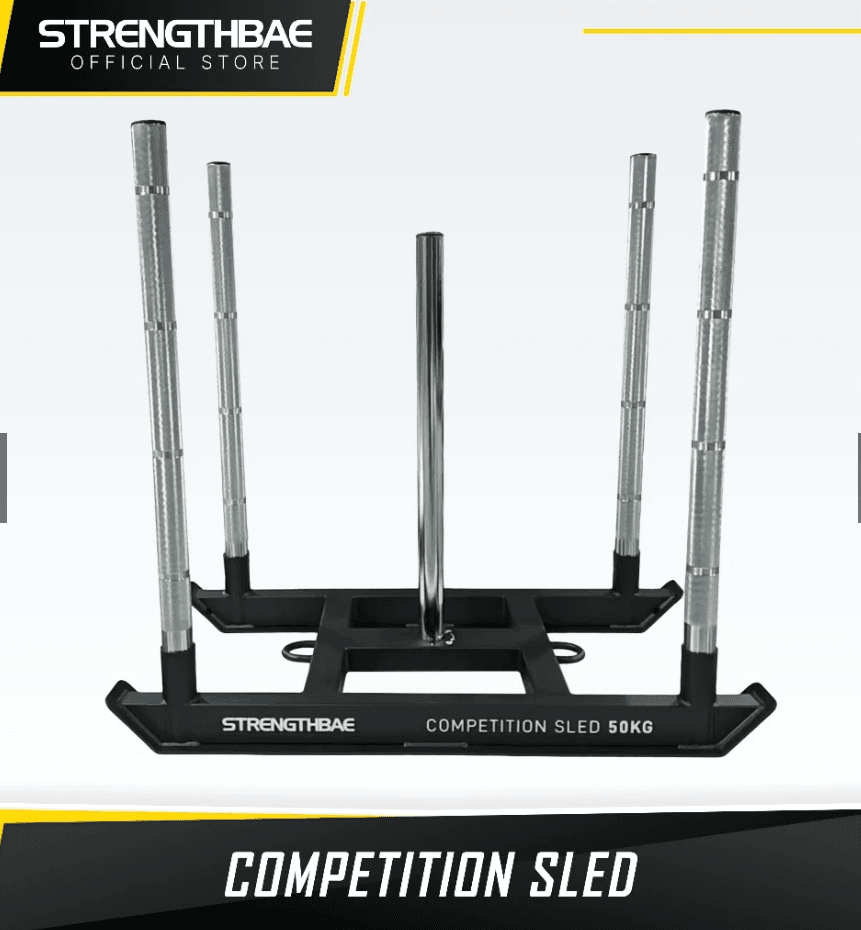
Competition Sled from Strengthbae
The StrengthBae Competition Sled is designed for sled training that more closely matches competition demands. With a base weight of approximately 50 kg, the sled already provides noticeable resistance before additional weight plates are added, making it suitable for both sled push training and race simulations.
This sled is equipped with four textured handles to help maintain a strong grip and allow users to push from either direction without having to move the poles. The longer weight pegs also provide more space for adding additional plates when heavier training loads are required.
In addition to sled pushes, this equipment can also be used for sled pulls, backward drags, and sprint resistance. Its sturdy frame and larger connector rope make the Competition Sled suitable for high-intensity strength and conditioning training.
What Are the Alternatives If You Do Not Have a Sled?
Several types of gym equipment available in commercial gyms, or that you can include in your own home gym, can be used to train for the HYROX Sled Push.
Leg Press
The leg press is one of the most useful options for building pushing strength in the legs, especially in the quadriceps and glutes.
Because the body position is more stable, you can focus on improving lower-body strength that can later help when handling the sled load.
Hack Squat
The hack squat can also be used to build leg strength, especially in the quadriceps.
This gym equipment provides a stable movement path, making it suitable for increasing force capacity without having to focus too much on balance.
Smith Machine
Smith machine squats or split squats can be used to train lower-body strength as well as unilateral, or one-sided, strength.
This is relevant because when pushing the sled, both legs work alternately to generate force.
Incline Treadmill
An incline treadmill can help get the legs accustomed to continuous work while cardiovascular demand also increases. The incline makes the glutes, calves, and thighs work harder than walking on a flat surface.
Stair Climber
A stair climber is also useful for training leg endurance, especially the ability to maintain repeated leg work as breathing becomes more difficult.
Cable Machine
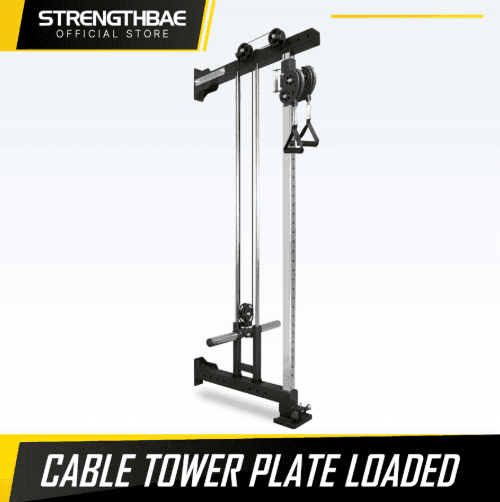
A cable machine can be used for resisted marches or resisted walks with a belt or harness if you want to train a walking pattern against resistance. This movement helps train stepping coordination while also improving the ability to generate forward force.
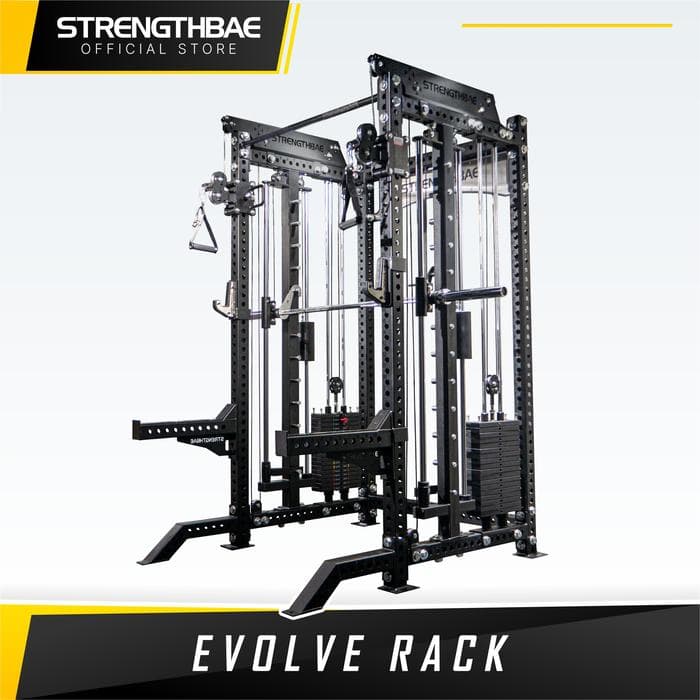
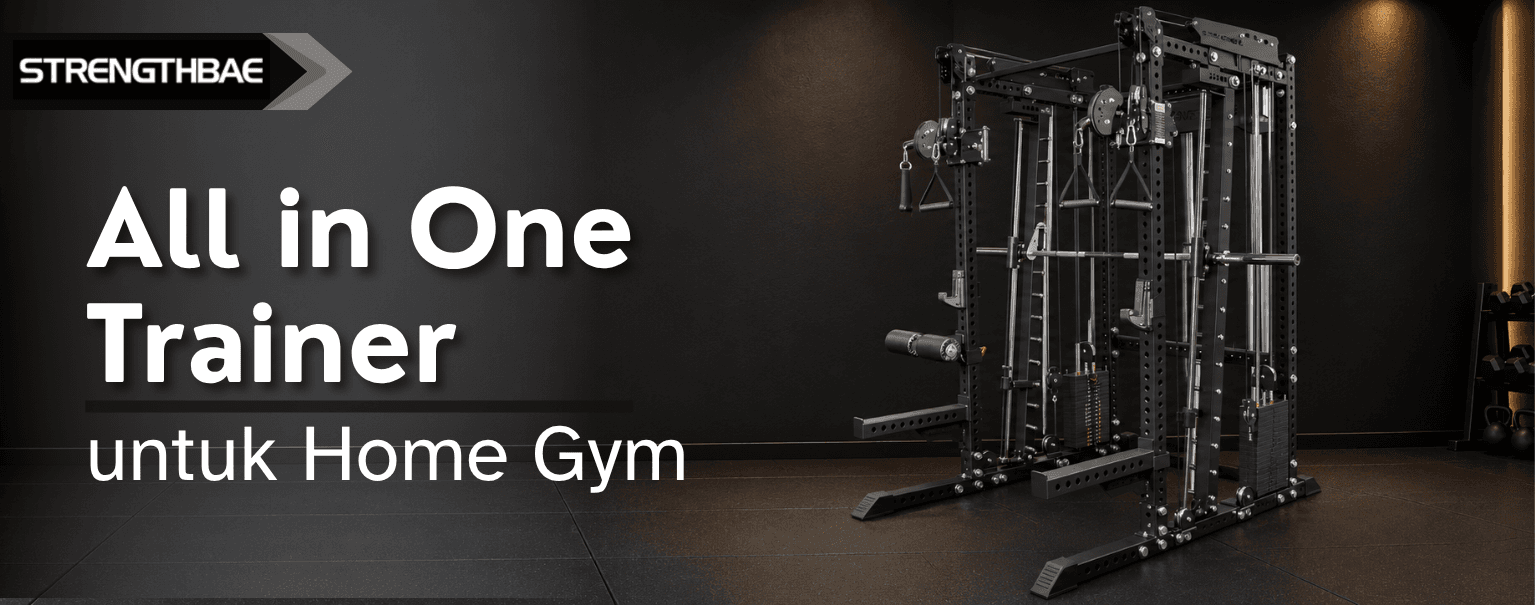
If you need to choose a training combination without a sled, a fairly complete gym equipment combination is the leg press for strength, incline treadmill or stair climber for endurance, and cable resisted walk for movement patterns. You can also use an All-in-One Trainer to get several gym equipment functions in one compact machine.
Common Beginner Mistakes and How to Deal with a Sled That Stops
HYROX participants often lose a lot of time because of several technical mistakes at this second HYROX station, such as:
Body Position Too Upright
This reduces the horizontal pushing angle, causing energy to be wasted downward into the floor.
Pushing with the Arms & Shoulders
Bent arms that actively push will quickly experience local fatigue before reaching 25 meters.
Being Too Aggressive in the First Few Meters
Excessive sprinting at the start causes lactic acid buildup and a sudden lack of oxygen.
Holding Your Breath
Incorrect breathing patterns can increase internal body pressure and accelerate cardiovascular fatigue.
Stopping Too Often in the Middle of the Lane
Every time the sled stops, you are forced to use significantly more energy to overcome inertia again.
If you are forced to stop because of extreme fatigue, do not immediately force yourself to start pushing again without control. Stop completely for 2–3 seconds and take a deep breath.
Reset your forward-leaning body position, establish a firm grip with your feet on the floor, then rebuild momentum using short, explosive steps.
FAQ
How can I gradually improve my Sled Push ability?
Start with a load and distance that match your current ability, then increase them gradually. You can progressively increase the load, distance, or number of repetitions while maintaining proper technique and pushing rhythm.
What should I pay attention to when performing the Sled Push on different surfaces?
Pay attention to the amount of surface friction because it can affect how heavy the weighted sled feels. Make sure the surface is sufficiently flat, safe, and suitable for training so the weighted sled can move properly without increasing the risk of losing balance.
How should I manage Sled Push training intensity so I do not get tired too quickly?
Use a load and distance that allow you to maintain your technique and a relatively consistent speed. Avoid starting with a load that is too heavy, and allow enough rest time between sets.
Why does pushing a sled feel much harder than using the same weight on a leg press?
Pushing a weighted sled involves floor surface friction, full-body stability without support, and horizontal force while moving forward.
These conditions require much more complex full-body muscle coordination compared with the guided movement path of a leg press machine.
What gym equipment is most important to have in a home gym for Sled Push preparation?
Essential functional training equipment includes a weighted sled, an All-in-One Trainer or Cable Machine for resisted walk training, as well as adjustable dumbbells or a barbell for squat and lunge movements.
Improve Your HYROX Performance with StrengthBae
Ready to conquer the Sled Push station and achieve your best time at your next HYROX event? Do not let limited facilities hold back your strength training. Contact the StrengthBae team via WhatsApp for a consultation about completing your home gym setup.
StrengthBae is a professional gym equipment brand that provides solutions for commercial, personal, and home gym needs. From racks and All-in-One Trainers to functional training accessories for HYROX, everything is available at StrengthBae.