8 HYROX Stations: Order, Specifications, & Training
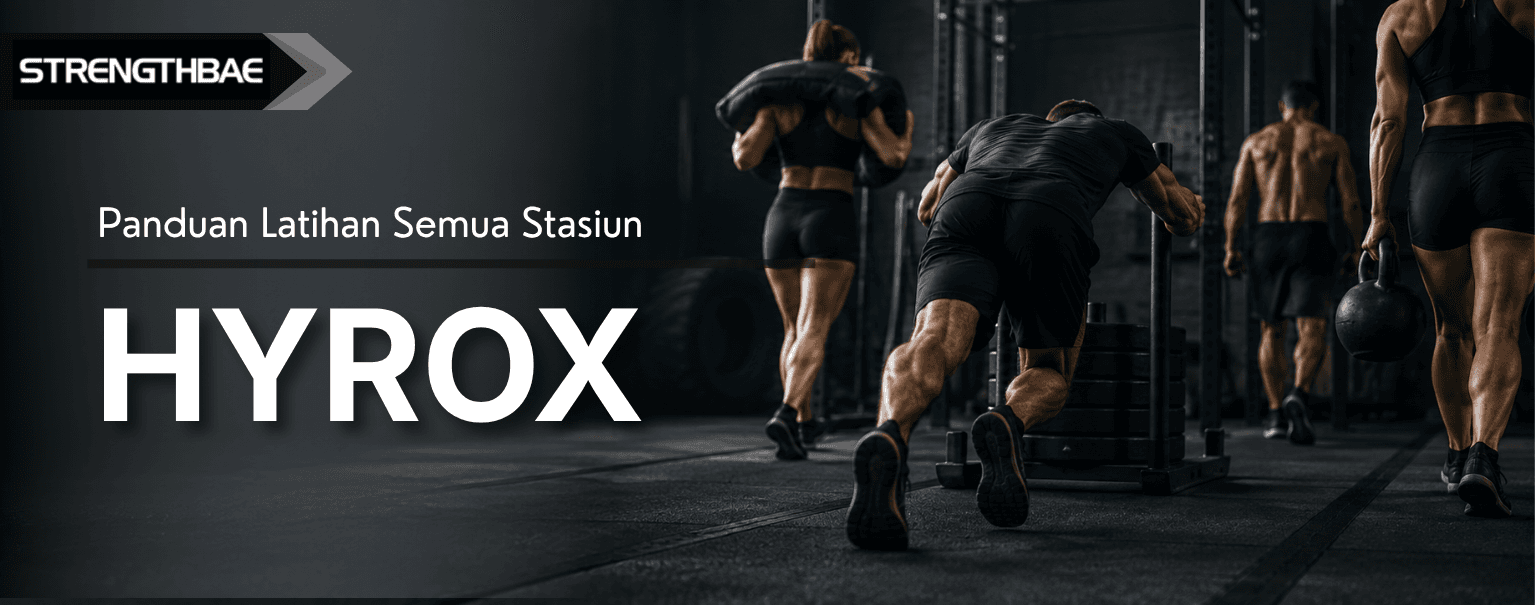
HYROX is a competition that combines running ability with various functional exercises in one race format. Participants must complete multiple rounds consisting of running and workout stations in sequence, requiring a combination of endurance, strength, and strategy.
In HYROX, there are 8 workout stations, each with a different challenge, from movements that test strength to exercises that require energy management and technical control.
Understanding the station order, movement characteristics, and training strategies can help participants prepare more effectively before joining a HYROX event.
What Are HYROX Stations and How Does the Race Format Work?
HYROX is a global fitness competition created by the World Series of Fitness Racing and is categorized as a hybrid race. A hybrid race is a type of fitness competition that combines endurance and strength.
The HYROX race format is consistent and standardized worldwide. Participants must run 1 km, enter 1 HYROX station, and repeat this pattern eight times for a total of 8 km of running and 8 workout stations.
The main appeal of HYROX is its measurable challenge. Unlike many other hybrid races, HYROX tests an athlete’s ability to maintain performance under continuous fatigue.
Between the running track and workout areas, there is an official transition zone called the Roxzone, where participants move between stations with an accumulated distance of approximately 700 meters.
Specifications of the 8 HYROX Stations
Each HYROX station has standardized distances or repetitions across international events. However, equipment loads vary depending on the race division (Open, Pro, Doubles, and Relay) and athlete category.
No. | HYROX Station | Distance / Reps | Open Women | Open Men / Pro Women | Pro Men |
|---|---|---|---|---|---|
1 | SkiErg | 1,000 m | Machine setting | Machine setting | Machine setting |
2 | Sled Push | 50 m (4 × 12.5 m) | 102 kg | 152 kg | 202 kg |
3 | Sled Pull | 50 m (4 × 12.5 m) | 78 kg | 103 kg | 153 kg |
4 | Burpee Broad Jump | 80 m | Bodyweight | Bodyweight | Bodyweight |
5 | Rowing (RowErg) | 1,000 m | Machine setting | Machine setting | Machine setting |
6 | Farmer’s Carry | 200 m | 2 × 16 kg | 2 × 24 kg | 2 × 32 kg |
7 | Sandbag Lunges | 100 m | 10 kg | 20 kg | 30 kg |
8 | Wall Balls | 100 reps | 4 kg (Target 2.74 m) | 6 kg (Target 2.74 m) | 9 kg (Target 3.05 m) |
Order of the 8 HYROX Stations, Movement Technique, and Training Methods
1. SkiErg (1,000 Meters)
The SkiErg is the first HYROX station after athletes complete the opening 1 km run. The movement is inspired by cross-country skiing, where participants continuously pull two handles from above downward.
Main Muscles Used: Latissimus dorsi (back), shoulders, triceps, core, glutes, and hamstrings.
HYROX Training Tips:
A common beginner mistake is relying only on arm strength and starting too aggressively during the first 200 meters.
Proper technique uses a hip hinge movement and body weight during the downward pull, combined with controlled breathing to prevent an early heart rate spike.
Read More: HYROX for Beginners, Station One: 1 km Run to the SkiErg
2. Sled Push (50 Meters)
At the second HYROX station, participants push a weighted sled for a total distance of 50 meters, divided into four 12.5-meter lanes.
Sled push challenges horizontal leg drive and full-body stability.
Main Muscles Used: Quadriceps, glutes, calves, core, shoulders, and arms as support muscles.
HYROX Training Tips:
Maintain approximately a 45-degree body angle and push using short, consistent steps from the legs rather than relying on arm strength.
Taking short 2–3 second pauses while turning at the end of each lane is often more efficient than forcing a continuous push until complete exhaustion.
3. Sled Pull (50 Meters)
At the third HYROX station, participants stand inside a designated area approximately 1.7 meters wide and pull the sled using a thick rope until it crosses the finish line.
Main Muscles Used: Glutes, hamstrings, biceps, back, forearm grip, and core.
HYROX Training Tips:
Use controlled backward steps while pulling the rope instead of relying only on arm strength.
Keep the rope organized inside the designated area to avoid tripping while moving.
4. Burpee Broad Jump (80 Meters)
This fourth HYROX station combines two demanding movements. Participants must perform a burpee until their chest touches the floor, then perform a broad jump forward with both feet landing together, repeated across 80 meters.
Main Muscles Used: Chest, triceps, core, quadriceps, glutes, and cardiovascular system.
HYROX Training Tips:
Maintain a consistent rhythm of around 3–4 seconds per repetition. Instead of jumping too far at the beginning, focus on landing with both feet together and completing the chest-to-floor position correctly to avoid missed repetitions from judges.
5. Rowing / RowErg (1,000 Meters)
Participants use a rowing machine to complete 1,000 meters. This middle HYROX station is an important moment to control breathing and rhythm before entering the heavier final stations.
Main Muscles Used: Legs (60–70% of driving force), core, back, and arms (30–40% of pulling force).
HYROX Training Tips:
Follow the correct movement sequence: push with the legs first, lean back, then finish the pull with the arms.
Avoid excessive lower-back rounding and maintain a stable stroke rate around 24–28 strokes per minute.
6. Farmer’s Carry (200 Meters)
At the sixth HYROX station, participants carry two heavy kettlebells, one in each hand, while walking for 200 meters.
Main Muscles Used: Forearm grip strength, trapezius, shoulder stabilizers, core bracing, and leg muscles.
HYROX Training Tips:
Maintain an upright posture with shoulders pulled back and eyes looking forward.
Avoid gripping the kettlebell handles unnecessarily hard to prevent early finger fatigue, and try not to put the weights down during the lane.
7. Sandbag Lunges (100 Meters)
Near the end of HYROX, participants carry a weighted sandbag on their shoulders while performing walking lunges for 100 meters.
Main Muscles Used: Quadriceps, glutes, hip flexors, and core stability muscles.
HYROX Training Tips:
Make sure the rear knee clearly touches the ground on every repetition and keep your hips upright at the end of each step.
Use a consistent breathing rhythm and maintain steady step length.
8. Wall Balls (100 Repetitions)
The final HYROX station is one of the most demanding, requiring participants to perform deep squats and throw a medicine ball toward a wall target 100 times.
Main Muscles Used: Full body, including quadriceps, glutes, shoulders, triceps, and mental endurance.
HYROX Training Tips:
Break the 100 repetitions into manageable sets, such as 10–15 reps per set, with short 3–5 second rest periods.
Ensure your squat depth meets the standard and your throw reaches the correct target height to avoid rejected repetitions.
Recommended Gym Equipment for HYROX Training at Home
To prepare for HYROX at home or in a personal training studio, you do not need to own every large commercial machine. Choosing versatile gym equipment is key to developing strength and functional endurance efficiently.
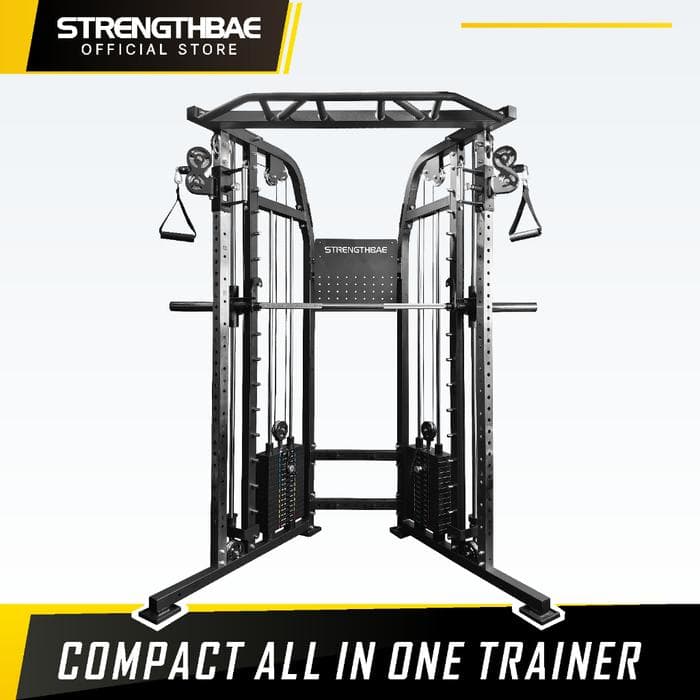
• Modular All-in-One Trainer:
Combines squat rack, Smith machine, and cable system in one compact footprint. Suitable for developing foundational movements such as squats, lat pulldowns, and cable rows.
Read More: StrengthBae All-in-One Trainer
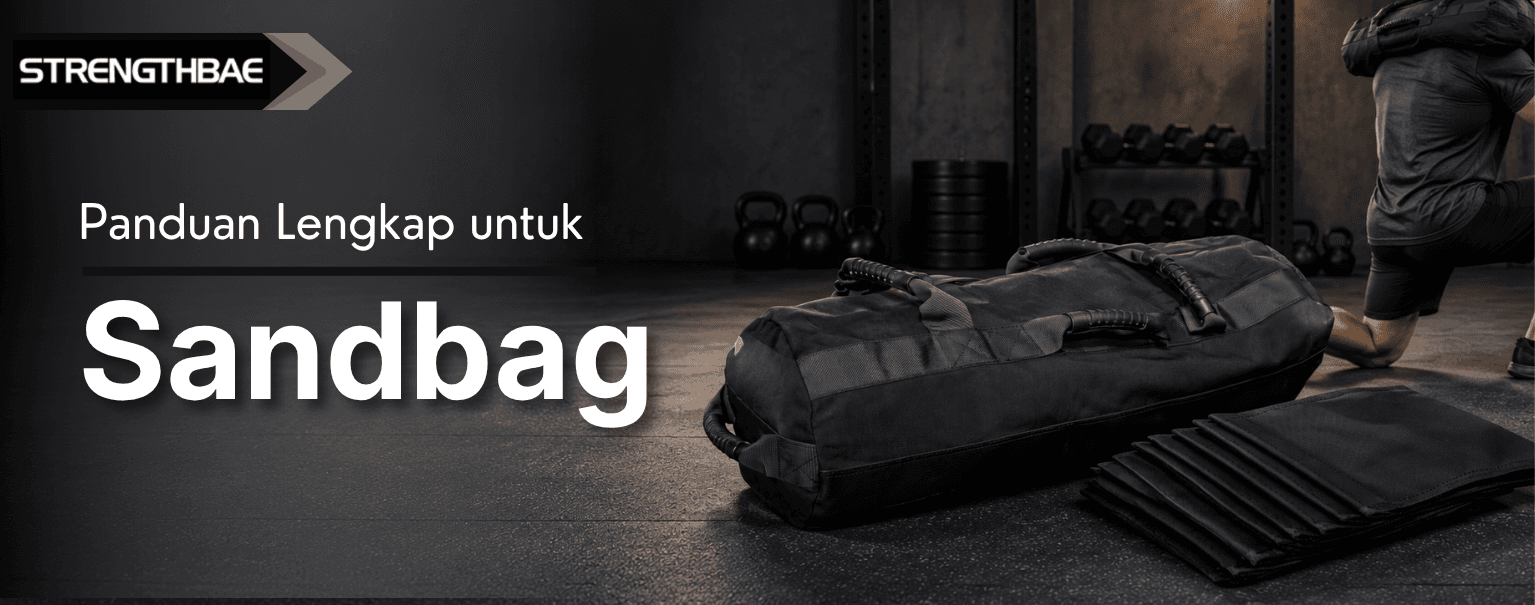
• HYROX-Spec Sandbag:
An essential accessory for practicing sandbag lunges and carry movements. Choose an adjustable sandbag system suitable for progressive training.
Read More: StrengthBae Sandbag
• Adjustable Dumbbell & Kettlebell:
Practical equipment for training Farmer’s Carry, lunges, and shoulder press movements.
Read More: StrengthBae Adjustable Dumbbell
Simple HYROX Training Program for Beginners
For beginners preparing for their first HYROX competition, here is an example of a structured 4-day weekly training split:
Training Day | Main Focus | Training Variation |
|---|---|---|
Day 1 | Running + Cardio Station Intervals | 400 m running intervals × 6 sets + SkiErg/Rowing intervals 500 m |
Day 2 | Lower Body Strength & Sled Work | Barbell Back Squat, Romanian Deadlift, Sled Push 4 × 12.5 m, Walking Lunges |
Day 3 | Rest & Active Recovery | Walking, joint mobility, and light Zone 2 cardio |
Day 4 | Functional Conditioning Circuit | 3 rounds: Farmer’s Carry 100 m, Burpee Broad Jump 40 m, Wall Balls 20 reps |
Day 5 | Upper Body & Core Endurance | Lat Pulldown, Dumbbell Press, Cable Row, Farmer Hold, Plank Bracing |
Day 6–7 | Full Rest & Recovery | Complete rest for muscle tissue and nervous system recovery |
FAQ
Can beginners who have never competed try HYROX station training?
Yes.
All 8 HYROX stations are based on natural functional movement patterns and do not require extremely technical skills.
Beginners can start with adjusted loads while focusing on movement technique and breathing rhythm before increasing intensity.
What gym equipment is most important for starting HYROX training at home?
Essential equipment includes a sandbag, adjustable dumbbells or kettlebells for carry training, and an adjustable bench or power rack to build foundational strength.
How long does it usually take to complete all 8 HYROX stations?
Total HYROX completion time varies significantly.
Open category participants often finish between approximately 1 hour 15 minutes and 1 hour 45 minutes, while elite Pro athletes can complete the race in under 60 minutes.
Are the station weights the same for all HYROX divisions?
No.
Official loads vary depending on the race division (Open, Pro, Doubles, and Relay) and athlete category.
For example, in Sandbag Lunges, Open Women use 10 kg, Open Men and Pro Women use 20 kg, while Pro Men use 30 kg.
Where can I get professional gym equipment for HYROX preparation?
You can find professional gym equipment including power racks, All-in-One Trainers, adjustable dumbbells, and HYROX-style sandbags through StrengthBae.
Conquer Every HYROX Station with StrengthBae
Do not let limited equipment hold back your training progress.
Contact the StrengthBae team via WhatsApp to receive free consultation about home gym setup, equipment specifications, and training equipment packages.
StrengthBae is a professional gym equipment brand providing solutions for commercial gyms, personal training facilities, and home gyms. From racks and All-in-One Trainers to functional training accessories such as HYROX-style sandbags, all are available at StrengthBae.