Smith Machine Counterbalance vs Non-Counterbalance: What’s the Difference?
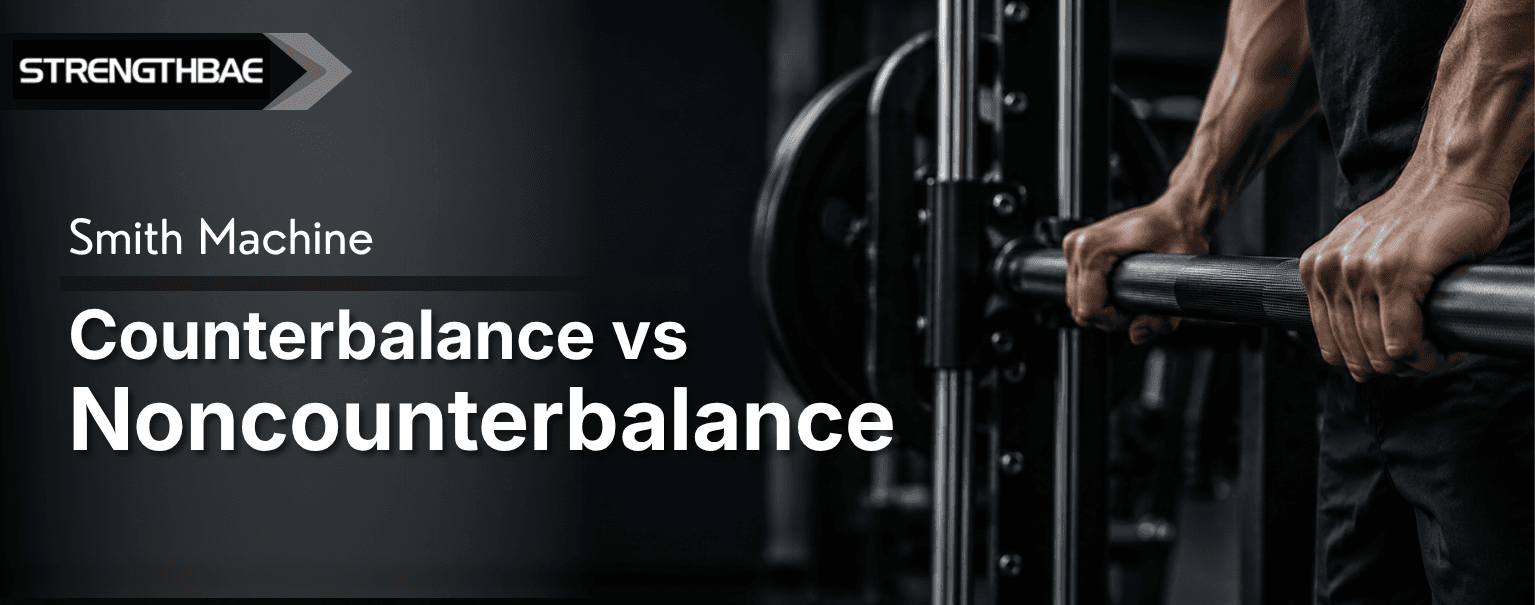
Counterbalanced and non-counterbalanced Smith machines both use a guided bar path, but the resistance feels different.
A counterbalanced Smith machine reduces the effective starting weight of the bar, making it feel lighter, while a non-counterbalanced Smith machine retains more of the bar’s actual weight from the beginning.
This difference affects comfort, exercise selection, and the type of user each system is best suited for. Here is a more detailed explanation to help you determine which Smith machine is right for your training needs.
What Is a Smith Machine? A Brief History and How It Works
The Smith Machine was first developed by fitness pioneer Jack LaLanne in the 1950s. LaLanne designed the system so people could perform resistance training with a guided vertical bar path without requiring a human spotter.
The concept was later refined and popularized by Rudy Smith, a gym owner who introduced the equipment to more fitness facilities, which is how it became widely known as the Smith Machine.
As fitness equipment technology developed, Smith machines also evolved to include counterbalance systems.
A counterbalance system uses cables, pulleys, and counterweights hidden within the machine frame. These counterweights offset part of the bar’s weight as it moves up and down.
As a result, the bar feels significantly lighter at the starting position. Users do not need to immediately support the full physical weight of the bar, making the movement easier to control, particularly for beginners or users who want to start with lighter resistance.
What Is the Main Difference Between Counterbalanced and Non-Counterbalanced Smith Machines?
In terms of their basic structure and safety functions, both Smith machine types use guide rods and locking hooks or safety catches. However, the lifting experience and the way the total load is calculated can be very different.
Counterbalanced Smith Machine
On a counterbalanced Smith machine, part of the bar weight is offset by an internal counterweight system. Because of this, the effective starting weight is much lighter, commonly around 0–6.8 kg depending on the machine.
One of its main characteristics is that the bar does not immediately drop under its full physical weight when the hooks are released. The movement feels lighter and more controlled because part of the bar weight is already supported by the counterbalance system.
Non-Counterbalanced Smith Machine
A non-counterbalanced Smith machine does not use a counterweight system to reduce the bar’s effective weight.
This means the user supports the physical weight of the bar and carriage from the beginning of the movement.
As a result, the starting resistance is usually heavier and often feels closer to training with a conventional barbell.
Comparison Factor | Counterbalanced Smith Machine | Non-Counterbalanced Smith Machine |
|---|---|---|
Effective Starting Resistance | Very light, potentially close to 0 kg | Closer to the physical bar weight, around 15–20 kg |
Internal Mechanism | Cables, pulleys, and counterweight system | No counterweight; direct sliding carriage movement |
Weight Plate Requirement | Requires more plates to reach the same total load | Requires fewer plates because the bar itself contributes more weight |
Beginners & Rehabilitation | Highly suitable for lighter resistance and beginners | Suitable if the user can already control around 20 kg of starting resistance |
Heavy Compound Training | Empty bar feels very light | Feels more familiar to users accustomed to free-weight barbells |
Small-Muscle Isolation Exercises | Flexible for shoulders and arms | A 20 kg starting load may be too heavy for some isolation exercises |
Read also: All-in-One Trainer vs Individual Gym Machines: Which Is Better for a Home Gym?
Which Is Better for Beginners vs Experienced Lifters?
Advantages of a Counterbalanced Smith Machine for Beginners
For beginners, teenagers, older adults, or users going through physical rehabilitation, a counterbalanced Smith machine provides greater flexibility.
Many newer users or lighter individuals may find a 15–20 kg starting load difficult for exercises such as overhead shoulder presses, incline chest presses, or split squats.
With a 0 kg starting load on the Evolve Counterbalance Smith, users can focus on learning proper movement technique and gradually add weight plates from the lightest available load.
Advantages of a Non-Counterbalanced Smith Machine for Experienced Lifters
For experienced lifters or athletes who are already familiar with free-weight barbell training, a non-counterbalanced Smith machine can feel more practical and familiar.
A 20 kg starting bar weight can also make progressive overload more convenient because fewer weight plates are required for heavier exercises such as squats, bench presses, hip thrusts, and Romanian deadlifts.
How to Identify a Counterbalance System on a Smith Machine
Physically, the easiest difference to identify is the additional mechanism connected to the Smith bar.
A counterbalanced Smith machine usually includes cables or belts, pulleys, and counterweights that move as the bar travels up and down. Some of these components may be visible on the sides, rear, or top section of the frame.
A non-counterbalanced Smith machine generally uses a simpler mechanism. The bar travels directly along the guide rails without an additional counterweight system.
However, the difference is not always obvious from appearance alone because some counterbalance systems are hidden inside the frame. The easiest ways to check are:
Move the empty bar. If it feels extremely light, almost floating, or lowers slowly after the hooks are released, the machine may use a counterbalance system.
Inspect the frame. Look for cables, pulleys, or additional mechanisms that move together with the bar.
Check the product specifications. Look for information about the effective bar weight or starting resistance in the manual or official specifications.
Ask the staff or seller. If you are still unsure, confirm whether the Smith machine uses a counterbalance system and ask for the actual effective starting weight.
How to Calculate the Total Load on a Smith Machine
Before tracking your progress, it is important to know the effective starting weight of the Smith machine you are using.
If the bar weight is calculated incorrectly, your training records can also become inaccurate and make it more difficult to compare progress over time.
Smith machine bar weights are not always the same. Some models have a very light starting resistance because of a counterbalance system, while others may begin at around 20 kg.
Because of this, do not assume that every Smith machine has the same starting bar weight.
To calculate your training load, first check the effective starting weight in the machine specifications.
If the starting weight is 0 kg, your total load is simply the combined weight of the plates you add.
If the starting weight is 20 kg, add that 20 kg to the total plate weight.
When comparing progress, it is best to use the same Smith machine. The same displayed load may feel different across machines because rail design, friction, movement angle, and counterbalance systems can vary.
Two Smith Machine Options on the StrengthBae Evolve All-in-One Trainer
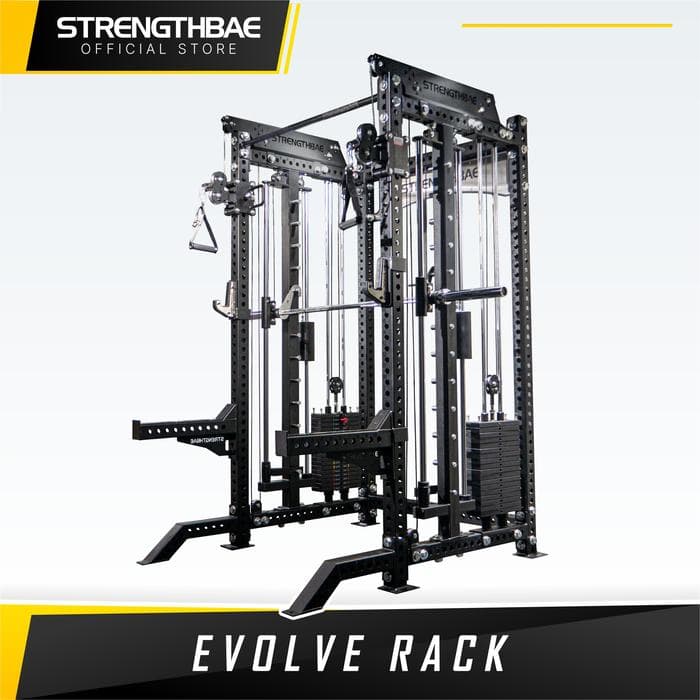
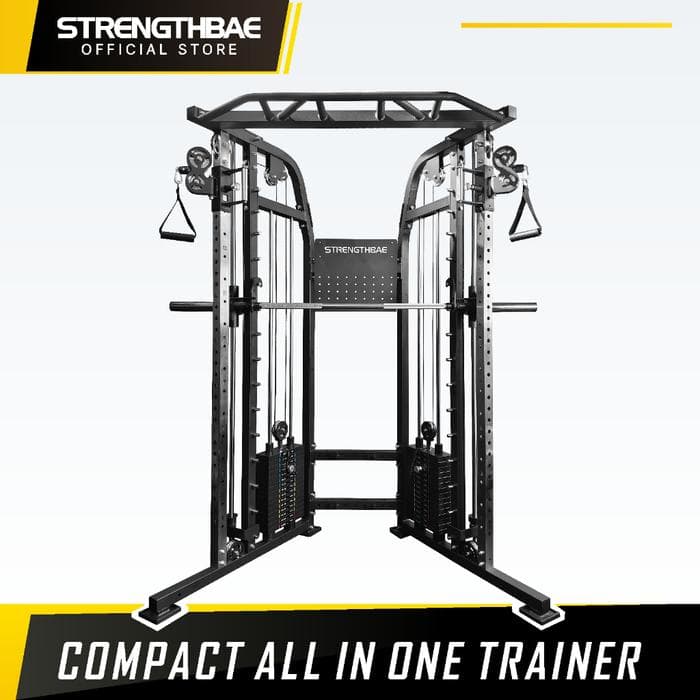
The StrengthBae Evolve All-in-One Trainer is available with two Smith machine options: counterbalanced and non-counterbalanced.
Each has a different feel, allowing you to choose based on the users and exercises most commonly performed.
Choose the Evolve Counterbalance Smith with a 0 kg starting bar weight if the machine will be used by people with different strength levels, or if you prefer to begin exercises with lighter and easier-to-control resistance.
The Evolve Non-Counterbalance Smith has an approximately 20 kg starting bar weight and is better suited to users who are already accustomed to heavier training, including squats, bench presses, and hip thrusts.
Example Load Calculation
For example, suppose you want to train with a total load of 60 kg.
On the Evolve Counterbalance Smith with a 0 kg starting bar weight, you need to load a total of 60 kg in weight plates, or 30 kg per side.
On the Evolve Non-Counterbalance Smith with a 20 kg starting bar weight, you only need to add 40 kg in weight plates, or 20 kg per side.
The remaining 20 kg comes from the Smith machine bar itself.
Read more: Strengthbae Evolve All in One Trainer
FAQ
Is a Smith machine suitable for a home gym?
Yes. A Smith machine can be a useful addition to a home gym because it supports a wide range of strength exercises with a guided bar path.
However, make sure the machine dimensions match the space available in your home gym.
Can a Smith machine be used for full-body training?
Yes. A Smith machine can be used for exercises such as squats, bench presses, shoulder presses, rows, hip thrusts, and Romanian deadlifts.
Does a Smith machine require a lot of space?
It depends on the model. In addition to the machine dimensions, you should also consider the working clearance around the equipment so training remains comfortable and safe.
Does a Smith machine require regular maintenance?
Yes. Clean the machine regularly, inspect bolts and connections, and make sure the rails and moving components continue to operate properly according to the manufacturer’s instructions.
What Smith machine specifications should I check before buying?
Check the dimensions, effective starting bar weight, maximum load capacity, safety system, type of rails or bearings, and whether the machine uses a counterbalanced or non-counterbalanced system.
Find the Right Smith Machine with StrengthBae
Counterbalanced and non-counterbalanced Smith machines both have their own advantages, but they are suited to different training needs.
If you are still unsure which option to choose, contact the StrengthBae team for a consultation and more information about the Evolve All-in-One Trainer and the Smith machine configuration that best matches your training requirements.
StrengthBae is a professional gym equipment brand that provides solutions for commercial gyms, personal training facilities, and home gyms. From racks and All-in-One Trainers to functional training accessories such as HYROX-style sandbags, a wide range of gym equipment is available at StrengthBae.