All in One Trainer vs Multi Gym: Guide and Differences
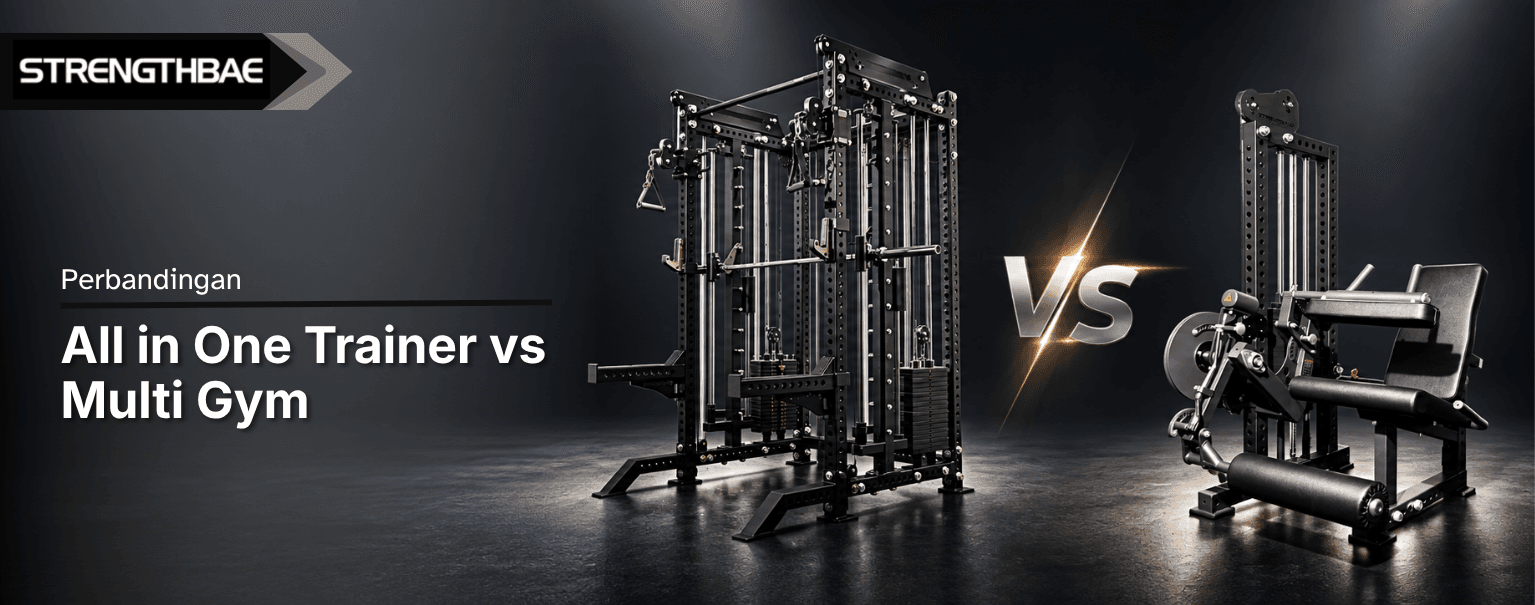
The main differences between an All in One Trainer and a Multi Gym lie in their design, functions, and how they are used. Choosing a multifunctional gym machine can be challenging, especially when deciding between an All in One Trainer and a Multi Gym. Both can combine several training functions into a single unit, making them suitable for saving space in home gyms and commercial gyms.
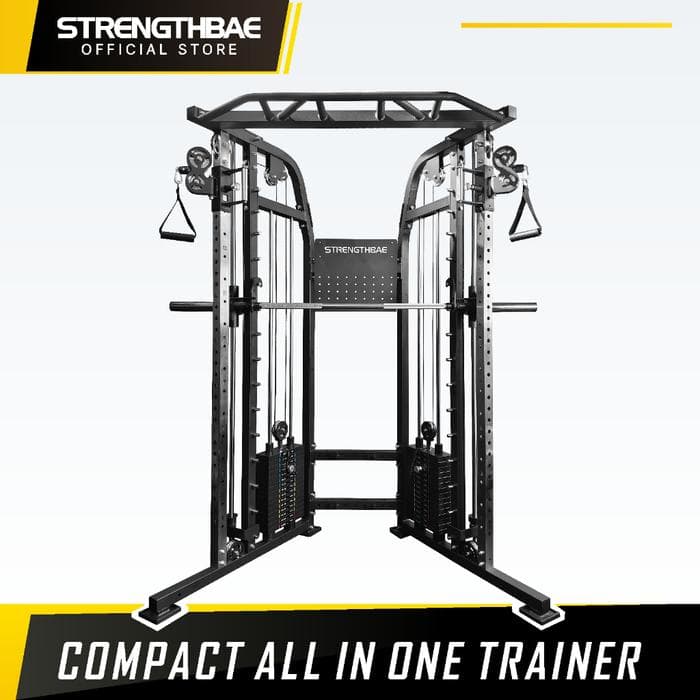
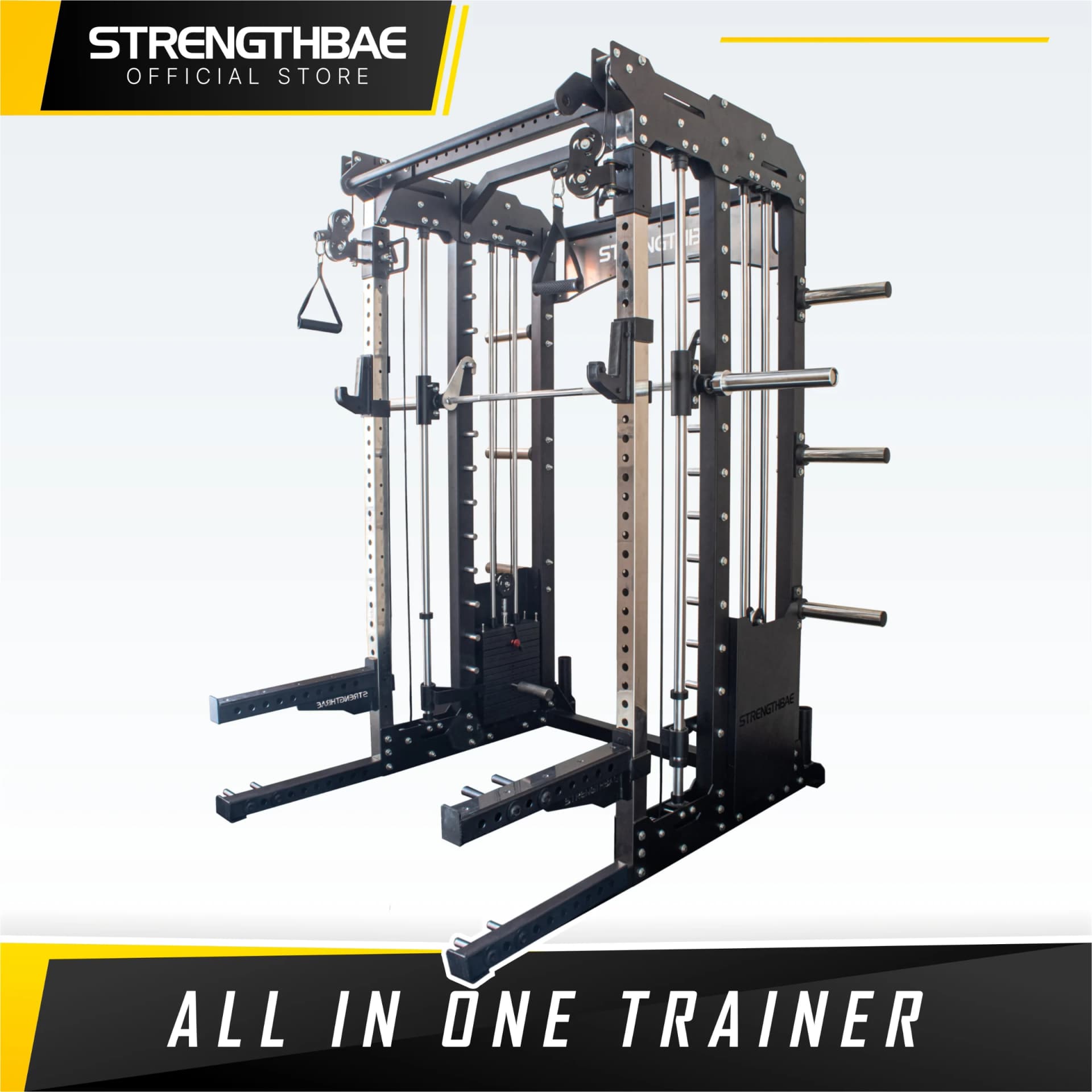
An All in One Trainer typically combines a power rack, Smith Machine, and dual cable functional trainer in a single frame, allowing it to be used for free-weight, Smith, and cable training. Meanwhile, a Multi Gym focuses more on machines with guided movements using a weight stack for more structured training. Both can save space compared to using multiple separate machines, but their features and components may differ. Therefore, always check the specifications of both before making a choice.
What Is an All in One Trainer?
An All in One Trainer is a fitness machine that combines several training functions into a single frame. It typically supports three main types of training: free weight, Smith Machine, and cable training, making it suitable for home gyms and commercial gyms that need multiple functions in a single area.
Common components available on an All in One Trainer include:
Power Rack or Half Rack: For barbell exercises such as squats and bench presses, equipped with J-hooks and spotter arms.
Smith Machine: A barbell that moves along guide rails and is equipped with a safety system.
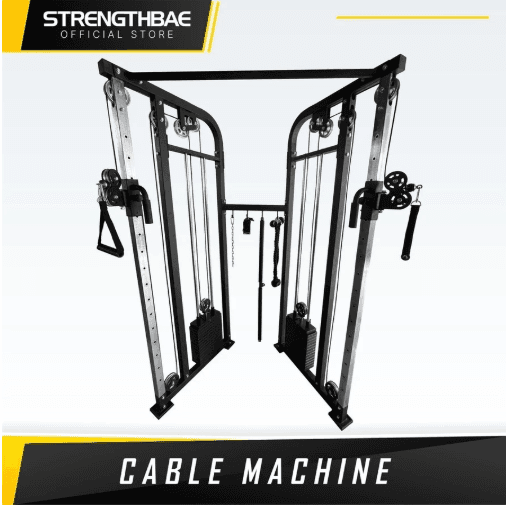
Functional Trainer / Dual Cable: Two pulleys with adjustable heights for various cable exercises.
Pull-Up Bar: For pull-ups and chin-ups with various grip positions.
Landmine Attachment: For exercises such as landmine presses, rows, and rotational movements
Plate Storage: A place to store weight plates on the machine frame.
Lat Pulldown & Low Row: Back training stations available on certain models.
Additional Attachments: Such as dip bars, leg press attachments, and various cable handles.
Advantages of an All in One Trainer
Multiple Functions in One Machine: Combines a power rack, Smith Machine, cable crossover, and several other stations in a single frame.
Supports Various Types of Training: Can be used for free-weight, Smith Machine, and cable training.
More Exercise Options: Can be used for various compound and isolation exercises for the entire body.
Space Saving: Suitable for home gyms with limited space that want to maximize a single area.
Limitations of an All in One Trainer
More Adjustments: Users need to adjust the J-hooks, safety arms, bench, and attachments when switching between exercises.
Requires Movement Space: Sufficient clearance is needed for a 2.2-meter barbell and cable movement.
Higher Initial Cost: Because it combines multiple functions into one machine.
Requires Familiarity with the Equipment: Users need to understand how to adjust the safety arms, stoppers, and other components to keep training safe.
What Is a Multi Gym?
A Multi Gym or multi-station gym is a gym machine that combines several exercise stations into a single frame. Unlike an All in One Trainer, which supports more free-weight and cable training, a Multi Gym focuses more on machine-based exercises with guided movements.
Examples of Multi Gym stations include:
Chest Press / Incline Press: For chest training with guided pressing movements.
Lat Pulldown: For training the back muscles through an overhead pulling movement.
Seated Row: For training the back muscles through a pulling movement from a seated position.
Pec Fly / Rear Delt: For training the chest and rear shoulders.
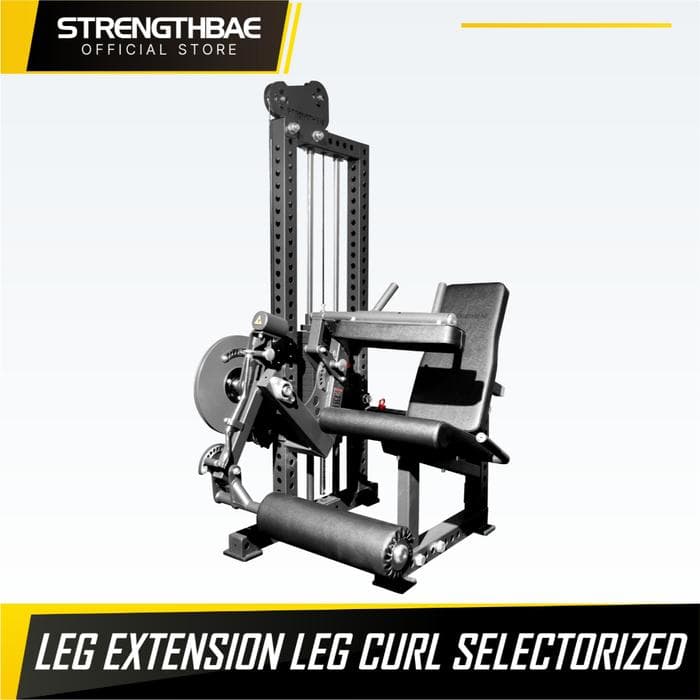
Leg Extension & Leg Curl: For training the quadriceps and hamstrings.
Low Row / Biceps Pulley: For back and arm exercises using a low pulley.
Abdominal Station: For abdominal exercises on certain models.
The number and type of stations can vary between models. Generally, each station has a movement path determined by the machine's design.
Advantages of a Multi Gym
Guided Movements: The machine helps maintain the movement path, making it easier to use, especially for beginners
Easy Weight Adjustment: Most models use a weight stack with a pin, allowing the load to be changed quickly
Suitable for Solo Training: Does not require a spotter like some barbell exercises
Multiple Exercise Options: Several machines can be used to train different muscle groups in a single unit
Limitations of a Multi Gym
Less Flexible Movement: The movement path is determined by the machine, so it is not as flexible as free weights
Limited Barbell Training: Most Multi Gyms are not designed for exercises such as back squats or deadlifts with a free barbell
Exercise Variety Depends on the Stations: The fewer stations available, the more limited the exercise options
Less Flexible for Different Angles: Not as flexible as a cable machine with pulleys that can be adjusted to different heights.
Comparison of All in One Trainer and Multi Gym
Training Needs | All in One Trainer | Multi Gym |
Machine-based training | Suitable, depending on the configuration | Highly suitable |
Beginners who want guided movements | Suitable | Highly suitable |
Flexible cable training | Generally available on many models | Depends on the model |
Barbell training (free weight) | Generally better supported | Limited, depending on the model |
Smith Machine training | Often available | Depends on the model |
Free-weight training | More flexible | Limited |
Overall exercise variety | Highly dependent on configuration & attachments | Depends on the number of stations |
Compact home gym | Suitable, especially when multiple functions are needed | Suitable |
Users with varied training goals | Highly suitable for a wide range of exercises | Suitable for structured training |
Read Also: All in One Trainer vs Functional Trainer: What's the Difference?
Resistance Systems in All in One Trainer and Multi Gym
The resistance or loading system affects how the equipment is used, how easily the weight can be changed, and how training progression is managed. All in One Trainer and Multi Gym generally use different loading systems.
On an All in One Trainer, resistance can come from weight plates, a weight stack, or a combination of both, depending on the model. Plate-loaded systems use weight plates attached to specific components such as the Smith Machine or cable station.
The advantage is that the load can be increased flexibly, and the same weight plates can also be used for barbell exercises. However, changing the weight takes more time because the plates have to be manually loaded and removed.
Multi Gyms generally use a weight stack with a pin. Users simply move the pin to change the load, making resistance changes faster and more convenient. The drawback is that the maximum load is limited by the capacity of the weight stack available on the machine.
This difference makes the All in One Trainer more flexible when adjusting the load, while the Multi Gym is more convenient when quick weight changes are needed. The choice should also be based on your space, type of training, and weight plate storage needs.
Comparison of Exercises on All in One Trainer and Multi Gym
The exercises available on both machines vary according to their respective designs and functions.
An All in One Trainer offers a wider range of exercises in a single machine. Users can perform squats, bench presses, Romanian deadlifts, shoulder presses, cable rows, cable flyes, lat pulldowns, biceps curls, triceps pushdowns, pull-ups, and exercises using a landmine attachment. In a single workout session, users can combine free-weight, Smith Machine, and cable training. This is especially true if the All in One Trainer you choose supports various attachments.
A Multi Gym focuses more on exercises determined by each machine station. Common exercises include chest presses, lat pulldowns, seated rows, leg extensions, leg curls, pec flyes, and various other isolation exercises, depending on the Multi Gym you choose. Because the movement path is guided by the machine, users can switch between exercises more quickly without making many adjustments to the bench or attachments.
Movement Flexibility of All in One Trainer and Multi Gym
An All in One Trainer supports a wide range of compound exercises using the power rack, Smith Machine, and free barbell. Its dual cable system with adjustable pulleys also allows for different pulling angles and exercise positions based on the user's needs.
Meanwhile, a Multi Gym focuses more on machine-based exercises with predetermined movement paths. This design provides greater body stability and more consistent movement, but the pulling angles are not as flexible as the cable system on an All in One Trainer. The number and type of exercises still depend on the specifications and configuration of each Multi Gym.
All in One Trainer and Multi Gym for Beginners
Both All in One Trainer and Multi Gym can be used by beginners, but they work differently. An All in One Trainer is fairly beginner-friendly, especially when using the Smith Machine and cable system. However, beginners need to learn how to adjust the J-hooks, Smith Machine locking mechanism, bench position, and cable attachments.
A Multi Gym is generally simpler because the seat position, pads, and movement path are already determined by the machine. Beginners simply select the weight using the pin and follow the available movement. However, both machines can be used effectively by beginners as long as proper exercise technique is maintained.
Comparing All in One Trainer and Multi Gym for Progressive Overload
Progressive overload means gradually increasing the training load to help improve strength and muscle mass.
An All in One Trainer provides many options for increasing the load, such as adding weight plates to the barbell and Smith Machine, increasing the cable load, or using additional dumbbells. Users can also increase the load gradually by using fractional plates.
On a Multi Gym, progressive overload is usually achieved by increasing the weight on the weight stack using the pin or adding plates on certain models. Weight adjustments are faster and more convenient, but the range of exercise variations is not as broad as with an All in One Trainer. Therefore, the All in One Trainer is more flexible, while the Multi Gym is more convenient for increasing the load.
All in One Trainer and Multi Gym for Home Gyms
Both All in One Trainer and Multi Gym are suitable for home gyms because they can combine several training functions into a single unit. Both help save space compared to purchasing multiple separate machines, but the choice should be based on the types of exercises you perform most often.
Before choosing, consider the room size, equipment footprint, movement space required during use, ceiling height, and access for bringing the equipment into your home. Do not only consider the frame dimensions, as some exercises require additional space around the equipment.
Also consider the loading system, maximum capacity, number of available exercises, and maintenance requirements. By considering these factors, both an All in One Trainer and a Multi Gym can be effective choices for building a home gym that suits your needs and available space.
Read Also: All in One Trainer for Limited Spaces: A Home Gym Solution
All in One Trainer and Multi Gym for Multiple Users
If the gym equipment will be used by several people, also consider how easy it is to readjust the equipment. Each user may have a different height, bench position, pulley height, and preferred load, so the equipment needs to be adjusted before each use.
On an All in One Trainer, there are generally more settings to adjust, such as the J-hook position, safety arms, pulley height, bench position, and weight plates. A Multi Gym is generally more convenient because several adjustments are already built into the machine stations, although the seat, pad, and weight settings still need to be adjusted. For a shared home gym, choose equipment that is easy to adjust so switching between users does not take too much time.
FAQ
Which is more space-efficient, an All in One Trainer or a Multi Gym?
It depends on the model and your needs. A Multi Gym generally has a more concentrated footprint, while an All in One Trainer can save space compared to purchasing a power rack, Smith Machine, and cable machine separately.
Can a Multi Gym be used with a free barbell?
Most Multi Gyms are not designed for free-barbell exercises. If you want to perform squats or bench presses with a free barbell, choose an All in One Trainer with a power rack.
Is a weight stack machine better than a plate-loaded machine?
Neither is better, as both are relatively similar. Weight stacks are more practical because the load can be changed using a pin, while plate-loaded machines provide more flexibility in adjusting the load and are suitable for users who already have weight plates.
Which is better for a home gym, an All in One Trainer or a Multi Gym?
Both are suitable for home gyms. Choose an All in One Trainer if you need a variety of free-weight, Smith Machine, and cable training options. Choose a Multi Gym if you prioritize practical and guided machine-based training.
Meet Your Gym Equipment Needs with Strengthbae
Both All in One Trainer and Multi Gym can serve as the main equipment for a home gym or commercial gym. An All in One Trainer offers more variety, including a rack, Smith Machine, cable, and free weight, while a Multi Gym is more practical for guided, machine-based training. Choose according to your available space, budget, and the types of exercises you perform most often.
Start building a more complete home gym that suits your needs with equipment from Strengthbae. The Strengthbae team is ready to help you choose between an All in One Trainer or Multi Gym and put together the right gym equipment package for your training space.
Strengthbae is a professional gym equipment brand that provides solutions for commercial gym businesses and home gyms. From racks and All in One Trainers to functional training accessories such as Hyrox-standard sandbags, everything is available at Strengthbae.