Tips for Choosing a Power Rack for Your Home Gym
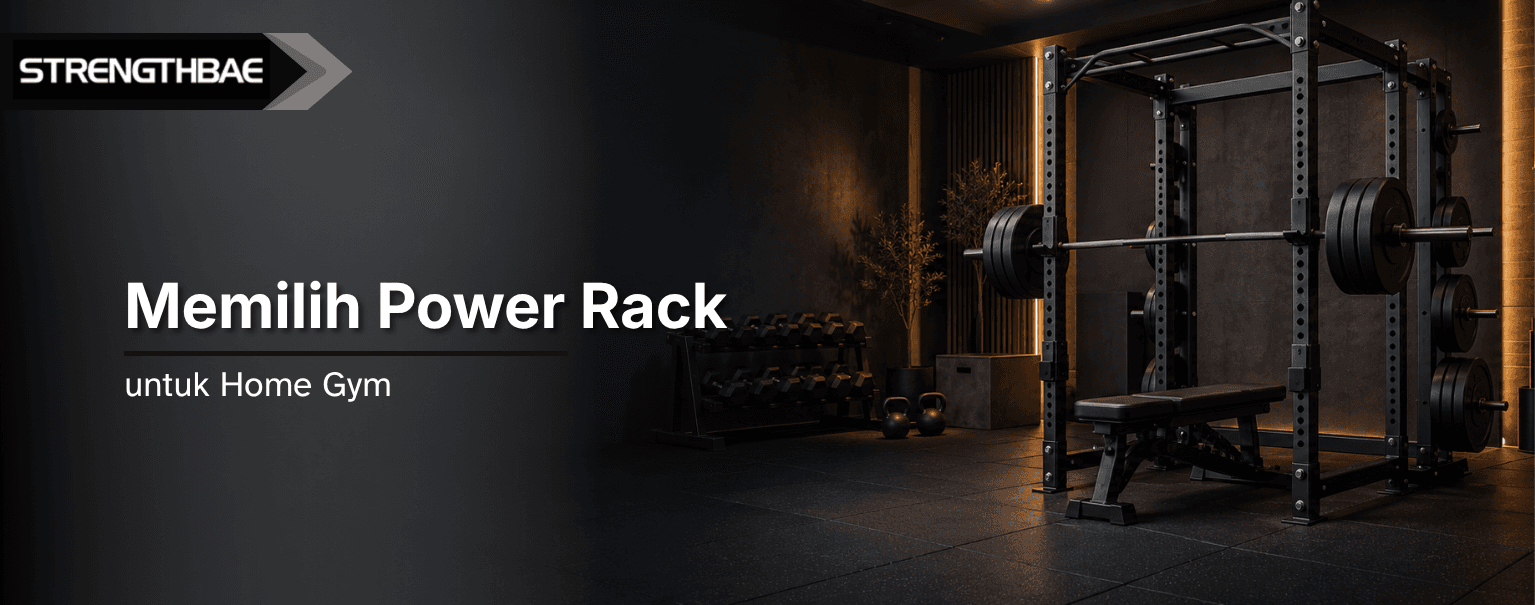
A power rack is one of the main pieces of gym equipment that can be used for various weight training exercises such as squats, bench presses, overhead presses, and pull-ups. In terms of shape, a power rack consists of a square-shaped steel frame with four main uprights equipped with J-cups, safety bars, and a pull-up bar to support and secure the barbell during training.
When choosing a power rack, do not only look at the weight capacity or frame design. Also consider the room size, ceiling height, safety system, rack stability, attachment compatibility, and the types of exercises you usually perform.
For a home gym, choose a power rack that fits the available space, is safe to use without a spotter, and can support your training needs in the long term. This article explores how to choose the best power rack for your home gym.
Know the Types of Power Racks for Home Gyms
Before buying a power rack for your home gym, it is important to understand the common types of designs available. Each type has different space requirements, levels of stability, and safety systems, so the choice should be adjusted to the conditions of your home gym.
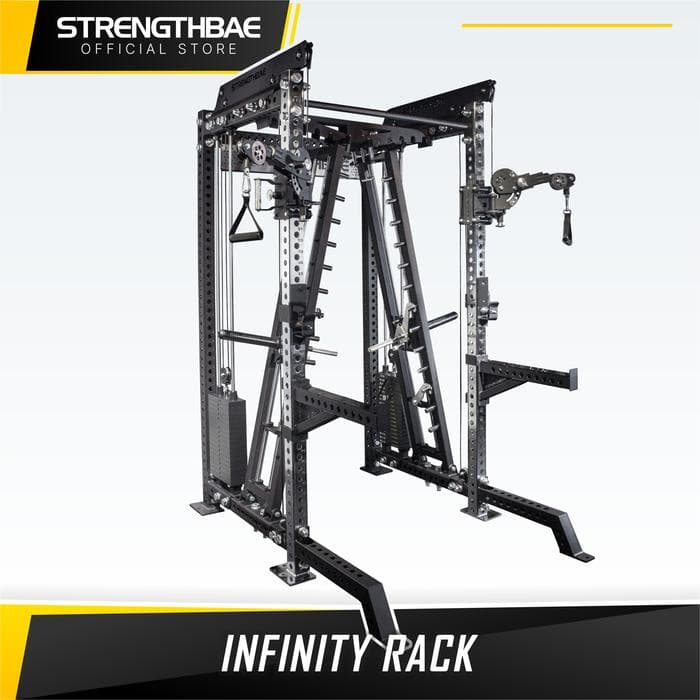
Full Power Rack
A Full Power Rack has a cage-like design with four or more main uprights. You can perform exercises inside the rack with the help of safety bars or safety pins to catch the barbell if you fail to complete a repetition. This design provides high levels of safety and stability for exercises such as heavy squats and bench presses.
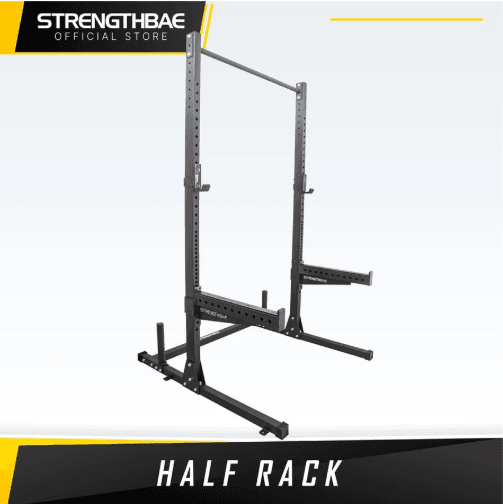
Half Rack
A Half Rack has a more open design with the training area positioned at the front and support uprights at the back. It is usually equipped with safety spotter arms to catch the barbell during training. Its size is more compact than a full power rack and provides greater freedom of movement.
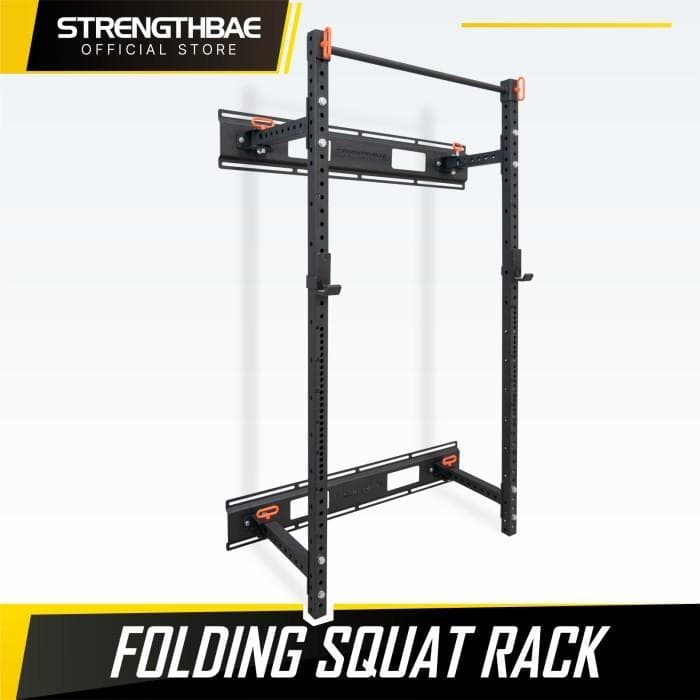
Folding Rack
A Folding Rack has uprights that can be folded toward the wall after use. This design is suitable for home gyms with limited space or multifunctional rooms because the floor area can be cleared when the rack is not being used.
Wall-Mounted Rack
A Wall-Mounted Rack is installed directly onto the wall, so it does not require much floor space. This type is suitable for home gyms with limited space, but the wall must have a strong structure and the installation must be done correctly to keep the rack stable during use.
Comparison of Power Rack Types for Home Gyms
Each type of power rack has different designs, space requirements, and levels of flexibility for your home gym. The following table helps you compare the characteristics, main advantages, and limitations of each rack type before making your choice.
Rack Type | Characteristics & Footprint | Main Advantages | Limitations & Notes |
Full Power Rack (4/6-Post) | Enclosed cage design with moderate to large space requirements. | Very stable and safe for heavy weight training inside the rack. | Requires sufficient floor space and ceiling height. |
Half Rack | Open training area with rear uprights that can also be used for storage. | More space-efficient and easy to enter and exit. | Exercises are performed outside the cage with the help of spotter arms. |
Folding Rack | Rack can be folded and brought close to the wall after use. | Extremely space-efficient and can free up floor space. | Requires a sturdy wall and needs to be folded after use. |
Wall-Mounted Rack | Installed directly and permanently onto the main wall. | Sturdy and saves floor space at the back. | Not easy to move because it is permanently installed. |
Read Also: 4 Types of All in One Trainers at Strengthbae and Their Differences
Measure Your Home Gym: Dimensions and Movement Space Around the Power Rack
The first step before choosing a power rack for your home gym is to accurately measure the available length, width, and height of the room. Do not only calculate the size of the power rack frame, such as 120 × 120 cm, because you also need open space around it to use the equipment comfortably.
Also consider the length of a standard Olympic barbell, which is approximately 220 cm. Ideally, provide a minimum room width of around 240 cm so there is enough space to load and remove weight plates from both sleeve ends more comfortably.
In addition, leave enough space for movements such as lunges and bench presses, placing a bench, and safely entering and exiting the power rack. Make sure the position of the power rack also does not block the room door from opening.
Check the Ceiling Height of Your Home Gym
Compare the height of the power rack, which is generally around 210–235 cm, with the ceiling height of your home gym. Do not only make sure that the rack can fit in the room, but also leave enough clearance above your head when performing pull-ups and overhead presses.
Also consider the position of hanging lights, ceiling fans, and air-conditioning ducts. Ideally, the power rack should not be placed directly underneath these installations so they do not interfere with movement and remain safe during training.
Match the Power Rack to Your Training Needs
Each exercise requires different power rack features. For squats, consider the quality of the J-Hooks and how easily the safety arms can be adjusted. For bench presses, choose a rack with sufficiently close hole spacing for the J-Hooks so the barbell position can be adjusted precisely.
For overhead presses, make sure the rack is tall enough so the barbell does not hit the top of the rack. When performing pull-ups, consider the shape and grip options of the pull-up bar. For rack pulls, make sure the safety arms are strong enough to hold heavy loads. If you want to perform more exercise variations in your home gym, choose a power rack that is compatible with various additional attachments.
Pay Attention to the Power Rack Weight Capacity
Do not only look at the maximum weight capacity stated in the brochure. Also check the capacity of each important component, such as the frame, J-Hooks, Safety Arms, Safety Pins, weight storage, and attachment brackets.
Match the power rack capacity to the weight you currently use as well as your plans for increasing the load or applying progressive overload in the future. If your training still uses moderate loads, you do not necessarily need a rack with a capacity of up to thousands of kilograms.
Check the Tubing Size and Thickness of the Power Rack
Tubing refers to the square-shaped steel profiles or bars used as the uprights and main frame of a power rack. The tubing profile size and material thickness have a significant impact on the strength, stability, and durability of the power rack.
Common tubing sizes include 50 × 50 mm, 50 × 75 mm, and 75 × 75 mm. 75 × 75 mm tubing is widely used on power racks for home gyms because the frame is more rigid and the range of compatible attachments is usually wider. However, attachments are not necessarily interchangeable between different tubing sizes. Make sure the attachments and power rack in your home gym are compatible with each other.
In addition to tubing size, also consider the frame thickness. Heavy-duty racks generally use 11-gauge steel with a thickness of around 3 mm, while more economical racks may use 12–14-gauge steel with a thickness of around 1.8–2.5 mm.
Choose the Right J-Hooks for Your Power Rack
J-Hooks are supports on the power rack uprights that are used to hold the barbell when starting or finishing an exercise. When choosing J-Hooks, consider their weight capacity, locking mechanism, and the presence of protective coatings such as plastic or UHMW.
These coatings help reduce direct friction between the J-Hooks and the barbell knurling, helping to prevent scratches and wear on the barbell.
Prioritize Power Rack Safety
The safety system is the most important feature of a power rack because it is designed to catch and hold the barbell when the user experiences muscular failure or a failed rep during exercises such as squats or bench presses. For users who train alone in a home gym without a spotter, a strong and properly adjustable safety system is essential for reducing the risk of injury.
Safety Arm
A Safety Arm or spotter arm is a steel support bar that extends forward from the outside of the rack uprights. This feature is commonly used on half racks or when exercises are performed outside the cage, helping protect the user if they fail to complete a squat or bench press repetition.
Safety Pin
A Safety Pin, or pin-and-pipe safety system, as well as nylon safety straps, are installed across the rack uprights and function as barbell supports inside a full power rack. Thick nylon safety straps are increasingly used because they can catch heavy loads with less noise while also helping reduce the risk of damage to the barbell's knurling surface.
Ensuring Power Rack Safety
When evaluating the safety system of a power rack, pay attention to several important factors. The safety mechanism should be easy to remove and install so its height can be adjusted according to the exercise.
Make sure the locking mechanism fits securely and fully engages with the holes in the rack uprights so the support does not shift easily when receiving a load. Height adjustment should also be precise enough to position the safety at the lowest point of your range of motion, whether performing squats or bench presses.
With a safety system that is easy to adjust, strong, and properly installed, a power rack can provide better protection when used for heavy weight training independently.
Pay Attention to Hole Spacing and Adjustability
Hole spacing is the distance between each hole on the vertical uprights of a power rack. Smaller hole spacing provides more options for adjusting the position of the J-Hooks and safety system.
For example, Westside hole spacing uses a distance of around 1 inch or 25 mm in certain areas such as the bench press position. More flexible adjustment allows users to find a comfortable barbell position that suits their height, especially when performing squats, bench presses, and overhead presses.
It is also important to note that attachments from one power rack brand may not be directly compatible with racks from another brand. Common hole sizes are around 16 mm and 25 mm. Before purchasing additional attachments, check the tubing size, hole diameter, and distance between holes on your power rack to ensure that the selected attachments are truly compatible.
Choose a power rack that can accommodate various attachments in the future, such as a dip station, landmine, lat pulldown, low row, jammer arms, or monolift. This feature makes the power rack more flexible, allowing it to adapt to the development of your training program and needs.
Test Stability and Mounting System
Check whether the power rack can stand securely without bolts, requires additional weight storage as ballast, or needs to be bolted to the floor or platform. For heavy training, the rack must remain stable and should not wobble easily to ensure safer workouts.
Use Storage to Save Space
Power racks with integrated storage such as plate horns, bar holders, and accessory hooks help keep the training area organized. For home gyms with limited space, these features can also save space and costs because you do not need to purchase additional storage.
Read Also: Gym Storage: Types of Storage for Home Gyms
Check Access Routes Before Buying
Measure the width of doors, corridors, stairs, and turning corners leading to the home gym. Also consider the packaged dimensions of the power rack when shipped to ensure all components can be safely brought into the room.
Power Rack Checklist for Your Home Gym
Use the following checklist to choose the best power rack for your home gym:
[ ] The rack's length × width × height fits the available room space.
[ ] The ceiling is high enough for pull-ups and overhead presses.
[ ] At least 240 cm of clear space is available for loading weight plates onto the barbell.
[ ] The frame and component capacities match your long-term weight targets.
[ ] The J-Hooks have protective coatings such as plastic or UHMW.
[ ] The safety system, such as Safety Arms or Safety Straps, is strong and easy to adjust.
[ ] The hole spacing is close enough to adjust the barbell position for squats and bench presses.
[ ] The tubing size and hole diameter are compatible with the attachments being used.
[ ] The pull-up bar has the appropriate grip and height for your needs.
[ ] The rack is stable, whether freestanding, using ballast, or bolted down.
[ ] Storage options such as plate horns and a bar holder are available.
[ ] The rack supports additional attachments for future training needs.
[ ] The powder coating is sufficiently resistant to moisture and sweat.
[ ] The doors, corridors, and stairs for bringing the rack inside have been measured.
[ ] The budget matches the features and quality that are actually needed.
FAQ
Is a power rack safe to use when training alone at home?
A power rack can be used for solo training in a home gym because it is equipped with safety systems such as safety arms or safety straps. These features help catch the barbell if you fail to complete exercises such as squats or bench presses. Make sure the safety system is installed at the correct position and is suitable for the load being used.
What is the minimum room size needed to install a power rack?
The recommended room size is approximately 2500 × 3000 mm with a minimum ceiling height of 2200 mm. This size provides enough space to install the power rack while also allowing sufficient room to load weight plates onto an Olympic barbell with a length of approximately 2200 mm.
Does a power rack always need to be bolted to the floor or wall?
Not always. Some power racks with 4 or 6 uprights and integrated weight storage can become more stable because the weight plates act as ballast. However, lightweight racks or wall-mounted racks generally require bolts to be secured to the floor or a strong wall for better stability.
What is the difference between 50 × 75 mm and 75 × 75 mm tubing, as well as 16 mm and 25 mm hole sizes?
75 × 75 mm tubing with approximately 25 mm holes generally offers a larger and sturdier construction as well as a wider range of attachment options. Meanwhile, 50 × 75 mm tubing with approximately 16 mm holes is generally more economical while still being suitable for various strength exercises in a home gym. However, attachment compatibility is determined not only by tubing and hole size, but also by hole spacing and attachment design.
Choose the Best Power Rack for Your Home Gym from Strengthbae
The right power rack is not only about having a high weight capacity. Choose a rack that fits your room size, has a good safety system, is sturdy, and can accommodate additional attachments as your training needs develop. By considering ceiling height, J-Hooks, the safety system, stability, and attachment compatibility, you can create a safer and more comfortable home gym.
Still unsure which power rack is right for you? The Strengthbae team is ready to help you choose a rack based on your available space, training style, and home gym needs, as well as recommend other gym equipment that suits your setup. Contact us now for a free consultation.
Strengthbae is a professional gym equipment brand that provides solutions for commercial gym businesses and home gyms. From racks and All in One Trainers to functional training accessories such as HYROX-standard hybrid race sandbags, everything is available at Strengthbae.