Wall-Mounted Gym Equipment for Home Gym
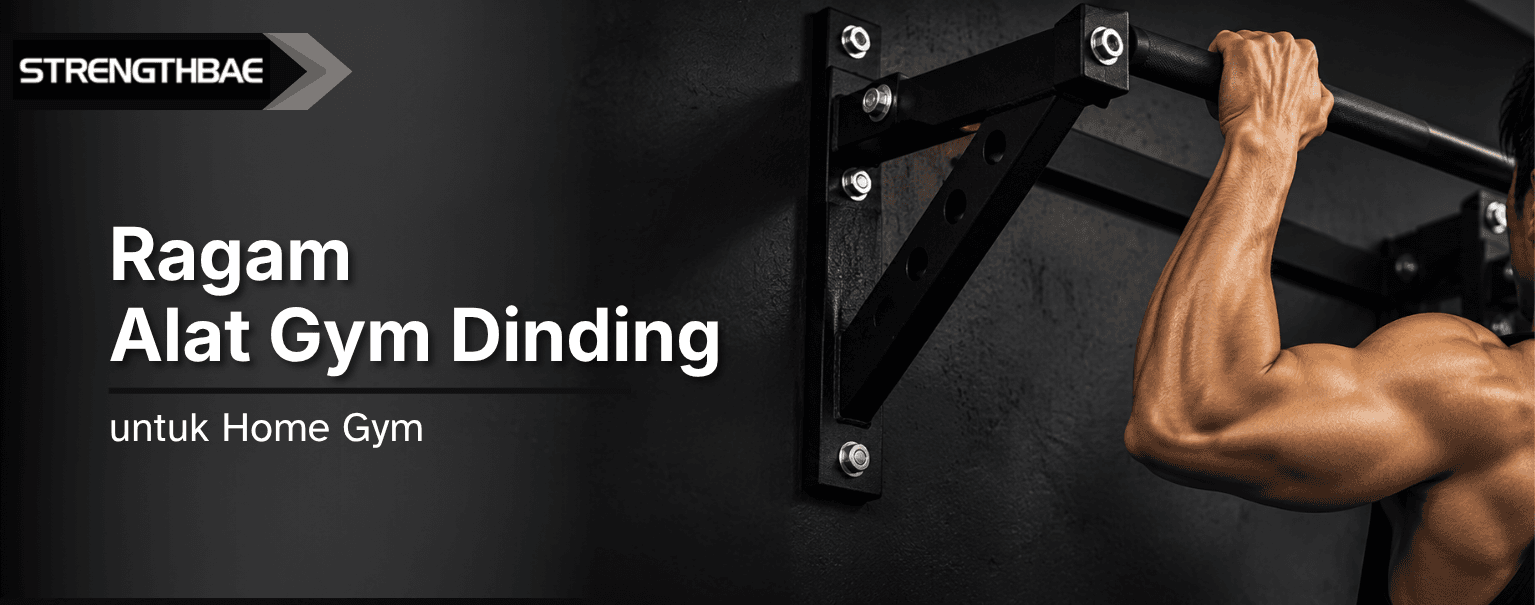
Wall-mounted gym equipment refers to training equipment that is installed directly onto a wall. This type of equipment helps save floor space in a home gym and keeps the workout area at home more organized.
Some wall-mounted gym equipment options include folding squat racks, pull-up bars, cable towers, wall ball targets, dip stations, landmines, resistance band or suspension anchors, battle rope anchors, peg boards, stall bars, and punching bag brackets. All of these can be included in your home gym.
Before installing the equipment, consider the type and strength of the wall, mounting points, and sufficient space to move safely. This article discusses 11 types of wall-mounted gym equipment for home gyms and the things you need to consider when installing them.
Things to Check Before Installing Gym Equipment on a Wall
Installing gym equipment on a wall requires careful technical preparation before making a purchase. Successful installation is determined not only by the amount of available wall space, but also by the wall structure’s ability to support the load of the gym equipment during use. This is important to ensure that your home gym remains safe, comfortable, and has enough space for movement during training.
Wall Type and Strength
Understand the differences between concrete walls, red brick walls, concrete block walls, wood stud structures, and gypsum partition walls or drywall. Concrete walls and thick wood studs can support heavy loads, while standard gypsum partition walls should not be used directly without dedicated structural reinforcement. Check the wall requirements in the instructions or ask about the wall requirements for your chosen wall-mounted gym equipment before purchasing.
Mounting Points
Use mounting points and fasteners or anchors made of iron or steel according to the requirements of the wall-mounted gym equipment. Make sure the anchors are securely embedded into the main wall structure rather than simply attached to the outer cement layer or paint finish. Check and test their durability regularly.
Static Load vs Dynamic Load
Consider the total physical load during training. Static load refers to the weight of the equipment itself, while dynamic load includes the user’s body weight combined with forces from impacts, swinging, or strong pulling movements. This is important because these forces occur during exercises such as pull-ups, battle rope movements, or punching bag strikes, which can multiply the pressure on the anchor points.
Clearance and Working Space
Provide enough free space around the equipment to ensure safety and comfortable movement. Consider the space in front for cable pulling range, space on the sides for the length of the barbell, and overhead space to prevent your head from hitting the ceiling.
Installation Height and Ceiling Height
Adjust the installation height of wall-mounted gym equipment based on the user’s height, ceiling height, and the types of movements you plan to perform. Installing equipment too high or too low can reduce range of motion and comfort during training.
Professional Installation
For heavy equipment or wall-mounted gym equipment that receives high dynamic loads, it is highly recommended to involve a professional technician or an experienced construction worker for installation. Professional installation helps ensure that dynabolts or stud bolts are installed in the correct locations and remain safe for long-term use.
11 Home Gym Equipment Options That Can Be Mounted on a Wall
Wall-mounted gym equipment can provide a variety of strength, fitness, and other workouts without sacrificing floor space at home. Here are 11 types of wall-mounted gym equipment you can consider for your home gym.
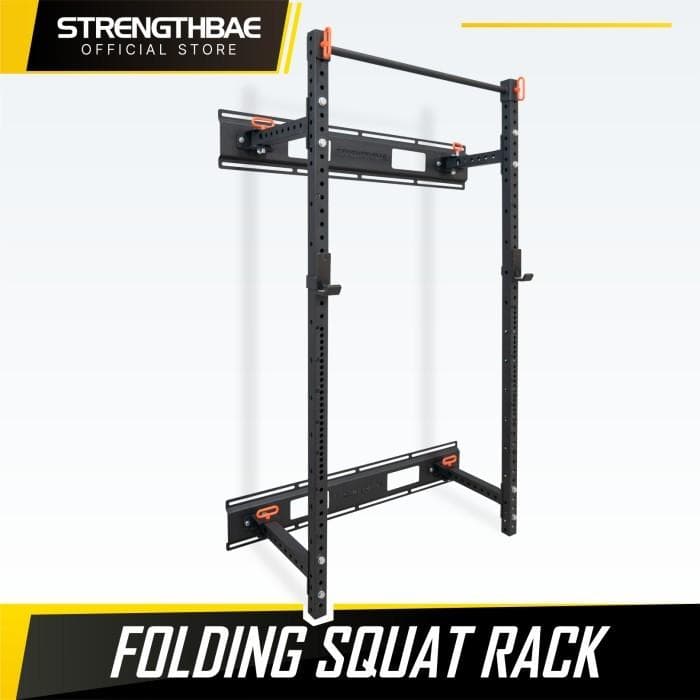
1. Folding Squat Rack
A folding squat rack is a barbell training rack that is mounted to the wall and can be folded compactly when not in use. It is highly suitable for garages or multifunctional rooms because it saves a significant amount of floor space after a training session. This equipment supports major barbell movements such as squats, bench presses, overhead presses, rack pulls, and pull-up exercises when equipped with a built-in pull-up bar.
The main things to consider during installation are ensuring that the wall is strong enough, making sure the floor is level so the folding hinge mechanism operates smoothly, and providing enough free space to load weight plates onto both ends of the barbell.
Read More: Strengthbae Folding Squat Rack
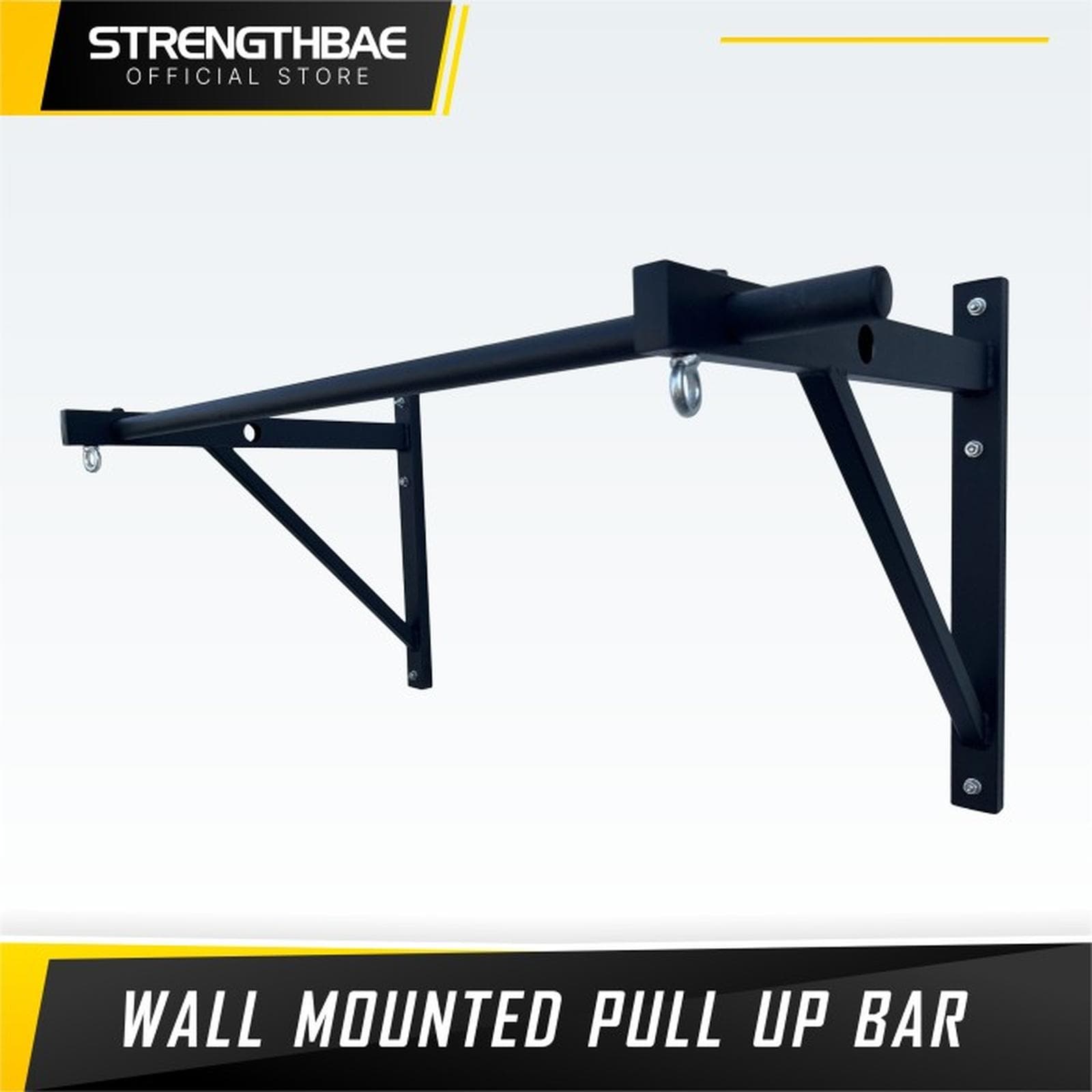
2. Wall-Mounted Pull-Up Bar
A wall-mounted pull-up bar is a horizontal bar securely mounted to the wall with supports. This wall-mounted gym equipment is one of the most popular options for training upper-body muscles using body weight without requiring a large rack station.
Its main functions include pull-ups, chin-ups, hanging knee raises, hanging leg raises, and dead hangs for spinal health. For a home gym, make sure there is enough distance between the bar and the wall so your movement is not restricted, while also leaving sufficient headroom below the ceiling.
Read More: Strengthbae Wall Mounter Pull-up Bar
3. Wall-Mounted Cable Tower
A wall-mounted cable tower is a vertical cable pulley training machine installed close to the wall. Its resistance system can use either a weight stack or weight plates.
This equipment provides dozens of isolation and functional exercise variations, such as lat pulldowns, cable seated rows, biceps curls, triceps pushdowns, lateral raises, face pulls, and cable squats. Its main advantage is the significantly larger amount of free space compared with conventional commercial cable crossover machines.
4. Wall Ball Target
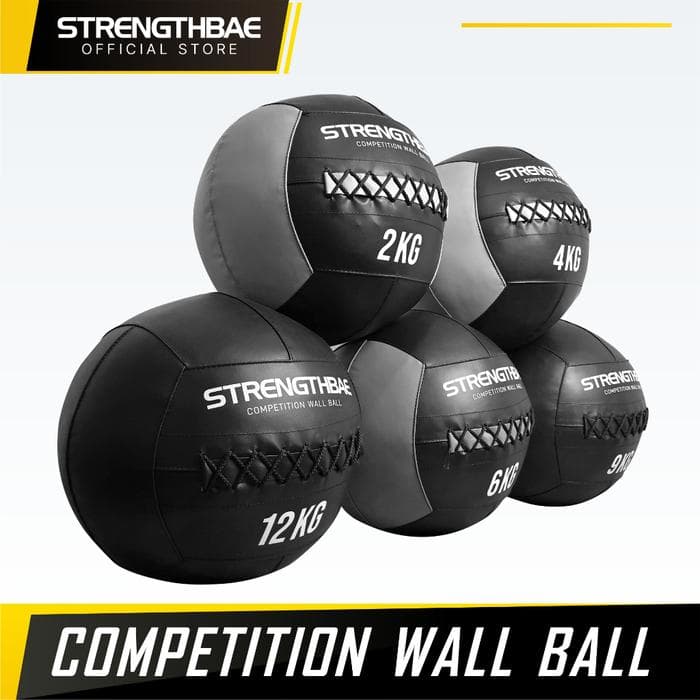
A wall ball target is a target board mounted on a wall or on the upper section of a rig/rack structure. This equipment is specifically designed for wall ball shots and squat-to-throw exercises when preparing for hybrid race competitions such as HYROX.
Installing this target helps maintain consistent official throwing heights, so make sure it is positioned at the correct height according to the requirements to make your training more similar to a hybrid race simulation, such as 2.7 meters for women and 3.0 meters for men. Make sure the supporting wall is strong enough to withstand repeated impacts from balls weighing 4 kg to 9 kg, while also providing sufficient ceiling height.
5. Wall-Mounted Dip Station
A wall-mounted dip station is a pair of dip handles mounted on a wall for training the chest, front shoulders, and triceps. It is available in fixed-frame, foldable, or removable models.
This wall-mounted gym equipment saves floor space because it does not require a separate dip station that takes up additional room. During installation, consider the distance between the handles to ensure it suits the user’s shoulder width, and make sure the mounting points can support body weight under dynamic movement.
6. Landmine Wall Mount
A landmine wall mount is a pivot sleeve or rotating joint mounted on a wall to hold one end of an Olympic barbell. Landmine movements provide an arc-based training pattern that is very comfortable on the joints.
Exercise variations that can be performed with this wall-mounted gym equipment include landmine presses, landmine rows, landmine squats, rotational twists, and single-arm presses. Because the end of the barbell moves in an arc, provide enough floor space in front of the mounting point so the barbell does not hit furniture in your home.
7. Resistance Band / Suspension Trainer Anchor
A wall anchor for resistance bands and suspension trainers is a steel mounting point secured to the wall. It is one of the most compact and economical training solutions for your home gym.
It can be used for exercises such as rows, chest presses, face pulls, Pallof presses, and assisted squats. Because a suspension trainer generates significant pulling force at an angle when supporting the user’s full body weight, use high-quality steel bolts and secure them to a concrete or wooden wall.
8. Battle Rope Anchor
A battle rope anchor is a small loop installed at the bottom of a wall to secure the center of a battle rope. This mounting point keeps the rope stable during explosive swinging movements.
Its main function is to support cardio and muscular endurance training through movements such as alternating waves, double waves, and slams. Although the wall anchor itself is very small, you need to provide a floor area at least 6 to 8 meters long to accommodate the rope.
9. Pegboard
A pegboard is a thick wooden board with holes that is mounted vertically on a wall. Users climb the board by alternating between a pair of wooden pegs inserted into the holes.
This exercise is highly effective for building grip strength, forearm muscles, biceps, trapezius muscles, and shoulder stability. Installing a pegboard requires a very strong wall structure and a protective mat on the floor underneath.
10. Stall Bars
Stall bars, or Swedish ladders, are wooden or steel ladders installed vertically and close to the wall. This classic equipment is highly versatile for flexibility, mobility, calisthenics, and postural rehabilitation exercises.
This wall-mounted gym equipment can be used for stretching, hanging leg raises, assisted squats, and as an attachment point for resistance bands. With a very small floor footprint, stall bars can be an aesthetic and functional addition to the corner of a room at home.
11. Punching Bag Bracket
A punching bag bracket is an extended steel support arm mounted to a wall for hanging a punching bag. This bracket is a practical alternative if you do not want to drill into the ceiling or purchase a floor-standing punching bag stand that takes up space.
This wall-mounted gym equipment is used for conditioning, boxing, and cardio endurance training. Because a punching bag weighs around 30–50 kg and swings when struck, the bracket must be mounted on a concrete wall using strong bolts such as heavy-duty Dynabolts.
Comparison of Wall-Mounted Gym Equipment for Home Gyms
The following table summarizes the main functions, floor space efficiency when the equipment is not in use, and physical movement space requirements for 11 types of wall-mounted gym equipment:
Wall-Mounted Gym Equipment | Main Function | Floor Space Efficiency | Requires a Large Movement Area |
Folding Squat Rack | Barbell strength | Low when folded | Yes |
Wall-Mounted Pull-Up Bar | Bodyweight pull | Very low | Moderate |
Wall-Mounted Cable Tower | Cable training | Low | Moderate |
Wall Ball Target | Conditioning | Almost zero | Yes |
Wall-Mounted Dip Station | Upper-body strength | Low | Moderate |
Landmine Wall Mount | Barbell multiplanar | Almost zero | Yes |
Band / Suspension Anchor | Functional / bodyweight | Almost zero | Moderate |
Battle Rope Anchor | Conditioning | Almost zero | Very large |
Peg Board | Grip/climbing | Almost zero | Moderate |
Stall Bars | Mobility/bodyweight | Low | Moderate |
Punching Bag Bracket | Boxing/cardio | Low after the bag is removed | Yes |
Checklist Before Buying Wall-Mounted Gym Equipment
Use the following technical checklist before ordering wall-mounted gym equipment for your home:
Main Training Goal: Does the wall-mounted gym equipment you choose support your daily training program?
Working Space Size: Is there enough free space in front of and beside the wall-mounted gym equipment during training?
Ceiling Height: Is the ceiling high enough for movements such as pull-ups or overhead presses?
Wall Structure Type: Is the wall made of concrete, brick, or wood that is strong enough to support the wall-mounted gym equipment both during use and when not in use?
Maximum Load Capacity: Can the mounting points support the entire load, including the weight of the wall-mounted gym equipment, the user’s body weight, and the load generated during use?
Dynamic Load Calculation: Can the anchor points withstand impacts, swinging movements, or strong pushing forces?
Bolt and Anchor Type: Do the anchor bolt specifications, such as Dynabolts or stud bolts, follow the manufacturer’s recommendations?
Foldable or Removable Features: Can the wall-mounted gym equipment be folded or removed when the home gym space is being used for other activities?
Free from Obstructions: Does the position of the wall-mounted gym equipment avoid blocking access to doors, windows, or electrical outlets?
Rubber Flooring: Is additional rubber flooring needed beneath the training area to absorb impacts from the use of wall-mounted gym equipment?
FAQ
Does wall-mounted gym equipment always save more space?
Wall-mounted gym equipment saves a significant amount of floor space when not in use. However, when the equipment is being used for training, you still need to provide enough free space around it, such as space for the full length of a barbell on a folding rack, a long path for a battle rope, the rotation radius of a landmine, or an area for wall ball throws.
What type of wall is suitable for installing gym equipment?
Walls made of concrete, red brick, or wood are the most suitable for supporting the load of gym equipment. Gypsum partition walls or drywall should not be used directly without additional steel or wooden reinforcement behind them. If you are unsure about the strength of your home’s walls, consult an experienced construction professional for installation and the Strengthbae team for product specifications.
What is the difference between floor space and working space for wall-mounted gym equipment?
Floor space is the amount of floor area occupied by the equipment when installed or folded against the wall. Working space is the additional area in front of and beside the equipment that must remain clear so users can perform exercises safely and comfortably.
Which wall-mounted gym equipment is the most multifunctional for a home gym?
It depends on your main training focus. A folding squat rack is one of the most multifunctional options for barbell training, a wall-mounted cable tower is highly versatile for cable isolation exercises, while stall bars and suspension anchors are versatile for bodyweight training, flexibility, and joint recovery in both home gyms and commercial gyms.
Build a Space-Saving Home Gym with Strengthbae
Wall-mounted gym equipment is a smart solution for maximizing the function of your space without filling the floor with multiple large machines. Combining wall-mounted equipment such as a folding rack, pull-up bar, cable tower, and landmine with free weights can create a compact, organized, and highly functional training area.
Make sure to carefully consider working space, wall structure, load capacity, and installation methods before purchasing. To consult about wall-mounted gym equipment options, installation guidelines, and layout planning for a personal home gym or commercial gym, contact the Strengthbae team.
Strengthbae is a professional gym equipment brand that provides solutions for commercial gyms and home gyms. From racks and All in One Trainers to functional training accessories such as HYROX-standard sandbags, everything is available at Strengthbae.