Barbell Weight Differences: Rubber Coated Plate vs Bumper Plate
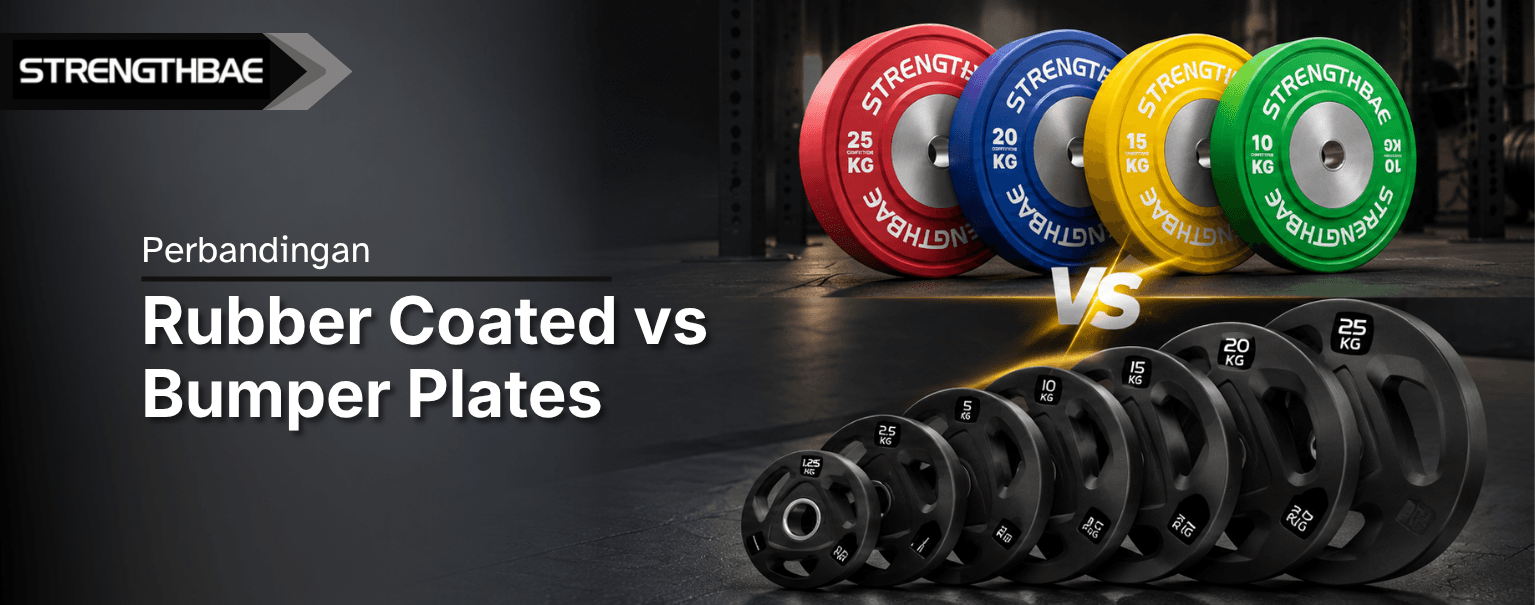
Rubber coated plates have a cast iron core covered with rubber and are suitable for strength training exercises such as squats, bench presses, and rows. Meanwhile, bumper plates are made of solid rubber with a steel insert and are designed to withstand impact when weights are dropped, making them more suitable for Olympic weightlifting and functional training.
Both have different characteristics in terms of construction, durability, noise, and usage. Understanding the differences will help you choose the right weight plate for your home gym or commercial gym.
What Is a Rubber Coated Plate?
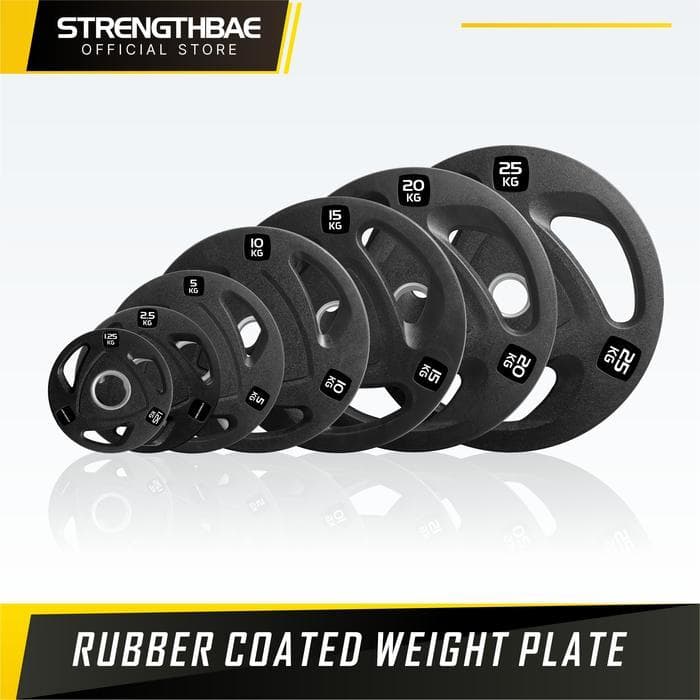
A rubber coated plate is a weight plate with a cast iron core covered with rubber. This coating helps protect the plate from friction, reduces the risk of rust, and dampens noise when the plate comes into contact with the barbell or other plates.
Physically, rubber coated plates are generally thinner than bumper plates. The diameter of these barbell weights can also vary depending on the weight, so lighter plates usually have smaller diameters. Many models feature grip holes that make them easier to lift and move. These plates are suitable for exercises such as squats, bench presses, barbell rows, Romanian deadlifts, overhead presses, and plate-loaded machines.
Advantages of Rubber Coated Plates
Thinner profile: Their thickness is around 1.25–1.7 inches (3.2–4.3 cm) for a 20 kg size, allowing more weight to be loaded onto the barbell sleeve.
Easy to move: Many models have grip holes that make it easier to lift, carry, and load the plates.
Space-saving: Their relatively thin design makes plate storage more efficient.
Quieter: The rubber coating helps reduce noise when plates come into contact with each other.
More economical: Suitable for completing a strength training setup at a more affordable cost.
Things to Consider with Rubber Coated Plates
Not designed for dropping: Rubber coated plates are not designed to be dropped from a height. Repeated impact can damage the rubber coating, cast iron core, or floor.
Non-uniform diameter: Plates with different weights may have different diameters, so the barbell height from the floor during deadlifts is not always the same.
What Is a Bumper Plate?
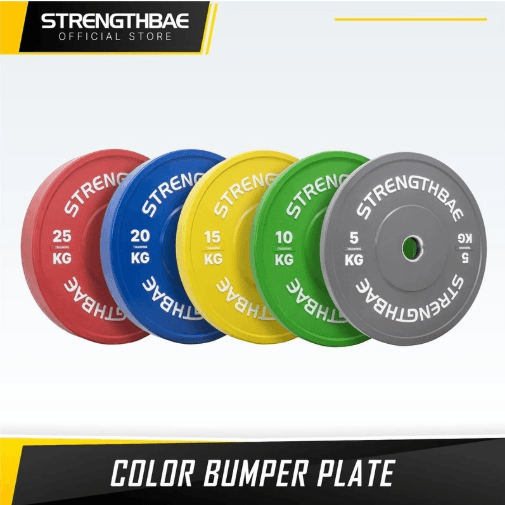
A bumper plate is a weight plate made of solid rubber with a metal ring or insert in the center. It is designed to absorb impact when a barbell is dropped, especially during exercises such as Olympic weightlifting, CrossFit, functional fitness, and dynamic strength training.
The main characteristic of these barbell weights is their thick rubber body and an outer diameter that generally reaches 450 mm for standard-sized plates. Bumper plates are available in black as well as colors such as red for 25 kg, blue for 20 kg, yellow for 15 kg, and green for 10 kg.
Advantages of Bumper Plates
Impact resistant: Solid rubber helps absorb impact when a barbell is dropped from a height.
Consistent diameter: Standard plates have a diameter of around 450 mm, keeping the barbell height from the floor consistent, including during deadlifts and cleans.
Protects the barbell and floor: The rubber material helps reduce direct impact on the barbell and floor surface.
Quieter: Rubber helps reduce noise and vibration when the plates hit the floor.
Rust resistant: The rubber body does not rust easily and is suitable for use in humid environments, although the metal components still require maintenance.
Things to Consider with Bumper Plates
Thicker: A 20 kg/45 lb bumper plate can be up to around 3 inches (7.6 cm) thick, so the barbell sleeve fills up more quickly.
Generally without grip holes: Most bumper plates do not have grip holes, so they need to be lifted from the edges.
Light plates require extra care: Thin plates such as 5 kg or 10 lb plates can bend more easily if dropped hard and repeatedly. For dropping exercises, they should preferably be used together with thicker plates.
Higher price: The solid rubber material and metal hub used generally make them more expensive than standard barbell weights.
Rubber Coated Plate vs Bumper Plate Comparison
The table below summarizes the key differences between rubber coated plates and bumper plates.
Aspect | Rubber Coated Plate | Bumper Plate |
Construction | Cast iron core with a thin rubber coating | Thick solid rubber with a metal insert |
Diameter | Varies according to plate weight | Generally around 450 mm for standard plates |
Thickness 20 kg / 45 lb | Around 3.2–4.3 cm | Around 7.6 cm |
Impact Resistance | Not designed to be dropped | Designed to withstand impact and drops |
Usage | Squats, presses, rows, and controlled strength training | Olympic weightlifting, CrossFit, and functional fitness |
Grip Hole | Available on many models | Generally not available |
Sleeve Capacity | More space-efficient and can accommodate more weight | More limited because the plates are thicker |
Noise | Reduces contact noise between plates | Better at reducing noise and vibration during impact |
In general, rubber coated plates are more suitable for controlled weight training that requires space efficiency. Bumper plates are more suitable for training that involves dropping or impact, such as Olympic weightlifting and functional training.
Rubber Coated Plates and Bumper Plates Dimensional
The difference in size between these two types of plates affects the starting position of exercises as well as storage space requirements.
Rubber coated plates have a thinner profile because the cast iron core provides most of the weight and only requires a rubber coating for protection.
Bumper plates, on the other hand, are made thicker because they use solid rubber to absorb impact. As a result, a 20 kg plate can have nearly twice the thickness of a rubber coated plate with the same weight.
In terms of diameter, standard bumper plates generally have a diameter of around 450 mm, which places the barbell approximately 22.5 cm above the floor and provides a consistent starting position for exercises such as deadlifts and cleans.
Meanwhile, the diameter of rubber coated plates usually varies according to their weight, so lighter plates have smaller diameters and can result in a lower barbell starting position from the floor.
Read More: Strengthbae Rubber Coated Weight Plate
Rubber Coated Plate vs Bumper Plate Thickness
A standard Olympic barbell sleeve has an effective length of around 41–43 cm, so plate thickness determines how much weight can be loaded.
The thinner rubber coated plate, at around 3.5 cm per 20 kg plate, allows approximately 5–6 plates to be loaded on each side, resulting in a total load of around 220–260 kg including the barbell.
Meanwhile, a thicker bumper plate, at around 7.6 cm per 20 kg plate, can generally accommodate around 4 plates per side, with a total load of around 180–200 kg. However, competition-standard bumper plates are usually made thinner than training bumper plates, allowing for greater loading capacity.
Rubber Coated Plates and Bumper Plates Durability
Impact resistance is one of the key differences between these two types of barbell weights because it affects equipment durability and floor condition.
Rubber coated plates have a thin rubber coating that protects the cast iron core from light impacts, but they are not designed to be dropped. If a barbell with these plates is frequently dropped, the rubber coating and cast iron core can be damaged, while the impact can also damage the floor.
Bumper plates, on the other hand, use solid rubber designed to absorb impact when a barbell is dropped from a height, such as during the snatch or clean & jerk.
However, very light bumper plates such as 5 kg or 10 lb plates have thinner bodies and should preferably not be dropped on their own without larger plates.
Rubber Coated Plates and Bumper Plates Bounce and Noise
The type of rubber used in a plate also affects its bounce and noise when the weight hits the floor.
Rubber coated plates have a rigid cast iron core, resulting in low bounce, but impacts can still produce considerable noise and vibration. Bumper plates, on the other hand, use thicker rubber to absorb impact, resulting in lower noise and vibration.
Depending on the hardness of the rubber, bumper plates can have high bounce or low bounce/dead bounce characteristics, with the latter stopping more quickly after hitting the floor.
Floor Protection for Rubber Coated Plates and Bumper Plates
Although rubber coated plates and bumper plates can help reduce impact, the training area still requires appropriate floor protection.
Rubber flooring made from rubber with a minimum thickness of 12 mm (0.5 inches) can help protect concrete floors, reduce vibration, and protect equipment from direct impact.
For training that frequently involves dropping barbells, such as Olympic weightlifting, a weightlifting platform can provide better protection.
These platforms typically use a combination of thick wooden boards and rubber mats to help absorb impact and reduce vibration when weights are dropped.
Rubber Coated Plates and Bumper Plates Training
The choice of plate should be adjusted to the training style to ensure safer and more appropriate use.
Rubber coated plates are suitable for controlled strength training exercises such as barbell back squats, front squats, bench presses, incline presses, bent-over rows, Romanian deadlifts, straight-leg deadlifts, and overhead presses.
These barbell weights can also be used on plate-loaded machines such as leg presses, lat pulldowns, and hack squats.
Bumper plates, meanwhile, are more suitable for exercises where the barbell may be dropped after the movement, particularly Olympic weightlifting and functional fitness.
These exercises include snatches, power snatches, clean & jerks, power cleans, deadlifts with rapid weight lowering, barbell thrusters, overhead lunges, as well as various exercises in CrossFit and functional fitness circuits.
Ease of Loading Rubber Coated Plates vs Bumper Plates
The ease of moving and loading plates is influenced by their surface shape and physical design.
Rubber coated plates generally have 3 or 4 grip holes around the plate, making them easier to lift from the floor, carry with one hand, and load onto a barbell or the loading horn of a gym machine. These holes also allow the plates to be used for exercises such as weighted sit-ups, plate front raises, and Russian twists.
Bumper plates, meanwhile, generally have a flat surface without grip holes so that the rubber body remains solid and can absorb impact effectively.
Therefore, the plates need to be lifted from the edges, and their greater thickness also requires some adjustment when loading or arranging multiple plates on a barbell.
Compatibility of Rubber Coated Plates vs Bumper Plates
Before purchasing plates, make sure the center hole size is compatible with the barbell and gym equipment being used.
Standard Olympic weight plates generally have a center hole of around 50.4 mm (2 inches), which fits Olympic barbell sleeves, while older standard plates typically use a hole of around 25 mm (1 inch). Make sure the rubber coated plate and bumper plate match these dimensions.
For plate-loaded machines, thinner rubber coated plates with grip holes are generally more practical because they are easier to load and can accommodate more weight on the loading horn.
Bumper plates, on the other hand, are thicker and can cause the loading horn to fill up more quickly. Their approximately 450 mm diameter should also be considered to prevent interference with other parts of the machine.
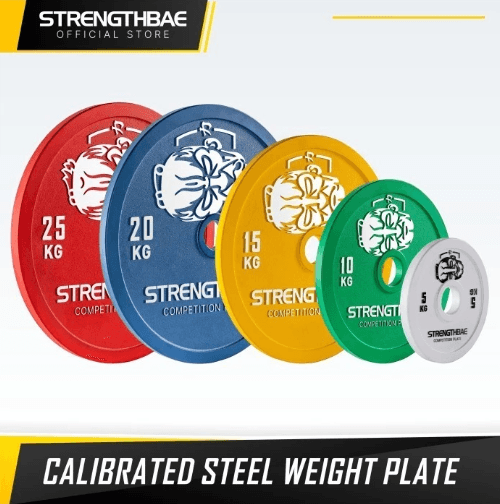
Read More: Strengthbae Competition Bumper Plate
Price Differences Between Rubber Coated Plates and Bumper Plates
Barbell weight prices are influenced by the material, production process, rubber quality, weight accuracy, and brand.
Rubber coated plates are generally more affordable per kilogram, making them suitable for building a larger weight collection for strength training in a home gym.
Bumper plates, meanwhile, are usually more expensive because they use solid rubber and a metal insert.
Competition bumper plates with very tight weight tolerances, such as ±0.1%, are in the highest price category, while training bumper plates generally offer a more balanced option between price and functionality.
Rubber Coated Plate vs Bumper Plate Strengthbae for Home Gym
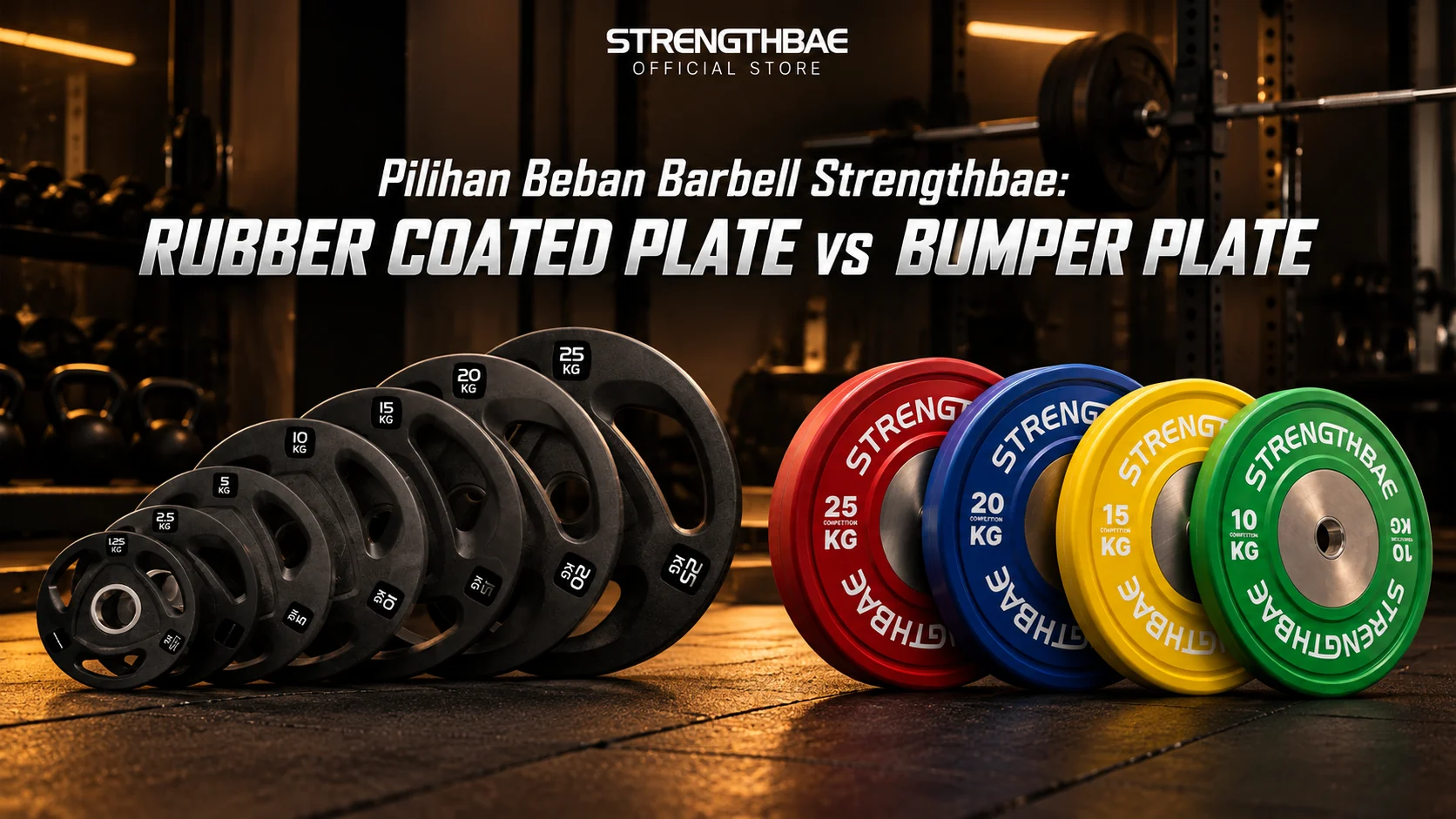
For a home gym focused on strength exercises such as squats, bench presses, shoulder presses, and barbell rows, rubber coated plates are generally sufficient.
These types of barbell weights are usually thinner than bumper plates of the same weight, allowing more weight to be loaded onto a barbell or plate-loaded machine. Some models also feature grip holes that make the plates easier to carry and load.
Bumper plates, on the other hand, are more suitable for home gyms used for Olympic weightlifting, functional training, or exercises where the barbell may be dropped, such as snatches and clean & jerks.
Bumper plates generally have a consistent outer diameter across different weight options, especially standard competition-sized models. This helps maintain a consistent starting barbell height from the floor, including during deadlifts.
When choosing the right plate, consider the type of training you perform most often. However, both types can also be used in the same home gym according to your needs, as long as the center hole diameter is compatible with the barbell or equipment being used.
Maintenance of Rubber Coated Plates vs Bumper Plates
Regular maintenance can help keep barbell weight plates in good condition and extend their lifespan.
For rubber coated plates, clean the rubber surface with a slightly damp microfiber cloth and regularly check for cracks or areas where the rubber is beginning to peel.
Avoid prolonged exposure to direct sunlight, as it can cause the rubber to become brittle more quickly.
For bumper plates, regularly clean the surface from chalk, sweat, and dirt, then check the steel insert in the center to make sure it remains securely in place.
Avoid dropping bumper plates on rough surfaces such as gravel or asphalt, as this can accelerate damage to the rubber surface.
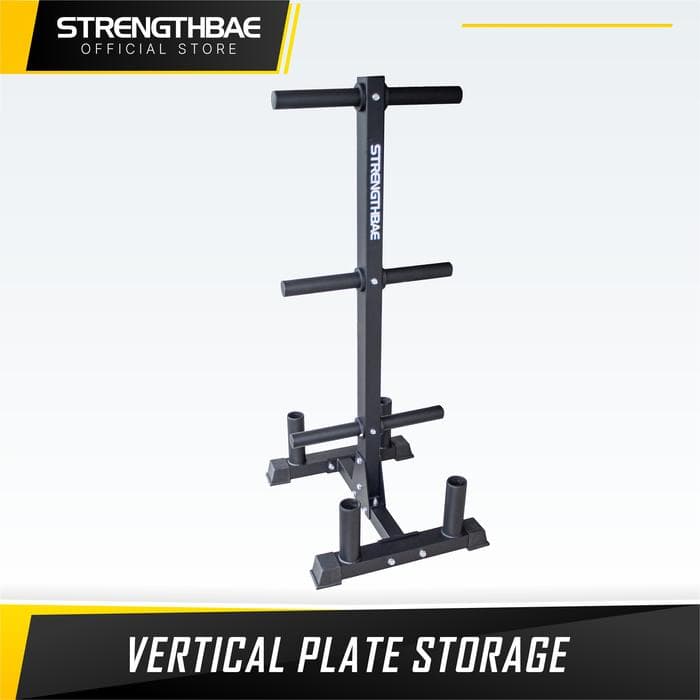
After use, store all plates on a plate tree or weight rack in a dry area with good air circulation.
FAQ
Can rubber coated plates be dropped during training?
It is not recommended. Rubber coated plates have a cast iron core with a relatively thin rubber coating, so repeated heavy impacts can damage the plates and the floor. If your training frequently involves dropping barbells, bumper plates are recommended.
Why do bumper plates have the same diameter?
Standard bumper plates have a diameter of around 450 mm, keeping the barbell position from the floor consistent. This is important for exercises such as deadlifts and cleans because the starting height of the barbell remains the same.
Can rubber coated plates and bumper plates be used on the same barbell?
Yes, as long as both have center hole sizes that are compatible with the barbell sleeve, generally around 50.4 mm (2 inches) for Olympic barbells. Both can be used together to increase the total load as needed.
Do bumper plates and rubber coated plates have a rubber smell when new?
Rubber plates usually have a distinct odor when first opened from their packaging. This smell generally decreases over time. Placing the plates in an area with good air circulation can help reduce the odor.
Which is more suitable for a home gym or commercial gym?
Both can be used depending on the type of training. Rubber coated plates are suitable for controlled strength training because they are thinner and more economical, while bumper plates are more suitable for training that involves dropping the barbell, such as Olympic weightlifting and functional fitness.
Choose the Best Barbell Weight Plates from Strengthbae
Understanding the differences between rubber coated plates and bumper plates can help you choose barbell weights according to your training style, available space, and budget. Need help choosing plates, an Olympic barbell, or other gym equipment? Consult the Strengthbae team for equipment recommendations that match your space, training style, and workout needs.
Strengthbae is a professional gym equipment brand providing solutions for commercial gym businesses and home gyms. From racks and All in One Trainers to functional training accessories for HYBRID RACE-style training, everything is available at Strengthbae.