Complete Guide to Barbell Terms and Parts
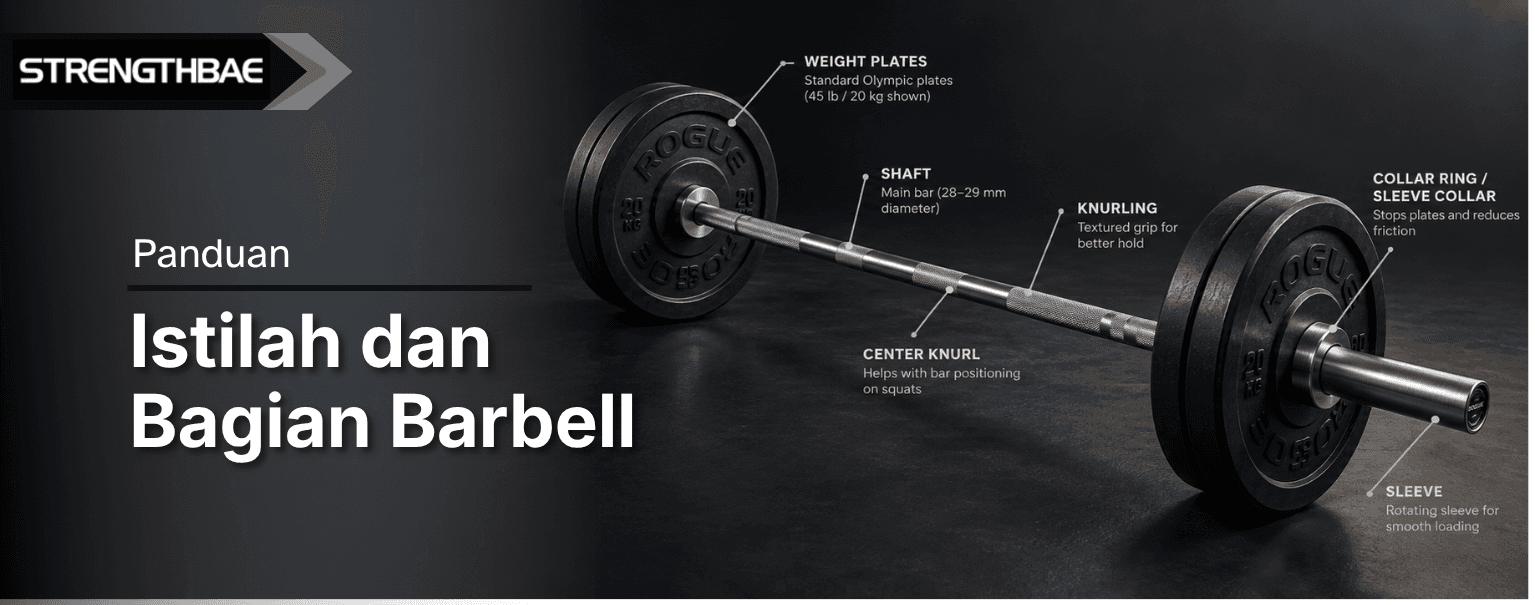
Barbell terms and parts include several main components such as the shaft as the barbell's gripping bar, the sleeve as the part where weight plates are loaded, knurling as the textured surface for grip, center knurl, knurl marking, as well as the collar or clip. Inside the sleeve, there are also mechanisms such as bearings or bushings that help the sleeve rotate.
Understanding barbell terms and the function of each barbell part helps you recognize differences in barbell characteristics, such as weight, shaft diameter, sleeve length, material strength, stiffness, and whip. This allows you to choose a barbell that suits your needs for powerlifting, Olympic weightlifting, or strength training.
Barbell Terms in Barbell Specifications
When reading barbell specifications, you will find several barbell terms that describe the size, strength, and characteristics of the barbell shaft. Understanding these terms helps you choose a barbell that is suitable for your type of training.
Bar Weight
Bar weight is the weight of the barbell without weight plates. A standard men's barbell generally weighs 20 kg and is around 2.2 meters long, while a standard women's barbell generally weighs 15 kg and is around 2 meters long. There are also technique bars that are lighter, usually around 5–10 kg, for beginners or technique training. Therefore, do not assume that all barbells have the same weight.
Loadable Sleeve Length
Loadable sleeve length is the length of the sleeve section where weight plates can be loaded. The longer this section is, the more plates can be loaded. This barbell term is important to consider, especially when using bumper plates, which are generally thicker and require more space on the sleeve.
Shaft Diameter
Shaft diameter is the diameter of the barbell shaft where it is gripped. Common sizes range from around 25–32 mm. Barbells with a diameter of around 28 mm are generally more flexible and are often used for Olympic weightlifting, while diameters of 29–32 mm usually feel stiffer and are commonly used for powerlifting or strength training.
Tensile Strength
Tensile strength is a barbell term that indicates how much tensile force the steel material in the shaft can withstand before failure. Its value is usually expressed in PSI. High-quality barbells can have a tensile strength of around 190,000–215,000 PSI.
However, tensile strength is not the only factor that determines barbell quality. Barbell durability is also influenced by the type of steel, heat treatment, manufacturing process, and sleeve construction.
Stiffness and Whip
Stiffness is a barbell term that describes how rigid the barbell shaft is when loaded. A stiffer barbell bends less and feels more stable, making it suitable for movements such as heavy squats and bench presses.
Whip describes how easily the barbell shaft bends and returns to its original shape when receiving a load or during fast movements. Whip is more noticeable in movements such as snatch, clean, and jerk, especially in Olympic weightlifting. This characteristic can also be useful for certain types of deadlifts, depending on the barbell design.
Read More: Echo Barbell Strengthbae
How to Read Barbell Specifications
Understanding barbell terms on a specification sheet helps you choose a barbell according to your training type, needs, and available space. Do not focus on just one number, but consider several important aspects below.
Check the Bar Weight and Length
Make sure the barbell's weight and length match your training needs. A 15 kg and 20 kg barbell have different characteristics and uses, as do bars around 2 meters and 2.2 meters long. For a home gym, also make sure the size fits the available space.
Consider Shaft Diameter and Knurling
Check the shaft diameter and the texture of the knurling on the gripping area. A diameter of around 28 mm is commonly used for Olympic weightlifting and general training, while larger diameters can provide a stiffer feel. Choose knurling that is comfortable and suitable for your type of training and grip preference.
Check the Center Knurl and Knurl Marking
The center knurl can help maintain the barbell's position during a back squat. Also check the knurl marking to identify the available grip positions on the barbell and adjust them according to the type of exercise.
Check the Sleeve and Rotation System
Pay attention to the sleeve construction and its rotation system. Bushings generally provide stable movement and are suitable for strength training, while bearings can provide freer rotation and are commonly used on Olympic weightlifting barbells.
Consider Tensile Strength and Sleeve Length
Tensile strength indicates the strength of the shaft material, but it is not the only factor that determines barbell quality. Also consider the loadable sleeve length to ensure there is enough space for the weight plates you use.
Consider the Coating and Intended Use
The type of coating can affect the barbell's protection against rust and its maintenance requirements. Choose a coating that suits the storage environment, especially if the barbell is used in a home gym with high humidity. Also make sure the barbell is designed for the type of training you perform.
Ultimately, do not choose a barbell simply because it has a high tensile strength rating or load capacity. Use these barbell terms and specifications as a whole to determine the barbell that best suits your training needs.
Understanding Barbell Terms and Parts
Understanding barbell terms and parts helps you learn the function of each component. This makes it easier to choose a barbell according to your type of training. Each part of a barbell has a different function, from providing the gripping surface and holding weight plates to helping the sleeve rotate when the barbell is in use.
Shaft
The shaft is the main bar of the barbell where the hands grip. This part of the barbell is located between the two sleeves and has different diameters and characteristics depending on the type of barbell.
A standard men's barbell generally has a shaft diameter of around 28–29 mm, while women's barbells generally use a 25 mm diameter. Shaft diameter can affect grip feel, hand comfort, and the amount of flexibility the barbell has during use.
Sleeve
Sleeve is a barbell term referring to the cylindrical sections at both ends of the barbell where weight plates are loaded. The length of the sleeve area where plates can be loaded is called the loadable sleeve length. The longer this area is, the more weight plates can be loaded.
The sleeve can also rotate independently from the shaft. This movement helps reduce the effect of the rotation and momentum of the weight plates on the hands when the barbell is being used.
Mechanisms Inside the Sleeve
Inside the sleeve is a mechanism that connects the sleeve to the shaft while allowing the sleeve to rotate. Two commonly used systems are bearings and bushings.
Bearing: Uses bearings such as needle bearings or ball bearings to produce smoother and more responsive sleeve rotation. This system is commonly used on Olympic weightlifting barbells because movements such as snatch and clean & jerk require fast sleeve rotation.
Bushing: Uses a ring as a sliding surface between the shaft and sleeve. Its rotation generally feels more stable and simple, so it is commonly used on general-purpose bars and power bars.
Bearings are not always better than bushings. The choice should be based on the type of training and the characteristics required from the barbell.
Knurling
Knurling is a barbell term for the textured or patterned surface engraved into the shaft that increases friction between the hands and the barbell. Knurling helps prevent the barbell from slipping while being gripped.
Each barbell can have different knurling characteristics, ranging from smoother and more comfortable textures for everyday training to more aggressive knurling that provides a stronger grip when lifting heavy loads. The choice of knurling should be based on the type of training and hand comfort.
Center Knurl
Center knurl is additional knurling located in the middle of the shaft. This part of the barbell helps keep the barbell in contact with the body during back squats by providing additional grip on the shoulders and upper back.
Center knurl is commonly found on power bars and squat bars. Some general-purpose bars or Olympic lifting bars may have lighter center knurling or no center knurl to avoid causing excessive friction during cleans or other movements where the barbell is positioned at the front of the body.
Knurl Marking
Knurl marking is a barbell term referring to the lines on the shaft that indicate hand placement when gripping the barbell. These markings help lifters determine an appropriate grip width and keep their hand positions symmetrical.
There are generally two main standards: Powerlifting or IPF markings with a distance of around 81 cm, and Weightlifting or IWF markings with a distance of around 91 cm. Some barbells have both, which is referred to as dual knurl marking.
Collar / Clip
A collar or clip is a locking device installed on the end of the sleeve after weight plates have been loaded. Its function is to keep the plates in place and prevent them from shifting while the barbell is being used.
Common barbell terms for collars include spring clips, quick-release collars, and pro-style collars, each with different mechanisms. Using collars is highly recommended, especially when performing heavy lifts or movements involving significant barbell movement.
Weight Plate
A weight plate is not a component permanently attached to the barbell, but it is an important part of the barbell loading system. These circular weight plates are used to add load according to the training requirements.
Common types include bumper plates, Olympic iron plates, rubber-coated plates, and fractional or change plates. For an Olympic barbell, choose plates with a center hole of around 50 mm so they can fit properly onto the barbell sleeve.
Barbell Terms by Type
Understanding barbell terms can also help you identify different types of barbells. Each type of barbell is designed for different training needs, so not all barbells have the same size, flexibility, or knurling.
General-Purpose Bar
General-purpose bar is a barbell term for a versatile barbell that can be used for various strength and conditioning exercises. Its characteristics are generally somewhere between a power bar and a weightlifting bar, making it suitable for home gyms that need one barbell for different types of training. Some models feature dual knurl marking and a bushing rotation system or a combination of bushings and bearings.
Power Bar
Power bar is the term for a barbell designed for powerlifting exercises such as squat, bench press, and deadlift. It typically has a stiffer shaft, a diameter of around 29 mm, more aggressive knurling, and center knurl to help keep the barbell in position during squats. Some power bars also use knurl markings according to the IPF (International Powerlifting Federation) standard, the governing body for the sport of powerlifting worldwide.
Weightlifting Bar
A weightlifting bar or Olympic bar is designed for the snatch and clean & jerk. This type of bar generally has a more flexible shaft with a diameter of around 28 mm for men and 25 mm for women. The sleeve is designed to rotate smoothly to follow the fast movements performed during Olympic lifting. In accordance with barbell terminology, this bar generally uses IWF (International Weightlifting Federation) standard knurl markings, the governing body for the sport of weightlifting worldwide.
Deadlift Bar
A deadlift bar is specifically designed for deadlift training. It usually has a thinner and longer shaft, resulting in greater whip compared to a power bar. This flexibility allows the center section of the barbell to lift first before the weight plates leave the floor, creating a different feel during the initial pull.
Specialty Bar
A specialty bar is a barbell with a specialized design intended to provide training variations or change the position of the load. Examples include the Safety Squat Bar for squats with a different grip position, the Trap Bar or Hex Bar which allows the user to stand in the center of the bar, the EZ Curl Bar for arm exercises, and the Cambered Bar with the load positioned lower than the hands.
By understanding barbell terms and the characteristics of each type, you can choose a barbell based on the type of training you perform most often, rather than simply based on price or appearance.
Read Also: Comparison of Four Barbell Sticks at Strengthbae
Important Barbell Terms for Each Type of Training
Each type of training places different demands on a barbell. Therefore, the barbell components that need to be considered also vary depending on the movements performed most often.
Type of Training | Barbell Parts to Consider | Reason and Impact |
Squat | Center knurl, knurling, shaft diameter, stiffness | Center knurl helps keep the barbell stable on the back. A stiffer shaft helps keep the barbell stable when used with heavy loads. |
Bench Press | Knurling, knurl marking, shaft diameter, loadable sleeve | Knurl marking helps determine a symmetrical grip position. Sufficiently strong knurling helps keep the barbell secure in the hands during the bench press. |
Deadlift | Knurling, shaft diameter, whip, loadable sleeve length | Knurling helps maintain a strong grip. A thinner shaft with greater whip can provide a different pulling characteristic as the barbell begins to lift from the floor. |
Olympic Weightlifting | Sleeve rotation, bearing, knurling, whip, shaft diameter | A sleeve that rotates smoothly helps follow fast movements such as the snatch and clean & jerk. Whip also affects the characteristics of the barbell during explosive movements. |
FAQ
Do all barbell sticks have the same weight and size?
No. Barbells have different weights, lengths, and diameters depending on their type and intended use. A standard men's barbell generally weighs 20 kg and is around 2.2 meters long, while a women's barbell generally weighs 15 kg and is around 2 meters long. Technique bars and specialty bars can have different sizes and weights.
Which is better between bearings and bushings in a barbell sleeve?
Both have different functions. Bearings provide faster and smoother sleeve rotation, making them suitable for Olympic weightlifting. Bushings provide more stable rotation and are commonly used for powerlifting and general strength training.
Does higher tensile strength always mean a better barbell?
No. Tensile strength only indicates the strength of the steel material. Barbell quality is also influenced by knurling, coating, sleeve construction, rotation system, and manufacturing quality.
Why is center knurl important for squat training?
Center knurl provides additional grip on the middle section of the barbell that rests on the upper back. This texture helps keep the barbell stable and prevents it from shifting easily during heavy back squats.
Which barbell is suitable for a home gym?
For a home gym with various types of training, a General-Purpose Bar or multipurpose bar can be a practical choice. This type of barbell can be used for squats, bench presses, deadlifts, and various strength and conditioning exercises.
Choose the Right, Quality Barbell with Strengthbae
Understanding barbell terms and the function of each component, such as the shaft, sleeve, knurling, rotation system, and coating, helps you read barbell specifications more easily. By knowing the type of training you will perform, you can choose a barbell with the right size, characteristics, and features to make your workouts more comfortable, safe, and durable.
If you are still unsure which barbell to choose, the Strengthbae team is ready to help you determine the specifications according to your training needs, from barbells and weight plates to complete home gym equipment packages.
Strengthbae ais a professional gym equipment brand that provides solutions for commercial gym businesses and home gyms. From racks and All in One Trainers to functional training accessories for HYROX-standard hybrid races, everything is available at Strengthbae.