Types of Barbell Exercises for Beginners
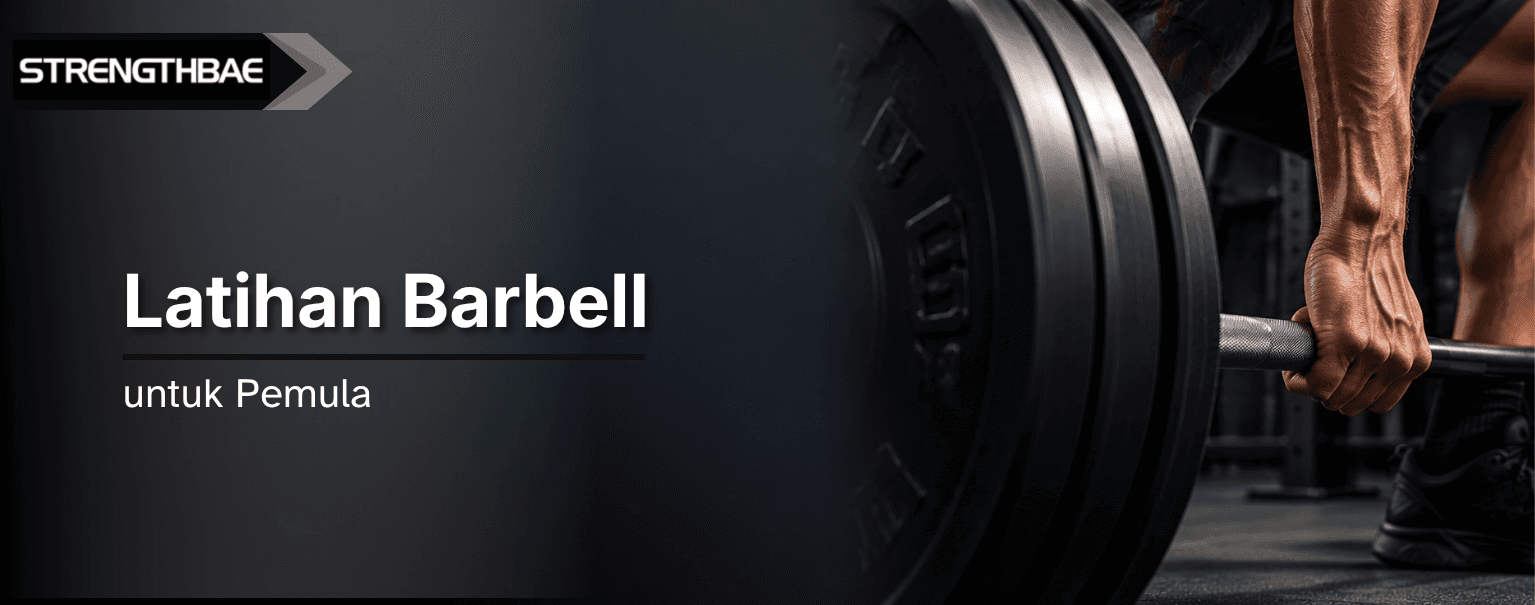
Barbell training for beginners should start by learning basic movements using an empty barbell or light weights. The main focus is to build technique, movement control, coordination, and strength gradually.
Barbell training can also help improve muscle mass, bone strength, metabolism, and overall physical fitness. As a beginner, you do not need to immediately learn many exercise variations. Simply start with compound exercises such as back squat, Romanian deadlift, bench press, bent-over row, and overhead press to train almost all major muscles in the body. These movements can be performed both at home and in the gym.
Basic Barbell Training Movements for Beginners
Before starting to lift heavier weights, beginners need to understand five basic movement patterns in barbell training. Mastering these movement patterns helps you perform exercises with proper technique, reduce the risk of injury, and make target muscles work more effectively.
Squat
A movement pattern where you lower and raise your body by bending your knees and hips. This movement trains the quadriceps, glutes, and core muscles to maintain body stability. Examples of main exercises include Barbell Back Squat and Barbell Front Squat.
Hinge
A movement pattern where you push your hips backward while keeping your back straight. This movement focuses on the posterior chain muscles, such as the hamstrings, glutes, and lower back. Examples of main exercises include Barbell Deadlift and Romanian Deadlift.
Push
A movement pattern where you push the weight away from your body. Push movements can be performed horizontally or vertically to train the chest, shoulders, and triceps. Examples of main exercises include Barbell Bench Press for horizontal push and Barbell Overhead Press for vertical push.
Pull
A movement pattern where you pull the weight closer toward your body. This movement trains the back muscles, rear delts, and biceps while helping maintain balance between pushing and pulling muscles. Examples of main exercises include Barbell Bent-Over Row and other rowing variations.
Carry
A movement pattern where you carry weight while walking or maintaining a stable body position. This movement trains grip strength, core, shoulders, and overall body endurance. Examples of main exercises include Farmer’s Carry using dumbbells, kettlebells, or barbells.
Read More: Echo Barbell Strengthbae
Types of Barbell Exercises for Beginners
Below are 8 basic barbell exercise variations highly recommended for beginners, along with technique guidance, target muscles, and technical tips.
Barbell Back Squat
How to Perform:
Place the bar on the upper back area, not directly on the neck bones. Position your feet shoulder-width apart or slightly wider depending on your hip comfort.
Take a deep breath and brace your core. Lower your body by bending your knees and opening your hips while keeping your feet flat on the floor. Make sure your knees remain stable and your back maintains a proper position.
Once you reach a suitable depth, push the floor away using your feet to activate your thighs and glutes, then return to a standing position.
Muscles Worked:
Quadriceps, glutes, hamstrings (as supporting muscles), as well as the core and lower back muscles for stability.
Beginner Tips:
Start with an empty barbell weighing around 20 kg. Do not force squat depth if your pelvis starts to lose position.
Make sure your knees stay aligned with your toes and your heels remain on the floor. Use a power rack or squat rack equipped with safety pins/spotter arms.
Barbell Romanian Deadlift (RDL)
How to Perform:
Stand upright while holding the bar in front of your thighs. Slightly bend your knees, then push your hips backward while lowering the bar close along your thighs.
Maintain a straight and neutral spine position. Lower the bar slowly by pushing your hips backward while keeping your back straight.
Stop when you feel your hamstrings begin to stretch, usually when the bar reaches slightly below the knees. Do not force the movement lower if it causes your back to round or lose proper positioning.
Muscles Worked:
Hamstrings, glutes, lower back (as stabilizers), upper back, and grip strength.
Beginner Tips:
Focus on pushing your hips backward rather than performing a squat movement. Keep the bar close to your legs throughout the movement.
RDL is highly recommended for beginners to learn hip control before attempting deadlifts from the floor.
Barbell Bench Press
How to Perform:
Lie on a flat bench with your feet firmly planted on the floor. Grip the bar slightly wider than shoulder width.
Lift the bar from the rack, then lower it with control toward the middle of your chest. Keep your forearms relatively straight as the bar approaches your chest.
Push the bar back upward in a straight line until your arms are fully extended.
Muscles Worked:
Chest, triceps, and anterior shoulder (front delts).
Beginner Tips:
Keep your shoulder blades pulled back and stable on the bench. Lower the bar toward your chest, not your neck.
Perform 8–12 repetitions for 3–5 sets using a manageable weight. Always use safety catches, assistance, or a spotter when training alone.
Read Also: Dumbbells vs. Barbells: Which One Do You Need?
Barbell Bent-Over Row
How to Perform:
Hold the bar while standing, slightly bend your knees, then push your hips backward until your torso leans forward.
Maintain a neutral and straight spine position. Pull the bar toward your lower stomach area by driving your elbows backward past your body.
Control the bar as it returns to the starting position.
Muscles Worked:
Latissimus dorsi, upper back, rear delts, biceps, as well as the core and posterior chain muscles that support posture.
Beginner Tips:
Avoid swinging your body to lift the weight. If your lower back gets tired quickly, reduce the weight or use a rowing variation with chest support.
Barbell Overhead Press (OHP)
How to Perform:
Hold the bar at shoulder height while standing upright with your feet firmly planted on the floor.
Brace your core and tighten your glutes. Press the bar straight overhead.
Move your head slightly backward as the bar passes your face, then return your head to a neutral position when the bar is directly above your body.
Lower the bar back to shoulder level with control.
Muscles Worked:
Shoulders (deltoids), triceps, upper chest (as supporting muscles), and core muscles.
Beginner Tips:
Avoid excessive lower back arching. Start with lighter weights to ensure adequate shoulder mobility.
Barbell Deadlift
How to Perform:
Stand with the bar positioned over the middle of your feet, close to your shins. Place your feet hip-width apart.
Bend down by hinging at your hips and knees until your hands can grip the bar. Brace your core, lift your chest, then push the floor away with your feet while pulling the bar upward close to your body until you stand tall.
Lower the bar back down with control using a hip hinge pattern.
Muscles Worked:
Glutes, hamstrings, quadriceps, all major back muscles, core, and grip strength.
Beginner Tips:
Prioritize your starting position and core tension. Never pull the bar away from your shins.
If you have not mastered the hip hinge pattern, learn the RDL movement first.
Barbell Hip Thrust
How to Perform:
Sit on the floor with your upper back supported against the edge of a flat bench.
Place the bar directly over your hip crease. Use a protective bar pad if needed.
Bend your knees and place your feet flat on the floor. Drive your hips upward using your glutes until your torso forms a straight line from your shoulders to your knees.
Lower your hips back down slowly.
Muscles Worked:
Glutes, hamstrings, and core muscles.
Beginner Tips:
Use a bar pad on your hips for comfort. Avoid pushing your hips too high if it causes your spine to overextend at the top position.
Barbell Front Squat
How to Perform:
Position the bar on the front of your shoulders using either a crossed-arm grip or fingertip grip. Keep your elbows high to prevent the bar from sliding down.
Lower your body in an upright squat pattern, then push back up to a standing position.
Muscles Worked:
Quadriceps, glutes, core, and upper back.
Beginner Tips:
This movement requires good flexibility in the wrists, shoulders, and upper back to keep the bar stable.
Beginners do not need to learn the front squat first if they are still developing the basic back squat technique.
Beginner Barbell Training Program
At the beginning stage, beginners do not need to immediately perform all 8 variations above. Prioritize these 5 main exercises as the foundation of barbell training:
Barbell Back Squat
Barbell Romanian Deadlift
Barbell Bench Press
Barbell Bent-Over Row
Barbell Overhead Press
This combination already covers all major muscle groups in the body.
Exercises such as Deadlift, Front Squat, and Hip Thrust can be added gradually after the basic techniques above become consistent and stable for beginners who are just starting barbell training.
Barbell Training Frequency and Beginner Program
The recommended barbell training frequency for beginners is 2 to 3 times per week. Allow rest days between training sessions so your muscles have enough time to recover.
Barbell Training 2 Times a Week
Day 1:
Back Squat (3 sets × 8–10 reps)
Bench Press (3 sets × 8–12 reps)
Romanian Deadlift (3 sets × 8–10 reps)
Bent-Over Row (3 sets × 8–12 reps)
Day 2:
Barbell Deadlift / RDL (3 sets × 8 reps)
Overhead Press (3 sets × 8–10 reps)
Light Back Squat / Goblet Squat (3 sets × 10 reps)
Bent-Over Row (3 sets × 10 reps)
Barbell Training 3 Times a Week
Day 1:
Back Squat (3 sets × 8–10 reps)
Bench Press (3 sets × 8–12 reps)
Bent-Over Row (3 sets × 8–12 reps)
Day 2:
Romanian Deadlift (3 sets × 8–10 reps)
Overhead Press (3 sets × 8–10 reps)
Hip Thrust (3 sets × 10–12 reps)
Day 3:
Light Back Squat (3 sets × 10 reps)
Bench Press (3 sets × 8–12 reps)
Barbell Deadlift / Bent-Over Row (3 sets × 8–10 reps)
Beginner Barbell Training Program Summary
The table below summarizes 5 main barbell exercises for beginners, including their movement patterns, target muscles, and recommended sets and repetitions.
Main Barbell Exercise | Basic Movement Pattern | Primary Target Muscles | Beginner Sets & Reps |
Barbell Back Squat | Squat | Quadriceps, Glutes, Core | 3 sets × 8–10 reps |
Barbell Romanian Deadlift | Hip Hinge | Hamstrings, Glutes, Lower Back | 3 sets × 8–10 reps |
Barbell Bench Press | Horizontal Push | Chest, Triceps, Anterior Shoulder | 3 sets × 8–12 reps |
Barbell Bent-Over Row | Horizontal Pull | Latissimus Dorsi, Upper Back, Biceps | 3 sets × 8–12 reps |
Barbell Overhead Press | Vertical Push | Deltoids, Triceps, Core | 3 sets × 8–10 reps |
Additional Barbell Training Tips for Beginners
Sets and Repetitions
As a safe starting point, use 2–3 working sets with a range of 8–12 repetitions per exercise.
Choose a weight that makes the final 2–3 repetitions challenging while still allowing you to maintain proper technique.
How to Choose Barbell Weight
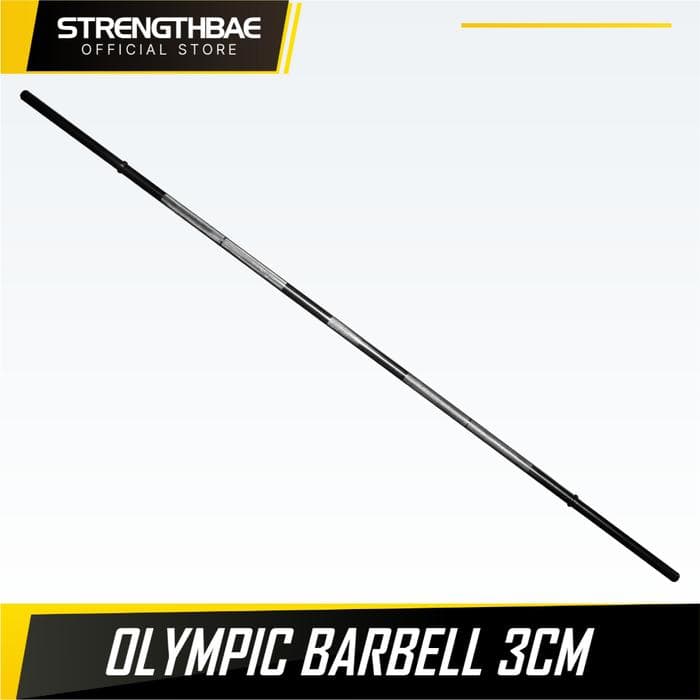
Start with an empty barbell (20 kg for a standard Olympic barbell) or a very light weight.
Increase the load only when your technique remains consistent, your range of motion is complete, and you are not using body momentum to complete the movement.
Remember that each exercise has a different loading capacity. Your squat weight, for example, will not be the same as your overhead press weight.
Progressive Overload
Increase your training load gradually through progressive overload.
Progress does not only come from adding more weight. You can also progress by increasing repetitions, adding sets, improving movement control, and reducing unnecessary momentum.
You are ready to increase weight when your technique stays consistent from the beginning to the end of the set. Ensure that the bar path remains stable, range of motion does not become shorter, posture does not change, and no joint pain appears.
Warm-Up Before Barbell Training
General Warm-Up: Perform 5–10 minutes of light cardio, such as walking, stationary cycling, or using an air bike, to increase body temperature.
Movement Preparation: Perform dynamic mobility movements such as bodyweight squats, hip hinges, and shoulder rotations.
Warm-Up Sets: Complete 1–2 warm-up sets using an empty barbell or light weight before starting your main working sets.
FAQ
Do beginners need to train with a barbell every day?
No. Training with a barbell 2–3 times per week is already ideal for stimulating muscle growth while allowing enough recovery time.
Is barbell training better than dumbbell training?
Not always. Barbells are excellent for repeatedly training heavier loads, while dumbbells are useful for improving left-right strength balance. Combining both provides a well-rounded training approach.
What gym equipment is needed for barbell training at home?
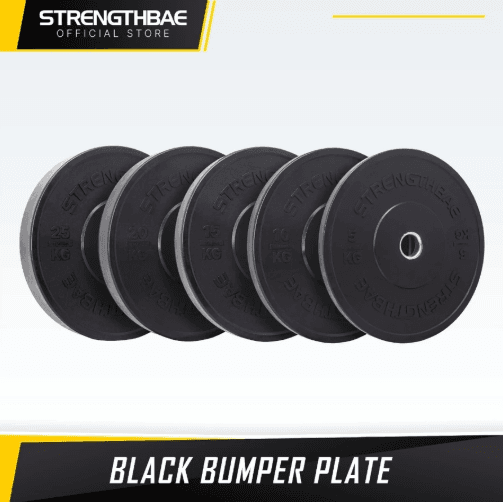
Equipment needed for home barbell training includes an Olympic barbell (20 kg), weight plates (bumper plates or rubber plates), a pair of barbell collars, an adjustable bench, and a sturdy squat rack or power rack equipped with safety features.
Build Your Strength Training Foundation with StrengthBae
Barbell training for beginners does not require a complicated approach. The key to success lies in mastering basic movement patterns, applying progressive overload consistently, and maintaining regular training habits.
Using high-quality barbell equipment and racks with precise construction helps ensure every training session is safer and more comfortable. Contact the Strengthbae team to find the right barbell equipment for your home training needs.
Strengthbae is a professional gym equipment brand providing solutions for commercial gyms and home gyms. From racks and All in One Trainers to functional training accessories such as standard Hyrox sandbags, everything is available at Strengthbae.