Sandbag Training at Home: Easy and Practical
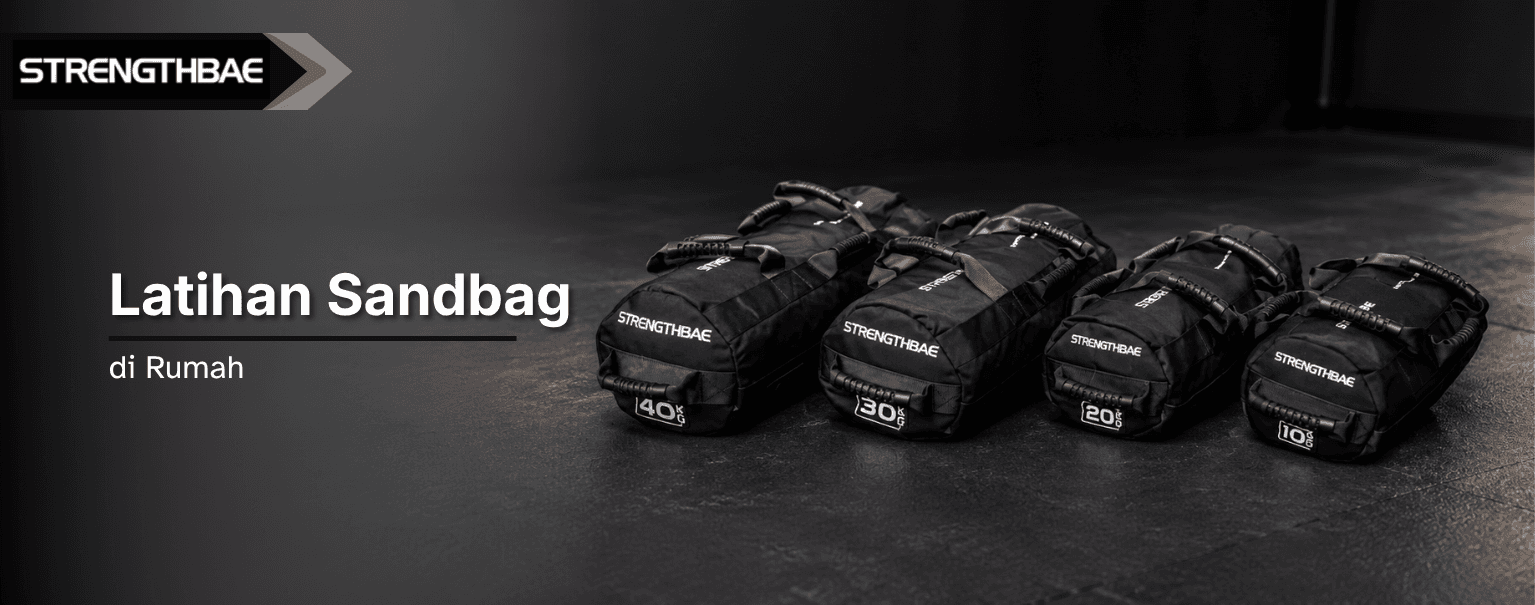
Sandbag training at home combines strength training, conditioning, and functional training in a practical format. A single sandbag can be used to train multiple muscle groups without requiring a lot of additional equipment.
Because the contents of a sandbag can shift and change position during movement, your body has to work harder to maintain balance. The core and other muscles responsible for maintaining stability are also engaged during movements such as squats, deadlifts, rows, presses, cleans, and carries.
For beginners, sandbag training at home can be an effective way to improve strength, build muscle, burn calories, and develop body stability. Start with a weight that matches your ability and master the movement technique before gradually increasing the load.
What Is a Sandbag?
A sandbag is a training tool shaped like a bag made from synthetic fabric or thick nylon and filled with weighted material such as sand or rubber mulch. Unlike dumbbells or barbells, which have a fixed and balanced load, the contents of a sandbag can move and shift during exercise. This requires the body, especially the core, hips, and back, to work harder to maintain balance and posture.
A sandbag can be used for various types of training with a single piece of equipment, including:
Strength training: Build strength through movements such as squats, deadlifts, and presses.
Functional training: Train movement patterns involved in lifting and carrying irregularly shaped objects.
Conditioning: Improve endurance and overall fitness through higher-intensity training.
Unilateral training: Improve strength balance between the right and left sides through movements such as lunges or single-sided carries.
Hybrid training: Support training for competitions such as HYROX, which combines running with movements such as sandbag lunges.
Choosing a Sandbag Weight for Beginners
Beginners should choose a sandbag weight based on their ability to maintain proper technique rather than trying to use the heaviest load possible. Because the contents can shift and move, a 15 kg sandbag can feel more challenging than a 15 kg dumbbell or barbell.
The weight should also be adjusted according to the movement being performed. Lower-body movements such as squats and carries can generally use heavier loads than upper-body or explosive movements such as shoulder presses, cleans, and shouldering.
Choose the weight based on the movement, number of repetitions, workout duration, and your training experience. Use a load that still allows you to perform several additional repetitions before your technique starts to break down or your body loses proper positioning.
Preparing for Sandbag Training at Home
Before starting sandbag training at home, make sure the training area and equipment are safe to use:
Choose enough space: Leave enough open space for carrying, lifting, and moving the sandbag without hitting nearby objects.
Make sure the floor is not slippery: Use rubber flooring or athletic shoes with good grip to maintain stable footing.
Check the condition of the sandbag: Make sure the stitching, handles, and zipper or inner filler closure are in good condition to prevent the filler from leaking.
Prepare a safe drop area: For movements such as shouldering or ground-to-shoulder, leave enough open space to safely drop the sandbag.
Warm up: Perform 5–10 minutes of dynamic warm-up, especially for the hips, knees, shoulders, and core.
Sandbag Exercises for the Lower Body
Lower-body sandbag exercises focus on building strength and muscle in the thighs, hips, and glutes while using the sandbag as resistance.
Sandbag Squat
How to perform: Hold the sandbag in front of your chest using a bear hug or front rack position. Stand with your feet approximately shoulder-width apart, then bend your knees and push your hips back while keeping your chest upright. Lower your body until your thighs are approximately parallel to the floor, then drive through your feet to return to a standing position.
Muscles worked: Quadriceps, glutes, hamstrings, and core.
Sandbag Romanian Deadlift
How to perform: Hold the sandbag in front of your thighs. Push your hips back with your knees slightly bent, then lower the sandbag along your thighs while keeping your back straight. Drive your hips forward to return to a standing position.
Muscles worked: Hamstrings, glutes, lower back, and core.
Reverse Lunge
How to perform: Hold the sandbag in front of your chest using a bear hug or front rack position. Step one foot backward and lower your body until your back knee is almost touching the floor. Push through your front foot to return to the starting position, then repeat with the other leg.
Muscles worked: Quadriceps, glutes, hamstrings, calves, and core.
Sandbag Lunges
How to perform: Perform walking lunges while holding the sandbag in a bear hug position or resting it on one shoulder. Step forward alternately while maintaining your balance and keeping your torso upright.
Muscles worked: Quadriceps, glutes, hamstrings, and core. This movement can also help improve leg endurance and prepare the body for sandbag lunges in HYROX.
Read Also: HYROX Station 7: 100-Meter Sandbag Lunges Guide
Sandbag Exercises for the Upper Body
Upper-body exercises use the sandbag to train the back, chest, and shoulders through pulling and pushing movements.
Sandbag Bent-Over Row
How to perform: Hold the sandbag handles with both hands. Lean your torso forward by pushing your hips back while keeping your back straight. Pull the sandbag toward your abdomen, then lower it slowly.
Muscles worked: Latissimus dorsi, rhomboids, trapezius, biceps, and rear deltoids.
Sandbag Floor Press
How to perform: Lie on your back with your knees bent. Hold the sandbag above your chest, then press it upward until your arms are straight. Lower it slowly until your upper arms touch the floor.
Muscles worked: Chest, triceps, and anterior deltoids.
Sandbag Shoulder Press
How to perform: Position the sandbag in front of your chest or on your shoulders. Brace your core and glutes, then press the sandbag overhead. Lower it back to the starting position under control.
Muscles worked: Shoulders, triceps, upper chest, and core.
Full-Body Sandbag Exercises
Explosive movements can be performed with sandbag exercises that use the legs and hips to move the sandbag from the floor to the chest or shoulder quickly and powerfully.
Sandbag Clean
How to perform: Stand with your feet hip-width apart near the sandbag. Hinge at the hips to grip the handles, then drive through your legs and hips explosively to bring the sandbag up to your chest. Catch the sandbag in a stable position, then stand upright.
Main muscles: Glutes, hamstrings, quadriceps, shoulders, upper back, and core.
Sandbag Shouldering
How to perform: Place the sandbag between your feet. Hinge at the hips and hug the sandbag, then drive through your legs and hips explosively to bring it onto one shoulder. Lower it under control and repeat on the opposite shoulder.
Main muscles: Glutes, hamstrings, back, shoulders, arms, and core.
Sandbag Ground-to-Shoulder
How to perform: Lift the sandbag from the floor to your shoulder using your legs and hips. Alternate between both shoulders. Avoid relying only on your back and arms to pull the load upward.
Main muscles: Full body, especially the glutes, hamstrings, back, and core.
Sandbag Carry Exercises
Loaded carry exercises train balance, grip strength, posture, and endurance while carrying a load.
Bear Hug Carry
How to perform: Hug the sandbag tightly against your chest. Stand upright, brace your core, and walk with short, controlled steps without leaning too far forward.
Main muscles: Core, glutes, legs, upper back, and grip.
Front Carry
How to perform: Hold the sandbag in front of your body using the handles or support it in the crook of your elbows. Keep your torso upright, then walk for the desired distance or duration.
Main muscles: Upper back, core, biceps, and thighs.
Suitcase Carry
How to perform: Hold the sandbag on one side of your body like carrying a suitcase. Walk upright without leaning toward the loaded side, then switch sides.
Main muscles: Obliques, core, grip, and shoulders.
Read More: Strengthbae Competition Sandbag
Sandbag Sets, Reps, and Training Duration for Beginners
For beginners, start with a simple training volume and focus on proper technique.
Perform 2–3 sets of 8–12 repetitions for movements such as Sandbag Squat, Romanian Deadlift, Row, and Press. For unilateral movements such as Reverse Lunge, perform 6–10 repetitions per side.
For loaded carries such as Bear Hug Carry and Suitcase Carry, use a distance of 20–40 meters or a duration of 20–40 seconds per set.
For conditioning, start with 10–15 minutes of moderate-intensity training, then gradually increase the duration or load.
Rest for around 60–120 seconds between sets, especially after more demanding movements.
15–30 Minute Sandbag Workout Session
Sandbag Workout for Beginners
Exercise | Target Muscles | Sets & Reps | Rest |
Sandbag Squat | Thighs, glutes, core | 3 × 8–10 | 90 seconds |
Sandbag Romanian Deadlift | Hamstrings, glutes | 3 × 8–10 | 90 seconds |
Sandbag Bent-Over Row | Back, lats | 3 × 8–12 | 60–90 seconds |
Reverse Lunge | Thighs, glutes | 2 × 8/side | 60 seconds |
Bear Hug Carry | Core, grip | 3 × 20–30 seconds | 60 seconds |
Plank | Core | 2–3 × 30 seconds | 45 seconds |
Advanced Sandbag Workout
Exercise | Target Muscles | Sets & Reps | Rest |
Sandbag Clean | Full body, hips | 3 × 6–8 | 90 seconds |
Sandbag Squat | Thighs, glutes | 3 × 10 | 90 seconds |
Sandbag Shouldering | Back, hips, core | 3 × 5/side | 90 seconds |
Sandbag Floor Press | Chest, triceps | 3 × 8–12 | 60–90 seconds |
Sandbag Lunges | Thighs, balance | 2–3 × 8/side | 60 seconds |
Bear Hug Carry | Full body, conditioning | 3 × 30–40 seconds | 60 seconds |
Additional Tips for Sandbag Training at Home
Prioritize load control: Control the movement when lifting and lowering the sandbag.
Use a spacious area: Make sure the training area and carry path are free from objects that could cause you to trip.
Use the appropriate weight: For cleans or shouldering, choose a load that allows you to perform the movement smoothly without compromising your posture.
Use a safe surface: Use rubber flooring or a rubber mat when performing high-impact movements or dropping the sandbag.
Control training intensity: Maintain controlled breathing and proper technique during conditioning sessions.
Combine it with other gym and fitness equipment: Pair the sandbag with dumbbells, kettlebells, resistance bands, or a treadmill for more training variety.
FAQ
Is sandbag training at home effective for building muscle and burning calories?
Yes. Sandbag training can help build muscle and burn calories. The movements engage multiple muscle groups at once, including the core, making sandbags suitable for both home and gym workouts.
What sandbag weight should beginners choose?
Beginners can choose a sandbag with an adjustable load, such as 10–20 kg. Use lighter loads for upper-body movements and heavier loads for exercises such as squats or carries.
Is it safe to use a sandbag alone at home?
Yes, as long as you start with basic movements, use an appropriate load, and maintain proper technique and back positioning. Master the movements you are already comfortable with before trying more complex exercises.
What is the difference between a sandbag and a dumbbell or barbell?
The main difference is that the contents of a sandbag can move and shift during exercise. This requires the core and stabilizing muscles to work harder to maintain balance compared with using a dumbbell or barbell.
Are sandbags suitable for home gyms or commercial gyms?
Yes. Sandbags are relatively space-efficient, versatile, and can be used for various strength, functional training, and conditioning exercises, making them suitable for both home gyms and commercial gyms.
Effective Sandbag Training with Strengthbae
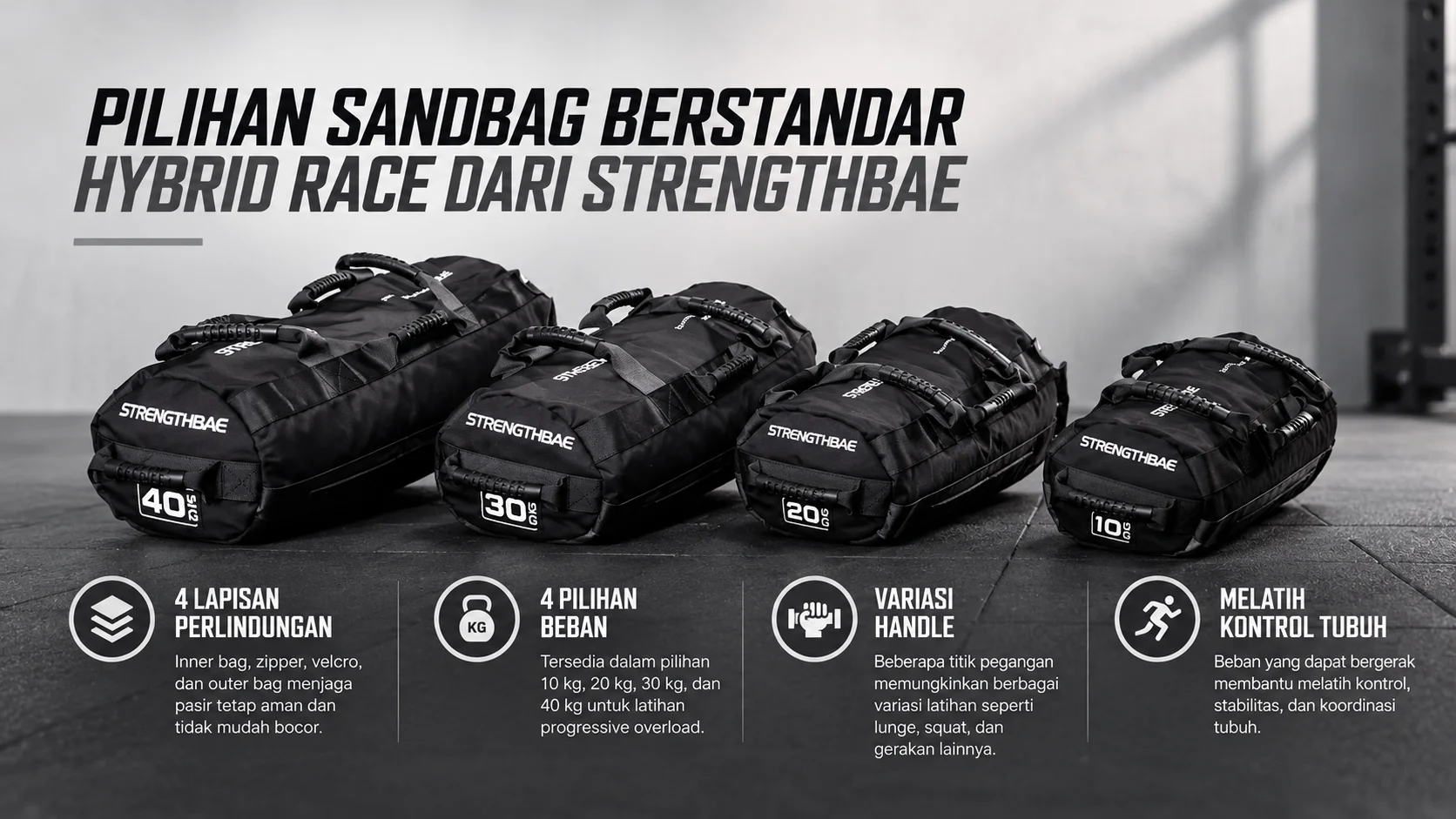
Sandbag training at home is a versatile form of functional training that can help improve strength, explosive power, core stability, and overall fitness. By mastering the basic movements, managing sets and repetitions properly, and gradually increasing the load, you can build a stronger and fitter body at home.
If you need advice on high-quality sandbags designed for hybrid races such as HYROX or other functional training equipment, you can contact the Strengthbae team for a free consultation.
Strengthbae is a professional gym equipment brand providing solutions for commercial gyms and home gyms. From racks and All in One Trainers to functional training accessories for HYROX-standard hybrid races, everything is available from Strengthbae.