Tips for Building a Home Gym in Your Garage
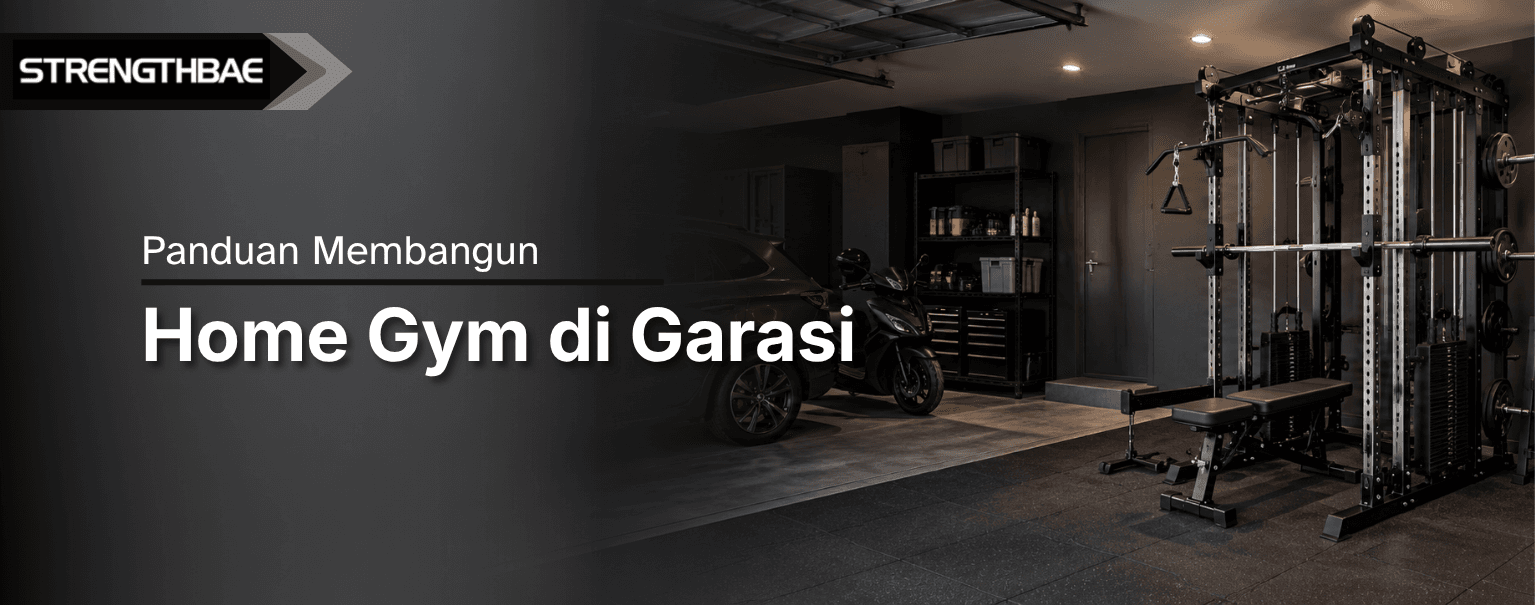
Building a home gym in your garage is a practical solution for creating a private workout area without having to visit a commercial gym. Garages generally have strong concrete floors and wide access, but you still need to consider ventilation, humidity, rust risk, and the use of rubber flooring. Adjust your equipment and layout to the size of the garage and your training needs so your home gym remains safe, comfortable, and durable. Here is a guide to building a garage home gym that you can use as a reference.
Determine the Garage's Main Purpose First
Before purchasing equipment, first determine how your garage home gym will be used. The garage can be converted entirely into a gym, shared with vehicle parking, or used as a multifunctional space. This will determine how the space is divided and how much equipment can be placed inside.
A single-car garage measuring around 20–23 m² is generally enough for a simple garage home gym. Meanwhile, a two-car garage of around 37–46 m² provides more space to divide between parking and training areas. If the garage is still used for vehicles, leave around 30–60 cm of clearance between the vehicle and gym equipment for safety.
In addition to equipment dimensions, consider the space needed for movement. Leave enough open space for exercises, stretching, jumping, and arm movements without hitting vehicles or other equipment.
Create a Flexible Garage Home Gym
If the garage is still used for parking, choose fitness equipment that can be easily moved or stored. Folding racks that can be folded against the wall and wall-mounted equipment can save significant floor space.
Use vertical storage to organize barbells, weight plates, dumbbells, and accessories so they do not clutter the floor. Wall-mounted racks can also help keep the vehicle's path clear.
Place heavy permanent equipment in the corners of the garage and away from areas where car doors open. Separate the parking and training areas so the garage home gym remains safe and organized.
Choose Equipment Based on Garage Conditions
Gym equipment should be selected according to your training goals and garage size so your garage home gym remains focused and efficient.
Strength Training
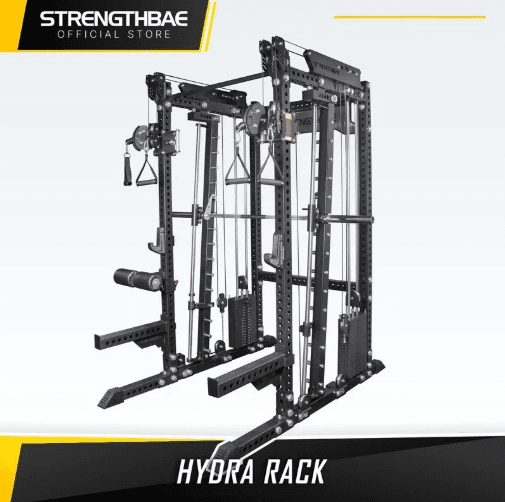
For strength training, use a power rack or squat stand, pull-up bar, adjustable bench, Olympic barbell, and weight plates. A power rack also includes safety systems to support heavy squat and bench press training.
Free Weights
Adjustable dumbbells and kettlebells are suitable for a wide range of exercises. Adjustable dumbbells also save more space than having multiple pairs of fixed dumbbells.
Cardio Equipment
Choose compact or easily movable cardio equipment such as an air bike, rowing machine, or spin bike. An air bike is also suitable for a garage because it does not require electricity.
Functional Training for Sports or Hybrid Race
Add equipment such as a weight sled, battle rope, plyo box, and weighted sandbag for functional fitness and conditioning.
Multifunctional Home Gym
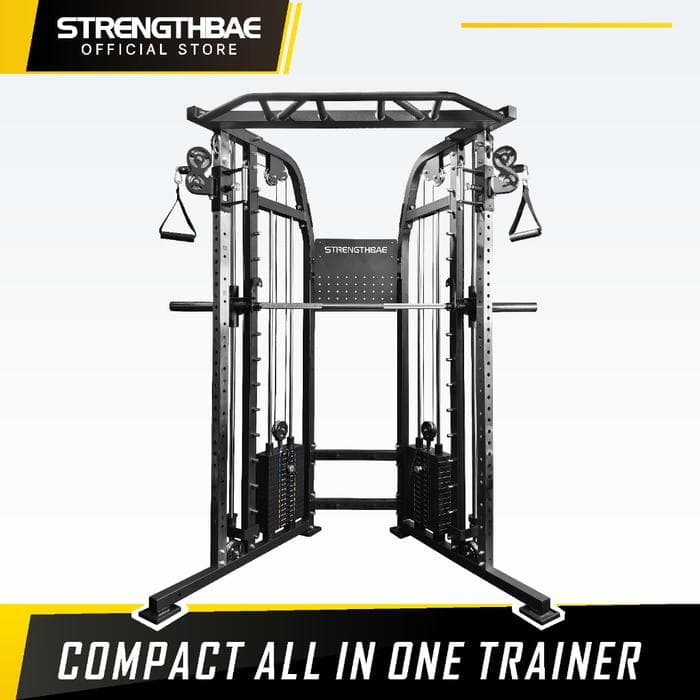
For limited spaces, an All-in-One Trainer or dual cable machine can be a practical choice. One machine can combine several functions, such as a power rack, Smith machine, and cable machine.
With the right equipment selection, a garage home gym can remain well-equipped without making the space feel overcrowded.
Check the Garage Size and Layout
Before purchasing equipment, measure the length, width, and height of the garage. In addition to calculating equipment dimensions, leave enough space for movement so workouts remain safe and comfortable.
Also consider the location of doors, electrical switches, and structural columns so large equipment does not block access. For exercises such as box jumps or kettlebell swings, provide additional movement space.
The following table can be used as a reference when planning a garage home gym layout:
Garage Type | Floor Area | Layout & Equipment | Recommendation |
Single-Car Garage | 20–23 m² | Folding rack, adjustable dumbbell, bench, vertical storage | Use foldable equipment or dedicate the space entirely to the gym |
Two-Car Garage (Shared) | 37–46 m² | Separate parking and gym areas with a power rack, bench, and cardio equipment | Separate the areas and leave 30–60 cm of clearance from the vehicle |
Garage Corner (10 × 10) | ±9 m² | All-in-One Trainer, compact cable, kettlebell, exercise mat, wall-mounted rack | Maximize vertical storage to save space |
Consider Heat and Humidity
A garage home gym is usually hotter and more humid than an indoor room. These conditions can make workouts less comfortable and increase the risk of rust on metal equipment.
Use insulation on the garage door or walls to reduce heat. You can also add a fan, exhaust fan, or portable AC to maintain a more comfortable temperature.
Make sure air can circulate properly so the garage does not become stuffy during workouts. Use an exhaust fan to remove hot and humid air, while a fan can help improve air circulation.
Also consider equipment placement. Do not block windows or ventilation paths with racks or large equipment.
Protect Your Home Gym Equipment from Rust
Equipment such as barbells, weight plates, cables, bolts, and chains can develop rust when frequently exposed to moisture. After training, wipe sweat from the equipment using a dry cloth.
Choose gym equipment with protective finishes such as powder coating, stainless steel, or hard chrome. Lubricate specific components according to the manufacturer's maintenance instructions.
Check the Garage Floor Condition
Make sure the garage home gym floor is level, free from severe cracks, and not prone to water pooling. An uneven floor can cause a rack or bench to become unstable or tilted. Clean and dry the floor before installing rubber flooring or other floor coverings.
Choose the Right Rubber Flooring
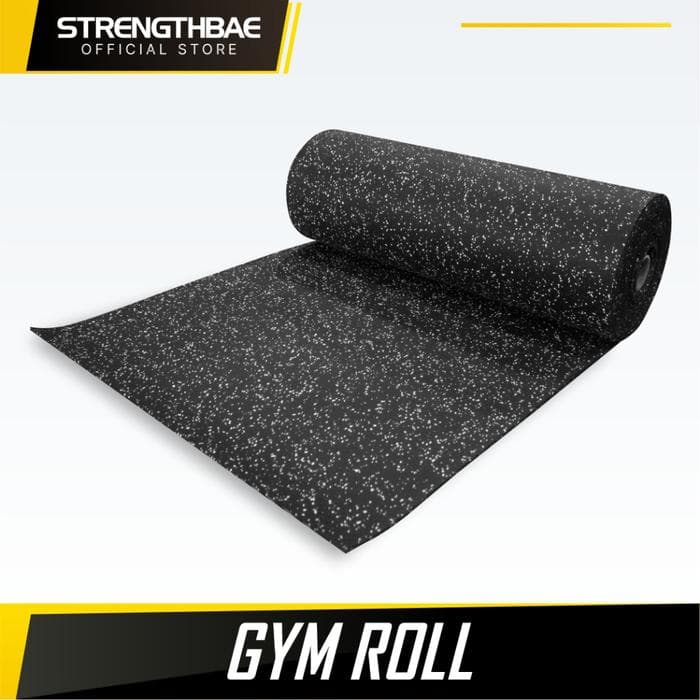
Use rubber flooring that is thick enough to protect the concrete floor and equipment from impact. For weight training, choose rubber mats at least 12 mm thick. If you frequently perform deadlifts or Olympic lifting, use a lifting platform with plywood and thicker rubber mats. For stretching or yoga areas in a garage home gym, you can add EVA mats for additional comfort.
Read Also: 4 Types of Gym Flooring and Platforms by Strengthbae
Consider the Garage Door
Make sure the garage door can still open and close smoothly after the equipment has been installed. Avoid placing a power rack or pull-up bar too close to the door path so they do not interfere with its movement.
Make Sure the Ceiling Height Is Sufficient
Measure the ceiling height before purchasing equipment such as a power rack or gym machine. In addition to the equipment's height, consider the overhead space required for pull-ups and overhead presses. Also make sure barbells and weights will not hit lights, the ceiling, or other installations.
Check Electricity and Lighting
Before building a garage home gym, check the location of electrical outlets and the power requirements for treadmills, fans, exhaust fans, AC units, and lighting.
Organize cables properly and avoid using too many extension cords to reduce the risk of electrical problems. If the garage has limited natural or artificial light, add bright LED lighting to keep the workout area comfortable.
Consider Drainage and Water Exposure
Make sure rainwater cannot easily enter through gaps around the garage door and that the drainage system works properly.
Avoid placing electronic equipment or metal gym equipment in areas that are prone to flooding or standing water. This helps protect your garage home gym from equipment damage and rust.
Reduce Dust and Dirt
Garages are more prone to dust because they are directly connected to outdoor areas. Clean the rubber flooring regularly to keep your garage home gym clean and comfortable.
Store accessories such as resistance bands, ankle straps, and timers in boxes or closed racks to protect them from dust.
Consider Noise and Vibration
The sound of barbells, weight plates, or treadmills can disturb people in the house and nearby neighbors. Use thick rubber flooring to help absorb impact and reduce vibration.
For weight training, bumper plates are also quieter than iron plates.
Prioritize Safety and Storage
Make sure the garage door has a secure locking system to protect your garage home gym equipment. Store dumbbells, kettlebells, and weight plates on sturdy and stable racks.
Keep entry, exit, and emergency access routes clear of equipment.
Checklist Before Buying Equipment
Use the following checklist before building a garage home gym:
[ ] Measure the length, width, and height of the garage.
[ ] Calculate equipment footprint and movement space.
[ ] Define the parking and training areas.
[ ] Check ceiling height and the garage door path.
[ ] Prepare rubber flooring at least 12 mm thick.
[ ] Make sure ventilation and lighting are sufficient.
[ ] Check the location and safety of electrical outlets.
[ ] Prepare protection against moisture and rust.
[ ] Make sure entry and exit routes remain clear.
[ ] Plan racks and storage to maximize space.
Read Also: How to Build a Home Gym in a Basement: Guide & Tips
FAQ
Is a home garage suitable for a home gym?
Yes. Garages typically have strong concrete floors and enough space for a home gym. With proper ventilation, rubber flooring, and storage, a garage can become a comfortable workout area.
What is the minimum garage space needed for a home gym?
A single-car garage of around 20–23 m² is generally enough for a power rack, bench, barbell, and dumbbells. If space is more limited, use a folding rack or wall-mounted equipment to save floor space.
What type of flooring is best for a garage home gym?
Use sufficiently thick rubber flooring, at least 12 mm, to protect the concrete floor, reduce impact noise, and provide a more stable training surface.
How can I prevent gym equipment from rusting in a humid garage?
Maintain good air circulation with an exhaust fan or regular fan, wipe away sweat after training, and choose equipment with protective finishes such as powder coating or stainless steel. Certain components should also be lubricated regularly according to the manufacturer's instructions.
Is garage gym equipment safe to use without a training partner or spotter?
It can be, provided you use equipment with an appropriate safety system, such as a power rack with safety spotter arms or safety straps. Always use a load that matches your ability and make sure the safety system is properly installed before training.
Build Your Dream Garage Home Gym with Strengthbae
Building a home gym in your garage can be a long-term investment that gives you more freedom to train at home. With the right layout, proper ventilation, and quality equipment, your garage can become a safe and comfortable workout space.
Need help choosing a power rack, planning your layout, or preparing a home gym or commercial gym equipment package? Contact the Strengthbae team for a free consultation today.
Strengthbae is a professional gym equipment brand providing solutions for commercial gym businesses and home gyms. From racks and All-in-One Trainers to functional training equipment for HYROX-standard hybrid race training, everything is available at Strengthbae.