Badminton Training: Program and Supporting Workouts
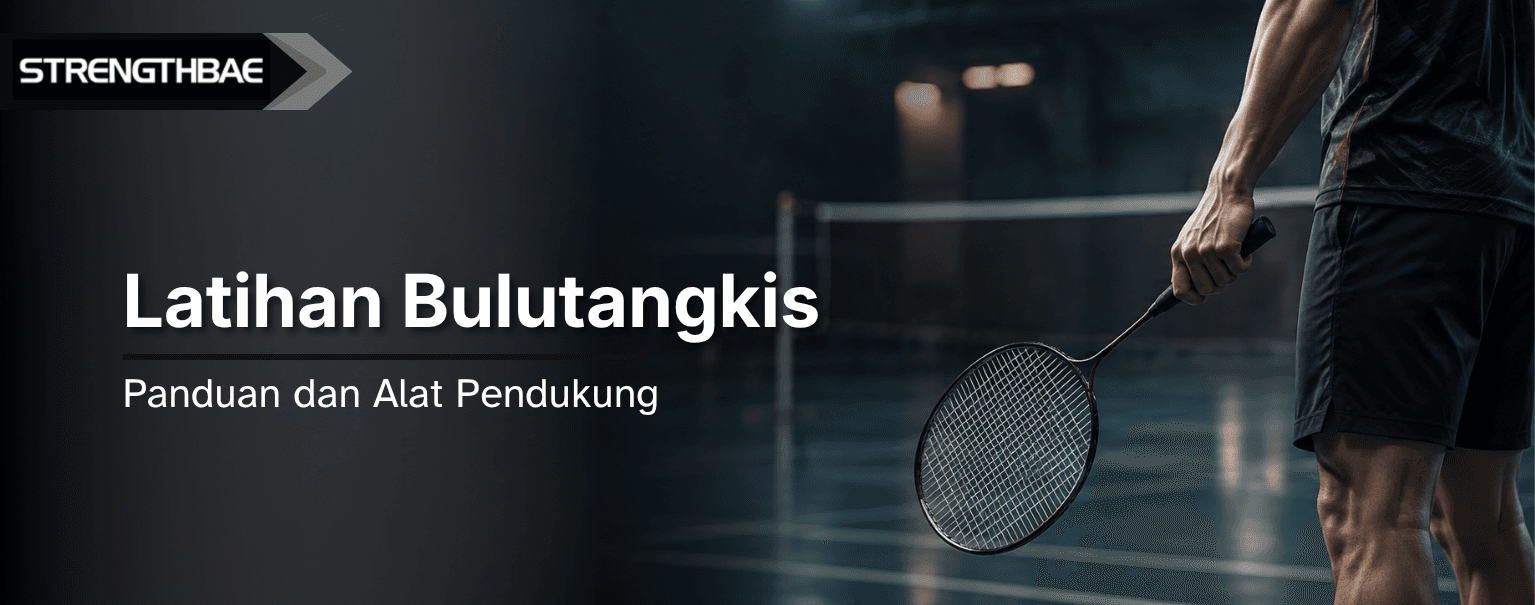
To play badminton better, on-court technique training needs to be supported by good physical fitness. Badminton requires more than just good stroke technique; it also requires agility, speed, strength, explosive power, stamina, balance, and a strong core. Supporting workouts at the gym or at home can help players move faster to reach the shuttlecock, change direction quickly, jump more steadily, and stay strong throughout the match.
A regular badminton training program can also help improve physical abilities while reducing the risk of injury, without making the body overly fatigued when playing badminton. Here are several types of exercises that can be included in a strength and conditioning program for badminton players.
Physical Abilities Important for Badminton
To reach the shuttlecock in different areas of the court and produce powerful shots, badminton players need several physical abilities that work together:
Agility: The ability to move and change direction quickly without losing balance.
Speed: Helps accelerate reaction time and the first step toward the shuttlecock.
Explosive Power: The ability to produce a large amount of force in a short period of time, such as during a jump smash or a fast lunge.
Leg Strength: Helps with footwork, lunges, and generating stronger leg drive.
Core Stability: Helps keep the body stable when rotating the body, swinging the racket, and performing challenging movements.
Balance: Helps maintain body control when landing, stopping, or supporting the body on one leg.
Endurance: Helps maintain energy and movement quality during long rallies and matches.
Grip Strength: Helps control the racket, keep the wrist stable, and produce more powerful shots.
Combining Badminton Training with Supporting Workouts
Combining strength training at the gym with badminton training requires proper scheduling. The goal is to prevent gym workouts from making the body overly fatigued or stiff when playing on the court.
Several things to keep in mind:
Avoid heavy leg training immediately before badminton training or a match.
Allow around 24–48 hours of recovery after heavy leg training before performing high-intensity badminton sessions.
Perform power and plyometric exercises while the body is still fresh, usually at the beginning of a gym session after warming up.
When badminton training becomes more frequent or intense, such as before a tournament, reduce the volume of gym training so the body is not overloaded.
Training Schedule Based on Weekly Frequency
A weekly training schedule can be adjusted based on the time available, how often you play badminton, and your training goals. Here are two example programs:
2-Day per Week Schedule
Suitable for players who play badminton 2–3 times per week and have limited time for supporting workouts.
Day 1 – Strength: Squat, Dumbbell Row, Bulgarian Split Squat, Shoulder Press, Calf Raise, Plank.
Day 2 – Power & Conditioning: Jump Squat, Skater Jump, Shuttle Drill, Push-Up, Pallof Press, Jump Rope or Interval Cardio.
3-Day per Week Schedule
Suitable for players who want to develop their physical abilities more comprehensively and have enough recovery time.
Day 1 – Lower Body & Core: Squat, Romanian Deadlift (RDL), Bulgarian Split Squat, Calf Raise, Plank, Side Plank.
Day 2 – Upper Body & Grip: Dumbbell Row, Shoulder Press, Lat Pulldown, Push-Up, Hand Gripper, Farmer's Carry.
Day 3 – Power, Agility & Conditioning: Jump Squat, Lateral Jump, Shuttle Drill, Skater Jump, Air Bike HIIT or Rowing Interval.
Adjustments Based on Player Level
Training experience should be considered when choosing exercises, loads, and the amount of training performed.
For beginners, it is best to focus first on basic movements using bodyweight or light weights. The goal is to build strength, balance, and core stability before adding more complex exercises.
Meanwhile, players who already play regularly can begin adding more challenging exercises, such as workouts to improve explosive power, jumping exercises, rapid change-of-direction drills, and exercises that use one leg or one side of the body alternately.
The amount of gym training should also be adjusted according to how often and how intensely you train or compete in badminton on the court.
Training Frequency and Recovery
Strength training sessions can be performed around 2–3 times per week, with each session lasting 45–60 minutes. However, if you already play badminton frequently, the amount and intensity of gym training should be reduced so the body has enough time to recover and avoid excessive fatigue.
In addition to managing your training schedule, leave at least 1–2 days per week without strenuous physical activity. Getting enough sleep, around 7–8 hours each night, as well as consuming enough protein, is also important to help the body repair and rebuild muscle after training.
Badminton Exercises for Leg Strength and Agility
The legs play an important role in badminton because almost every movement on the court requires drive and control from the legs. Strength training for the thighs, hips, and calves can help improve strength, balance, and stability during movement.
Squat
Squats can be performed using bodyweight, dumbbells, kettlebells, or a barbell. Stand with your feet shoulder-width apart, lower your hips in a controlled manner while keeping your knees aligned with your toes, then push through the floor to return to a standing position.
This exercise primarily trains the quadriceps and glutes to build leg strength.
Bulgarian Split Squat
Use a bench or chair to support one foot behind you, while the other leg becomes the primary support. Lower your body slowly, then push through the front leg to return to the starting position.
This exercise trains single-leg strength, especially the quadriceps and glutes, which helps support badminton footwork.
Walking Lunge
Step forward, lower your body until both knees are bent, then bring the back leg forward and repeat with the other leg. The exercise can be performed with bodyweight or dumbbells.
This movement trains leg strength, balance, and body control while changing positions.
Step-Up
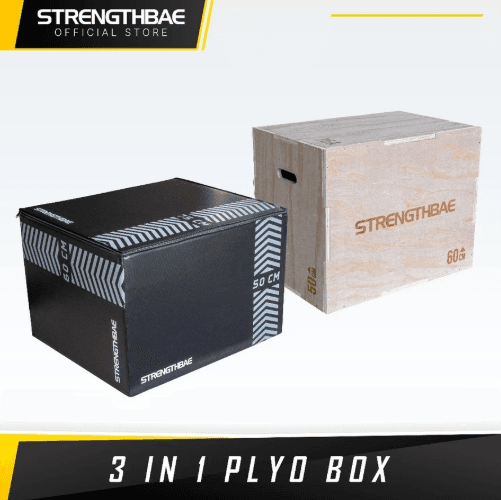
Use a sturdy bench or plyo box. Place one foot on the platform, push your body up until you are standing, then lower yourself back down in a controlled manner.
Step-ups train the quadriceps, glutes, and single-leg strength while also helping improve balance when moving around the court.
Calf Raise
Stand upright, then raise your heels as high as possible until you are supporting your weight on the balls of your feet, then slowly lower them back down.
This exercise strengthens the calf muscles and helps maintain ankle stability. Strong calves also support leg drive when moving quickly and changing direction.
Read Also: Gym Equipment for Leg Workouts at Home Besides a Treadmill
Badminton Exercises for Balance and Agility
Badminton requires quick movements from side to side, forward, and backward. Therefore, agility training can help improve foot speed, the ability to change direction, and body control while moving around the court.
Lateral Lunge
Take a wide step to the side and bend the knee of the supporting leg, while keeping the other leg straight. Push back to return to a standing position.
This exercise trains the inner thighs, glutes, and lateral movement strength.
Skater Jump
Jump from one leg to the other in a lateral direction, then land with control before jumping to the opposite side.
This exercise trains lateral explosive power, balance, and body control.
Shuffle
Use cones or markers spaced around 2–4 meters apart. Move quickly from side to side without crossing your feet, then return in the opposite direction.
This exercise helps improve footwork speed and the ability to move laterally.
Shuttle Drill
Sprint quickly from one cone to another, touch the marker, then brake and change direction.
This exercise trains the ability to accelerate and decelerate, similar to what is needed when chasing the shuttlecock and returning to the ready position.
Badminton Exercises for Explosive Power
Explosive power is the ability to produce a large amount of force in a short period of time. In badminton, power helps players jump, move, and perform explosive movements more quickly.
Jump Squat
Perform a squat, then push forcefully through the floor to jump. Land with your knees slightly bent and under control.
This exercise helps improve leg power to support jumps during smashes and quick movements.
Box Jump
Jump from the floor using both legs and land steadily on top of a plyo box. Then step down safely.
This exercise trains explosive power in the thighs and hips.
Lateral Jump
Jump explosively sideways over a line or marker, then land with control.
This exercise helps improve lateral power and balance when moving around the court.
Broad Jump
Start in a half-squat position, swing your arms backward, then jump as far forward as possible and land on both feet.
This exercise trains forward drive strength, which is useful when chasing the shuttlecock.
Badminton Exercises for Core and Stability
The core muscles help keep the body stable and help transfer power from the legs to the upper body when performing shots. A strong core also helps maintain balance when moving quickly around the court.
Plank
Hold your body in a straight position, supported by your forearms and the balls of your feet. Keep your hips from dropping or rising too high.
This exercise trains core strength and muscular endurance.
Side Plank
Support yourself on one elbow and the side of your foot, then lift your hips until your body forms a straight line.
This exercise trains the side abdominal muscles and helps maintain body stability when moving laterally.
Pallof Press
Use a resistance band or cable machine positioned to the side of your body. Press the handle forward while resisting rotation so your body does not turn with the movement.
This exercise trains the core's ability to resist rotational movement.
Dead Bug
Lie on your back, then alternately move the opposite arm and leg while keeping your lower back pressed against the mat.
This exercise trains core stability and coordination between the arms and legs.
Badminton Exercises for Upper-Body Strength
Although most of the power in badminton comes from the legs and hips, the upper body also plays an important role in controlling the movement and direction of the racket.
Training the back, shoulders, and chest can help support strength and stability during play.
Dumbbell Row
Bend your body forward while maintaining a stable position, then pull the dumbbell toward your waist and slowly lower it back down.
This exercise trains the back and biceps to support pulling movements and racket swings.
Shoulder Press
Press the dumbbells or handles from shoulder level overhead, then lower them back down in a controlled manner.
This exercise trains the shoulders and triceps and helps maintain shoulder stability during repeated shots.
Lat Pulldown
Pull the bar toward your chest while keeping your torso upright, then slowly return the weight to the starting position.
This exercise trains the latissimus dorsi and upper back to support swing strength during smashes and overhead shots.
Push-Up
Start with your body in a straight position, lower your chest toward the floor, then push yourself back up.
Push-ups train the chest, triceps, and front shoulders, which help support pushing movements and arm stability during play.
Badminton Exercises for Grip Strength
Hand and wrist grip strength helps players control the racket and transfer power more effectively. Simple exercises such as hand grippers and farmer's carries can help improve grip strength.
Hand Gripper
Grip the hand gripper and squeeze the handles together, then slowly release.
This exercise trains the fingers and hand muscles to improve grip strength and racket control during shots.
Farmer's Carry
Hold a dumbbell or kettlebell in each hand, then walk while keeping your body upright.
This exercise trains grip strength and endurance while also working the core, shoulders, and overall endurance.
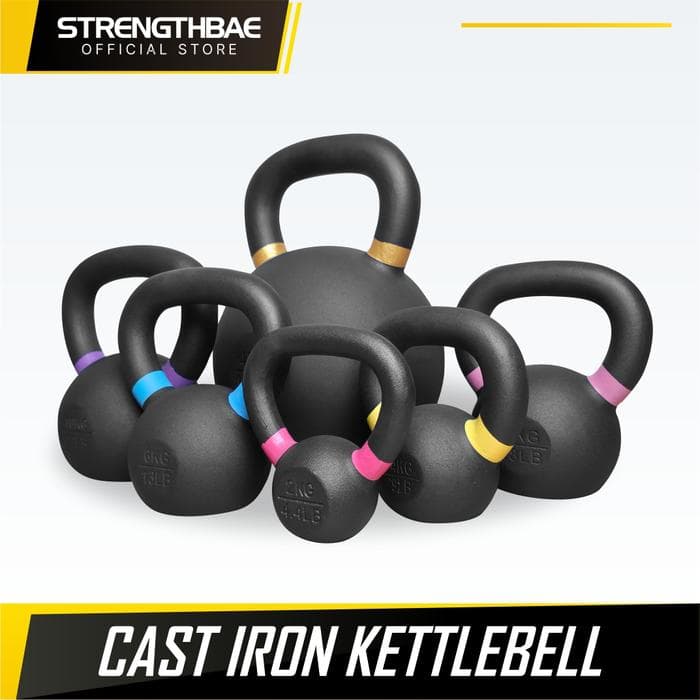
Read More: Classic Kettlebell Strengthbae
Badminton Exercises for Stamina and Endurance
Badminton consists of fast and intense rallies with short rest periods. Therefore, endurance training should combine interval cardio and aerobic exercise to build a solid fitness base.
Interval training or HIIT is suitable for mimicking the work-and-rest pattern of a match. Meanwhile, low-intensity, steady-state cardio, such as easy running, can be used to build a foundation of cardiovascular fitness.
Cardio Equipment | Training Method | Benefits for Badminton |
Treadmill | Interval running (sprint-walk), tempo runs, or incline walking | Improves stamina, running ability, and leg endurance. |
Air Bike / Fan Bike | HIIT, for example 20 seconds of sprinting and 10 seconds of easy pace | Trains full-body stamina with lower impact on the joints. |
Rowing Machine | Interval rowing or steady-state for 20–30 minutes | Improves stamina while training the legs, hips, and back. |
Jump Rope | Interval skipping, fast feet, or double unders | Improves stamina, foot movement rhythm, and ankle strength. |
FAQ
Would gym training make badminton movements stiff?
No, as long as gym training is designed around functional movement patterns and a full range of motion. Strength and agility training can actually make footwork feel lighter, improve balance, and build explosive power for jumping and hitting the shuttlecock.
How many times per week should badminton players do strength training at the gym?
The ideal frequency is 2–3 times per week. For recreational players who regularly play badminton 2–3 times per week, a 2-day-per-week gym program is already sufficient to strengthen the muscles and help prevent injuries.
Are home gym equipment such as dumbbells and resistance bands enough for badminton training?
Yes. Practical equipment such as dumbbells, kettlebells, resistance bands, and plyo boxes in a home gym are sufficient for performing exercises such as lunges, squats, rows, shoulder presses, as well as agility and core exercises.
When is the best time to do strength training so it does not interfere with badminton sessions?
Perform strength training on a separate day from your badminton sessions, or allow at least 6–8 hours between sessions if they are performed on the same day. Avoid heavy thigh or lower-body training the day before an important match.
What gym equipment is most recommended for training foot speed and smash power?
Equipment such as a plyo box for box jumps, dumbbells or kettlebells for split squats and farmer's carries, an air bike or treadmill for interval cardio, and a cable machine or resistance bands for rotational core exercises are effective gym equipment options.
Improve Your Badminton Training Performance with Strengthbae
A supporting badminton training program should not focus only on building muscle, but also on strength, explosive power, agility, stamina, balance, and core stability. Choose exercises according to your ability and give your body enough time to recover so your training continues to support your performance on the court.
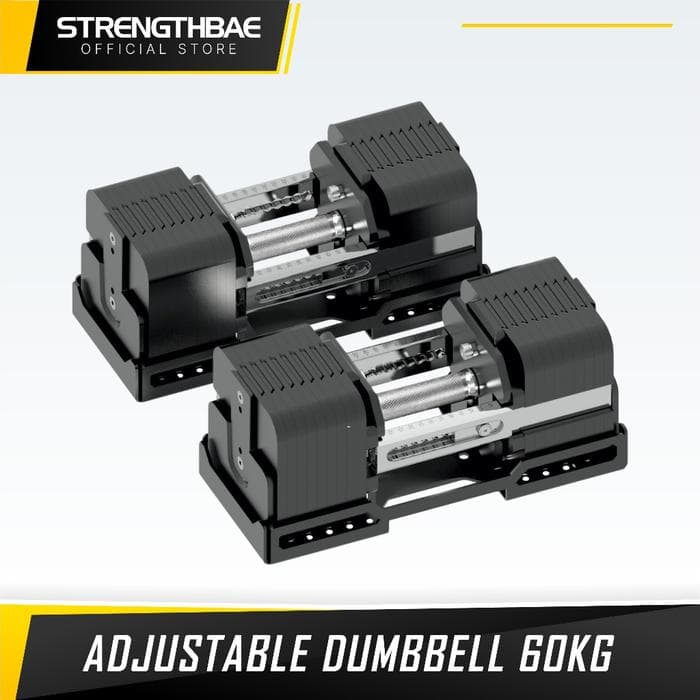
You do not always have to go to the gym to train these abilities. With the right equipment, you can build a home gym and perform various supporting badminton exercises at home. Strengthbae provides a variety of equipment such as dumbbells, kettlebells, benches, plyo boxes, and other home gym equipment. Consult the Strengthbae team about your needs today.
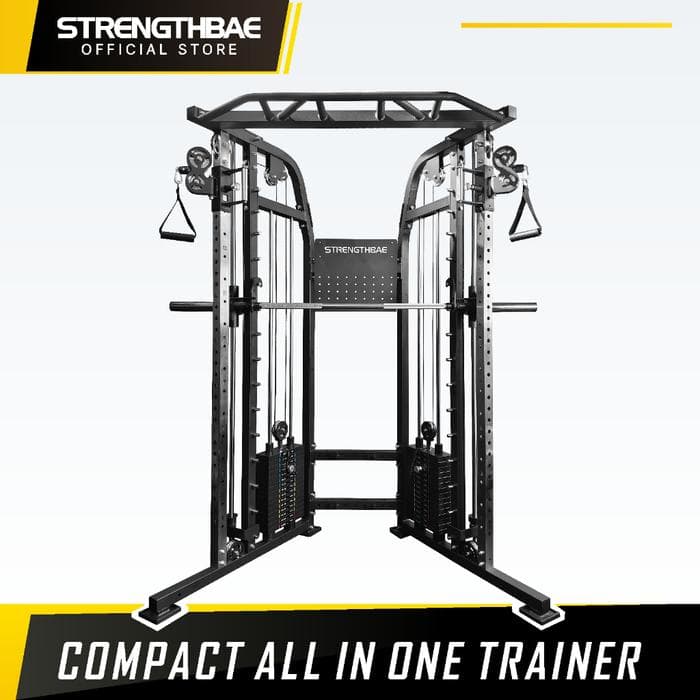
Strengthbae is a professional gym equipment brand that provides solutions for commercial gyms and home gyms. From racks and All in One Trainers to functional training accessories such as HYROX-standard sandbags, everything is available at Strengthbae.