Cable Machine Guide for Beginners: How to Use It and Basic Exercises
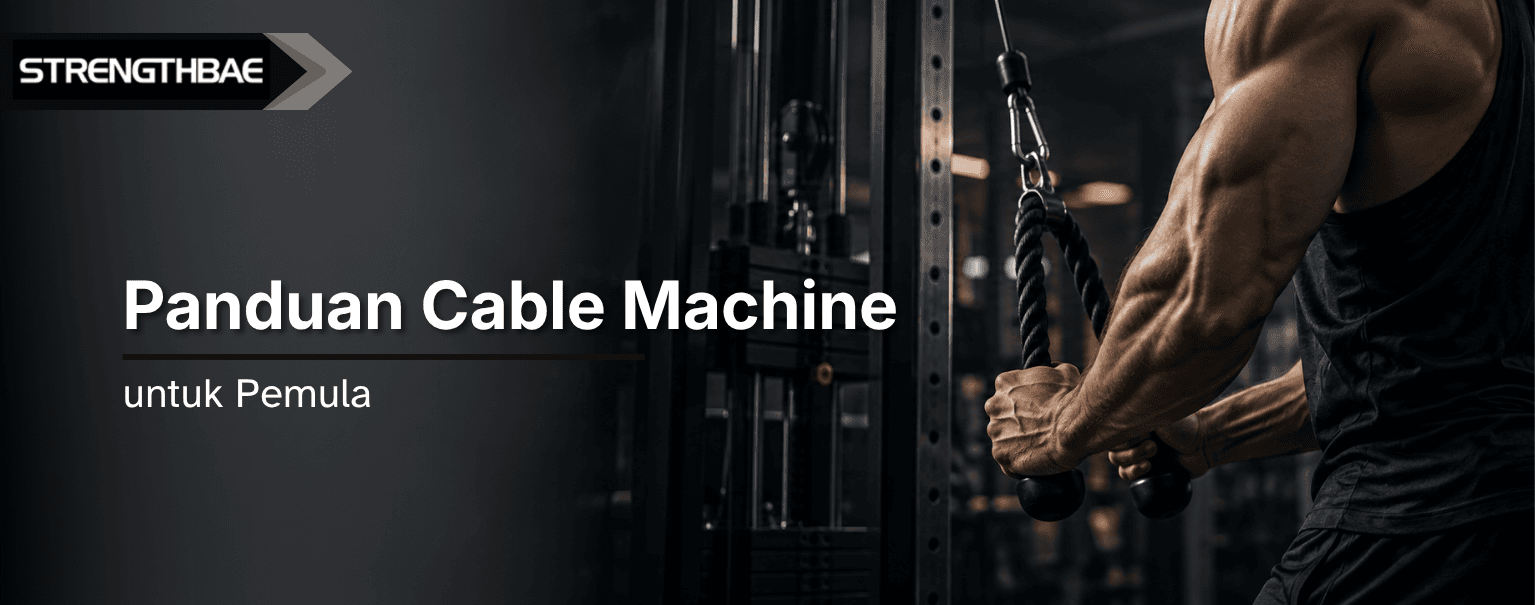
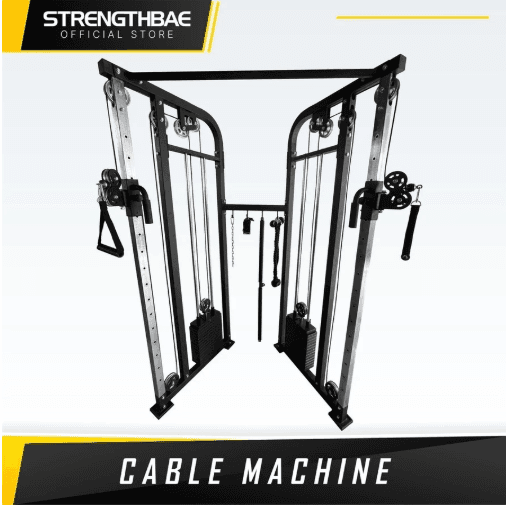
A cable machine is a strength training gym equipment that uses a cable system, pulleys, and weights in the form of a weight stack or weight plates to provide resistance during exercise. This system allows the muscles to remain under resistance throughout the movement, with the resistance level adjustable according to the user's needs.
A single cable machine can be used for various upper-body, lower-body, and core exercises. You simply adjust the pulley height, choose the appropriate attachment or handle, position your body, and adjust the weight being used. This article covers how a cable machine works, its main components, how to set up the equipment safely, basic exercises that can be performed, sample full-body workout programs, and common mistakes beginners should avoid.
What Is a Cable Machine?
A cable machine is versatile fitness equipment commonly used in commercial gyms and home gyms.
This equipment uses steel cables connected to one or more pulleys and a weight system. When the user pulls the handle or attachment, the cable lifts the weight, providing resistance to the muscles throughout the exercise.
Based on its weight system, cable machines generally consist of two types:
Weight Stack or Selectorized: Uses a stack of weight plates already installed inside the machine. The weight is selected by inserting the selector pin at the desired weight. This system is practical because the weight can be changed quickly without manually loading plates.
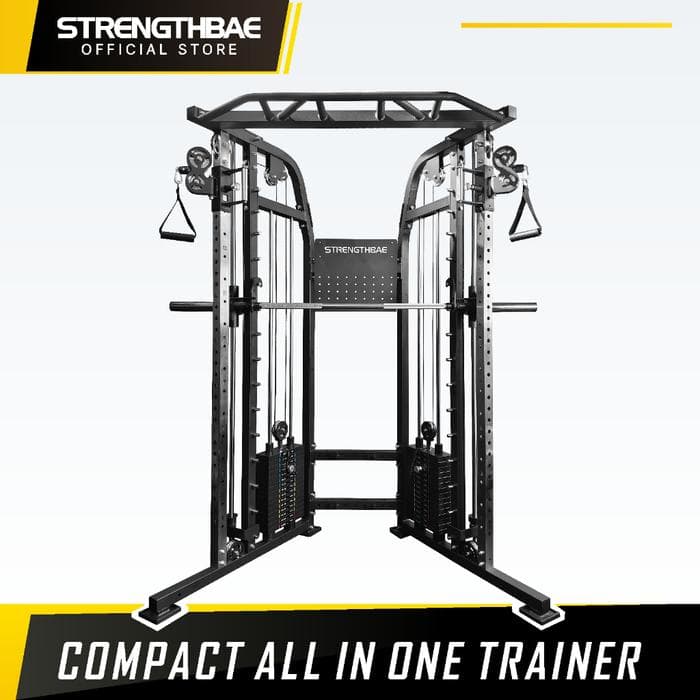
Plate-Loaded: Uses loading sleeves to manually attach weight plates or bumper plates. This system is commonly used in compact functional trainers and all-in-one trainers, especially for home gyms because it provides greater flexibility in choosing the weight and does not require a built-in weight stack.
Unlike dumbbells or barbells, where resistance primarily comes from gravity, a cable machine can provide tension throughout the range of motion or constant tension.
The cable continues to provide resistance from the starting position, throughout the movement, and toward the point of contraction. The amount of resistance felt can also vary depending on the pulley ratio, such as 1:1 or 2:1, the direction of the cable, the angle of movement, and the number of pulleys being used.
Read Also: Smith Machine Counterbalanced vs Non-Counterbalanced: What's the Difference?
Advantages of Cable Machines Compared to Free Weights
Although dumbbells and barbells remain popular choices for strength training, cable machines offer several advantages that make workouts more flexible and varied.
More Flexible Resistance Direction
With dumbbells, the weight is always pulled downward by gravity. A cable machine allows the direction of the pull to be adjusted from above, below, the side, or diagonally depending on the pulley position.
Easily Adjustable Pulley and Attachments
The pulley height and type of attachment can be changed according to the exercise. With these combinations, a single cable machine can be used for many movements without requiring multiple pieces of equipment.
Can Be Used on One or Both Sides
A cable machine can be used with both hands simultaneously or with one hand at a time. Unilateral exercises can also help train each side of the body in a more controlled manner.
Trains the Entire Body
A cable machine can be used to train the chest, back, shoulders, arms, thighs, glutes, and core. The type of exercise can be adjusted based on the pulley position and attachment being used.
Suitable for Beginners
The weight on a cable machine can be adjusted gradually, and its movements can be easier to control than some free-weight exercises. However, beginners still need to learn proper body positioning and cable machine technique to keep their workouts safe.
Dumbbells and barbells still have their own advantages, especially for strength training with free weights. Therefore, a cable machine is better viewed as a complement to a training program rather than a complete replacement for all free-weight exercises.
Parts of a Cable Machine
Understanding the different parts of a cable machine can help beginners use the equipment more easily and safely. Some of its main components include:
Pulley: The wheel that directs the movement of the cable. On a functional trainer, the pulley can usually be moved up or down depending on the type of exercise.
Cable: The cable that connects the handle to the weight system. When the handle is pulled, the cable transfers the force to the weight.
Weight Stack or Weight Plate: The part that provides resistance during training. A weight stack uses a set of weights already installed in the machine, while a plate-loaded system uses weight plates that are attached manually.
Selector Pin: The pin used to select the weight on a machine with a weight stack system. Simply move the pin to the desired weight position.
Handle and Attachment: Handles or accessories attached to the end of the cable according to the type of exercise being performed.
Some common attachments include:
D-Handle or Single Handle: A one-handed handle suitable for exercises such as single-arm rows, cable chest flys, and lateral raises.
Straight Bar: A straight bar used with both hands, for example for cable biceps curls, triceps pushdowns, and low rows.
Rope Attachment: A rope with two flexible handles used for exercises such as triceps pushdowns, face pulls, woodchoppers, and glute kickbacks.
V-Bar or Angle Bar: A V-shaped handle commonly used for triceps pushdowns and seated cable rows with a neutral grip.
Ankle Strap: A strap attached around the ankle for lower-body exercises such as glute kickbacks, hip abductions, and standing hamstring curls.
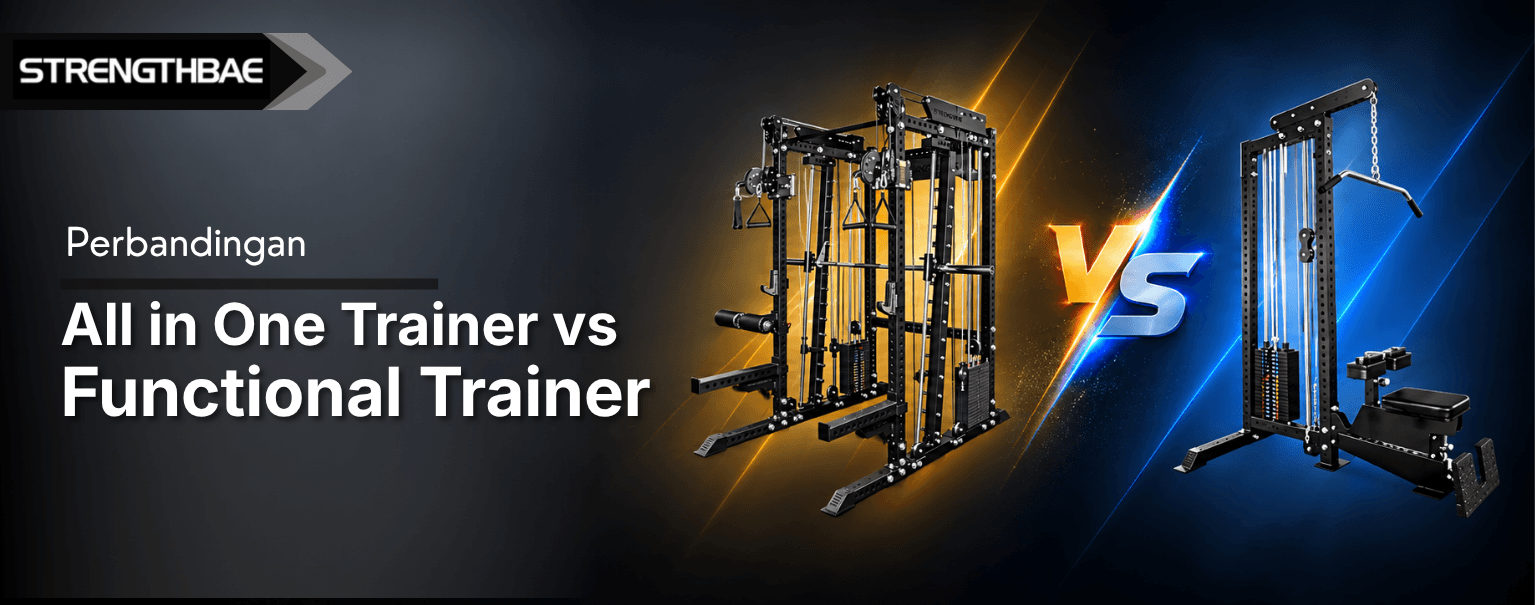
Read More: Strengthbae All in One Trainer
How to Set Up a Cable Machine Before Training
Before starting your workout, adjust the cable machine first so that your body position is comfortable and the movement can be performed safely.
Determining the Pulley Height
The pulley height determines the direction of the cable pull. A high pulley is commonly used for exercises such as lat pulldowns, triceps pushdowns, and standing cable crunches. A chest- or shoulder-height pulley can be used for cable chest flys, face pulls, and Pallof presses. Meanwhile, a low pulley is suitable for exercises such as biceps curls, lateral raises, low rows, and glute kickbacks.
The pulley position is not always the same for every exercise. Adjust its height according to the type of movement, the design of the cable machine, as well as your body position and joint comfort.
Choosing and Attaching the Attachment
Choose an attachment according to the exercise and grip required. Attach it to the carabiner at the end of the cable until it is securely locked. Always check the attachment again before starting to pull the weight.
Determining the Weight
Start with a light weight so you can perform the movement with full control. Do not compare weight numbers between different cable machines because pulley ratios, such as 1:1 or 2:1, and the amount of friction can vary between machines. Master the technique before increasing the weight.
Adjusting Your Body Position
Adjust your distance from the pulley according to the direction of the cable pull. In the starting position, the cable should already have slight tension while your body remains stable. Adjust your foot and body position so the cable can move smoothly without causing you to lose balance.
Using One or Both Hands
Using both hands is suitable for exercises such as pushdowns, flys, and rows. Meanwhile, using one hand can help train each side of the body separately and identify differences in strength between the right and left sides. Choose according to the exercise and your training goals.
Adjusting the Range of Motion
Use a range of motion that you can control properly. Do not force the movement too far simply to achieve a greater ROM if it makes your body position or joints uncomfortable. ROM can be adjusted according to the exercise, body shape, and individual ability.
Tips for Beginner Cable Machine Users
For beginners using a cable machine for the first time, keep the following points in mind to make your workout safe and effective:
Start with a stable position: Engage your core, keep your chest upright, and make sure your feet have a strong base before pulling or pushing the cable.
Perform controlled movements: Follow the proper movement pattern and avoid movements that are too fast or jerky.
Do not rely on momentum: Avoid swinging your body or using body movement to help complete a repetition.
Control the return: Return the cable slowly and continue controlling the weight rather than allowing it to return quickly.
Do not slam the weights: Avoid allowing the weight stack or plates to drop and hit the machine, as this can damage the equipment and reduce training control.
Understand how the machine works: Before using heavy weights, learn how to adjust the pulley, select the weight, and attach the attachment correctly.
Start with basic movements: Master several basic exercises before trying more complex movements.
Increase the weight gradually: Increase the weight once your technique is mastered and the movement remains controlled.
Track your training progress: Record your weight and repetitions so your progress can be monitored over time.
Ask for help if needed: If you are using a cable machine for the first time, do not hesitate to ask gym staff for help understanding how to operate the equipment.
Cable Machine Exercises for Beginners
Here are 8 basic exercises using a cable machine that are suitable for beginners:
Lat Pulldown
Attach the lat pulldown bar to the high pulley. Sit upright and grip the bar slightly wider than shoulder-width. Pull the bar toward your chest while keeping your body stable. This exercise primarily trains the back muscles.
Seated Cable Row
Attach the V-bar to the low pulley. Sit with your knees slightly bent, then pull the handle toward your abdomen while keeping your back stable. This exercise trains the back muscles and pulling movement.
Cable Chest Fly
Set the pulley at chest height and use D-handles. Stand slightly in front of the machine, then pull both handles forward in a hugging motion. Focus on controlled movement and contraction of the chest muscles.
Cable Triceps Pushdown
Attach the rope attachment to the high pulley. Stand upright with your elbows close to your body, then push the rope downward until your arms are straight. Keep your elbows in position and focus on the triceps.
Cable Biceps Curl
Attach the straight bar to the low pulley. Stand upright and pull the bar toward your body by bending your elbows. Avoid swinging your body so that the biceps can work effectively.
Face Pull
Attach the rope attachment to the pulley at face height. Pull the rope toward your face while directing your elbows outward and backward. This exercise trains the upper back and rear shoulders.
Cable Lateral Raise
Attach a D-handle to the low pulley and stand sideways to the machine. Raise the handle to the side until approximately shoulder height using a controlled movement. Use a weight that allows you to keep your body stable.
Pallof Press
Attach a D-handle to the pulley at chest height and stand sideways to the machine. Hold the handle in front of your chest, then press it straight forward while resisting rotation toward the machine. This exercise trains the core to resist rotational movement.
Sample Cable Machine Workout Program for Beginners
The following program combines several cable machine exercises into a single workout structure for beginners. The exercises include pulling, pushing, arm exercises, and core training with different pulley positions and attachments.
Exercise | Movement Pattern | Target Muscles | Pulley Position | Attachment | Sets & Repetitions |
Lat Pulldown | Upper-body pull | Back, especially lats | High | Lat Bar | 2–3 sets × 10–12 reps |
Cable Chest Fly | Upper-body push | Chest | Chest height | D-Handle | 2–3 sets × 10–15 reps |
Seated Cable Row | Horizontal pull | Mid-back | Low / medium | V-Bar | 2–3 sets × 10–12 reps |
Cable Biceps Curl | Arm isolation | Biceps | Low | Straight Bar | 2–3 sets × 12–15 reps |
Cable Triceps Pushdown | Arm isolation | Triceps | High | Rope / Bar | 2–3 sets × 12–15 reps |
Pallof Press | Anti-rotation core | Core | Chest height | D-Handle | 2–3 sets × 10 reps per side |
Adjust the weight according to your ability and make sure every movement can still be performed with proper technique. Rest for around 60–90 seconds between sets and do not rush to increase the weight before you have mastered the movement.
FAQ
Is a cable machine suitable for beginners?
Yes, cable machines are suitable for beginners. The movements are relatively easy to control and the weight can be adjusted according to your ability. The equipment can be used to learn exercise techniques before or alongside training with dumbbells and barbells.
How many sets and repetitions are suitable for beginners?
Beginners can start with 2–3 sets and 10–15 repetitions for each exercise. Choose a weight that is challenging enough but still allows you to perform the movement with proper and controlled technique from beginning to end.
Can a cable machine build muscle?
Yes. A cable machine can provide resistance throughout the range of motion, keeping the muscles engaged during the exercise. When performed with appropriate weight, repetitions, and progression, cable machine exercises can help improve strength and build muscle mass.
Can a cable machine be used without a spotter?
Generally, it can be used for many exercises because the weight is connected to a cable and pulley system. However, always use a weight that matches your ability and understand how the machine works. If you can no longer complete a repetition, stop the movement and return the handle in a controlled manner. For certain exercises with heavy weights, assistance from a spotter or gym staff may still be necessary.
How much space is needed for a cable machine in a home gym?
The space required depends on the size and design of the cable machine. For a functional trainer or all-in-one trainer, in addition to the machine's footprint, provide enough space around it so the cables can be pulled and movements can be performed freely. As a general reference, an area of around 1.5 × 2 meters and a minimum ceiling height of 2.1 meters can be suitable for certain units, but always follow the specifications of the machine you choose.
Make Cable Machine Training More Effective with Strengthbae
A cable machine is a flexible piece of equipment because the pulley height, attachment, body position, and weight can be adjusted for different types of exercises. For beginners, understand how the equipment works first and start with basic movements using a weight that is easy to control. Once your technique is mastered, the weight can be increased gradually.
Want to build a home gym or equip a commercial gym with a cable machine? Consult the Strengthbae team to choose a functional trainer, all-in-one trainer, cable crossover, as well as equipment and training-area layouts that suit your needs.
Strengthbae is a professional gym equipment brand that provides solutions for commercial gyms and home gyms. From racks and All in One Trainers to functional training accessories such as HYROX-standard sandbags, everything is available at Strengthbae.