7 Types of Strengthbae Gym Belts and Their Differences
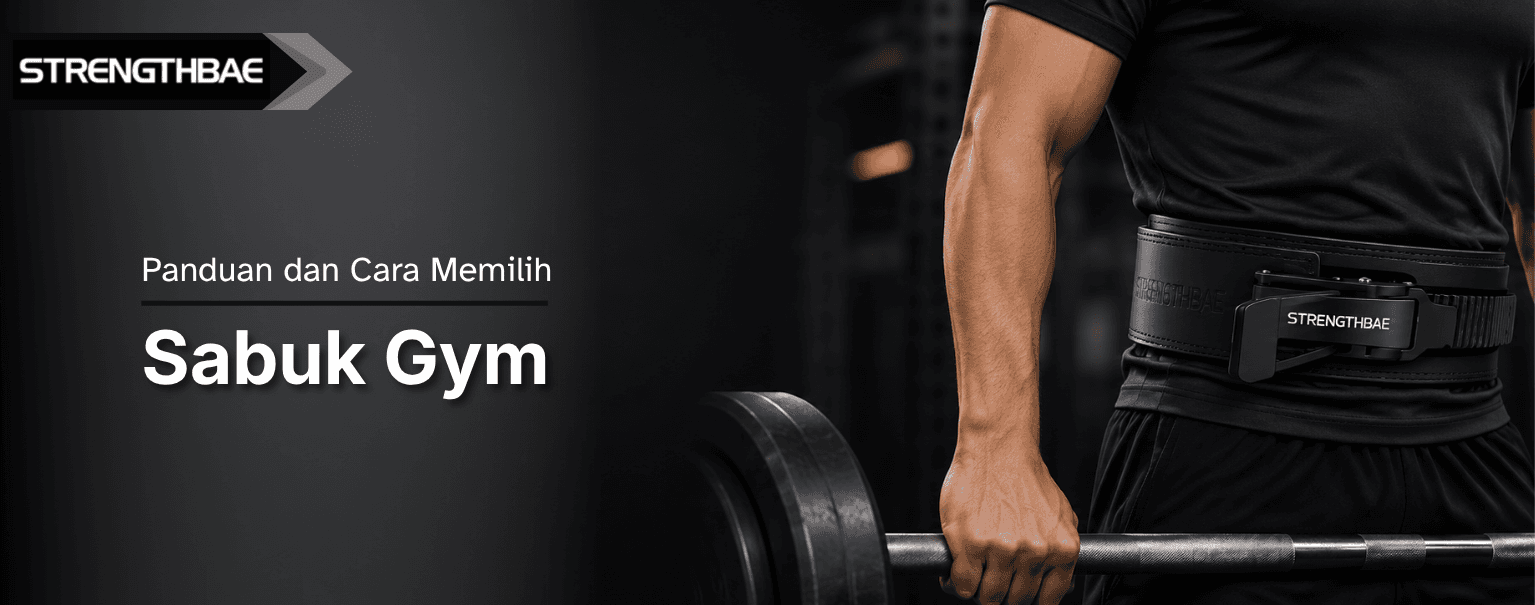
Getting to know the different types of gym belts can help you choose a belt that suits your training needs. Each gym belt has a different shape, material, and function, ranging from belts for attaching additional weight during calisthenics training to rigid leather belts that help maintain body stability when lifting heavy weights.
Strengthbae offers seven types of gym belts: Dip Belt, Hip Thrust Belt, Nylon Belt, Weightlifting Belt, Lever Belt, Prong Belt, and Ratchet Lifting Belt. Each type is designed for different training needs, whether for a home gym or commercial gym.
This article will discuss the function of gym belts, the advantages of each type of Strengthbae gym belt, a specification comparison table, and a guide to choosing the belt that best suits your training needs.
What Is the Function of a Gym Belt During Training?
The function of a gym belt varies depending on its type and design. In general, gym belts have two main functions: helping maintain body stability when lifting heavy weights and providing a way to attach additional weight to the body during training.
Here are three main functions of gym belts during weight training:
Helping Maintain Body Stability
A gym belt provides additional support around the abdomen and lower back to help maintain a stable body position during exercises that involve multiple muscle groups, such as squats and deadlifts.
Supporting Core Bracing Technique
A gym belt helps increase intra-abdominal pressure. When you breathe into your abdomen and brace your core against the belt, the resulting pressure helps maintain body stability and reduces the risk of excessive rounding of the lower back when lifting weights.
Adding Extra Weight
Some types of gym belts, such as Dip Belts and Hip Thrust Belts, are not used to stabilize the core but to attach additional weight such as weight plates or dumbbells. This feature allows users to gradually increase their training load or apply progressive overload, especially during bodyweight exercises and glute training.
How to Choose the Right Gym Belt
To avoid choosing the wrong gym belt, consider the following five factors before purchasing:
Training Goal
Each gym belt has a different function and is not simply used to support the muscles. For example, a Dip Belt is used to add weight during pull-ups and dips, while a Hip Thrust Belt is designed for glute training using dumbbells.
Belt Material
Nylon gym belts are more flexible and comfortable for everyday training. Meanwhile, genuine leather belts are more rigid, strong, and durable for supporting heavy lifts.
Belt Thickness
An 8 mm gym belt provides a balance between comfort and support for general training. A thickness of 10–13 mm provides more rigid support to help maintain body stability during heavy squats and deadlifts.
Fastening System
Choose Velcro if you want a belt that is easy to put on and remove, a single prong for adjusting tightness through the belt holes, a lever buckle for strong and quick locking, or a ratchet buckle for more precise tension adjustment.
Waist Circumference
Do not choose a gym belt based only on your waist size. Measure your waist circumference at the position where the belt will be worn, usually around the navel.
It is recommended to measure before eating and check the fit while performing core bracing. Choose a size within the middle of the size range to maintain comfort if your body weight changes during bulking or cutting.
Summary of Each Strengthbae Gym Belt Function
The following table compares the main function, material, thickness, and fastening system of the seven types of Strengthbae gym belts:
Gym Belt Type | Main Function | Material | Thickness | Fastening System |
Dip Belt | Attaching additional weight for pull-ups and dips | Thick nylon and padded support | Heavy Duty | Metal locking system, steel chain, carabiner, or daisy chain |
Hip Thrust Belt | Attaching two dumbbells for hip thrust and glute training | Flexible nylon or webbing | Standard padding | Attachments on both sides of the hips |
Nylon Belt | Helping maintain core stability during everyday training | Quality nylon | Even 360° width | Long Velcro fastener |
Weightlifting Belt | Maintaining core stability without excessively restricting body movement | Genuine leather | 8 mm | Stainless single/double prong with zigzag holes and padding |
Lever Belt | Providing strong support for heavy squats and deadlifts | Cowhide leather and suede lining | 10 mm and 13 mm | Quick-release double hook made from aviation aluminum |
Prong Belt | Maintaining core stability during powerlifting training | 100% cowhide leather | 13 mm | Stainless single prong with zigzag holes spaced 1.25 cm apart |
Ratchet Lifting Belt | Providing strong support with easily adjustable tightness | Leather and suede lining | 10 mm and 13 mm | Ratchet buckle with precise adjustment and quick release |
From the table above, Dip Belts and Hip Thrust Belts are used to add training weight. Nylon Belts and Weightlifting Belts help maintain body stability while still allowing freedom of movement. Meanwhile, Lever Belts, Prong Belts, and Ratchet Lifting Belts have more rigid structures to support heavy lifting, particularly during powerlifting exercises.
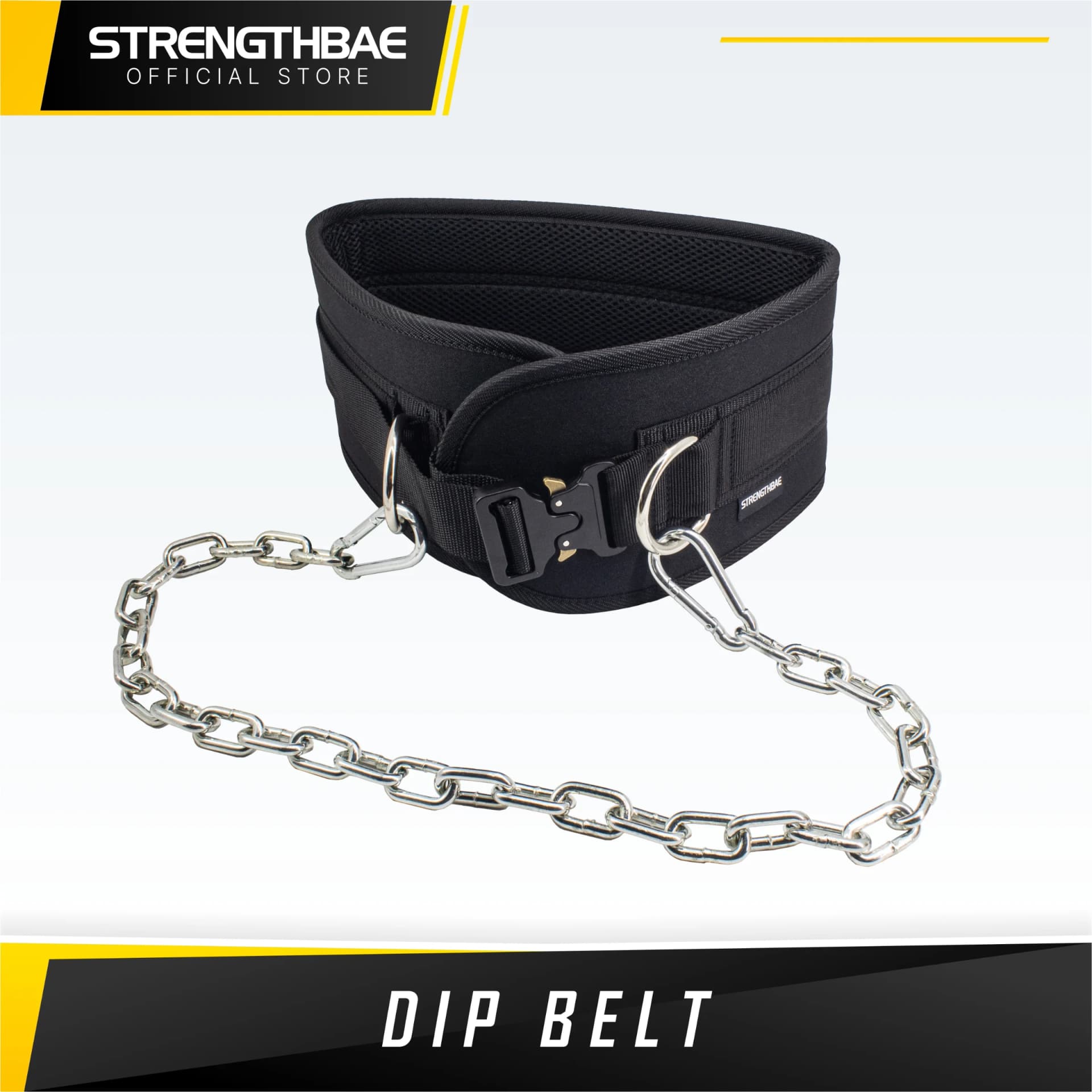
Dip Belt Strengthbae
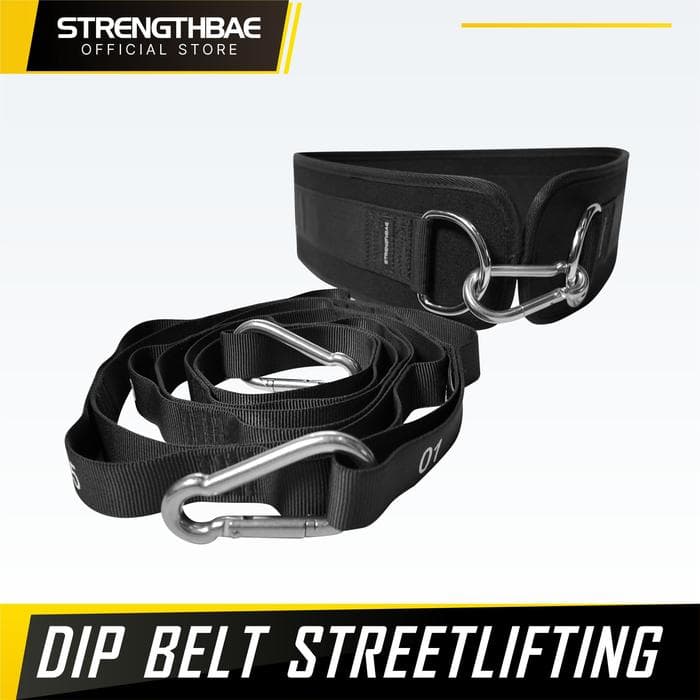
Dip Belt is a gym belt used to attach additional weight during weighted pull-ups, chin-ups, weighted dips, and push-ups using parallettes. This gym belt is suitable for streetlifting and weighted calisthenics training.
Dip Belt Strengthbae uses a metal locking system to keep the weight balanced and make attachment easier. It features thick nylon material with double stitching, wide and padded lower-back support, as well as a rust-resistant steel chain and carabiner. A daisy chain option is also available to adjust the height of the weight according to your training needs.
Read More: Dip Belt Strengthbae
Hip Thrust Belt Strengthbae
Hip Thrust Belt Strengthbae is a gym belt specifically designed for glute training, particularly hip thrusts and glute bridges, both at home and in the gym.
When performing hip thrusts, placing a dumbbell directly on the hips can often cause discomfort or pain due to the pressure from the weight. The dumbbell can also shift, causing your hands to fatigue quickly because they have to hold it in place, while also limiting you to using only one dumbbell.
With Hip Thrust Belt Strengthbae, you can attach two dumbbells simultaneously to the attachments on the right and left sides of the belt.
The center section is designed to allow you to add weight more stably and comfortably without placing painful direct pressure on the abdomen or hips.
This gym belt is also made from strong and easy-to-clean material, making it practical for regular training.
Read More: Hip Thrust Belt Strengthbae
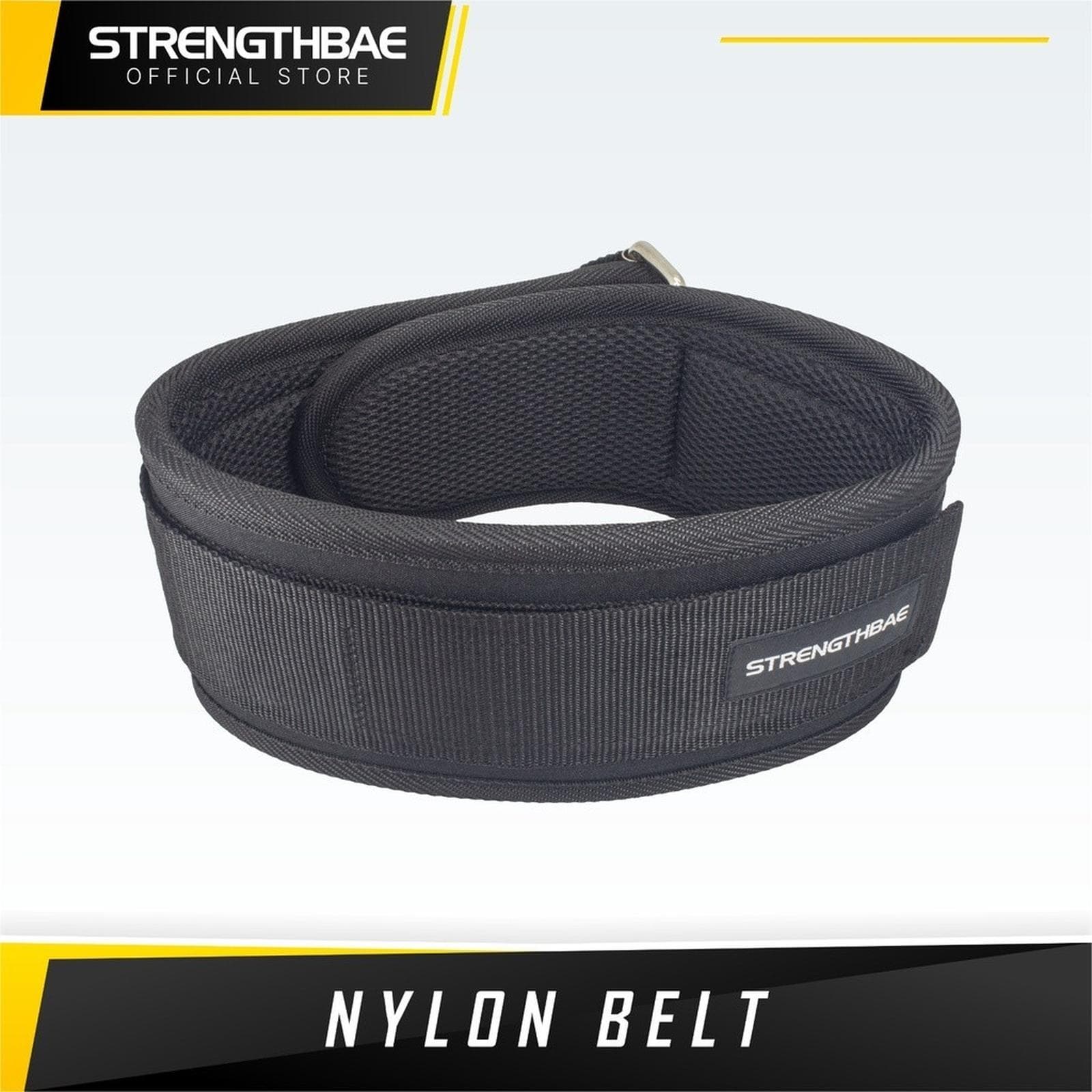
Nylon Belt Strengthbae
Nylon Belt Strengthbae is a gym belt used to help maintain abdominal and lower-back stability during weight training, especially squats and deadlifts.
This gym belt helps increase intra-abdominal pressure when performing core bracing, which involves tightening the core muscles.
Its purpose is to help maintain a stable body position and reduce the risk of the back rounding while lifting heavy weights.
Unlike rigid leather gym belts, Nylon Belt Strengthbae uses thick and flexible nylon material that is comfortable for everyday training. The evenly distributed width around the abdomen and back provides support for performing core bracing.
Nylon Belt Strengthbae is available in three sizes: S for an abdominal circumference of 68–85 cm, M for 81–96 cm, and L for 91–111 cm.
Read More: Nylon Belt Strengthbae
Weightlifting Belt Strengthbae
Weightlifting Belt Strengthbae is a gym belt designed for bodybuilding, Olympic weightlifting such as clean & jerk and snatch, as well as CrossFit.
This gym belt helps maintain core stability through core bracing when lifting weights without excessively restricting body movement. When used together with proper core bracing technique, the gym belt provides support for the abdominal muscles to press outward. This helps keep the body stable when lifting weights.
Weightlifting Belt Strengthbae is made from leather with a thickness of 8 mm, providing a balance between support and flexibility. Its tapered design makes the front section of the belt narrower, reducing interference during movements such as cleans, jerks, and rows.
Read More: Weightlifting Belt Strengthbae
Lever Belt Strengthbae
Lever Belt is a gym belt designed to help maintain core and lower-back stability when lifting heavy weights, especially during squats, deadlifts, and other compound movements.
This gym belt has a rigid structure that provides strong support during core bracing, which involves tightening the abdominal muscles to increase intra-abdominal pressure and maintain a stable body position.
This belt is suitable for lifters who want to improve heavy-lifting performance, especially during powerlifting training.
One of the advantages of Lever Belt Strengthbae is its lever locking system, which allows the belt to be put on and removed quickly without manually tightening the belt each time it is used. This gym belt uses a strong quick-release double hook made from aviation aluminum, with an adjustable size that does not require the bolts to be reset.
Read More: Lever Belt Strengthbae
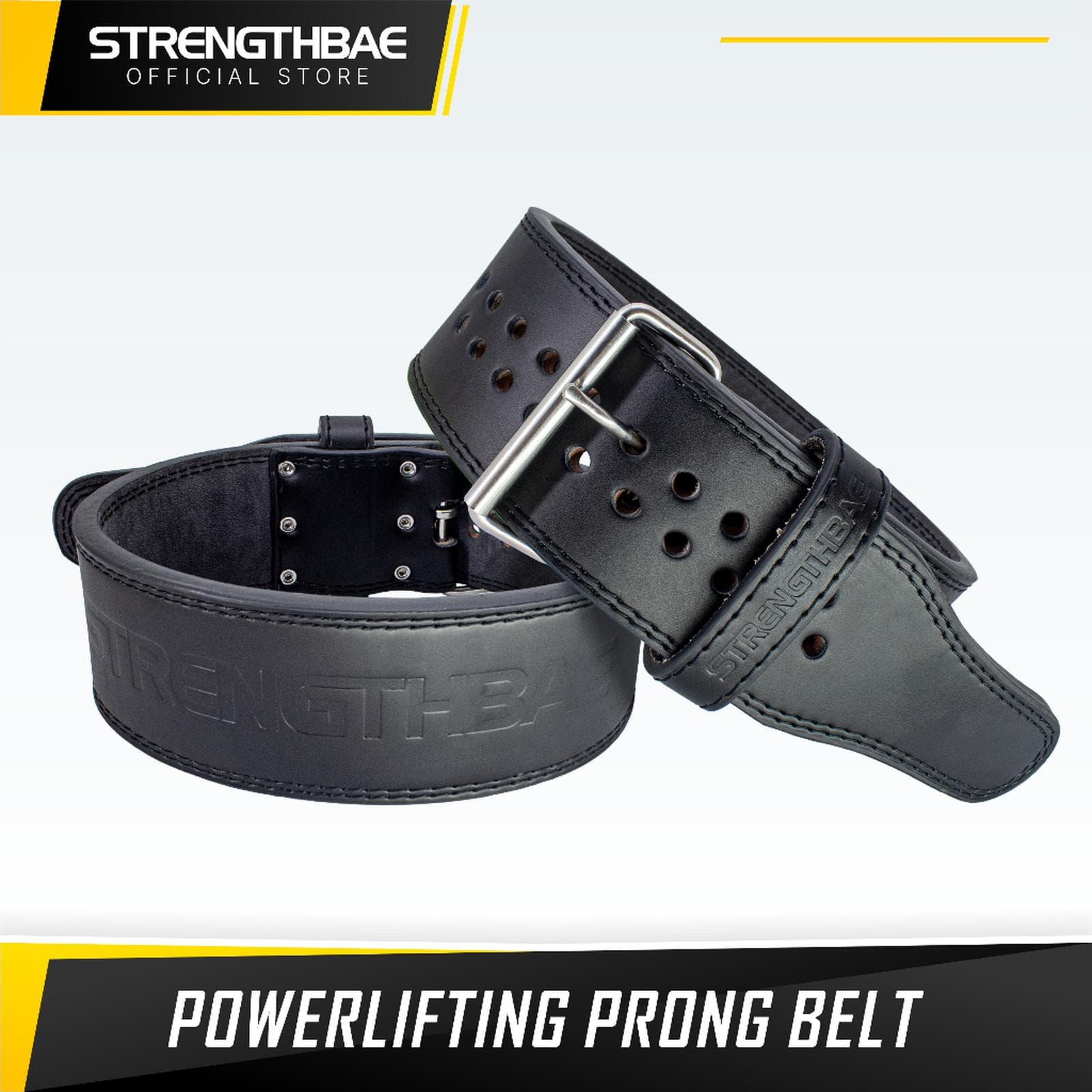
Prong Belt Strengthbae
Prong Belt is a gym belt designed to help maintain core and lower-back stability when lifting heavy weights, especially during powerlifting exercises such as squats and deadlifts.
With its thick and rigid structure, this gym belt provides strong support during core bracing, helping the body remain stable during heavy lifts.
Unlike a lever belt, a prong belt uses a fastening system similar to a regular belt, with the end of the belt facing outward. This design helps reduce the risk of pinching the abdominal skin during movements such as deadlifts.
The single-prong fastening system is also easier to put on and remove than a double-prong system, while the zigzag fastening holes spaced 1.25 cm apart allow more precise tightness adjustments as your abdominal circumference changes.
Read More: Prong Belt Strengthbae
Ratchet Lifting Belt
Ratchet Lifting Belt Strengthbae is a gym belt designed to help maintain core and lower-back stability when lifting heavy weights, especially during squats, bench presses, and deadlifts.
This gym belt provides strong support during core bracing, helping maintain a stable body position throughout the exercise.
The main advantage of a ratchet belt is its fastening system, which allows users to adjust the belt tightness more precisely. This makes it possible to adjust the belt so that it is neither too loose nor too tight, including when your abdominal circumference changes during bulking or cutting phases.
The quick-release system also makes it easier to remove the belt after completing heavy lifts.
Read More: Ratchet Lifting Belt Strengthbae
FAQ
Do beginners need to use a gym belt when starting weight training?
Beginners are not required to use a gym belt. It is better to learn proper core bracing first, which involves tightening the abdominal muscles to maintain body stability when lifting weights. A gym belt can be introduced when you begin training with heavier weights.
Which is better for powerlifting, a Lever Belt or Prong Belt?
Both are suitable for powerlifting, but each has different advantages. A Lever Belt is more practical because it can be put on and removed easily using a quick-release system. Meanwhile, a Prong Belt has an outward-facing belt fold that may be more comfortable for some users, along with zigzag holes for more precise tightness adjustment. Choose based on your comfort and training needs.
Can a gym belt prevent lower-back injuries?
A gym belt can help increase intra-abdominal pressure and maintain body stability when lifting weights, but it does not automatically prevent injuries. Proper lifting technique, appropriate weight selection, and proper core bracing technique remain important for training safety.
How should a leather gym belt be maintained to keep it durable?
After training, clean the belt with a dry cloth to remove sweat. Store it in a dry place with good air circulation and avoid leaving it in a damp gym bag for too long to prevent the leather from developing mold.
Can a Dip Belt and Hip Thrust Belt be used for core bracing during squats?
No. Dip Belts and Hip Thrust Belts are designed to attach additional weight such as weight plates or dumbbells, not to support the core during squats. To support core bracing, use a Nylon Belt, Weightlifting Belt, Lever Belt, Prong Belt, or Ratchet Belt.
Best Gym Belt Options from Strengthbae
Choosing the right gym belt can help maintain body stability, improve comfort, and support more effective weight training. Strengthbae offers seven types of gym belts that can be tailored to your training needs.
If you are still unsure which gym belt is right for you, contact the Strengthbae team for recommendations on the appropriate belt type, material, and size. Find the right gym equipment so you can train more comfortably and confidently with Strengthbae.
Strengthbae is a professional gym equipment brand that provides solutions for commercial gyms and home gyms. From racks and All in One Trainers to functional training accessories for HYROX-standard hybrid races, everything is available at Strengthbae.