Complete Leg Day Guide: Exercises, Order, and Training Tips
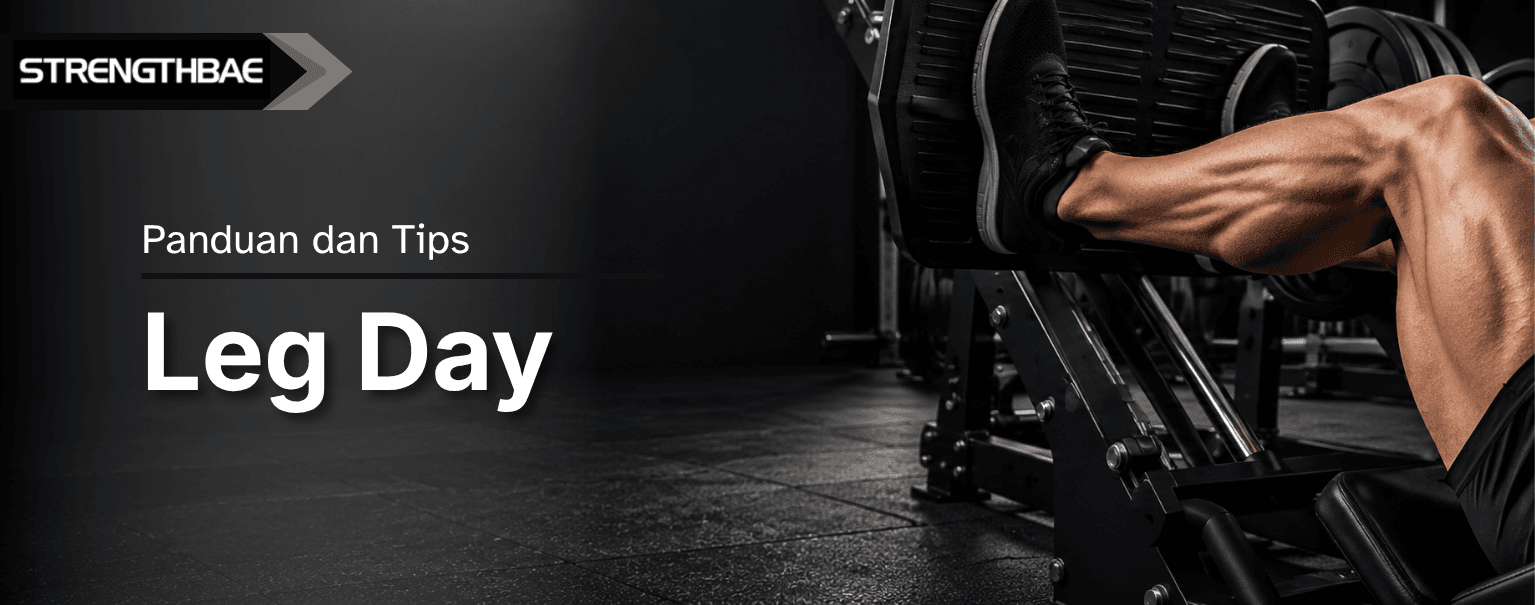
Leg day is a training session that focuses on the lower-body muscles, such as the quadriceps, hamstrings, glutes, inner thighs, and calves. To make your workout more effective, pay attention to exercise order, number of sets and repetitions, weight, and rest time. This guide covers how to structure a leg day from start to finish for training at home or at the gym.
Muscles to Train During Leg Day
Leg day workouts should not focus on only one part of the legs, such as the quadriceps. To develop more balanced lower-body strength, also train the hamstrings, glutes, inner thighs, and calves. This combination helps improve overall stability and reduces the risk of muscle imbalances.
Quadriceps
The quadriceps are the muscles at the front of the thighs. These muscles work extensively when straightening the knees, such as during squats, leg presses, hack squats, and leg extensions.
Hamstring
The hamstrings are the muscles at the back of the thighs. These muscles help bend the knees and move the hips, especially during Romanian deadlifts, leg curls, and hip hinge movements.
Glutes
The glutes are the buttock muscles that play a major role in generating force from the hips. These muscles are active during squats, hip thrusts, lunges, and Romanian deadlifts.
Adductor
The adductors are the inner thigh muscles. These muscles help maintain pelvic stability and knee position during various lower-body movements.
Calf
The calves are the lower-leg muscles that help with standing on your toes and generating force from the ankles. Training the calves is important for keeping lower-leg strength and development balanced.
Common Leg Day Exercise Order
The order of exercises during leg day is important because energy and focus are usually at their highest at the beginning of the session. Therefore, heavier main exercises or movements that require better technique should be performed first.
Isolation exercises can be placed toward the end because they are generally simpler and do not require as much balance. With this order, the muscles do not become fatigued too quickly before the main exercises are completed.
Warm-Up
Start with around 5 minutes of light cardio, such as casual walking, stationary cycling, or treadmill walking. After that, perform dynamic stretches and warm-up sets with light weights to prepare your joints and body for the main workout.
Main Leg Day Exercises
Perform the main exercises that involve multiple muscles and require the most energy, such as barbell squats, hack squats, or leg presses. This part should be performed while your energy levels are still high.
Hip and Thigh Exercises
Continue with movements that involve the hips and posterior muscles more extensively, such as Romanian deadlifts or hip thrusts.
Unilateral or Single-Side Exercises
Add alternating single-leg exercises, such as Bulgarian split squats or walking lunges. These exercises help train balance and reduce strength differences between the right and left legs.
Isolation or Specific Muscle Exercises
After completing the main exercises, perform exercises that focus more on specific muscles, such as leg extensions and leg curls. These movements are suitable for adding training volume without requiring much balance.
Calf Exercises
Finish the session with calf exercises such as standing calf raises or seated calf raises to complete your leg day workout.
Below is an example of a one-session leg day workout that you can perform at home or at the gym.
Leg Day Stages | Example Exercises | Sets & Repetitions |
1. Warm-Up | Light cardio, dynamic stretch, warm-up set | ±5 minutes + warm-up set |
2. Main Leg Day Exercises | Barbell Squat / Hack Squat / Leg Press | 3 Sets × 8–12 Reps |
3. Hip and Thigh Exercises | Romanian Deadlift / Hip Thrust | 3 Sets × 8–12 Reps |
4. Unilateral or Single-Side Exercises | Walking Lunge / Bulgarian Split Squat | 3 Sets × 10–12 Reps per side |
5. Isolation or Specific Muscle Exercises | Leg Extension / Leg Curl | 3 Sets × 10–15 Reps |
6. Calf Exercises | Standing Calf Raise / Seated Calf Raise | 3 Sets × 15–20 Reps |
How to Determine the Number of Exercises for Leg Day
The number of exercises in a single leg day session does not always have to be high. Adjust it according to your fitness level, training goals, available time, and your body’s ability to recover so that each movement can still be performed with good technique.
Number of Exercises in One Leg Day Session
A single leg day session does not need to include too many exercises. For beginners or general training, around 4–6 exercises are enough, for example consisting of a main exercise, hip exercise, single-leg exercise, isolation exercise, and calf exercise. It is better to focus on movement quality and technique rather than adding too many variations.
How to Choose Weight for Beginners
Choose a weight for leg day that you can still control with good technique and a full range of motion. Do not rush to increase the weight. You can gradually increase the weight once you can complete the target repetitions comfortably and consistently.
Number of Sets and Repetitions for Leg Day
Beginners can start with 2–3 sets per exercise and around 8–12 repetitions. The main focus is to build proper technique and establish a consistent leg day routine first.
To build muscle mass during leg day, main exercises can be performed for around 6–10 repetitions, while isolation exercises can be performed for around 10–15 repetitions. If the main focus is increasing strength, use heavier weights for the main exercises with around 3–6 repetitions and longer rest periods.
Leg Day Exercise Comparison: Leg Extension vs Leg Curl
Leg extensions and leg curls are both isolation exercises, but they target different parts of the legs. Both are suitable for performing after main exercises such as squats, leg presses, or Romanian deadlifts.
Leg Extension
Leg extensions focus on training the front thigh muscles (quadriceps). Sit with your knees aligned with the machine’s pivot point, then straighten your legs forward and slowly lower them back down.
Tips: Use a weight that you can still control and avoid jerking your legs when lifting the weight.
Leg Curl
Leg curls focus on training the back thigh muscles (hamstrings) through a knee-bending movement. Slowly pull the pad toward the back of your legs, then return it with control.
Tips: Keep your hips against the machine so that the movement truly comes from the hamstrings.
Compound vs Isolation Exercises in Leg Day
Compound and isolation exercises have different functions. Compound exercises are usually performed earlier because they require more energy and coordination, while isolation exercises are used to provide additional focus on specific muscles.
Compound Exercise
Compound exercises involve multiple joints and muscle groups at the same time, such as squats, leg presses, hack squats, Romanian deadlifts, lunges, Bulgarian split squats, and hip thrusts.
Tips: prioritize these exercises at the beginning of the session while your energy levels are still high, and focus on technique before increasing the weight.
Isolation Exercise
Isolation exercises focus more on a single muscle group, such as leg extensions, leg curls, calf raises, and hip abductor/adductor exercises.
Tips: use controlled movements and feel the target muscles working instead of simply trying to lift heavier weights.
Squat vs Leg Press vs Hack Squat Comparison
Squats, leg presses, and hack squats all train the lower body, but they differ in their balance requirements and the amount of support provided by the machine.
Squat
Squats involve the quadriceps, glutes, core, and many stabilizing muscles at the same time. This movement is suitable for training strength as well as body control.
Tips: lower your hips with control, keep your back stable, then push through your legs to return to a standing position.
Leg Press
The leg press is performed with the body supported by the machine, allowing you to focus more on pushing with your legs without requiring as much balance.
Tips: Place your feet firmly on the footplate and avoid excessively locking your knees when pushing.
Hack Squat
The hack squat uses a guided movement path and backrest, making the squat movement feel more stable and easier to focus on the quadriceps and glutes.
Tips: keep your back against the backrest and lower your body only as far as you can comfortably and with control.
Exercises for Training the Hamstrings During Leg Day
The hamstrings should not only be trained through squats. For more complete training, use a combination of hip movements and knee-bending movements.
Hip Hinge
Hip hinge movements such as Romanian deadlifts or stiff-leg deadlifts train the hamstrings while the muscles are in a more stretched position. Push your hips backward while keeping your back stable, then return to a standing position.
Tips: do not lower the weight too far if your back begins to round.
Knee Flexion
Movements such as seated leg curls or lying leg curls train the hamstrings through knee flexion. Pull the pad toward the back of your legs, then slowly return it.
Tips: avoid jerking the weight so that the hamstrings remain engaged throughout the movement.
Exercises for Training the Glutes During Leg Day
The glutes can be trained through movements that involve hip drive and single-leg exercises. Some effective options include hip thrusts, Romanian deadlifts, Bulgarian split squats, and reverse lunges.
Hip Thrust
The hip thrust focuses on hip drive to train the glutes. Rest your upper back on a bench, then drive your hips upward and lower them back down with control.
Tips: squeeze your glutes at the top without excessively arching your back.
Bulgarian Split Squat and Reverse Lunge
Both movements train the glutes while also helping improve balance and strength between the right and left legs. Lower your body with control, then push back up using your front leg.
Tips: keep your knees and feet stable throughout the movement.
Exercises for Training the Calves During Leg Day
The calves need to be trained directly if you want more balanced lower-leg development. These exercises are usually placed at the end of a leg day session.
Calf Raise
Standing calf raises, seated calf raises, or Smith machine calf raises are performed by lifting your heels until you are standing on your toes, then slowly lowering them back down.
Tips: use a full range of motion and do not rush the movement so that the calf muscles work more effectively.
Tips for Leg Day Workouts at Home or in a Home Gym
Leg day workouts at home can still be effective even if you only use dumbbells and an adjustable bench. Exercises such as goblet squats, Bulgarian split squats, dumbbell Romanian deadlifts, reverse lunges, hip thrusts, and calf raises are enough to train the quadriceps, hamstrings, glutes, and calves.
If your home gym has a Smith machine, leg day workouts can be made more stable with Smith squats, Romanian deadlifts, Bulgarian split squats, hip thrusts, and calf raises. The guided bar path also helps keep movements controlled as the weight begins to increase.
The key is to choose 4–6 main exercises in one session, start with a weight that you can still comfortably control, then gradually increase the weight or repetitions. Also make sure there is enough space so that leg day workouts at home remain safe and comfortable.
Gym Equipment Options for Leg Day Workouts in a Home Gym
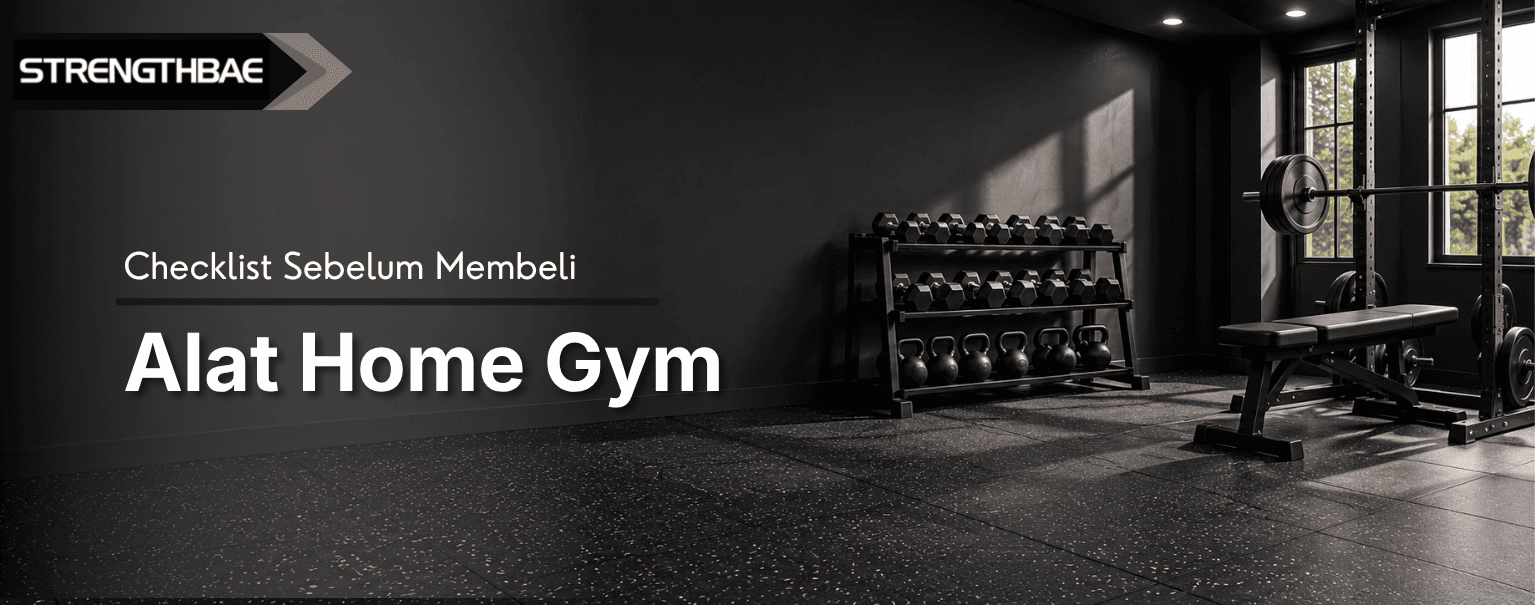
For leg day workouts at home, choose gym equipment that suits your space and needs. You do not need to buy everything at once; start with the most versatile equipment, then add machines if your home gym still has enough space.
Some gym equipment that can be prioritized for leg day workouts at home:
Squat rack or Smith machine for squats, lunges, Romanian deadlifts, and calf raises.
Adjustable bench for Bulgarian split squats, hip thrusts, and unilateral exercises.
Dumbbells or barbells for various leg exercises without large machines.
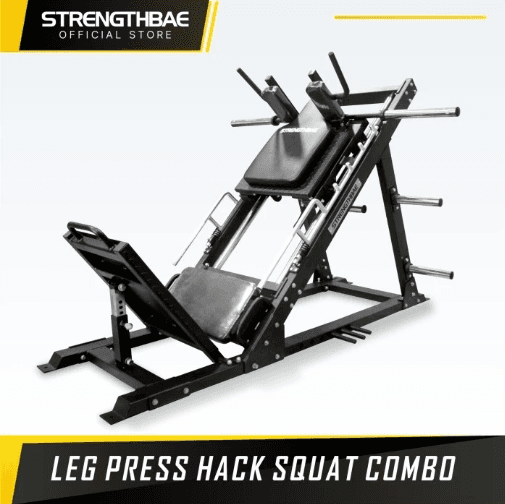
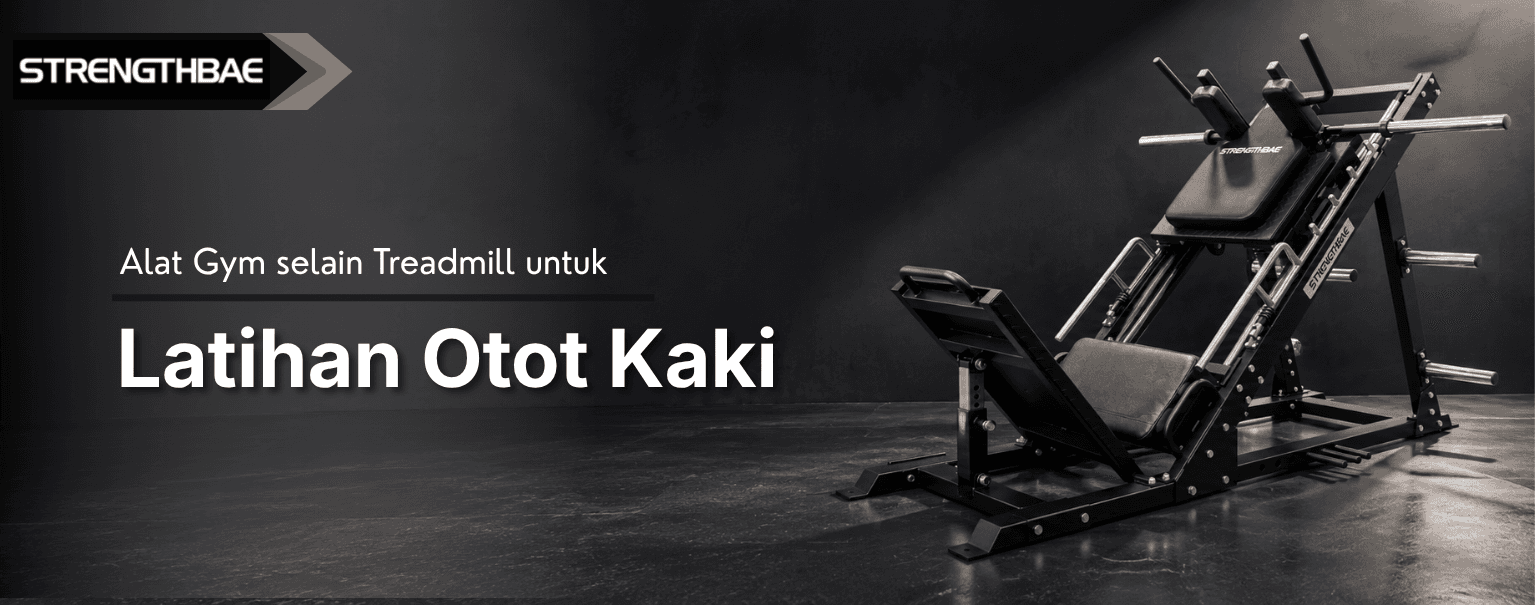
Leg press or hack squat for adding more thigh and glute exercise variations.
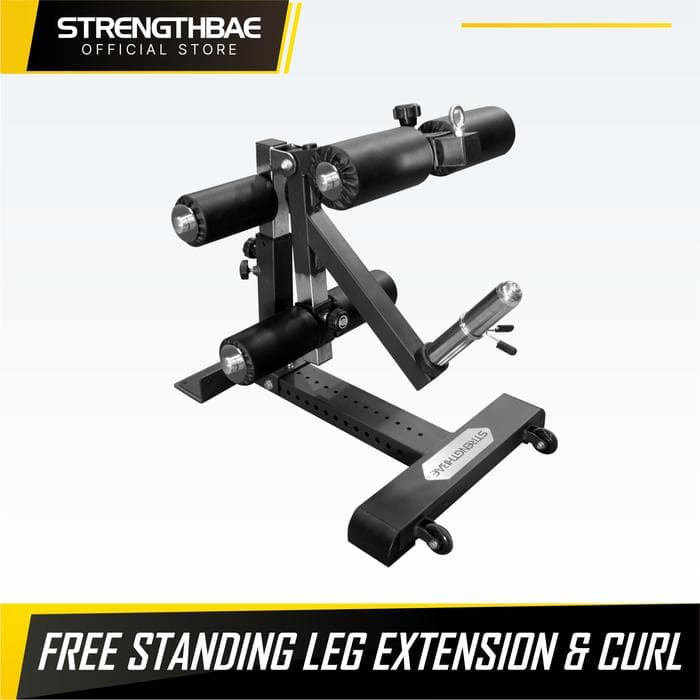
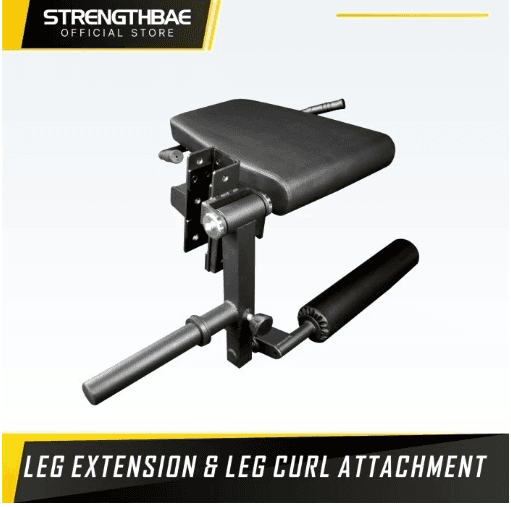
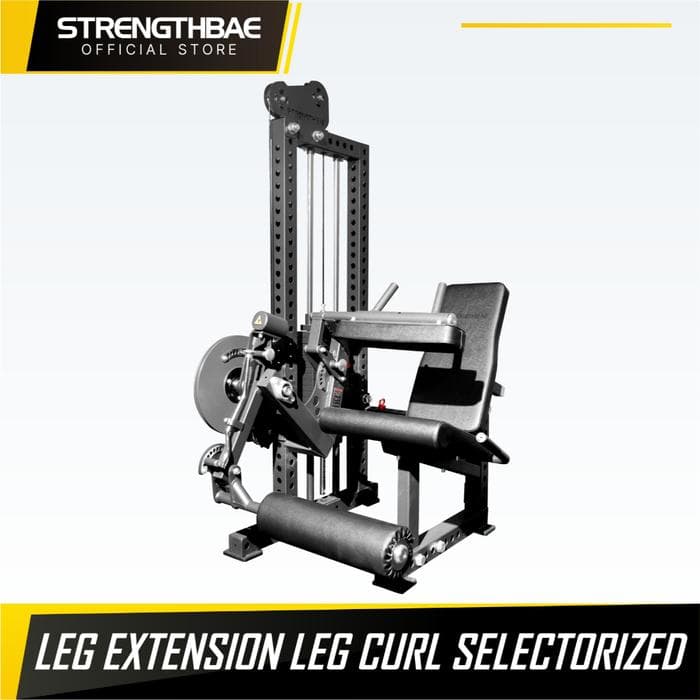
Leg extension and leg curl for training the quadriceps and hamstrings more specifically.
Hip thrust machine or calf machine if you want to add specialized exercises and your home gym has enough space.
Prioritize equipment that can be used for multiple exercises first. For a home gym with limited space, a combination of a squat rack or Smith machine, bench, and dumbbells is usually enough for a complete leg day workout at home.
FAQ
Does leg day have to start with squats?
Not always. You can start a leg day session with a leg press, hack squat, or another compound exercise depending on your specific goals and level of joint comfort.
Do squats and leg presses need to be performed in the same session?
They can be performed in the same session, but it is not required. If one compound exercise already provides enough training volume for the quadriceps and glutes, you can allocate the rest of your energy to hip-dominant or isolation exercises.
Is one leg day per week enough to build leg muscles?
It is enough for beginners and as part of a routine, as long as the total training volume and intensity of the leg day sets are performed with proper technique and progressed gradually. For advanced trainees, splitting leg day workouts into two sessions per week is highly recommended.
What gym equipment is needed for a complete leg day?
For a complete leg day session, essential equipment includes a squat rack or Smith machine, barbell and weight plates, adjustable dumbbells, an adjustable bench, as well as leg extension and leg curl machines.
Build the Best Leg Day Workout with Strengthbae
A complete leg day workout is not determined by how many exercise variations are forced into a single day. The main key to successful leg training lies in structuring the exercise order, combining different movements, and applying an appropriate amount of training based on your needs.
To support your leg day routine at home, having strong, durable fitness equipment with an official warranty is key to long-term comfort. If you would like to consult about recommended leg day equipment, suitable home gym equipment, or your home gym room layout, contact the Strengthbae team for a free consultation.
Strengthbae is a professional gym equipment brand that provides solutions for commercial gym businesses and home gym needs. From racks and All in One Trainers to functional training accessories such as HYROX-standard sandbags, everything is available at Strengthbae.