What Is a Resistance Band and How to Choose One
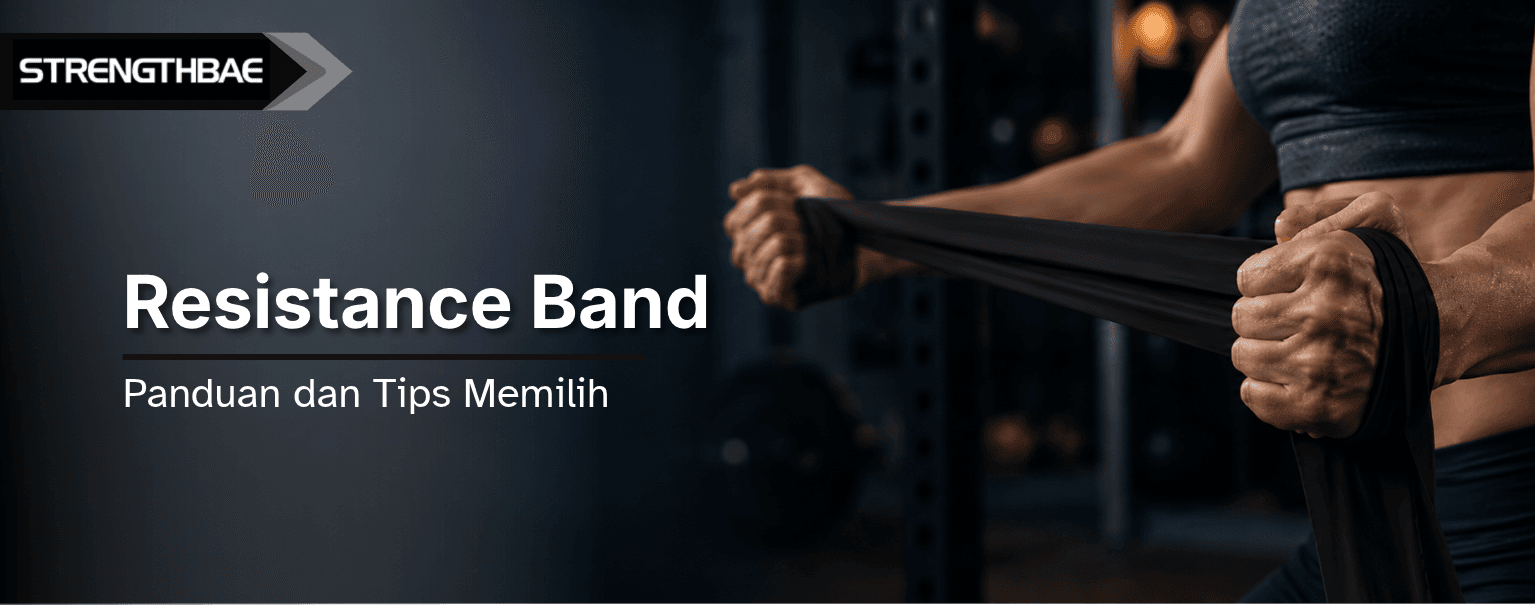
A resistance band is a practical workout tool that can be used at home, is easy to store, and can train various muscle groups. It uses elastic resistance that becomes more noticeable as the band is stretched further, allowing the exercise to help improve strength, endurance, and flexibility.
This article covers the different types of resistance bands, how to choose the appropriate resistance level, 15 exercise variations for the legs, chest, back, shoulders, arms, and core, as well as an example of a full-body workout that can be performed at home.
What Is a Resistance Band?
A resistance band is an elastic exercise tool made from materials such as latex, rubber, or elastic fabric that provides resistance when stretched. When used, the muscles have to work against the band's tension throughout the movement.
Resistance bands work differently from dumbbells or barbells. The farther the band is stretched, the greater the resistance it provides. Therefore, the exercise generally feels heavier as the band is stretched further.
For example, during a biceps curl, a dumbbell usually feels heaviest around the middle of the movement when the elbow is at approximately 90 degrees. A resistance band, on the other hand, provides increasing resistance as the hands approach the top position and the band becomes more stretched. This allows the muscles to remain under resistance throughout the movement.
Resistance bands can be used for various training purposes, such as:
Training muscle strength through various compound and isolation exercises.
Providing resistance that can help stimulate muscle growth.
Being used as light-resistance exercises to support muscle and joint recovery under the guidance of a qualified professional.
Supporting warm-ups, activating muscles such as the glutes and shoulders, or adding extra work at the end of a workout session.
Helping train range of motion, as well as body control and stability.
Advantages of Resistance Bands
Resistance bands offer several advantages that make them practical for home workouts:
They can be folded and stored in a bag, making them easy to carry when traveling.
They require very little space and can be stored in a drawer or hung up after use.
They are available in loop, mini band, and tube-with-handle designs, with various resistance levels.
They can be used for movements such as pushing, pulling, squatting, and rotation to train various muscle groups.
Resistance from a resistance band increases gradually as it is stretched, which can provide a more gradual loading pattern for the joints.
They can help train stability, including the core and stabilizing muscles.
Limitations of Resistance Bands
Although practical, resistance bands also have several limitations that should be considered:
A resistance band can feel lighter when it is not stretched very far and progressively heavier as the tension increases.
Unlike dumbbells, which have a specific weight, resistance band tension depends on how far the band is stretched.
For exercises such as deadlifts or squats with very heavy loads, a stronger resistance band and proper positioning are required.
Movements such as rows or lat pulldowns require a strong and secure anchor point to prevent the band from coming loose.
Latex or rubber resistance bands can crack, harden, or become damaged due to friction and heat. Inspect the band regularly before use.
Choosing Based on Resistance Band Type
There are three common types of resistance bands used at home. Each has a different design and application.
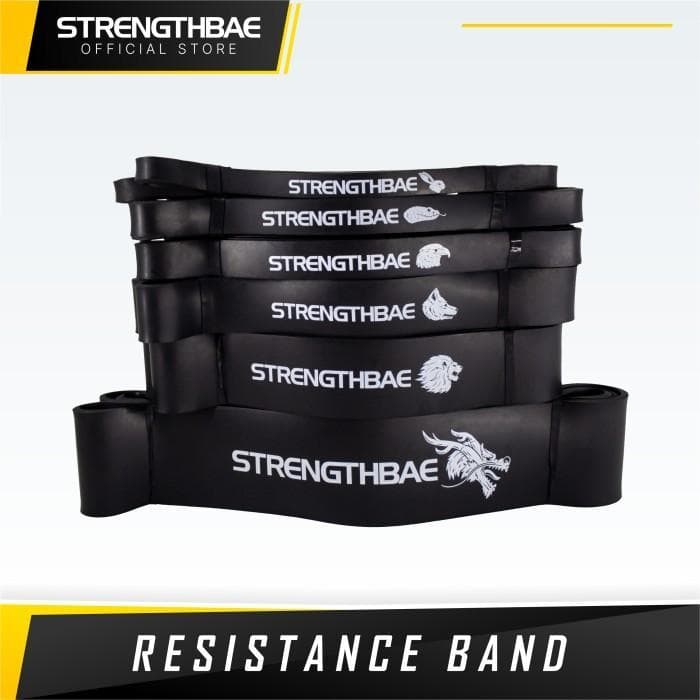
Long Loop Resistance Band
A long loop resistance band is shaped as a long continuous loop, typically around 1–2 meters long, without handles. These bands are usually made from thick latex and are available in several resistance levels.
This type is versatile and can be used for squats, Romanian deadlifts, bent-over rows, shoulder presses, and assisted pull-ups. Long loop resistance bands are suitable as a primary tool for full-body workouts at home.
Mini Band
A mini band is a short continuous loop, usually around 5–7 cm wide. This type of resistance band is commonly placed around the thighs, ankles, or forearms.
Mini bands are suitable for training and activating the glutes and shoulders, including exercises such as lateral band walks, glute bridges, monster walks, and shoulder exercises. Because of their short length, they are less suitable for movements that require a long range of stretch.
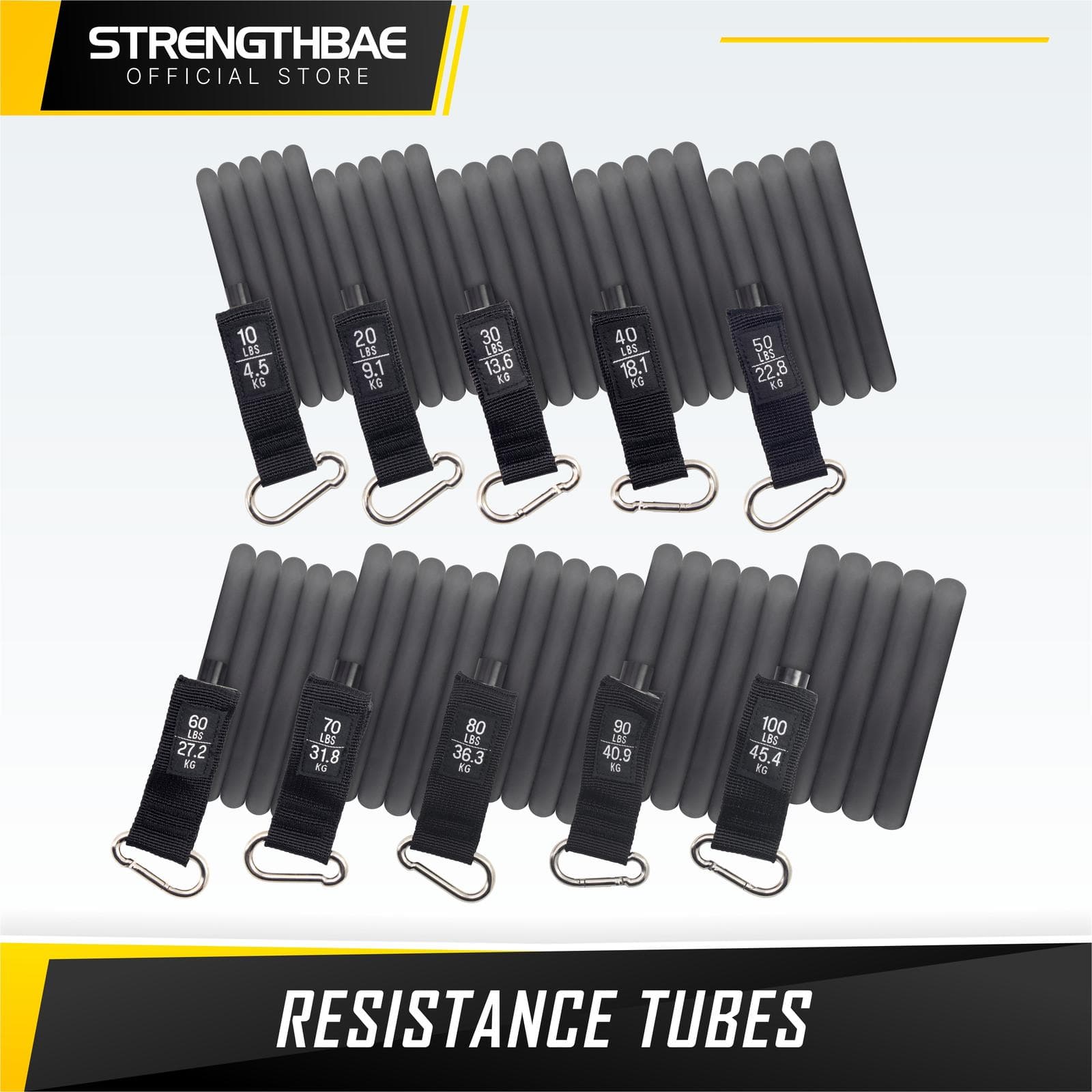
Resistance Tube with Handle
A resistance tube is an elastic tube with handles at both ends and carabiners for attachment. Some sets also include a door anchor and ankle strap.
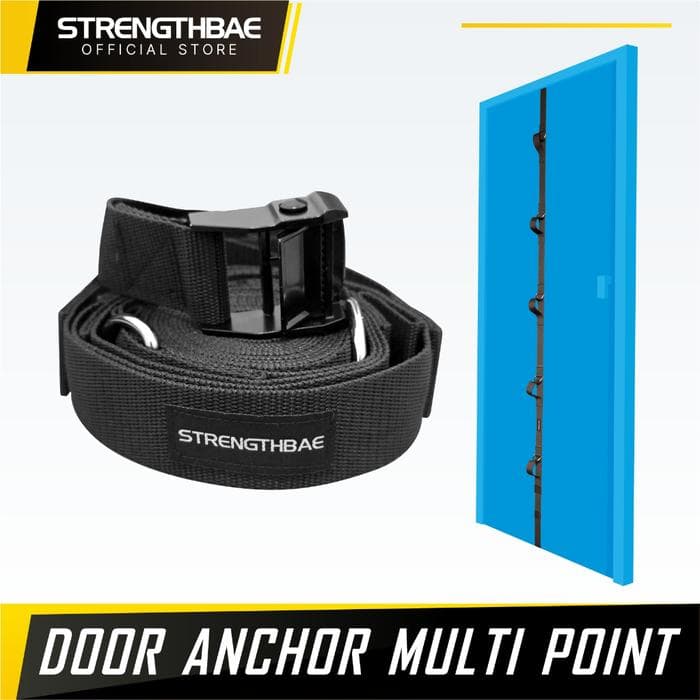
This type of resistance band is suitable for upper-body exercises such as chest presses, shoulder presses, biceps curls, seated rows, and triceps pushdowns. With a door anchor, the pulling position can be adjusted from high, middle, or low positions, making the movement more similar to training with a cable machine.
Read More: Resistance Band Strengthbae
Choosing a Resistance Band Based on Resistance Level
Resistance levels are usually distinguished by color, thickness, or estimated load labels such as 5 kg, 10 kg, 15 kg, or 30 kg. However, colors are not standardized across brands, so bands with the same color do not necessarily have the same resistance level.
The resistance number shown on the packaging is also an estimate, rather than the amount of resistance you feel from the beginning of the pull. Usually, the number represents the resistance when the band is stretched considerably, around 1.5–2 times its original length.
When choosing a resistance level, consider the following:
Choose a band that allows you to complete all repetitions with a full range of motion and proper technique without swinging your body.
Light to medium bands are suitable for movements such as lateral raises, band pull-aparts, and triceps extensions, making them suitable for beginners.
Medium to heavy bands can be used for squats, Romanian deadlifts, and chest presses, making them suitable for building muscle.
For beginners, having 3–5 resistance levels makes it easier to adjust the resistance according to your ability and training progress.
Choosing a Resistance Band Based on Material
The material of a resistance band affects its elasticity, comfort when in contact with the skin, and durability during repeated use. Common materials include natural latex, synthetic rubber or TPE, and elastic fabric.
Latex resistance bands are known for their good elasticity, but they are not suitable for users with latex allergies. Synthetic alternatives can be considered, while still checking the material composition provided by the manufacturer.
Fabric resistance bands, meanwhile, typically use a combination of fabric and elastic fibers. This type is commonly found in loop bands for lower-body exercises because some designs provide a more comfortable surface and are less likely to roll up on the thighs. However, their elasticity and comfort still depend on the construction of each product.
Choosing a Resistance Band Based on Size
The length of a resistance band should be considered because it can affect range of motion and ease of performing exercises. A band that is too short may restrict certain movements, while a band that is too long may require adjustments to the grip or attachment point.
For exercises such as standing rows, chest presses, and lat pulldowns, choose a band with a length that allows you to perform the movement through an appropriate range of motion for your setup. Meanwhile, for lateral walks or glute bridges, a mini loop band with a suitable circumference is generally more practical.
Also consider your body size and exercise position. A resistance band that provides a comfortable setup for one person may not provide the same setup for another user with a different height or arm length.
Choosing a Resistance Band Based on Accessories
Some resistance bands come with accessories that can expand the variety of exercises available. For example, handles can make gripping easier during biceps curls or rows, while ankle straps can be used for movements such as standing hip abductions and glute kickbacks.
If you want to perform exercises using a fixed anchor point, such as lat pulldowns or standing chest presses, a door anchor can also be a useful accessory.
However, make sure the accessories are compatible with the type of band being used. Not all resistance bands can be connected to handles, carabiners, or ankle straps. For door anchors, make sure the door is firmly closed, strong enough, and does not risk opening in the direction of the pulling force.
Read More: Resistance Tube Strengthbae
Ensuring Resistance Band Quality and Safety
Resistance bands undergo repeated stretching during exercise. Therefore, construction quality should be checked before purchasing, especially around connection points, elastic surfaces, and attachment components when using resistance tubes.
Some things to check include:
The band surface has no cracks, tears, or areas that appear brittle.
Connections on loop bands and stitching on fabric bands are secure.
Handles, carabiners, or attachment points feel sturdy and do not come loose easily.
The product includes usage instructions and stretching limits from the manufacturer.
The material and accessories are suitable for the intended training environment, including when used with a door anchor.
A resistance band that appears damaged should not be used because it may snap while stretched and cause injury. Also avoid repeatedly rubbing the band against rough surfaces or sharp metal edges.
How to Store and Maintain a Resistance Band
One of the advantages of resistance bands is their compact size, making them suitable for use at home where space may be limited.
However, storage requirements can vary depending on the type. Mini loop bands can easily fit into a small bag, while resistance tubes with handles and additional accessories require slightly more storage space.
Choose a resistance band that is easy to clean and store according to the manufacturer's instructions. Avoid excessive heat, prolonged direct sunlight, and storing the band while it is stretched. Proper care can help maintain its elasticity and extend the service life of the resistance band.
FAQ
Are resistance bands suitable for beginners who are just starting to work out at home?
Yes. Resistance bands are suitable for beginners because they are available in various resistance levels and can be used for many basic exercises. Beginners can start with light resistance and gradually increase it according to their ability.
Can resistance bands replace dumbbells or cable machines?
Not completely. Resistance bands can be used for many pushing, pulling, squatting, and isolation exercises, but their resistance profile differs from dumbbells and cables. Resistance bands are better suited as a practical alternative or additional training tool rather than a complete replacement in every situation.
Are resistance bands suitable for a home gym with limited space?
Yes. Resistance bands are very suitable for small home gyms because they require little space and are easy to store after use. Some types can even be folded and placed in a bag.
Is it better to buy one resistance band or a complete set?
For more flexible training, a set of resistance bands with multiple resistance levels is generally more practical. You can adjust the resistance according to the exercise and your ability, since one resistance level may not be suitable for every movement.
What are the benefits of having several resistance band levels at once?
Having multiple resistance levels makes it easier to choose the appropriate resistance for different muscles and exercises. Light bands can be used for shoulder or arm exercises, while heavier resistance can be used for exercises such as squats, Romanian deadlifts, or chest presses.
Quality Resistance Bands from Strengthbae
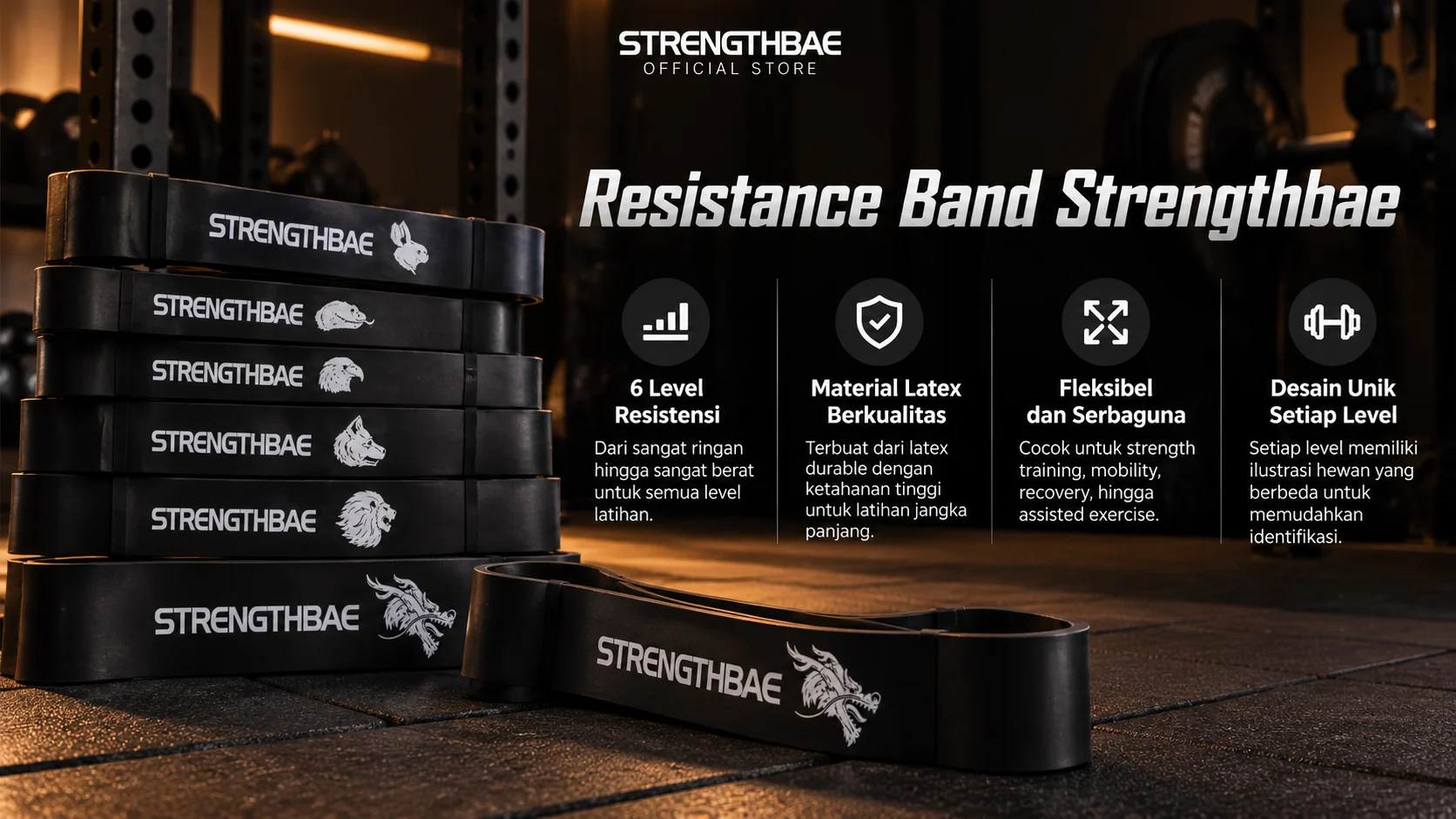
Resistance bands are a practical option for adding variety to your workouts, whether for warm-ups, strength training, or full-body workouts. Strengthbae offers resistance bands with multiple resistance levels that can be adjusted to your training needs, allowing you to progressively increase resistance according to your ability.
If you need resistance bands for a home gym, individual training, or workouts while traveling, you can consult the Strengthbae team to choose the appropriate type and resistance level, or check our catalog for more information.
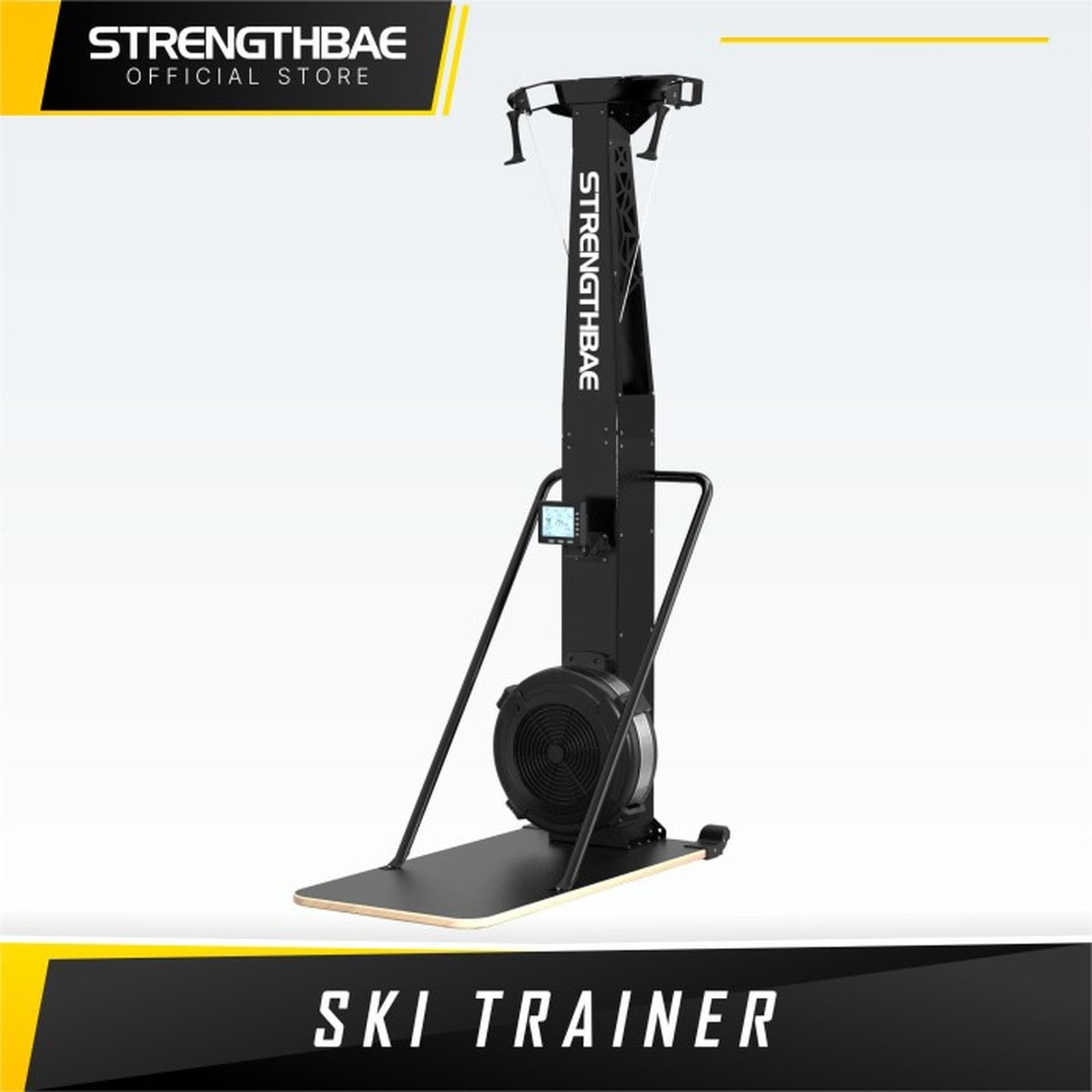
Strengthbae is a professional gym equipment brand providing solutions for commercial gym and home gym needs. From racks and All in One Trainers to functional training accessories for Hybrid Race training, everything is available at Strengthbae.