Chest Press vs Bench Press Comparison
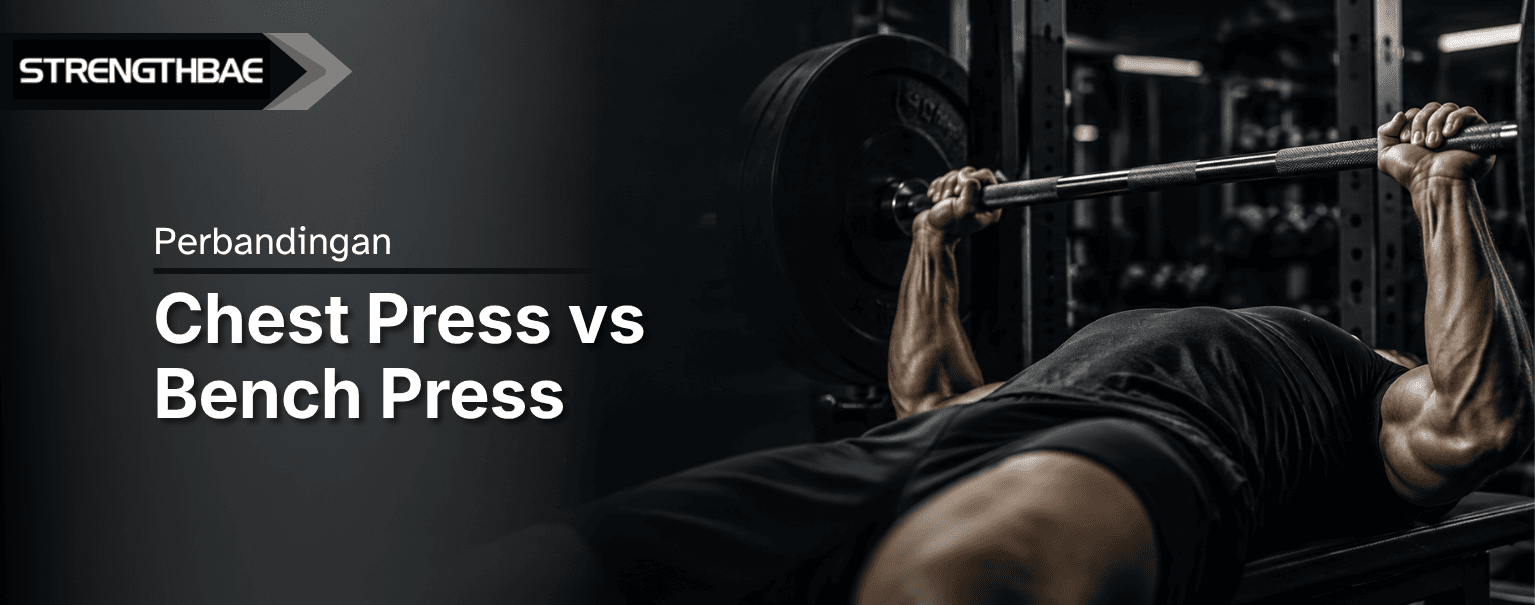
Chest press and bench press are both compound exercises that primarily train the chest, front shoulders, and triceps through pushing movements. Both can help improve strength and build muscle mass.
The main difference lies in how the load is moved. Chest press uses a machine with a more guided movement path, making it easier to use and allowing the exercise to be performed without a spotter. Meanwhile, bench press uses free weights that must be controlled independently, requiring greater stabilization and coordination, but it can also help develop more comprehensive pressing strength. This article discusses the differences between chest press and bench press, including how they work, target muscles, stability requirements, advantages, and their use in training programs.
What Is a Chest Press?
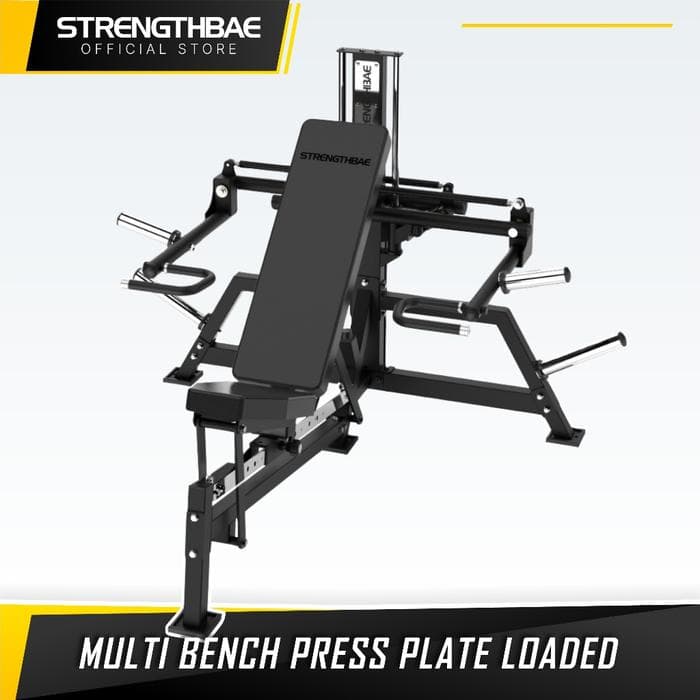
Chest press is a pushing exercise performed from a seated position that primarily trains the chest, front shoulders, and triceps. This exercise is usually performed using a chest press machine, either with a weight stack system where the load is selected using a pin or a plate-loaded system that uses weight plates.
Because it uses a machine, the handle's movement path is predetermined, making the movement more stable and consistent from the beginning to the end of each repetition. This allows users to focus on pushing the load without having to spend as much effort maintaining the balance of the weight.
Advantages of Chest Press
Chest press has several advantages, especially for those who prioritize stable, practical movements and a focused training stimulus.
More Guided and Stable Movement
The handle's movement path is determined by the machine, so you do not need to control the balance of the load as much. This also reduces the risk of the load tilting or falling toward your body.
Simpler Setup
You only need to adjust the seat position or height as needed, then select the weight using the pin if you are using a weight stack. These adjustments can be made quickly before starting the exercise.
Requires Less Stabilization
Because the machine helps support and guide the load, you can focus more on the pushing movement and chest contraction without having to maintain as much control over the balance of the weight.
Suitable for High Training Volume
Chest press is practical for workouts involving a high number of sets or repetitions. Techniques such as drop sets and rest-pause can also be applied more easily because you do not need to control the balance of a barbell.
Practical and Beginner-Friendly
A chest press machine can be used without the assistance of a spotter because the load remains connected to the machine's system. This makes it practical for beginners and can also be used in rehabilitation programs according to individual needs and professional guidance.
Disadvantages of Chest Press
Although practical, chest press also has several limitations that should be considered.
More Limited Movement Path
The direction of the handles follows the machine's design, so it may not always match the body shape, joint position, or flexibility of every user.
Less Stabilizer Muscle Involvement
Because the machine helps maintain the movement path and balance of the load, stabilizing muscles such as the core and rotator cuff do not need to work as much as they do when using free weights.
More Limited Transfer to Free-Weight Exercises
Improved performance on a chest press machine does not necessarily mean that your ability to control free weights such as a barbell will improve by the same amount. Free-weight exercises require additional control, balance, and coordination.
Requires Dedicated Space
A chest press machine is relatively large and is generally designed for one primary exercise. Therefore, it requires dedicated space and may be less efficient for home gyms with limited space.
What Is a Bench Press?
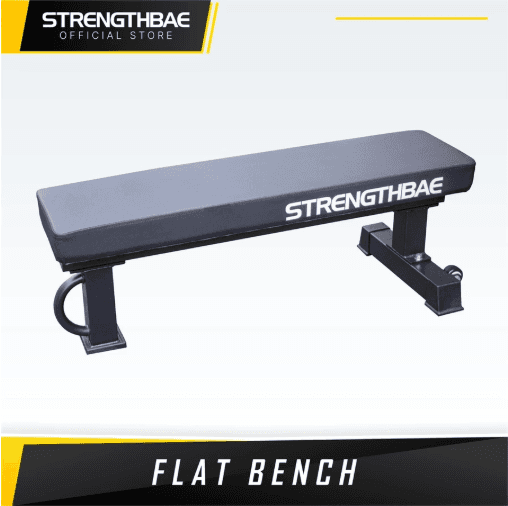
Bench press is a pushing exercise using free weights performed while lying on your back on a flat bench. The exercise can be performed using a barbell or a pair of dumbbells. The movement involves lowering the weight from the top position toward the chest, then pressing it back up. Bench press is one of the three main lifts in powerlifting and is often used to measure upper-body strength.
Advantages of Bench Press
Bench press has several advantages that make it widely used for strength training and muscle building.
Greater Control and Stabilization
You must control the balance and movement path of the load yourself from the beginning to the end of the exercise.
Good for Increasing Pressing Strength
Bench press allows you to progressively use heavier loads, making it effective for increasing pressing strength.
Involves Multiple Supporting Muscles
In addition to the chest as the primary target muscle, the movement also involves the triceps, shoulders, core muscles, and upper-back muscles to help maintain body position and control the load.
Offers Many Variations
Bench press can be performed using a barbell or dumbbells, as well as different bench positions such as flat, incline, and decline to provide training variation.
Efficient for Home Gyms
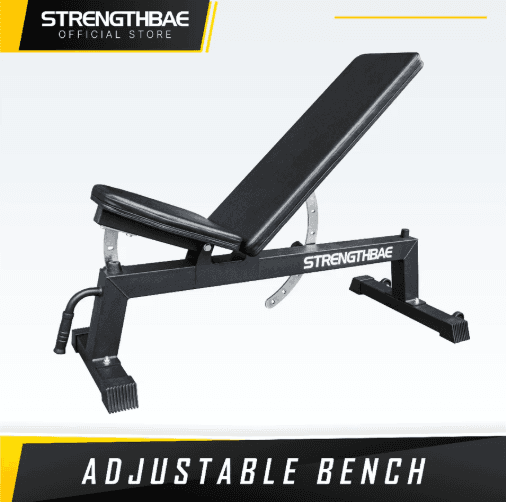
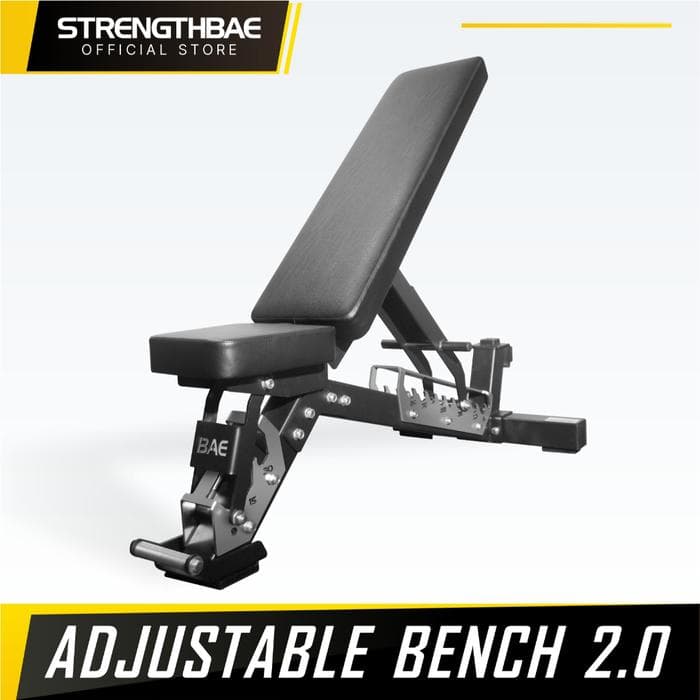
Combining an adjustable bench with a power rack or squat stand can support not only bench press but also many other exercises.
Bench Press Disadvantages
Although effective, bench press requires greater attention to technique and safety, especially when using heavy loads.
More Complex Setup and Technique
You need to understand body position, bracing, shoulder and scapula positioning, as well as the use of leg drive to keep the movement stable and comfortable for the shoulders.
Higher Risk When Performed Without Supervision
When using a barbell with heavy loads, failing to complete a repetition can cause the barbell to become stuck on the chest if an appropriate safety system is not available.
A Spotter or Safety System Is Recommended
When using heavy loads or attempting maximal lifts, using a spotter or safety spotter arms on a power rack is highly recommended to improve safety.
Triceps May Fatigue More Quickly
For some people, the triceps may fatigue first, reducing their ability to press the load before the chest muscles receive the desired training stimulus.
Differences in How Chest Press and Bench Press Work
The main difference between chest press and bench press lies in the type of equipment and how the load moves. Chest press uses a machine that helps guide the load, while bench press uses free weights that must be controlled independently. The comparison can be seen in the following table:
Comparison Aspect | Chest Press Machine | Bench Press Free Weight |
Equipment Type | Machine with pin-loaded or plate-loaded system | Free weight using a barbell or dumbbells |
Movement Path | Movement path is guided by the machine | Movement path is controlled independently by the user |
Stabilization Demand | Lower because the machine helps support the load | Higher because the user must maintain the balance of the load |
Body Position | Seated upright with the back resting against the pad | Lying on your back on a flat bench |
Load Adjustment | Uses a pin on the weight stack or weight plates | Uses weight plates on a barbell or a pair of dumbbells |
Ease of Setup | Relatively simple and quick | Requires setting up the bench, rack, and barbell |
Spotter Requirement | Generally not required | Highly recommended, especially when using heavy loads |
Main Focus | Makes pressing movements easier and helps focus on muscle development | Improves pressing strength and the ability to control free weights |
Based on this comparison, chest press prioritizes stability and ease of use because the machine helps guide the load. Bench press requires greater control and coordination because the load must be controlled independently, making it more demanding on body stabilization.
Read More: Strengthbae Multi Bench Press Machine
Muscles Worked
Both chest press and bench press are compound exercises because they involve more than one joint, particularly the shoulder and elbow joints. Both also involve several muscle groups simultaneously to produce the pushing movement.
Muscles Worked During Chest Press
During chest press, the muscles that work the most are the primary muscles involved in the pushing movement.
Pectoralis Major, or the chest muscles, is the primary muscle responsible for pushing the arms forward and bringing them toward the center of the body.
Next, the Anterior Deltoid, or front shoulder muscle, helps move the arms forward while pushing the handles.
Finally, the Triceps Brachii, or back-of-the-arm muscle, works to extend the elbows during the pushing movement.
Stabilizer muscles also work to maintain body position, but their demand is relatively lower because the machine already helps maintain the movement path. The involvement of stabilizer muscles can vary depending on the machine's design.
Muscles Worked During Bench Press
Bench press involves more muscles because the user must control and balance the free weight throughout the movement.
Pectoralis Major, or the chest muscles, is one of the primary movers responsible for pressing the barbell or dumbbells upward from the chest.
Meanwhile, the Anterior Deltoid and Triceps Brachii help press the load until the elbows reach an extended position.
The back and shoulder muscles, such as the rotator cuff, rhomboids, trapezius, and latissimus dorsi, help maintain shoulder position and control the barbell throughout the movement.
The core and lower body also work to keep the body stable on the bench. The abdominal, hip, and leg muscles help maintain body position and support leg drive when performing the bench press technique with heavy loads.
Chest Press for Beginners
For those who are new to training, the chest press machine is one of the easier pieces of equipment to learn. Because the movement is assisted by the machine and performed in a seated position, beginners can learn the pushing movement without having to worry as much about losing balance or having the weight fall onto them.
How to Perform a Chest Press
Adjust the seat height so that the handles are aligned with the middle of your chest.
Sit upright with your back, shoulders, and the back of your head against the backrest, with both feet firmly planted on the floor.
Grip the handles with an overhand grip and wrap your thumbs around the handles, keeping your wrists straight and neutral.
Take a breath before pushing, then exhale as you push the handles forward until your arms are almost straight without locking your elbows.
Return the handles slowly and under control for around 2–3 seconds without allowing the weight stack or load to collide forcefully.
Chest Press Seat Adjustment
Seat height is important for achieving a comfortable movement position and helping maintain proper shoulder positioning. Adjust the seat so that the handles are positioned appropriately in relation to your chest, not too high or too low.
If the seat is too low, the handles may be positioned too high, closer to the shoulders or neck, which can make the shoulder position less comfortable. If the seat is too high, the handles may be positioned too low, closer to the abdomen, making the pushing movement less optimal for training the chest.
Each chest press machine can have a different design and handle position. Therefore, seat height should always be adjusted according to the machine's design and the individual user's body position.
Bench Press for Beginners
Starting bench press training requires attention to body positioning before lifting the weight. Beginners need to understand how to position and lock the shoulder blades, keep the feet firmly on the floor, and control the barbell path so the movement remains safe and comfortable for the shoulders.
How to Perform a Bench Press
Lie on your back on a flat bench with your eyes positioned directly underneath the barbell mounted on the rack.
Pull the shoulder blades back and down so they remain against the bench, then place both feet firmly on the floor.
Grip the barbell slightly wider than shoulder-width and keep your wrists straight.
Unrack the barbell by straightening both arms, then position the barbell above the chest area.
Take a breath and slowly lower the barbell toward the middle of your chest. Keep your elbows at around a 45-degree angle from your body.
Exhale while pressing the barbell back to the starting position above your chest, then repeat the movement.
Bench Press Grip and Hand Position
The hand position on the barbell can affect how the muscles work. A grip that is too narrow makes the triceps work more, while a grip that is too wide can increase stress on the shoulders. For a commonly used position, choose a hand width that keeps your forearms vertical when the barbell is positioned over your chest.
Chest Press and Bench Press for Home Gyms
Building a home gym requires consideration of available space, equipment functionality, and budget. Equipment choices should be based on how many different exercises you want to perform.
Chest press machines are generally quite large and primarily focus on chest pressing exercises. For home gyms with limited space, they can be less efficient because they are mainly used for a limited number of exercises.
However, a chest press machine can still be a good option for a home gym, especially if you prioritize stable, practical, and easy-to-use chest training without a spotter. It is also suitable for users who want to focus on hypertrophy training without having to adjust free weights frequently.
Bench press is more versatile for home gyms. With an adjustable bench, power rack or squat stand, barbell, and weight plates, you can perform not only bench press but also squats, overhead press, barbell rows, and various other exercises. This option is suitable if you want one setup that can be used for many exercises.
If you want the convenience of chest press while also saving space, an All-in-One Trainer or functional trainer can be an option. This multifunctional equipment combines a cable system with various training functions in one space, making it more practical for home gyms that need a wide range of exercises without filling the room with multiple machines.
Read More: All-in-One Trainer vs Single Gym Machines: Home Gym Options
Combining Chest Press and Bench Press in One Session
An effective strategy is to use bench press as the main exercise at the beginning of the workout, when energy and focus are still high. Bench press can be used to train pressing strength with 3–5 sets of 6–8 repetitions.
After that, chest press can be used as an accessory exercise in the middle or at the end of the session. Because the machine helps maintain movement stability, you can focus more on the chest muscles even when the stabilizing muscles are beginning to fatigue. Chest press can be performed for 3–4 sets of 10–15 repetitions, depending on your ability and training goals.
FAQ
Can chest press replace bench press?
Chest press can replace bench press if your main goal is to build chest muscles practically, use more stable equipment, or train without a spotter. Chest press can also be an option during rehabilitation, according to professional guidance. However, if your goal is to increase strength using free weights or prepare for a powerlifting competition, bench press remains more suitable.
Does bench press have to use a barbell?
No. Bench press can also be performed using dumbbells or a Smith machine. Dumbbell bench press allows each hand to move more freely and can provide a different range of motion compared with a barbell.
Which is better for building chest muscles?
Both are effective for training and building the chest muscles. Bench press allows you to use heavier free weights, but it requires more control and stabilization. Chest press is more stable, allowing you to focus more on the movement and chest muscle contraction without being as limited by fatigued stabilizing muscles.
Can chest press and bench press be performed in the same session?
Yes. You can perform bench press at the beginning of the workout while your body is still fresh to train strength, then use chest press as an accessory exercise to add volume and train the chest muscles in a more controlled manner.
Does bench press require a spotter?
For barbell bench press, a spotter is highly recommended, especially when using heavy loads or performing repetitions close to your limit. Alternatively, use a power rack with safety spotter arms positioned at the appropriate height to help reduce the risk of injury if you fail to complete a repetition.
More Effective and Safer Chest Training with Strengthbae
Building strong and balanced chest muscles requires proper training and suitable equipment. Bench press provides flexibility with free weights, while chest press offers a more stable and controlled movement. Whatever your choice, make sure the bench, frame, and safety system are of good quality for long-term use.
Need help choosing equipment for chest training? Consult the Strengthbae team for recommendations on All-in-One Trainers, power racks, bench press, chest press, as well as home gym or commercial gym layout planning based on your available space and training needs.
Strengthbae is a professional gym equipment brand providing solutions for commercial gym businesses and home gyms. From racks and All-in-One Trainers to functional training accessories such as HYROX-standard hybrid race sandbags, everything is available at Strengthbae.