HYROX Fifth Station: 1000-Meter Rowing Guide
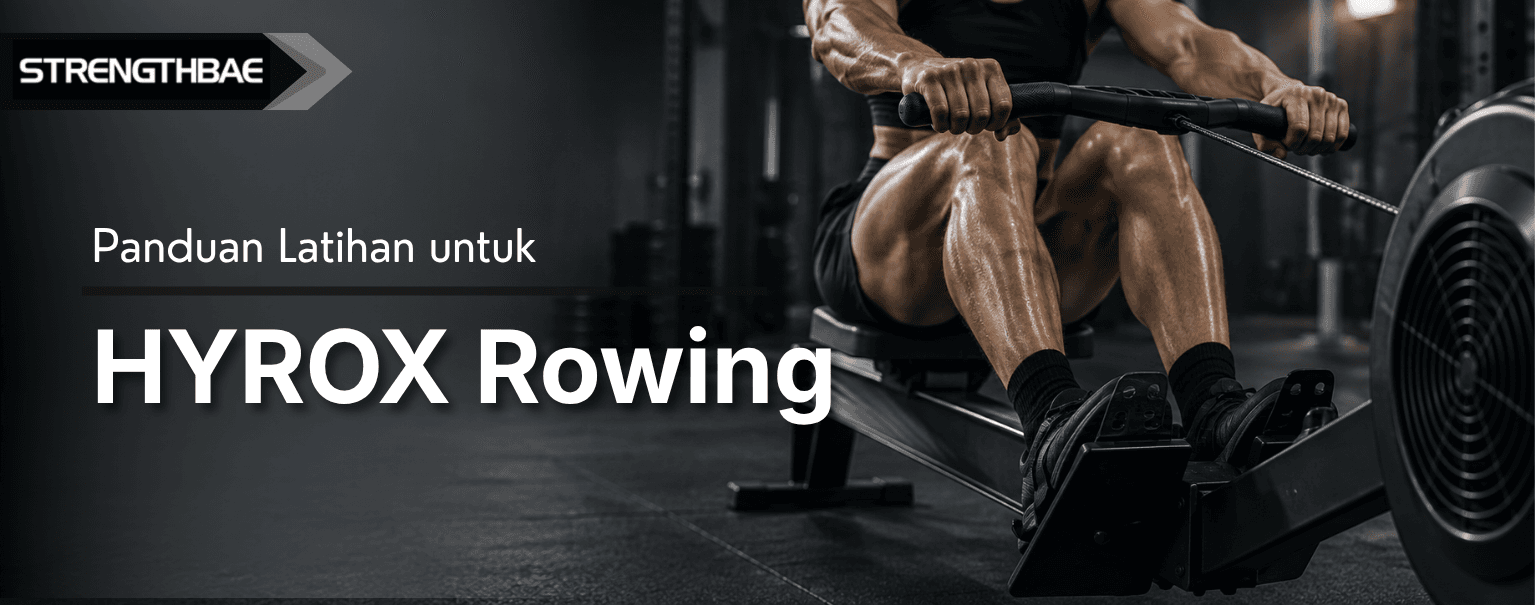
Rowing 1,000 meters is the fifth training station in a HYROX race. Positioned right after the first four stations and several kilometers of running, this rowing challenge is performed when participants are already experiencing significant physical fatigue.
This fifth station is one of the HYROX stations that uses measurable cardio equipment besides the SkiErg. Using a rowing ergometer that measures distance, time, and power, HYROX Rowing relies on full-body coordination that combines a strong leg drive, torso swing, and efficient arm pull.
The key to successfully completing HYROX Rowing lies in mastering the basic technique and maintaining a stable rowing rhythm.
HYROX Rowing Specifications and Rules
Every HYROX competitor across all adult divisions must complete the official distance of 1,000 meters using the official Concept2 RowErg rowing machine. Although this is the only training station performed in a seated position, it also follows official movement standards and strict time penalties just like the other HYROX stations.
Before rowing begins, the machine’s digital monitor will be prepared or reset by an official judge. Participants must place both feet on the footplates and their buttocks on the seat before holding the handle. Throughout the rowing process, both feet must remain on the footplates at all times.
After completing the full 1,000-meter distance, participants are required to remain seated and raise their hand to request confirmation from the judge. Participants may only leave the machine after receiving official confirmation.
HYROX Category / Division | Official Distance | Standard Damper Preset |
|---|---|---|
Women Open / Women Doubles | 1,000 Meters | Level 5 |
Women Pro / Men Open / Men Doubles / Mixed | 1,000 Meters | Level 6 |
Men Pro / Men Pro Doubles | 1,000 Meters | Level 7 |
Although the damper is prepared at the standard presets above, each participant is free to change the damper position and adjust the footplate straps according to personal comfort preferences before or during rowing.
How to Perform the Rowing Movement in HYROX
The correct and energy-efficient HYROX rowing movement consists of four continuous main phases: catch, drive, finish, and recovery.
The movement sequence you need to remember starts with the drive phase flowing from the legs, to the body, and then to the hands. During the recovery phase, the movement should flow from the hands, to the body, and then to the legs.
Catch
The starting position where the participant sits with the knees flexibly bent and the shins vertical. Both arms are straight while holding the handle, the shoulders are relaxed, the chest is upright, and the torso leans slightly forward.
Drive
The phase that generates the main power, beginning with a strong push from the legs against the footplate, similar to a leg press movement.
As the knees begin to straighten, the torso swings slightly backward through a hip hinge, followed by an arm pull that brings the handle toward the lower ribs or lower chest area. This is the main rowing movement.
Finish
The final phase of the drive where both legs are straight, the handle is pulled directly toward the lower chest area, and the body leans slightly backward by approximately 10–15 degrees while the core remains tightly braced.
Recovery
The phase of returning the body to the catch position in a controlled manner. The movement sequence is the reverse of the drive: first extend both arms forward, then tilt the torso forward from the hips, and finally bend both knees again to slide slowly back toward the catch position.
Why Can Rowing Feel So Difficult?
Although performed in a seated position, the HYROX Rowing station often drains energy significantly due to a combination of several physiological and technical factors:
It activates many large muscle groups at the same time, requiring very high oxygen consumption.
The legs generate most of the power, while the back, arms, and core muscles must continuously maintain tension.
It is the fifth HYROX station, coming after 5 km of running and the SkiErg, Sled Push, Sled Pull, and Burpee Broad Jump.
Heart rate can rise very quickly if the rowing rhythm is too high and uncontrolled.
Being too aggressive or sprinting during the first 200–300 meters can trigger lactic acid accumulation, making the remaining distance feel much more difficult.
Main Muscles Working During HYROX Rowing
HYROX Rowing is a full-body functional resistance exercise that actively involves approximately 85% of the body’s muscle groups. The role of the muscles is distributed across several areas:
Quadriceps
Act as the main driving muscles at the beginning of the drive phase to push the body and extend the knees away from the footplate.
Glutes
Play a role in hip drive or hip extension as the body moves from the catch position toward the finish position.
Hamstrings
Help control hip and knee movement while strengthening the endurance of the posterior chain.
Back
The latissimus dorsi and upper back muscles actively assist the horizontal pulling phase while maintaining an upright torso posture.
Biceps and Forearms
The biceps help complete the pull at the end of the drive, while the forearms maintain grip endurance on the handle.
Core
Stabilizes the spine and acts as a bridge for transferring power from the leg drive to the upper body.
Efficient HYROX Rowing Technique
Efficient rowing technique helps you complete the HYROX Rowing 1,000 meters with more controlled energy without causing the legs, back, and arms to fatigue too quickly. The key is using the correct movement sequence, maintaining rhythm, and distributing effort evenly from start to finish.
Push with Your Legs First
Avoid immediately pulling the handle with your arms. Prioritize the leg drive as the main source of power at the beginning of the drive phase before transferring that power to the arms.
Do Not Open the Torso Too Early
If the torso swings backward before the legs finish pushing, the leg drive will not be used optimally and will place excessive stress on the lower back.
Keep the Handle Moving Smoothly
Pull the handle smoothly and in a controlled manner without sudden jerking, while keeping the recovery movement stable.
Control Your Stroke Rate
A stroke rate that is too high does not necessarily produce faster distance. Maintain a stable rowing rhythm of around 24–28 strokes per minute (spm) so each drive remains powerful.
Do Not Chase Maximum Power from the Start
Focus on a pace that can be maintained until the HYROX Rowing 1,000 meters is completed rather than sprinting and quickly draining your stamina.
Control Your Breathing
Use a regular breathing pattern: exhale during the drive phase and inhale during the recovery phase consistently.
Use a Damper Setting That Matches Your Ability
A damper setting that is too heavy can accelerate muscular fatigue. Choose a resistance level that allows each stroke to feel strong while remaining consistent.
How Beginners Should Train for HYROX Rowing
Beginners should prioritize mastering the movement pattern before chasing the fastest time.
Start Rowing with short-distance intervals such as 250 meters or 500 meters, then focus on coordinating the sequence of legs, body, and hands while controlling your breathing. As technique becomes more consistent, gradually increase the distance and training duration.
Next, if you are training HYROX Rowing for competition, start practicing the transition from running to rowing and from rowing back to running. This can help the body adapt to real fatigue conditions similar to those experienced during competition.
Common Beginner Mistakes When Rowing
Mistakes during HYROX rowing usually happen because the movement looks simple, even though it requires proper body coordination and rhythm.
For beginners, understanding common mistakes from the beginning can help make training feel more comfortable, efficient, and consistent.
Pulling with the Hands First
Ignoring the leg drive causes the forearms and biceps to experience local fatigue more quickly.
Stroke Rate Too Fast
Using a high cadence without enough power in each stroke drains your breathing without producing efficient distance.
Bending Too Far Forward at the Catch
An excessively hunched torso position reduces hip stability and puts the spine at risk.
Opening the Torso Too Early
Swinging the body backward before the leg drive is complete limits power transfer.
Pulling the Handle Too High
Pulling the handle toward the neck or chin instead of the lower chest makes the movement path less efficient.
Recovery Too Fast
Rushing back into the catch position without allowing controlled recovery for breathing.
Choosing a Damper Setting That Is Too High
Setting the resistance too heavy causes the thigh and back muscles to fatigue more quickly.
Sprinting from the Start
Forcing maximum speed during the first 200 meters can cause you to run out of stamina in the second half.
Only Training Rowing While Fresh
Never practicing rowing simulations while fatigued after other cardio activities.
Gym Exercises That Help HYROX Rowing 1,000 Meters
Gym exercises can help prepare the strength, endurance, and movement control needed to complete HYROX Rowing 1,000 meters more efficiently.
Training should not focus only on the back and arms, but also on the legs, core, and the ability to maintain power throughout the rowing duration.
Squat
Squats are performed by lowering the hips as if sitting down, then standing back up.
This movement strengthens the quadriceps and glutes to improve the initial drive power during the drive phase.
You can perform the movement using a barbell, dumbbell, Smith machine, or squat rack.
Leg Press
The leg press is performed by pushing the footplate with both legs from a seated or reclined position.
This exercise builds lower-body strength so the leg drive becomes more powerful. Use a leg press machine for this exercise.
Romanian Deadlift
The Romanian deadlift is performed by pushing the hips backward while lowering the weight in front of the body, then returning to a standing position.
This movement strengthens the glutes, hamstrings, and posterior muscles to support hip stability. It can be performed using a barbell, dumbbell, or Smith machine.
Seated Row
The seated row is performed by pulling a weighted handle toward the body from a seated position, then returning it slowly.
The pulling pattern is quite similar to the pulling portion of a HYROX rowing machine because both involve horizontal pulling movements and heavily use the back muscles and biceps. You can use a seated row machine or cable machine with a row attachment.
Lat Pulldown
The lat pulldown is performed by pulling a bar from above toward the chest, then returning it in a controlled manner.
This movement trains upper-back strength to help improve endurance for the pulling movement in rowing. Use a lat pulldown machine or cable machine with a high pulley.
Cable Row
Cable row is performed by pulling a cable handle horizontally toward the body and returning it slowly.
This exercise helps build pulling control and muscular endurance. Use a cable machine with a low pulley and row handle.
Core Training
Core exercises such as planks, dead bugs, and Pallof presses help keep the body stable throughout the drive and recovery phases.
Planks and dead bugs can be performed on a mat, while Pallof presses use a cable machine or resistance band.
Cardio Interval
Cardio intervals are performed by alternating between high-intensity phases and recovery phases. This exercise helps improve endurance as the heart rate increases.
It can be performed using a treadmill, Air Bike, rowing machine, or ski trainer.
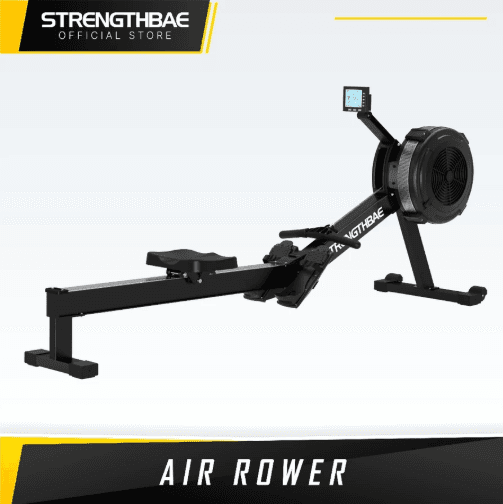
Air Rower STRENGTHBAE Commercial Grade
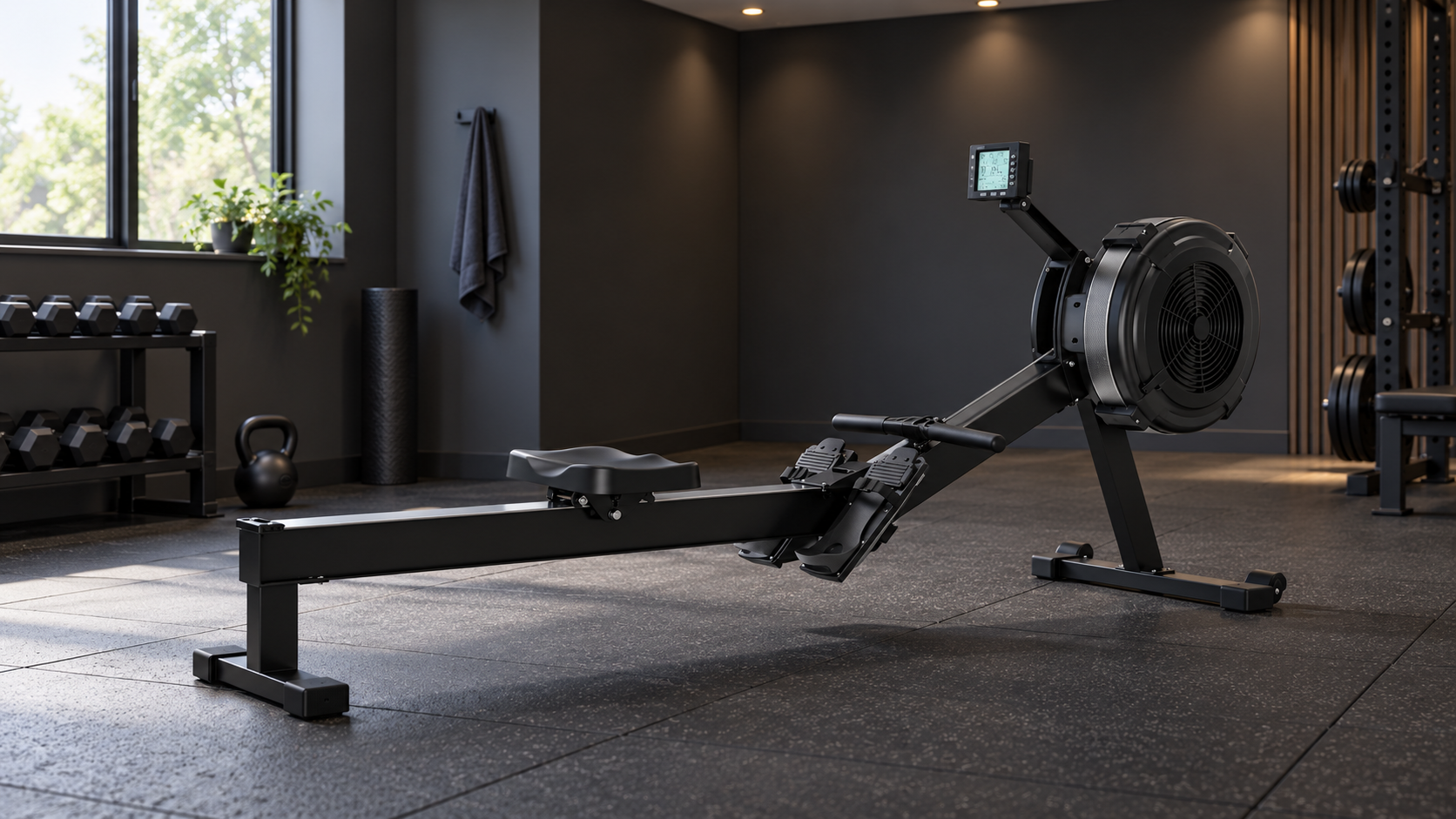
To train full-body endurance, rowing technique, and prepare for HYROX Rowing 1,000-meter simulations at home or in the gym, the Air Rower STRENGTHBAE CrossFit Commercial Grade is designed as a commercial-quality cardio training solution.
This equipment uses adjustable fan-based resistance to produce a smooth and comfortable pull during use.
The long rowing track supports a full range of motion, including for taller users, while its design can be folded for easier storage.
The monitor displays data such as time, distance, estimated calories, watts, and speed. The handle and footpad also use sturdy construction to support intensive use.
FAQ
Can Beginners Who Have Never Rowed Try Rowing Training?
The HYROX Rowing movement is very easy for beginners to learn. By understanding the sequence of the leg drive and hand recovery properly, this exercise becomes a safe cardio option that is joint-friendly for both home gyms and commercial gyms.
What Damper Level Is Best for Daily Rowing Training?
For daily training or competition simulations, a rowing machine damper level between 5 and 6 is the most ideal range.
This level provides balanced air resistance to train muscular endurance without making the joints feel overloaded.
Is the StrengthBae Air Rower Suitable for a Home Gym or Commercial Gym?
Yes, the StrengthBae Air Rower is very suitable for both types of facilities. Its sturdy frame structure can withstand intensive use in commercial gyms, while its foldable feature makes it very space-efficient for personal home gym areas.
What Are the Main Benefits of Rowing Compared with Other Cardio Equipment?
Rowing trains approximately 85% of the body’s muscles at the same time, combining strength training for the thighs, back, and core with cardiovascular endurance.
In addition, its movement is low-impact, making it very safe for the knees.
Train for HYROX and Cardio with StrengthBae
Rowing 1,000 meters in HYROX is a full-body station that requires a combination of technique, endurance, pacing, and coordinated movement between the legs, torso, and hands.
If you are preparing for a fitness event or want to design a personal training facility at home or in a commercial gym, contact the StrengthBae team for consultation and offers on equipment with an official warranty.
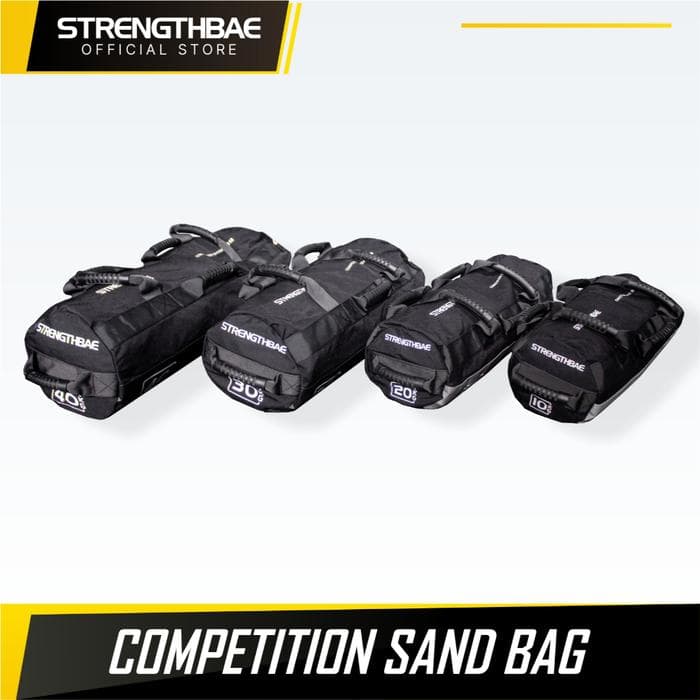
StrengthBae is a professional gym equipment brand that provides solutions for commercial, personal, and home gym needs. From racks and All-in-One Trainers to functional training accessories such as HYROX-standard sandbags, everything is available at StrengthBae.